

What is Large T Shirt Size in Cm: Complete Measurement Guide
What Is Large T Shirt Size In Cm
Buying clothes online or from stores in different countries can be confusing. You might see the same size label, like “L” for Large, but the actual measurements can be very different. This is especially true for t-shirts. If you want your t-shirt to fit well and feel comfortable, you need to know what “Large” really means in centimeters. This guide breaks down everything you need to know about Large t-shirt size in cm, why sizing matters, and how to make the best choice for your body and style.
Why T-shirt Sizes Are Confusing
When you see a t-shirt labeled “Large,” you might think it will always fit the same way. But that’s not true. Different brands, countries, and even styles use different measurements for Large size. For example, a Large t-shirt in one country might be much bigger or smaller than in another. Some brands use their own charts, making it even more difficult.
Another problem is that people’s bodies are different. Someone who is tall and thin will wear a Large differently from someone who is shorter but broader. That’s why just knowing the label isn’t enough—you need to look at the actual measurements in centimeters.
What Does "large" Mean In T-shirt Sizing?
A “Large” size is usually meant for people with a chest measurement and body width that is above average. But the exact measurements are not the same everywhere. Most clothing makers use chest width, body length, and sometimes shoulder width to decide what counts as Large.
Common Measurements For Large T-shirts
Let’s look at the most common measurements used for Large t-shirts around the world.
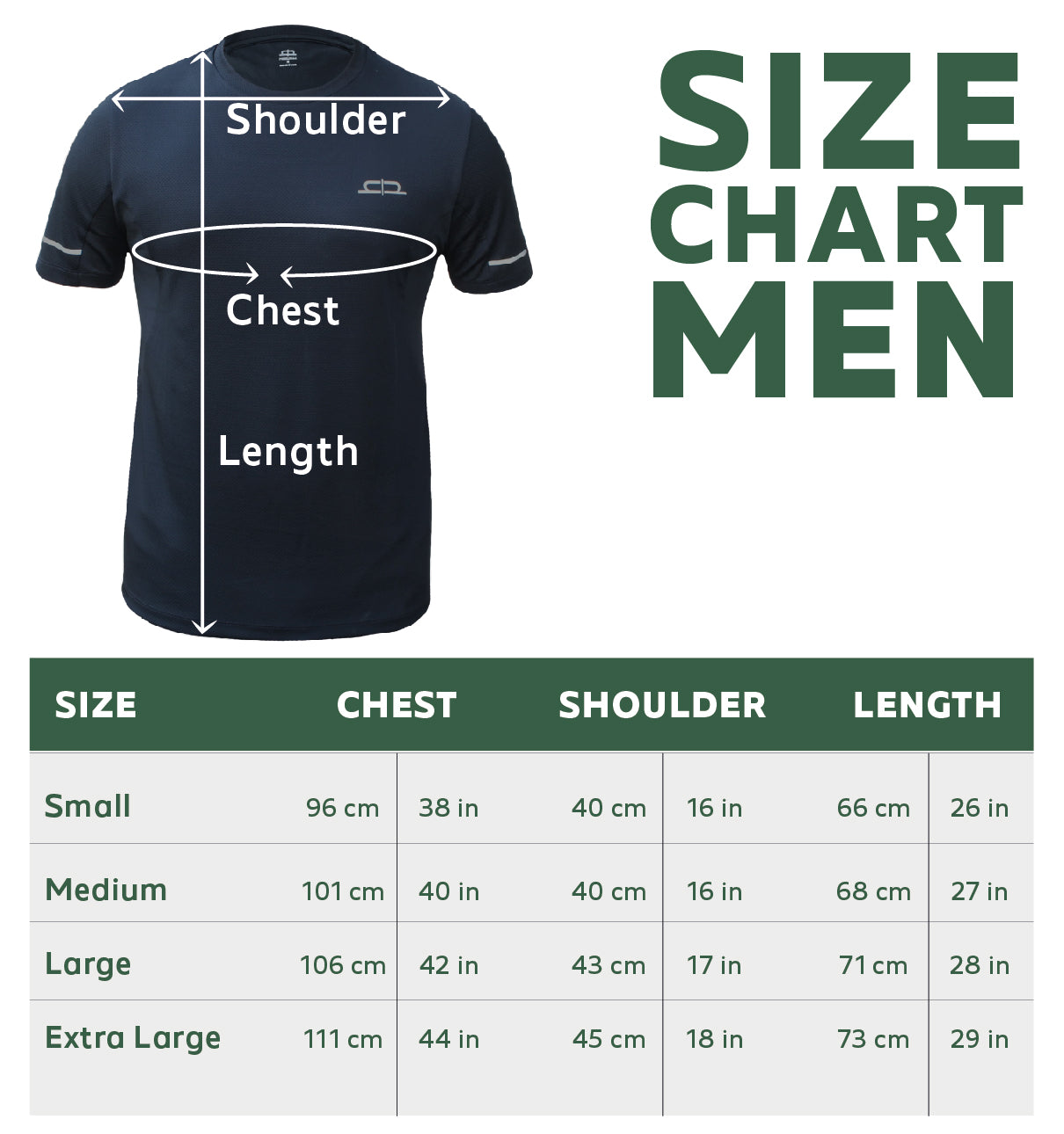
- Chest Width: This is the measurement across the chest, from one armpit to the other, while the t-shirt is lying flat.
- Body Length: Measured from the highest point of the shoulder (next to the collar) down to the bottom hem.
- Shoulder Width: From one shoulder seam to the other, across the back.
Here’s a simple example of common Large t-shirt measurements in centimeters:
| Measurement | Size (L) in cm |
|---|---|
| Chest Width | 54-56 cm |
| Body Length | 72-75 cm |
| Shoulder Width | 48-52 cm |
These numbers are the most commonly used, but remember that they can change depending on the brand and country.
How Different Countries Define Large T-shirt Size
Size labels like “L” are used all over the world, but their meaning changes from place to place. Here’s how some major regions define Large t-shirt sizes:
Asia
In many Asian countries, sizes run smaller than in Europe or North America. An Asian Large may feel like a Medium or even a Small in other countries. Asian Large t-shirts usually have these measurements:
- Chest Width: 52-54 cm
- Body Length: 70-72 cm
Europe
European sizes are closer to international standards but can still be a bit slimmer. European Large is usually:
- Chest Width: 54-56 cm
- Body Length: 72-75 cm
North America
North American t-shirts are often more generous. Large here might have:
- Chest Width: 56-58 cm
- Body Length: 75-77 cm
Brand Differences
Some brands, especially those that target young people or make fashion-fit t-shirts, use slimmer cuts. Sportswear brands sometimes make their Large even bigger for more comfort.
How To Measure Yourself For The Right T-shirt Size
Many people guess their size or buy what they usually wear. But if you want a great fit, you need to measure your body.
- Chest: Wrap a measuring tape around the fullest part of your chest. Keep the tape flat and level.
- Shoulders: Measure from the edge of one shoulder to the other, across your back.
- Length: Measure from the top of your shoulder (next to the neck) down to where you want the t-shirt to end.
Write down your measurements in centimeters. Then compare them to the size chart of the brand you want to buy from.
Comparing Large T-shirt Sizes: Major Brands
Let’s see how some popular brands define their Large t-shirt size. Notice the differences in their measurements.
| Brand | Chest Width (cm) | Body Length (cm) | Shoulder Width (cm) |
|---|---|---|---|
| Uniqlo | 55 | 72 | 50 |
| H&M | 56 | 74 | 51 |
| Nike | 56 | 75 | 51 |
| Zara | 54 | 73 | 49 |
| Adidas | 56 | 75 | 52 |
It’s easy to see that while the differences are small, they can change the way a t-shirt fits.
Why Sizing Charts Are Not Universal
You might think that all Large t-shirts should be the same size, but there is no worldwide standard. Some brands use their own numbers because they want a different look or style. For example, a “slim fit” Large will fit more tightly than a “regular fit” Large, even from the same brand.
Another reason is that people in different regions have different average body types. Brands often adjust their sizes to match their customers.
The Importance Of Fabric And Shrinkage
Not all t-shirts are made from the same material. Cotton is the most common, but many t-shirts use blends of polyester, rayon, or other fabrics. Pure cotton t-shirts can shrink a little after washing, making your Large t-shirt feel smaller over time. Polyester blends usually keep their size better.
When you buy a t-shirt, check if the label says “pre-shrunk. ” This means the shirt should not shrink much after washing. If you want a looser fit, you might want to buy a t-shirt that is a little bigger than your actual measurements, especially if it is 100% cotton.
How To Check If A Large T-shirt Will Fit You
You have your measurements, but you’re still not sure if a Large will fit. Here are some tips:
- Compare the size chart: Always find the brand’s size chart and look for the Large measurements in centimeters.
- Check customer reviews: People often write if the t-shirt runs small, large, or true to size.
- Try on similar t-shirts: If you have a favorite t-shirt at home, lay it flat and measure it, then compare with the new t-shirt’s chart.
- Check the fabric: Remember, cotton shrinks, blends do not.

Credit: aeroclubcomo.com
Real-life Example: Large T-shirt Size For Men And Women
T-shirt sizing can also change based on gender. Men’s Large is usually bigger than women’s Large. Here’s a comparison.
| Measurement | Men’s Large (cm) | Women’s Large (cm) |
|---|---|---|
| Chest Width | 56 | 50 |
| Body Length | 75 | 68 |
| Shoulder Width | 51 | 44 |
As you can see, women’s Large t-shirts are usually shorter and narrower.
The Difference Between Slim Fit, Regular Fit, And Oversized Large
One of the biggest mistakes people make is not looking at the fit style. A “Large” slim fit can feel much tighter than a regular fit, and an “oversized” Large can feel huge.
- Slim Fit Large: Cut closer to the body, less room in the chest and arms.
- Regular Fit Large: Standard width and length, suitable for most people.
- Oversized Large: Extra wide and long, meant for a very loose style.
Always check the fit type before buying. If you want a relaxed look, choose regular or oversized. If you want a closer fit, go with slim.
How To Convert Inches To Centimeters For T-shirt Sizes
Many size charts use inches, but if you need centimeters, you can convert easily. One inch is 2.54 cm. So, if a chart says a Large t-shirt has a chest width of 22 inches, multiply 22 by 2.54:
22 X 2.54 = 55.88 Cm
This means the chest width is about 56 cm.
Common Mistakes When Choosing Large T-shirt Size
Choosing the wrong size is easy if you don’t pay attention. Here are mistakes to avoid:
- Ignoring the brand’s size chart: Never assume all Larges are the same.
- Not measuring yourself: Guessing leads to disappointment.
- Overlooking fit style: Slim fit and oversized are very different, even if both say “Large.”
- Forgetting about fabric shrinkage: Pure cotton can become smaller after washing.
- Not checking reviews: Real buyers often mention if the fit is off.
Why Size Labels Can Be Misleading
Size labels are only a starting point. They help you narrow down your options, but you always need to check the measurements. You might fit into a Large in one brand and a Medium in another.
Some brands also use vanity sizing, where they make sizes bigger so customers feel better. For example, what is labeled as a Large may actually be closer to an Extra Large in real measurements.
How To Shop For T-shirts Online With Confidence
Online shopping is risky if you don’t know your size. Here’s how to get it right:
- Check your measurements before you shop.
- Always use the brand’s size chart, not just the label.
- Read product descriptions for fit type and fabric.
- Look for photos on models, and see their height and what size they wear.
- Buy from stores with good return policies in case the fit is not perfect.
Uncommon Insights For Choosing The Right Large T-shirt
Many people focus only on chest width, but two other areas are important:
- Sleeve Opening: Some Large t-shirts have narrow sleeves, which can feel tight on your arms. Always check this if you have bigger arms.
- Neck Opening: If you have a larger neck or prefer a relaxed collar, check the neck opening measurement. Some brands make their Large t-shirts with a tighter neck.
Another thing people miss is torso length. If you are tall, you may need a Large with extra length, sometimes called “tall” or “long” fit.
What If You’re Between Sizes?
If your measurements are between Medium and Large, or between Large and XL, you have a choice. Here’s what to consider:
- If you want a looser fit, go with the bigger size.
- If you prefer a closer fit, choose the smaller size, but check if the fabric will shrink.
- Some brands offer “in-between” sizes, like “L/XL.” Try these if you can.
Children’s And Youth T-shirt Sizing
For kids and teens, Large is different. Youth Large is smaller than adult Large. Always check if the chart is for children or adults. For example, a Youth Large might have a chest width of 45-48 cm, which is much smaller than an adult Large.
Understanding Unisex T-shirt Sizing
Many brands sell unisex t-shirts. These are based on men’s sizes and are usually bigger for women. If you’re a woman buying a unisex Large, it will likely be looser and longer than a women’s Large.
If you want a closer fit, consider choosing a size down from your normal women’s size.
How Climate Affects T-shirt Fit
This is something most people don’t consider. If you live in a hot, humid place, you might want a looser Large so air can flow and you stay cool. In cooler places, a closer fit can help with layering.
Why You Should Care About Large T-shirt Measurements
A t-shirt that fits well makes you look better and feel more confident. If it’s too tight or too loose, you won’t wear it often. Knowing the Large size in cm means you can buy with confidence, even from other countries.
.png)
Credit: exactprint.co.uk
How T-shirt Sizing Has Changed Over Time
Modern t-shirts are often cut more loosely than in the past. Brands want to fit more people, so they add extra room to their Large size. This means if you haven’t bought a t-shirt in a while, you may need to check your size again.
How To Take Care Of Your Large T-shirts
To keep your t-shirts fitting well, follow care instructions. Wash in cold water, avoid hot dryers, and iron on low heat. This helps prevent shrinking and keeps the fabric in good shape.
T-shirt Sizing Resources
If you want more details or specific charts for international sizes, check out resources like the Wikipedia page on clothing sizes.
Frequently Asked Questions
What Is The Chest Width Of A Large T-shirt In Cm?
The chest width of a Large t-shirt is usually between 54 and 56 cm, measured flat from armpit to armpit. Always check the specific brand’s size chart for the most accurate number.
Is Large T-shirt Size The Same In All Countries?
No, Large t-shirt size is not the same everywhere. Asian Large is often smaller than European or North American Large. Always check the measurements in centimeters and compare with your body size.
How Do I Know If A Large T-shirt Will Fit Me?
Measure your chest, shoulders, and length in centimeters. Compare these with the brand’s size chart. Also, check the fit style (slim, regular, oversized) and fabric type for the best results.
Do Large T-shirts Shrink After Washing?
If the t-shirt is 100% cotton, it can shrink a little after washing, especially if you use hot water or a dryer. Blended fabrics like cotton-polyester shrink less. Look for “pre-shrunk” labels if you want to avoid this.
Can Women Wear Men's Large T-shirts?
Yes, but a men’s Large is usually bigger and longer than a women’s Large. Many women like the looser fit for comfort or fashion, but check the measurements if you want a more fitted look.
A well-fitting t-shirt can make a big difference in how you look and feel. By understanding what Large t-shirt size means in centimeters, and paying attention to brand, fit, and fabric, you can shop smarter and avoid common mistakes. With these tips, you’ll never have to guess your t-shirt size again.
Credit: heelium.in
