

What is Acceptable Business Casual Attire: A Complete Guide
What Is Acceptable Business Casual Attire
Business casual is one of the most confusing dress codes in the workplace. Many people struggle to understand what is acceptable, what is too casual, and what is too formal. The rules can change depending on your company, your industry, and even the day of the week.
If you’re not sure what to wear, you’re not alone. This guide will help you make sense of business casual attire, so you can look professional and feel confident at work.
Understanding Business Casual
Business casual is a dress code that balances professionalism and comfort. It’s less formal than traditional business attire, but more polished than everyday casual wear. The goal is to look neat, approachable, and ready for work, without wearing a suit and tie.
Most offices use business casual because it allows employees to express themselves while maintaining a professional look. However, there is no single definition. What is acceptable in one workplace may not work in another. Always consider your company’s culture and the expectations in your industry.
Why Business Casual Matters
Choosing the right business casual clothing is important for several reasons. First, it shows respect for your workplace. Second, it can impact how colleagues and clients see you. Dressing appropriately can boost your confidence and help you build a positive reputation.
Studies show that people judge others within seconds based on appearance. Wearing the right clothes can make you seem trustworthy, competent, and approachable. It can also help you feel more comfortable, which improves your performance and mood at work.
Key Elements Of Business Casual Attire
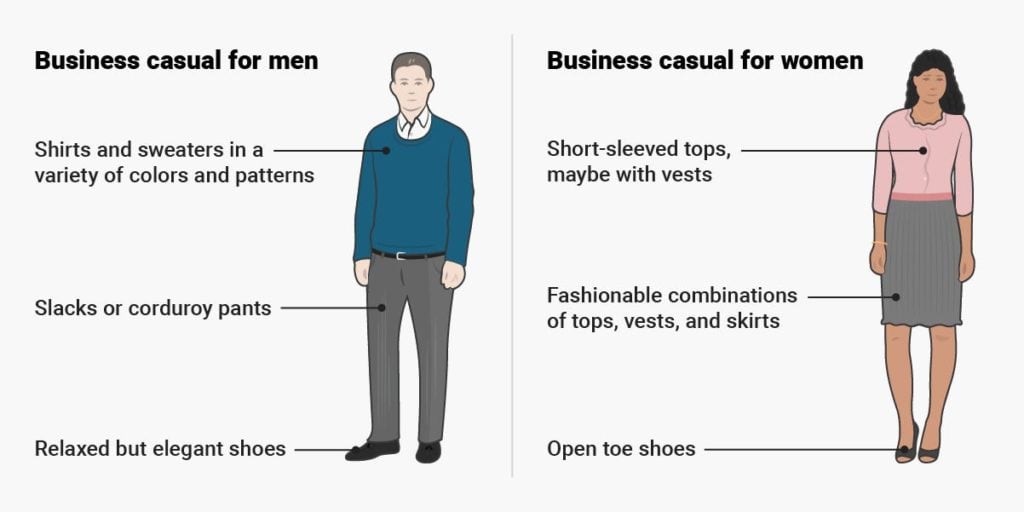
Let’s break down what counts as business casual for men and women. While there are differences, the principles are similar: clean, well-fitting clothes, nothing too flashy, and nothing too relaxed.
Business Casual For Men
Men’s business casual is about looking sharp without wearing a full suit. Here’s what works and what doesn’t.
Acceptable Shirts
- Button-down shirts: Solid colors or subtle patterns are best. Long sleeves are standard, but short sleeves are acceptable in warm climates.
- Polo shirts: Choose simple, high-quality polos. Avoid bright logos or flashy designs.
- Sweaters: V-neck or crew neck sweaters over a collared shirt work well.
Avoid T-shirts, tank tops, or shirts with large graphics.
Pants And Trousers
- Chinos: A classic business casual staple. Neutral colors like khaki, navy, or gray are safest.
- Dress slacks: Well-tailored slacks are always appropriate.
- Corduroy pants: Acceptable if they look neat and are not too casual.
Stay away from jeans, shorts, or pants with visible wear and tear.
Shoes
- Dress shoes: Leather loafers, oxfords, or brogues.
- Dress boots: Simple, clean boots can work in colder months.
Sneakers, sandals, and athletic shoes are not business casual.
Jackets And Blazers
A blazer can add polish but is not always required. Choose a classic color and avoid loud patterns. Avoid denim jackets and hoodies.
Accessories
Keep accessories simple. A watch or belt is fine. Avoid flashy jewelry or anything that distracts from your overall look.
Quick Comparison Table For Men’s Business Casual
Here is a quick table comparing acceptable and unacceptable items for men:
| Item | Acceptable | Not Acceptable |
|---|---|---|
| Shirt | Button-down, Polo, Sweater | T-shirt, Tank top, Graphic shirt |
| Pants | Chinos, Dress slacks, Corduroy | Jeans, Shorts, Baggy pants |
| Shoes | Dress shoes, Dress boots | Sneakers, Sandals, Flip-flops |
| Jackets | Blazer | Denim jacket, Hoodie |
Business Casual For Women
Women have more choices, but the same rules of neatness and professionalism apply.
Acceptable Tops
- Blouses: Solid colors or simple patterns. Avoid anything too tight or revealing.
- Knit tops: Simple sweaters or cardigans are good options.
- Button-down shirts: A classic choice, especially in neutral colors.
Tank tops, spaghetti straps, and crop tops are too casual.
Pants, Skirts, And Dresses
- Dress pants: Tailored pants in neutral colors work best.
- Skirts: Knee-length or longer. Avoid very short skirts.
- Dresses: Simple, knee-length dresses are ideal. Avoid plunging necklines or overly fancy designs.
Leggings, shorts, and mini-skirts are not business casual.
Shoes
- Flats: Ballet flats or loafers are comfortable and polished.
- Heels: Low to medium heels are fine. Avoid very high heels or platform shoes.
- Boots: Simple ankle boots can work in colder weather.
Flip-flops, athletic shoes, and overly casual sandals are not appropriate.
Accessories
Keep accessories subtle. Small earrings, simple necklaces, and classic watches are safe. Avoid large, flashy jewelry.
Acceptable Outerwear
- Cardigans
- Blazers
- Light jackets
Stay away from hoodies, denim jackets, or anything that looks like sportswear.
Comparison Table For Women’s Business Casual
Let’s look at a comparison for women:
| Item | Acceptable | Not Acceptable |
|---|---|---|
| Top | Blouse, Knit top, Button-down | Tank top, Crop top, Spaghetti strap |
| Pants | Dress pants, Slacks | Leggings, Shorts |
| Skirt/Dress | Knee-length skirt, Simple dress | Mini-skirt, Fancy party dress |
| Shoes | Flats, Heels, Boots | Flip-flops, Sneakers, Platform shoes |
| Outerwear | Cardigan, Blazer | Hoodie, Denim jacket |
:max_bytes(150000):strip_icc()/what-is-business-casual-attire-2061168_final1-5b9ff978c9e77c0050d606aa.png)
Credit: igrs.itu.edu.tr
Business Casual Vs. Other Dress Codes
Business casual sits between formal business attire and casual wear. Understanding the differences can help you avoid mistakes.
Table: Dress Code Comparison
Here’s a table comparing business casual to other dress codes:
| Dress Code | Typical Attire | Occasion |
|---|---|---|
| Formal Business | Suit and tie, Dress shoes | Client meetings, Interviews |
| Business Casual | Collared shirt, Dress pants, Flats | Daily office, Internal meetings |
| Casual | T-shirt, Jeans, Sneakers | Casual Friday, Social events |
Guidelines For Choosing Business Casual
If you’re new to business casual, use these tips to make smart choices:
- Fit matters: Clothes should fit well—not too tight, not too loose. Poor fit looks sloppy.
- Avoid extremes: Stay away from very bright colors, bold patterns, or flashy accessories.
- Check for cleanliness: Stains, wrinkles, and tears are never acceptable.
- Company culture: Some offices are more relaxed, others more strict. Observe what others wear.
- Dress for the occasion: If you have an important meeting, dress closer to business formal.
Common Mistakes To Avoid
Many beginners make these errors:
- Wearing athletic shoes or sneakers
- Choosing clothes that are too tight or revealing
- Over-accessorizing
- Ignoring grooming (hair, nails, facial hair)
Even if your office is relaxed, avoid these mistakes to stay professional.
Seasonal Adjustments
Business casual changes with the seasons. How can you stay comfortable and professional all year?
Summer
- Light fabrics like cotton or linen are best.
- Short-sleeve shirts and skirts are fine, as long as they’re not too short.
- Avoid flip-flops and tank tops.
Winter
- Layering is key. Sweaters, cardigans, and blazers help.
- Choose heavier fabrics like wool or thicker cotton.
- Boots are acceptable, but avoid snow boots.
Tips For Seasonal Business Casual
- Keep extra layers at your desk for sudden changes.
- Make sure outerwear matches your overall look.
- Choose colors that suit the season (darker in winter, lighter in summer).
Business Casual In Different Industries
Not all industries have the same business casual standards. Let’s explore a few examples.
Corporate Offices
Most corporate workplaces prefer classic business casual. For men: button-down shirts, chinos, and dress shoes. For women: blouses, dress pants or skirts, and flats.
Creative Industries
Advertising, design, and tech companies are usually more relaxed. You may see jeans and sneakers, but always check your company’s policy.
Healthcare And Education
These fields often require comfortable, practical clothing. You might need to adjust for safety or hygiene, such as closed-toe shoes.
Finance And Law
These workplaces are stricter. Business casual still means collared shirts, dress pants, and conservative shoes.
Non-obvious insight: Even in relaxed industries, dressing too casually can affect how seriously colleagues take you. Always observe and ask if unsure.
Business Casual For Remote Work
Many people now work from home or attend virtual meetings. What does business casual mean in this context?
Video Calls
- Choose a neat top, such as a button-down shirt or blouse.
- Avoid distracting backgrounds and loud patterns.
- Grooming still matters—messy hair or poor lighting can impact your image.
Home Office Tips
- Keep a few business casual pieces ready for video calls.
- Dress fully, not just from the waist up. You never know when you’ll need to stand.
- Use accessories like simple earrings or a watch to look polished.
Why Remote Business Casual Matters
Even when working remotely, dressing appropriately can help you feel focused and professional. It also signals respect for your team and clients.
Grooming And Hygiene
Clothes are just one part of business casual. Grooming is equally important.
Hair And Nails
- Keep hair clean and styled.
- Nails should be neat—no chipped polish or dirt.
Facial Hair
Men should keep facial hair trimmed and tidy.
Fragrance
Use perfume or cologne sparingly. Strong scents can bother others in shared spaces.
Non-obvious insight: Many people forget the importance of grooming, but it is often noticed more than the clothes themselves.
Business Casual For Special Events
Sometimes you need to adjust your business casual look for special occasions.
Office Parties
You can add a bit of color or a fun accessory, but keep it professional. Avoid anything too flashy or revealing.
Networking Events
Dress slightly more formal than usual. Add a blazer or wear dressier shoes.
Team Building Activities
If the event is outdoors or active, check the dress code. You may be allowed to wear jeans or sneakers, but always confirm.
How To Build A Business Casual Wardrobe
Building a business casual wardrobe doesn’t have to be expensive. Start with basics, then add variety.
Essential Pieces
For men:
- 3–4 button-down shirts
- 2–3 pairs of chinos or dress pants
- 1–2 sweaters
- 1 blazer
- 2 pairs of dress shoes
For women:
- 3–4 blouses or tops
- 2–3 pairs of dress pants or skirts
- 2 dresses
- 1 cardigan or blazer
- 2 pairs of flats or heels
Shopping Tips
- Invest in quality basics—cheap clothes wear out quickly.
- Choose neutral colors to mix and match.
- Add one or two pieces in your favorite color for personality.
Wardrobe Maintenance
- Regularly check for stains, holes, or worn areas.
- Dry clean or wash according to label instructions.
- Organize your closet so you can find items easily.
Non-obvious insight: Buying fewer high-quality pieces is better than having many cheap items. Well-made clothes last longer and look better.

Credit: www.wikihow.com
Business Casual For Different Body Types
Business casual should be comfortable for everyone. Here’s how to choose clothes for different body types:
Tall Or Short
- If you’re tall, avoid pants that are too short. Look for “long” sizes.
- If you’re shorter, choose pants with a shorter inseam and avoid oversized tops.
Plus Size
- Choose clothes with structure—not too loose, not too tight.
- Look for brands that offer plus-size business casual.
Athletic Build
- Tailored shirts and pants fit better. Avoid very slim or baggy styles.
Tips For All Body Types
- Try clothes on before buying. Fit is more important than brand.
- Alterations can help clothes fit perfectly.
Non-obvious insight: Many people overlook tailoring, but small adjustments can make any outfit look much more professional.
Business Casual And Gender Expression
Business casual should be inclusive. People express gender in different ways, and dress codes are changing.
Unisex Options
- Button-down shirts and slacks work for anyone.
- Blazers and simple sweaters are gender-neutral.
Tips For Gender Expression
- Choose clothes that make you feel comfortable and confident.
- If your company allows, express yourself with color or accessories.
- If unsure, ask HR or check company policies.
Non-obvious insight: Inclusive dress codes improve morale and productivity by allowing employees to be themselves.
Making Business Casual Work For You
Business casual is not one-size-fits-all. It’s about finding the balance between comfort and professionalism. Here’s how to make it work:
- Observe what others wear, especially managers.
- Start simple—neutral colors, classic styles.
- Add your personality with small touches: A scarf, a watch, or patterned socks.
- Check your company’s dress code regularly—rules can change.
If you ever feel unsure, it’s better to dress a bit more formal than too casual. You can always remove a blazer or roll up your sleeves if needed.
Frequently Asked Questions
What Should I Avoid Wearing For Business Casual?
Avoid items like jeans, athletic shoes, flip-flops, tank tops, and clothes with large graphics or logos. Anything too casual or revealing is not appropriate.
Can I Wear Jeans For Business Casual?
In most workplaces, jeans are not considered business casual. Some creative industries allow dark, neat jeans, but always check your company’s policy.
Are Sneakers Allowed In Business Casual?
Sneakers are generally not acceptable. Stick to dress shoes, loafers, flats, or boots. Some offices allow simple sneakers, but this is rare.
How Can I Know If My Outfit Is Business Casual?
Ask yourself: Does my outfit look neat, professional, and comfortable? If unsure, compare with what managers or colleagues wear. When in doubt, dress slightly more formal.
Is Business Casual Different For Remote Work?
Business casual for remote work focuses on the upper body for video calls. Wear a neat top and avoid distracting patterns. Grooming and lighting are important, even if you’re at home.
Credit: igrs.itu.edu.tr
Final Thoughts
Business casual attire is a mix of professionalism and comfort. It helps you look and feel your best at work. Always check your company’s rules, observe what others wear, and choose clothes that fit well and are clean. Remember, business casual is not about following strict rules—it’s about showing respect for your workplace and feeling confident. With the right approach, you can build a wardrobe that works for any office, any industry, and any season. For more detailed examples and further reading, check out Business News Daily.
By understanding what is acceptable business casual attire, you’ll avoid common mistakes, impress your colleagues, and feel comfortable every day. The best business casual looks are simple, polished, and true to who you are.
