

What Does Business Casual Mean for Women? Essential Style Guide
What Does Business Casual Mean For Women
Business casual is a term that confuses many people, especially women. Offices across the world use this dress code, but the meaning changes from place to place. If you want to look professional yet comfortable, you need to understand what business casual really means for women.
This guide will break down the main elements, offer practical advice, and help you avoid common mistakes. Whether you are starting a new job, attending an interview, or simply want to refresh your work wardrobe, this article will help you dress with confidence.
Understanding Business Casual For Women
Business casual is not as formal as traditional business attire, but it is not relaxed like weekend wear. It sits somewhere in the middle. The goal is to look polished and ready for work, but not overdressed. For women, business casual allows more options than men, but it also brings more questions.
The typical business casual wardrobe for women includes:
- Dress pants
- Skirts
- Blouses
- Sweaters
- Cardigans
- Closed-toe shoes
You can add accessories, but keep them simple. Avoid party outfits, gym clothes, ripped jeans, or anything too revealing. A good rule is: if you would wear it to a club, the gym, or to clean your house, it’s probably not business casual.
Some companies might allow certain patterns or brighter colors, but if you are new to a workplace, start with classic and neutral pieces. You can always add more personality later once you understand the culture. In some environments, even a simple turtleneck or a soft blouse with a modest print is a good choice.
Differences Between Business Casual And Other Dress Codes
To make things clearer, here’s a comparison of business casual, business formal, and casual attire:
| Dress Code | Key Features | Examples |
|---|---|---|
| Business Casual | Polished, comfortable, semi-formal | Blouse + slacks, midi skirt + sweater |
| Business Formal | Strict, professional, classic | Tailored suit, pencil skirt + blazer |
| Casual | Relaxed, informal, flexible | Jeans + T-shirt, sundress, sneakers |
It’s easy to confuse business casual with “smart casual,” but they’re not always the same. Smart casual may allow more fashion-forward pieces or stylish jeans, while business casual leans toward a more classic look. Many offices use business casual, but always check your company’s dress code.
Some companies are stricter, while others allow more creative outfits. If you are unsure, ask HR or observe what managers and other staff wear.
Key Elements Of Business Casual
Business casual is made up of several key elements. Each piece matters, so let’s look at them more closely.
Tops
Your top is the first thing people notice. Choose blouses, button-up shirts, or fine knit sweaters. Avoid tank tops, graphic tees, or anything with loud prints.
Good choices:
- Solid colors or subtle prints
- Lightweight fabrics like cotton or silk
- Collared shirts
- Simple sweaters or cardigans
Not recommended:
- Spaghetti straps
- Low-cut tops
- Cropped shirts
Try to keep necklines modest. If you want to wear a printed top, choose small, soft patterns like stripes or polka dots over bold, busy designs. Layering is also helpful—wearing a camisole under a blouse or a cardigan over a sleeveless top keeps you comfortable and professional.
For cooler months, a turtleneck or thin cashmere sweater works well.
Bottoms
Women can pick from dress pants, skirts, or sometimes dark, well-fitted jeans if your office allows. Skirts should be knee-length or longer.
Best options:
- Tailored slacks
- Midi or pencil skirts
- Chinos
Avoid:
- Shorts
- Mini skirts
- Leggings as pants
The fit of your pants or skirt is important—make sure they aren’t too tight or too loose. Some women choose wide-leg trousers for comfort, but make sure they don’t drag on the floor. When in doubt, classic straight or slightly tapered pants are always a safe bet.
If you want to wear jeans on casual Friday, pick a dark wash with no rips or extra decorations.
Dresses
Dresses are a great business casual choice if they are not too short or flashy. Go for sheath, wrap, or A-line styles.
- Aim for knee-length or midi
- Avoid dresses with cut-outs or deep plunges
Shirt dresses and sweater dresses can also work as long as they are not tight or too casual. Pairing a simple dress with a blazer gives an instant professional look. If your dress is sleeveless, add a cardigan or a jacket.
Shoes
Footwear matters in business casual. Go for closed-toe flats, low heels, or loafers. Open-toe sandals, flip-flops, or sneakers are not appropriate.
Recommended:
- Ballet flats
- Block heels
- Loafers
Not recommended:
- Stilettos
- Athletic shoes
- Casual sandals
If you are on your feet all day, comfort is important. Look for shoes with cushioned soles. In winter, ankle boots with a low heel are a good choice, but avoid boots that look too rugged or casual. Shoes in neutral colors like black, brown, navy, or beige are versatile and match most outfits.
Accessories
Accessories can finish your look, but keep them simple. A watch, stud earrings, or a small necklace is enough.
- Avoid large statement pieces
- Keep bags neat and structured
A slim belt can add polish to dresses or pants. Scarves are a good way to add color, but don’t let them overpower your outfit. When it comes to bags, structured totes or satchels look more professional than slouchy or oversized bags.
Outer Layers
Depending on your office climate, you may need a blazer, cardigan, or light jacket. A tailored blazer can make almost any outfit look more professional.
You can also try a structured vest or a classic trench coat for colder weather. Avoid hoodies, denim jackets, or anything that looks too casual.

Credit: www.sumissura.com
How To Build A Business Casual Wardrobe
Building a business casual wardrobe takes planning. You want versatile pieces that you can mix and match.
Start With Basics
Focus on core items:
- Black, navy, or beige slacks
- Simple blouses in neutral colors
- Cardigans or sweaters
- Comfortable flats
These basics form the backbone of your wardrobe. Start with two or three pairs of pants and three or four tops. With just these items, you can create different combinations for each day. Add a classic blazer and a skirt to increase your options.
Add Some Color
After you have basics, add color or patterns with one or two items. For example, a floral blouse or a colored skirt.
You can also include a soft pastel cardigan or a scarf. If you prefer subtlety, choose navy, olive, or soft pink. If you want to try patterns, go for small checks, pinstripes, or polka dots.
Invest In Quality
Well-made clothes last longer and look better. Buy fewer pieces, but make sure they fit well and are made from good materials.
Check seams, buttons, and fabric before buying. Natural fabrics like cotton, wool, or silk often last longer and feel comfortable against the skin. Spending more on a great pair of pants is usually a better investment than buying several cheap ones.
Plan For The Week
Prepare your outfits ahead of time. This saves stress and helps you avoid last-minute mistakes.
Try laying out your clothes for the week on Sunday night. You can also keep a few “go-to” outfits ready for days when you’re in a rush. Having a backup pair of shoes or an extra cardigan at work can save you if the weather changes or you spill something.
Business Casual Examples And Outfit Ideas
Practical examples help you understand what business casual looks like. Here are some outfit ideas for different situations.
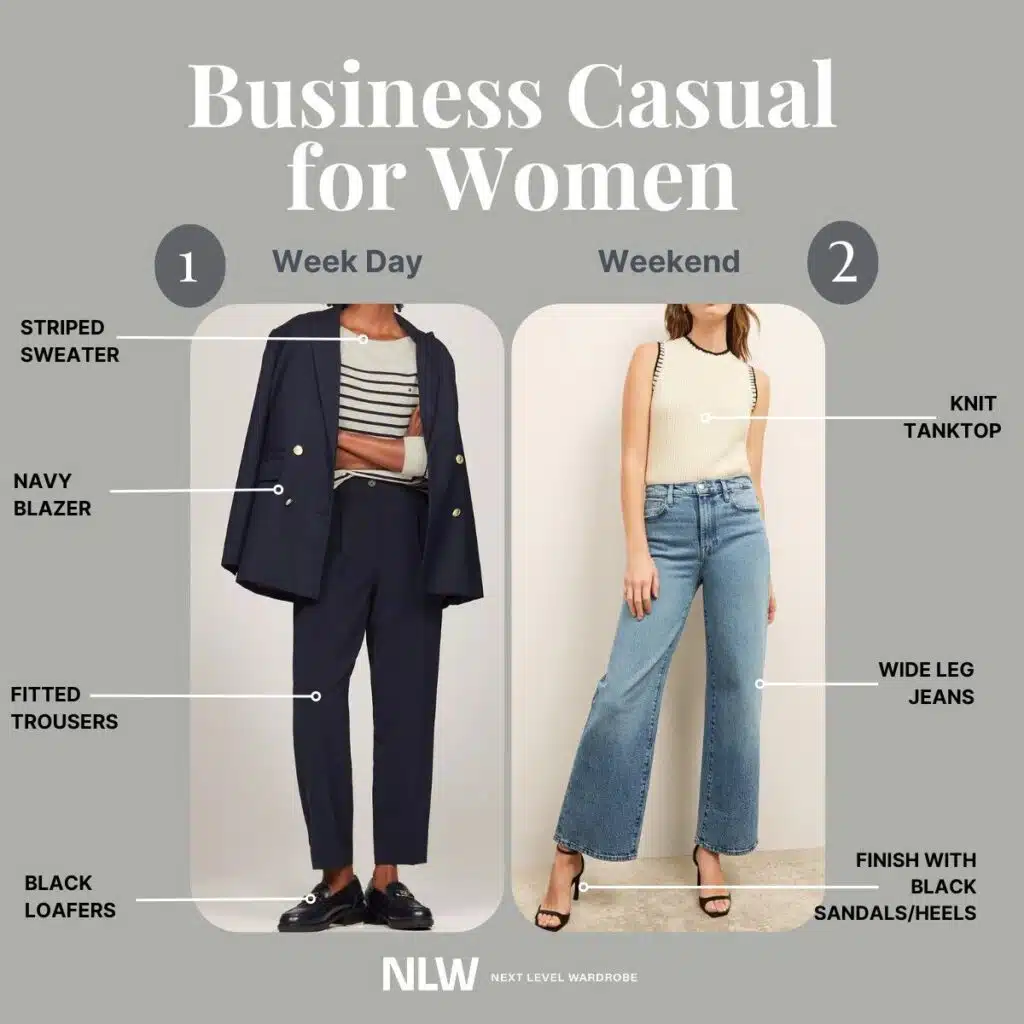
Everyday Office Outfit
- Navy slacks
- White blouse
- Light gray cardigan
- Black flats
You can add a slim belt and a small necklace for a finished look. If your office is cold, keep a neutral blazer at your desk.
Job Interview
- Black pencil skirt
- Light blue button-up shirt
- Structured blazer
- Low heels
Add a simple watch and a neat, medium-sized bag. Stay with classic colors for interviews to look polished and trustworthy.
Casual Friday
Some offices relax rules on Fridays. You could wear:
- Dark jeans
- Patterned blouse
- Neutral sweater
- Loafers
If jeans are not allowed, swap them for chinos. You can add a pop of color with a scarf or jewelry, but keep the rest of your outfit classic.
Meeting Days
- Tailored dress
- Thin belt
- Blazer
- Closed-toe pumps
Choose a dress in a solid color or a subtle print. A blazer adds authority, and a neat hairstyle completes the look.
Cold Weather
- Wool slacks
- Turtleneck sweater
- Tweed blazer
- Ankle boots
Layering is key in winter. You can add a scarf for warmth, but stick to classic patterns like plaid or houndstooth.
Summer Months
- Linen pants
- Short-sleeve blouse (not sleeveless)
- Lightweight cardigan
- Simple flats
Linen is breathable and perfect for hot weather, but it wrinkles easily. Choose a lined pair of pants to avoid see-through problems.
If you have a presentation or need to impress, step up your look with a statement necklace or a silk scarf, but keep the rest of your outfit simple.
Common Mistakes In Business Casual
Even experienced professionals make errors with business casual. Here are mistakes to avoid:
- Wearing clothes that are too tight or too loose.
- Choosing pieces that are too casual, like sneakers or graphic tees.
- Forgetting to check the company dress code.
- Over-accessorizing with large jewelry or bright scarves.
- Wearing wrinkled or stained clothes.
- Ignoring shoes—dirty or worn-out shoes can ruin your look.
- Not considering the office culture; some workplaces are more formal than others.
A non-obvious mistake: Many women forget that fit matters more than brand or price. Even a simple outfit looks sharp if the clothes fit you well.
Another hidden insight: Undergarments matter. Visible bra straps or panty lines can distract and look unprofessional. Choose seamless or nude undergarments to avoid this problem.
A third insight: Confidence shows. If you feel awkward in your clothes, it will show in your body language. Wear outfits that you feel comfortable and confident in, even if they are simple.
Business Casual Across Different Industries
Business casual looks different in each industry. Let’s compare tech, finance, and creative fields.
| Industry | Business Casual Style | Special Notes |
|---|---|---|
| Technology | Relaxed, flexible | Jeans often allowed, sneakers sometimes okay |
| Finance | Conservative, classic | Blazers, slacks, closed-toe shoes required |
| Creative | Artistic, expressive | Bold colors and patterns accepted, but keep it polished |
Some workplaces are shifting towards “dress for your day,” where the dress code changes based on your schedule (client meetings vs. desk work). If you are unsure, observe what other women wear in your office. When in doubt, dress slightly more formal until you know the rules.
Business Casual For Different Body Types
Business casual is not one-size-fits-all. You should pick clothes that suit your body type.
Petite
- Choose fitted clothes, avoid oversized pieces
- Go for vertical lines or small patterns
- Hem pants and skirts so they don’t drag
Short blazers and high-waisted pants can also make legs look longer.
Tall
- Midi skirts and wide-leg pants work well
- Try layers to break up your silhouette
- Avoid clothes that are too short
Long cardigans or dusters can add style and balance.
Curvy
- Structured jackets highlight your shape
- Wrap dresses are flattering
- Avoid clingy fabrics
A-line skirts and tailored pants work well for curves.
Athletic
- Soft fabrics add curves
- Peplum tops create shape
- Straight-leg pants balance proportions
Try blouses with details like ruffles or gathers for added dimension.
Clothing that fits your body boosts confidence and comfort. Don’t be afraid to take clothes to a tailor for small adjustments.
Business Casual For Different Seasons
You need to adjust your business casual wardrobe as seasons change.
Spring
- Light colors
- Cotton blouses
- Trench coat or light blazer
Add a floral scarf or pastel cardigan for a fresh look.
Summer
- Linen pants
- Short-sleeve blouses
- Keep sweat under control with breathable fabrics
Choose lighter colors to stay cool and avoid visible sweat marks.
Fall
- Rich colors like burgundy or olive
- Knit sweaters
- Ankle boots
Layering helps with changing temperatures outside and inside.
Winter
- Wool slacks
- Thick sweaters
- Layering with blazers and scarves
Consider fleece-lined tights or thermal undershirts for extra warmth.
Business Casual For Plus Size Women
Plus size women sometimes struggle to find business casual that flatters. Here are tips:
- Choose clothes with structure, like blazers or A-line skirts
- Avoid thin fabrics that cling
- Use belts to highlight your waist
- Try wrap dresses or tunics with slim pants
Look for tops with a bit of stretch for comfort. Wide straps and V-necks can be more flattering. Many brands now offer plus-size business casual collections. Look for brands with good reviews and real customer photos.
Choose prints carefully; small, repeating patterns often look more professional. It’s also okay to get clothes tailored for a better fit.
Business Casual For Maternity
Pregnant women need comfort and style. Options include:
- Stretchy slacks or maternity dress pants
- Empire waist dresses
- Flowy blouses
- Cardigans for layering
Loose-fitting blazers, wrap sweaters, and soft knit dresses are also helpful. Avoid tight belts or stiff fabrics. Maternity business casual is about flexibility and ease.
You may only need a few special maternity pieces—mix these with your regular cardigans and accessories to keep your style consistent.
Sustainable Business Casual
Many women want to make eco-friendly choices. You can build a sustainable business casual wardrobe by:
- Buying clothes made from organic cotton, bamboo, or recycled materials
- Shopping at thrift stores or second-hand shops
- Choosing brands with ethical practices
A non-obvious tip: Care for your clothes. Washing in cold water and air drying makes clothes last longer. This reduces waste and saves money.
Another sustainable step: Swap clothes with friends or coworkers. If you outgrow a piece or your style changes, pass it on instead of throwing it out. Repairing small holes or missing buttons also extends clothing life.
Business Casual In Remote Work
Remote work has changed business casual for women. Many companies now use video calls, so your top matters more than your bottom.
Tips for video call outfits:
- Wear solid colors; patterns can look distracting on screen
- Choose blouses or sweaters with simple lines
- Avoid noisy jewelry
Keep your background tidy, and avoid tops that blend into your wall. You can still wear comfortable pants or slippers out of view, but be ready to stand up if needed.
If you need to go to the office sometimes, keep a blazer or cardigan handy.
Credit: nextlevelwardrobe.com
How To Transition From Business Formal To Business Casual
If you move from a formal office to a business casual one, you may feel unsure. Here’s how to adjust:
- Start by swapping your suit jacket for a cardigan or casual blazer.
- Replace pencil skirts with midi skirts or dress pants.
- Switch from high heels to low heels or flats.
- Try softer colors instead of only black and navy.
- Add accessories, but keep them simple.
You can also change crisp white shirts for blouses in gentle fabrics. Observe your new colleagues and adjust your style over time.
How To Avoid Looking Too Casual
Some women worry about looking too relaxed. Here are ways to stay professional:
- Always wear closed-toe shoes
- Pick structured pieces like blazers or tailored pants
- Use minimal makeup and neat hair
- Avoid ripped jeans, shorts, or athletic wear
- Check your outfit in the mirror before leaving
A non-obvious insight: Even on casual Fridays, keep one element formal—like a blazer or classic shoes. This shows you respect the workplace.
Another overlooked detail is posture—standing tall and sitting upright adds to a professional image, no matter what you wear.
Business Casual For Special Occasions
Sometimes offices have special events—like team lunches, conferences, or presentations. Business casual can shift for these days.
For presentations:
- Choose a strong color top, like deep blue or burgundy
- Wear a blazer for authority
For team lunches:
- Opt for comfortable pants and a cheerful blouse
For conferences:
- Go with structured dresses and simple heels
If you are attending an after-work event, check if you need to adjust your outfit. Always check if the event has a dress code.
Business Casual For Different Age Groups
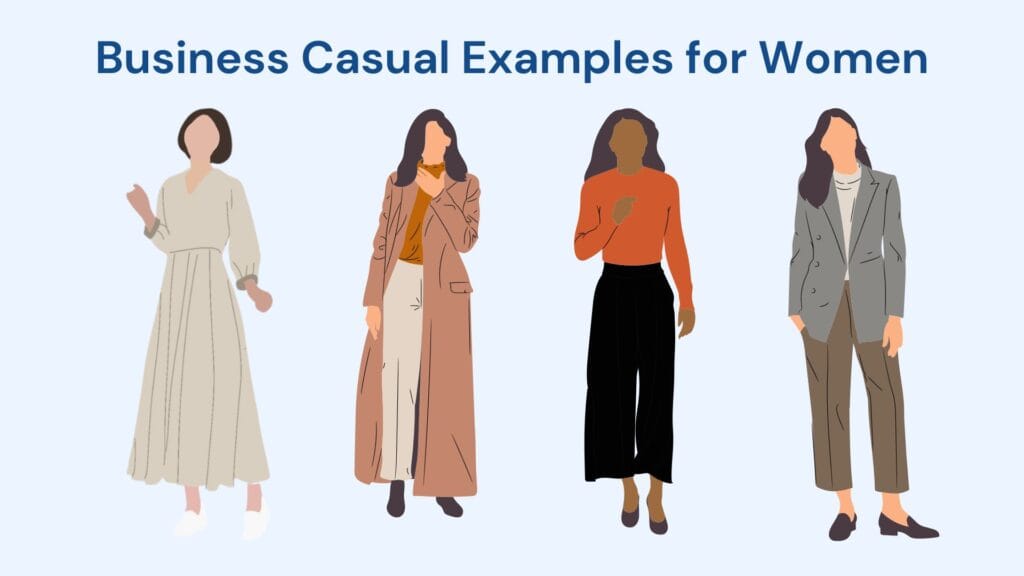
Women of all ages wear business casual. But preferences change.
- Younger women: May prefer trendy items, but keep them office-appropriate (like ankle pants or printed blouses)
- Mid-career: Focus on quality and fit, invest in classic pieces
- Senior professionals: Classic cuts, subtle colors, and elegant accessories
Don’t feel pressured to dress “older” or “younger”—choose pieces that make you feel comfortable and confident. Age is not a limit; confidence and fit matter more.
Credit: www.poseidonion.com
How To Care For Business Casual Clothes
Keeping your business casual wardrobe fresh is important.
- Wash clothes gently, avoid high heat
- Iron or steam blouses and pants
- Store shoes properly; use shoe trees for shape
- Repair small tears or loose buttons quickly
A non-obvious tip: Keep a lint roller in your office or bag. It keeps your outfit sharp, especially if you wear dark colors.
If you wear delicate fabrics like silk or wool, use mesh laundry bags and mild detergent. Regularly air out shoes to avoid odor.
Shopping Tips For Business Casual
When shopping for business casual, keep these points in mind:
- Try clothes on before buying; fit is key
- Check fabric quality and care instructions
- Buy versatile items that match others in your wardrobe
- Look for sales or discounts, but don’t compromise on quality
If shopping online, read sizing guides and check return policies. Many online stores offer free returns, making it easier to experiment.
Keep a list of what you need to avoid buying similar items repeatedly. If you find a brand that fits you well, it’s smart to buy a few basics from them.
Business Casual Around The World
Business casual is not the same everywhere. In the US, it’s often more relaxed. In Europe, it can be more formal. Some Asian countries expect modesty and conservative colors.
If you travel for work, check local expectations. For example, in Japan, business casual may mean a skirt and blouse, but avoid bright colors. In the Middle East, long sleeves and high necklines may be required.
An external resource for global dress codes: BBC Worklife.
Frequently Asked Questions
What Colors Are Best For Business Casual?
Stick to neutral colors like black, navy, gray, beige, or white. You can add soft colors like light blue or pale pink. Avoid neon or very bright colors unless your workplace allows it. If you want to try prints, start with small checks or classic stripes.
Are Jeans Ever Business Casual?
Dark, well-fitted jeans may be acceptable in some offices, especially creative or tech companies. Avoid distressed, ripped, or light-wash jeans. Always check your company policy before wearing jeans. If in doubt, choose dress pants.
Can I Wear Open-toe Shoes?
Most business casual dress codes require closed-toe shoes. Open-toe heels or sandals may be allowed in some places, but it’s safer to stick with closed-toe styles, especially for meetings or interviews. Peep-toe shoes are sometimes accepted in the summer, but always check the rules.
How Can I Look Stylish While Staying Professional?
Choose clothes that fit well and add one or two accessories. Try mixing textures, like a silk blouse with wool pants. Use color in small amounts—like a patterned scarf or a colored cardigan. The key is balance. Shoes and bags in good condition also make a big difference.
What Are The Best Brands For Business Casual?
Brands like Ann Taylor, Banana Republic, J.Crew, and Nordstrom offer good business casual options. Look for brands that focus on quality and fit. Many stores now offer plus-size and petite lines. Local department stores may also have hidden gems.
Business casual for women is flexible, but also requires attention to detail. With the right pieces, careful planning, and an understanding of your office culture, you can build a wardrobe that feels comfortable and professional. You don’t need to spend a fortune or follow every trend—focus on fit, quality, and your own style.
If you keep these tips in mind, you’ll never feel unsure about what business casual means for women.
