

What Does Business Casual Mean? Dress Code Explained
What Does Business Casual
Business casual is a phrase you hear often in workplaces, interviews, and networking events. But what does it actually mean? The answer is not always simple. Business casual can look different depending on the company, country, industry, and even the specific day. Many people feel confused by the term, unsure of what to wear or how to act. This article will help you understand business casual fully, so you can feel confident and comfortable in any setting. We will break down what business casual is, what it is not, and how to make the right choices for your own situation. You will see examples, tips, and some common mistakes people make. By the end, you will know exactly how to dress and behave in a business casual environment.
Defining Business Casual
The term business casual is a mix of professional and relaxed. It is less formal than traditional business wear, like suits and ties, but still more polished than casual clothes. Business casual is meant to help employees feel comfortable while keeping a neat, respectful appearance.
Key Elements
- Professional look: Not as formal as a suit, but still tidy.
- Comfortable: You can move easily, sit, and work without feeling restricted.
- Appropriate for the workplace: Avoid clothes that are too relaxed, too tight, or too revealing.
Business casual is not the same everywhere. Some companies are stricter, others are more flexible. In some places, jeans are allowed; in others, they are not. Always check your company’s dress code or ask someone if you are unsure.
Typical Business Casual Clothing
Business casual is about balance. You want to look smart, but not overdressed. Here are the most common items in a business casual wardrobe:
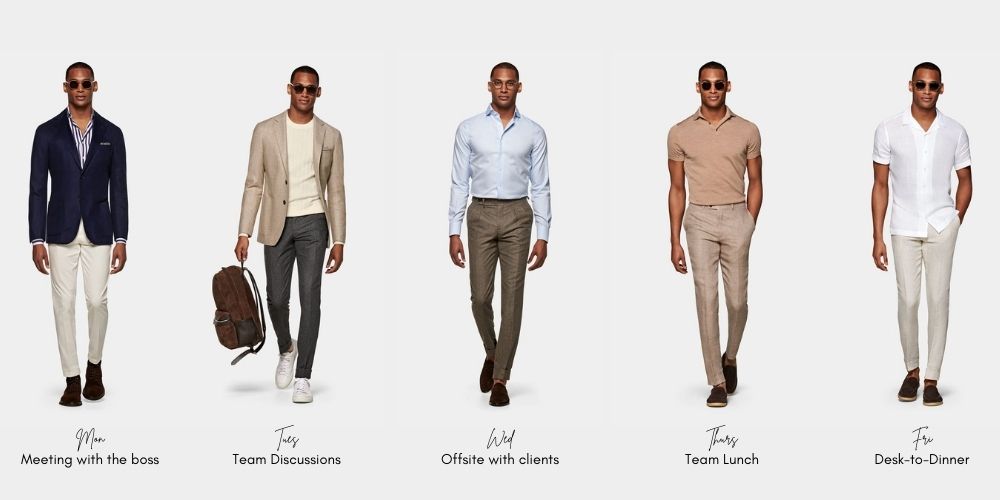
For Men
- Shirts: Collared shirts, button-downs, polo shirts
- Pants: Slacks, chinos, khakis
- Sweaters: Cardigans, pullover sweaters
- Shoes: Loafers, dress shoes, sometimes clean sneakers
- Blazers: Optional, adds polish
- Belts: Simple, matches shoes
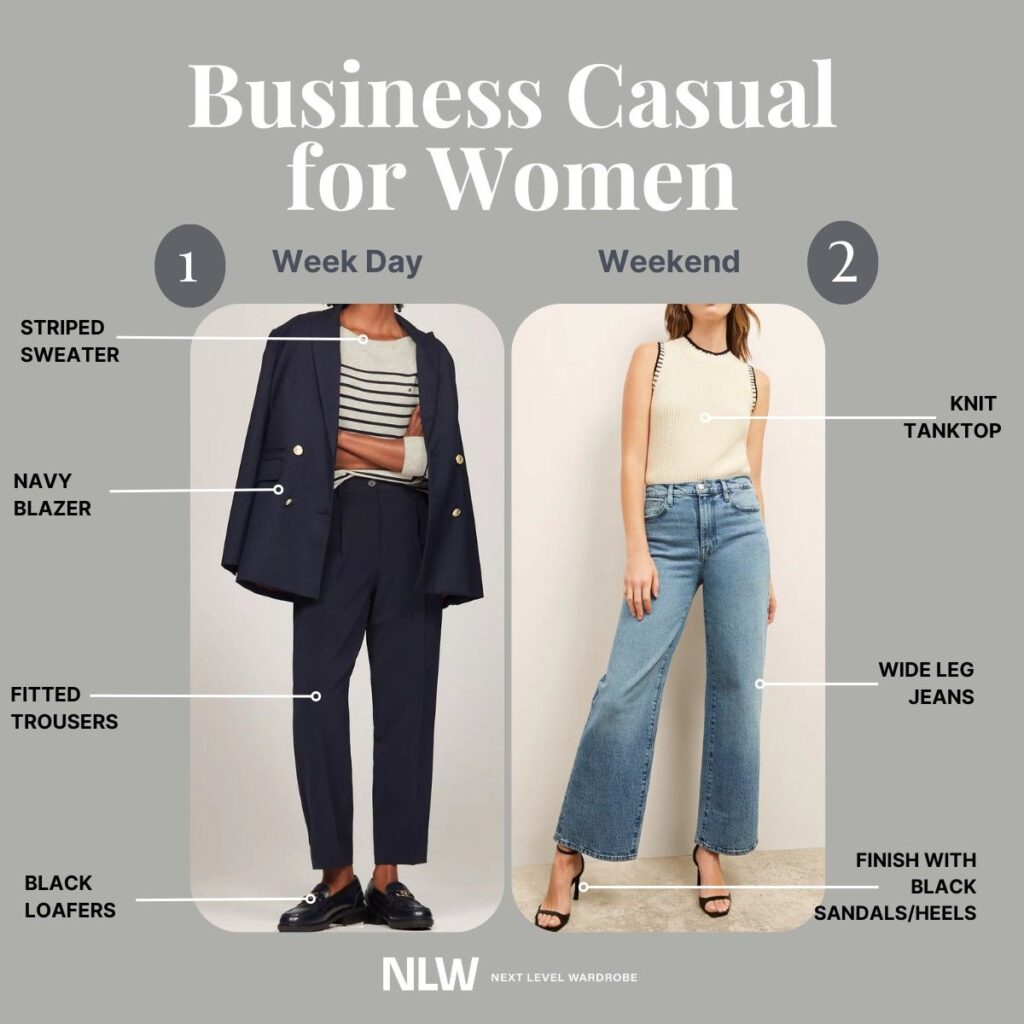
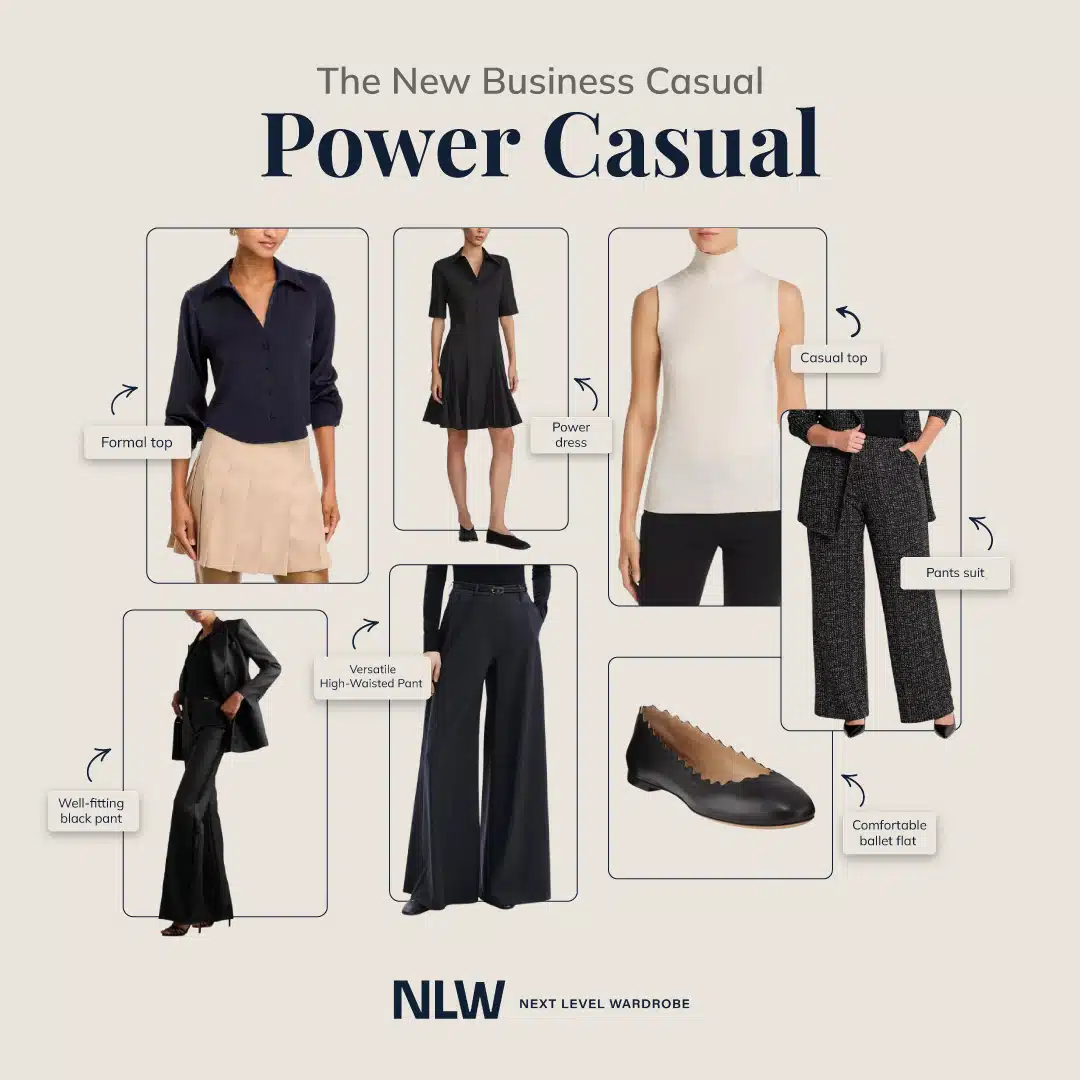
For Women
- Blouses: Button-up, knit tops, modest necklines
- Pants: Dress pants, chinos, tailored trousers
- Skirts: Knee-length or longer, no mini skirts
- Dresses: Professional, not too tight or short
- Sweaters/Cardigans: Adds warmth and style
- Shoes: Flats, low heels, loafers
Some companies allow dark, clean jeans as part of business casual, but not all. Avoid ripped jeans, shorts, tank tops, and flip-flops. If you are new to a company, start with more formal business casual and adjust as you see what others wear.
Common Accessories
- Simple jewelry: Small earrings, watches, wedding rings
- Neat bags: Leather or professional-looking backpacks
- Scarves: Adds color, but keep it subtle
- Ties: Not required, but can be worn
Business Casual Vs Other Dress Codes
Business casual sits between formal business and true casual. Let’s compare them in a simple way.
| Dress Code | Typical Clothing | Occasion |
|---|---|---|
| Formal Business | Suits, ties, dress shoes | Interviews, board meetings |
| Business Casual | Collared shirts, slacks, modest dresses | Most office days, networking events |
| Casual | Jeans, t-shirts, sneakers | Casual Fridays, creative offices |
The business casual style is often the default for many offices. It is flexible, but not too relaxed. Understanding these differences helps you avoid mistakes and dress correctly for every situation.
Why Business Casual Matters
Business casual has become popular because it offers both comfort and professionalism. It lets employees focus on their work without worrying about their clothes. Here are some reasons why companies choose business casual:
- Boosts morale: Employees feel better when they are comfortable.
- Encourages creativity: Less strict clothing can help people think more freely.
- Attracts talent: Younger workers often prefer relaxed dress codes.
- Saves money: Employees don’t need expensive suits.
A study by the Society for Human Resource Management found that over 50% of offices now use business casual for their everyday dress code. This shows how important it is to understand and follow business casual rules.
Choosing The Right Business Casual Outfit
Picking the right outfit can be tricky, especially when you are new to a company or unsure about the rules. Here are steps to help you:
- Read the company dress code: Many companies share guidelines.
- Observe others: Watch what colleagues wear, especially managers.
- Start formal, adjust later: Begin with more professional clothes, then relax if you see others do.
- Pick safe choices: Neutral colors, clean lines, nothing too flashy.
- Check for fit and comfort: Clothes should not be too tight or loose.
Some companies have different rules for men and women, so pay attention. If in doubt, ask Human Resources or your manager.
Practical Examples
Let’s look at two sample outfits for business casual:
- Men: Navy chinos, light blue button-down shirt, brown loafers, simple belt, no tie.
- Women: Black dress pants, cream blouse, gray cardigan, black flats, small earrings.
Both outfits are professional, comfortable, and suitable for most business casual offices.
What To Avoid In Business Casual
Many beginners make mistakes when choosing business casual clothes. Here are common things to avoid:
- Too casual: No t-shirts, shorts, hoodies, or gym shoes
- Too formal: No full suits or evening dresses
- Poor fit: Baggy or tight clothes look unprofessional
- Bright colors: Neon or flashy prints can distract
- Heavy perfumes: Avoid strong scents
- Revealing clothes: No low-cut tops, mini skirts, or see-through fabrics
Some companies allow jeans, but only if they are dark, clean, and paired with a smart top. If you are unsure, stick to classic business casual items until you know the rules.
Credit: ardenteal.com
Business Casual Around The World
Business casual is not the same everywhere. Different cultures have different ideas of what is appropriate. Here are some examples:
- United States: Mostly relaxed, jeans sometimes allowed
- Europe: More formal, blazers are common, jeans less popular
- Asia: Professional look, often with ties for men, skirts for women
- Australia: Very relaxed, polos and chinos are common
Some countries value tradition and formality. Others are more flexible. If you travel or work in an international company, ask for local advice or observe what others wear.
Cultural Insights
One non-obvious insight is that in some Asian countries, business casual may still include dress shoes and a tie for men, even if suits are not required. In Scandinavian countries, layering is common because of the cold weather, so sweaters and cardigans are often seen.
Business Casual For Specific Industries
Business casual can change depending on your job. Some industries are stricter, others are more relaxed.
| Industry | Business Casual Example | Common Exceptions |
|---|---|---|
| Finance | Blazers, dress pants, polished shoes | No jeans, often no polo shirts |
| Tech | Jeans, polos, sneakers | More casual allowed |
| Education | Button-downs, khakis, cardigans | Comfort is key |
| Healthcare (Admin) | Dress pants, blouses, flats | Scrubs for clinical roles |
If you switch industries, always check the new dress code. A business casual outfit in tech may not work in finance.
Credit: nextlevelwardrobe.com
Business Casual For Remote Work
With more people working from home, business casual has changed. Many companies now expect employees to dress business casual for video calls, even if they are at home.
Tips For Remote Business Casual
- Keep the top professional: Shirts, blouses, sweaters
- Comfort on the bottom: You can wear jeans or even sweats, but only if not visible
- Good lighting: Makes you look sharp on screen
- Avoid distractions: No loud prints or accessories
Some companies have relaxed the rules, but if you are in doubt, dress as you would in the office for important meetings.
Business Casual For Interviews
Many people ask what to wear for a job interview. Business casual is often a safe choice, unless the company asks for formal business wear.
Interview Outfit Tips
- Choose classic colors: Navy, black, gray, white
- Avoid jeans: Unless you know the company allows them
- Wear clean, polished shoes
- Keep accessories minimal
- Iron your clothes: Wrinkles look unprofessional
Researching the company before your interview can help. Look at their website or social media to see how employees dress.
Business Casual For Events
Business casual is common for networking events, seminars, and work parties. The key is to look smart but not overdressed.
Event Outfit Tips
- Dress in layers: Cardigans, blazers, sweaters
- Bring a neat bag: For notebooks or laptops
- Avoid loud prints: Keep it simple
- Be comfortable: You may stand or walk for hours
Some events, like after-work parties, allow more relaxed clothes. But always start with business casual unless told otherwise.
Common Mistakes In Business Casual
Even experienced workers make mistakes. Here are some non-obvious pitfalls:
- Ignoring company changes: Dress codes can change. Always check for updates.
- Misreading the culture: Some offices want more formal, others more relaxed.
- Confusing business casual with smart casual: Smart casual can include jeans and trendy items, but business casual is safer and more classic.
- Wearing old or damaged clothes: Even business casual should look fresh and well-kept.
If you are unsure, ask someone you trust in the company. It is better to be slightly overdressed than too relaxed.
How To Build A Business Casual Wardrobe
If you are starting from zero, building a business casual wardrobe can feel overwhelming. Here is a step-by-step guide:
- Start with basics: Buy 2-3 pairs of dress pants, 3-5 shirts/blouses, 2 sweaters.
- Choose neutral colors: Navy, black, gray, white, beige.
- Add 1-2 pairs of shoes: Loafers, flats, dress shoes.
- Get a blazer or cardigan: Adds style and warmth.
- Check fit and comfort: Try everything on before buying.
- Add accessories slowly: Simple jewelry, neat bag.
Avoid buying trendy items that may go out of style. Stick with classic pieces that can mix and match.
Caring For Business Casual Clothing
Business casual clothes need care to look their best. Here are some tips:
- Wash gently: Use mild soap, cold water for most items.
- Iron or steam: Wrinkles make even the best outfit look bad.
- Store properly: Hang shirts, fold sweaters, keep shoes clean.
- Check for damage: Fix buttons, remove stains quickly.
Good care helps your clothes last longer and saves money. Avoid dry cleaning unless needed.
Business Casual For Different Body Types
Finding business casual clothes that fit your body type can be hard. Here are some practical suggestions:
- Tall people: Look for longer pants and shirts.
- Petite people: Choose clothes with short sleeves, small collars.
- Plus-size: Choose clothes with structure, not too tight or loose.
- Athletic build: Avoid clothes that are too slim, look for relaxed fits.
Many brands now offer sizes for different body types. Try clothes on before buying, and don’t be afraid to ask for advice.
Business Casual And Sustainability
More companies now want employees to buy clothes that are eco-friendly. Sustainable business casual means picking items made from organic or recycled materials.
Tips For Sustainable Wardrobe
- Choose natural fibers: Cotton, linen, wool.
- Buy less, buy better: Quality items last longer.
- Recycle old clothes: Donate or use for home projects.
- Check brand values: Some brands use fair labor and eco-friendly materials.
Sustainable clothing helps the planet and often feels more comfortable. For more information, you can visit Sustainable Fashion.
Credit: nextlevelwardrobe.com
Business Casual For Different Seasons
Weather affects what you wear. Business casual changes with the seasons.
Spring/summer
- Light fabrics: Cotton, linen
- Short sleeves: Polo shirts, blouses
- Lighter colors: White, beige, light blue
- Comfortable shoes: Loafers, flats
Fall/winter
- Warm fabrics: Wool, thick cotton
- Layers: Sweaters, cardigans, blazers
- Dark colors: Navy, black, gray
- Boots or closed shoes: Keep feet warm
Some offices use air conditioning, so keep a sweater or cardigan handy even in summer.
Making Business Casual Your Own
Business casual does not mean boring. You can add your own style, but keep it professional.
Ways To Show Personality
- Add color: Use a scarf, tie, or blouse in a favorite color.
- Pick unique accessories: A watch, belt, or bag can stand out.
- Try patterns: Subtle stripes or checks.
Just avoid anything too loud or distracting. Your clothes should help you feel confident and comfortable.
Comparing Business Casual Brands
Many brands offer business casual clothes. Here’s a simple comparison.
| Brand | Price Range | Style Notes |
|---|---|---|
| Banana Republic | Medium-High | Classic, modern |
| Uniqlo | Low-Medium | Simple, good basics |
| J.Crew | Medium | Trendy, colorful |
| Brooks Brothers | High | Traditional, quality fabrics |
Try different brands and see what fits your body and budget. Sometimes, less expensive brands offer the best comfort.
Frequently Asked Questions
What Is The Main Difference Between Business Casual And Formal Business Attire?
Business casual is less strict than formal business. You do not need a suit or tie, but you should still look neat and professional. Formal business requires a suit, tie, and dress shoes for men; a tailored dress or suit for women.
Can I Wear Jeans In A Business Casual Environment?
It depends on the company. Some offices allow dark, clean jeans as part of business casual, but others do not. Always check the dress code or ask your manager before wearing jeans.
Are Sneakers Allowed In Business Casual?
Usually, sneakers are not part of business casual. However, some tech or creative companies allow clean, simple sneakers. Avoid athletic or flashy styles.
Is Business Casual The Same For Men And Women?
The basic idea is the same: look professional and comfortable. However, specific items differ. Men wear collared shirts and slacks; women wear blouses, dress pants, skirts, or dresses. Both should avoid overly casual or revealing clothes.
What Should I Do If I Am Unsure About The Dress Code?
Start with more formal business casual items, like dress pants and a collared shirt. Observe what colleagues wear and adjust. If you are still unsure, ask Human Resources or your manager for advice.
Business casual is a flexible dress code, but it has clear rules. It is about looking professional, feeling comfortable, and fitting in with your company’s culture. Whether you are new to the workplace or just want to update your style, understanding business casual will help you succeed.
Remember, it is always better to be slightly overdressed than too relaxed. With the right choices, you can feel confident every day.
