

What Does a Large T Shirt Weigh? Complete Guide to T-Shirt Weights
What Does A Large T Shirt Weigh
Choosing the right t-shirt size is important for comfort, but have you ever wondered how much a large t-shirt weighs? This question matters more than you might think. Whether you’re shipping shirts for a business, packing for travel, or just curious about your laundry, the weight of a t-shirt can affect decisions. But the answer is not simple—t-shirt weight depends on fabric, style, and even the brand. In this article, we’ll explore every detail about the weight of a large t-shirt, including real examples, different materials, and why weight matters in everyday situations.
Understanding T-shirt Sizing
A large t-shirt is a common size for adults. But sizing is not always the same everywhere. In North America, a large t-shirt usually means a chest width of about 22 inches (56 cm) and a body length of around 30 inches (76 cm). In Europe or Asia, the numbers might be a bit different. Brands can also have their own size charts, which makes things confusing.
When talking about the weight of a t-shirt, most people mean a basic, short-sleeve crew neck. Specialty shirts—like long-sleeve, polo, or fashion-fit—can weigh more or less than a standard t-shirt.
What Factors Affect T-shirt Weight?
Many people think all t-shirts weigh the same. This is not true. Here are the main factors that change the weight of a large t-shirt:
- Fabric Type: Cotton, polyester, and blends all have different weights.
- Fabric Thickness (GSM): GSM means grams per square meter. Higher GSM means a thicker, heavier shirt.
- Weave and Finish: How the fabric is made and finished changes the feel and weight.
- Style and Design: Features like pockets, prints, or long sleeves add weight.
- Brand and Sizing: Some brands make larger or longer shirts for the same “large” size.
Let’s look deeper at each factor so you can understand what makes one large t-shirt heavier than another.
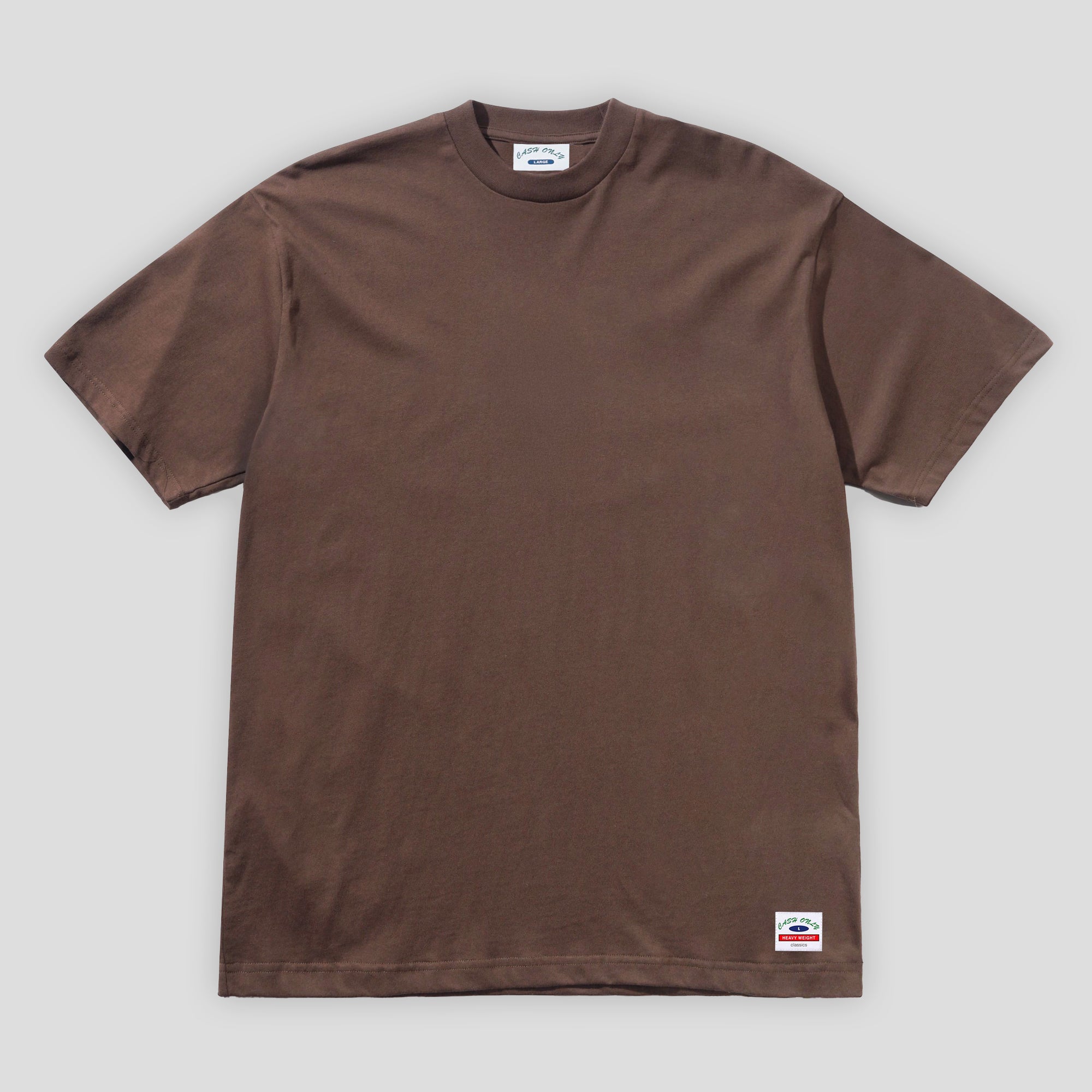
Credit: passportal.com
Fabric Types And Their Weights
The most important detail is the t-shirt fabric. Here are the most common types:
100% Cotton
Cotton t-shirts are soft, breathable, and most popular worldwide. A basic large cotton t-shirt usually weighs between 5 and 7 ounces (140–200 grams). But not all cotton is the same. “Ring-spun” or “combed” cotton is lighter and softer than regular carded cotton.
Polyester
Polyester t-shirts are common for sports and activewear. They are lightweight, resist wrinkles, and dry quickly. Large polyester t-shirts often weigh a bit less—around 4 to 6 ounces (113–170 grams).
Cotton-polyester Blends
Many brands use a 50/50 blend to get the best of both fabrics. Blended shirts usually weigh 5 to 6 ounces (140–170 grams) for a large. They are soft, hold color well, and last longer.
Other Materials (rayon, Bamboo, Modal)
Some shirts use rayon, bamboo, or modal for extra softness or performance. These shirts can be even lighter—sometimes 3.5 to 5 ounces (100–140 grams) for a large—but prices are higher.
Comparing Fabric Weights
Here’s a quick comparison of average weights for a large t-shirt by fabric:
| Fabric | Average Weight (Large T-shirt) |
|---|---|
| 100% Cotton | 5–7 oz (140–200g) |
| Polyester | 4–6 oz (113–170g) |
| 50/50 Blend | 5–6 oz (140–170g) |
| Rayon/Bamboo/Modal | 3.5–5 oz (100–140g) |
Gsm: The Fabric Weight Standard
GSM stands for grams per square meter. It tells you how thick and heavy the fabric is. Most t-shirts range from 120 GSM to 200 GSM. Here’s how GSM affects a large t-shirt’s weight:
- 120–150 GSM: Lightweight. Feels thin, good for summer.
- 150–180 GSM: Medium weight. Standard for most t-shirts.
- 180–200+ GSM: Heavyweight. Feels thick, more for colder weather.
A large t-shirt made from 180 GSM cotton will weigh more than one made from 130 GSM polyester.
How Much Does A Large T Shirt Weigh? Real Examples
To give you a clear idea, here are some real large t-shirts from well-known brands:
- Gildan Ultra Cotton (100% cotton, heavy): About 6.1 oz (173g)
- Hanes ComfortSoft (100% cotton, midweight): Around 5.2 oz (147g)
- Fruit of the Loom HD Cotton (100% cotton, lightweight): Close to 5 oz (142g)
- Bella+Canvas 3001 (ringspun cotton, lightweight): About 4.2 oz (119g)
- Champion Performance Tee (polyester, athletic): Around 4.1 oz (116g)
These numbers show that a large t-shirt can weigh anywhere from about 4 ounces (113g) to 7 ounces (200g) depending on material and style.
Why T-shirt Weight Matters
You might wonder, “Why should I care about t-shirt weight?” There are some practical reasons:
1. Shipping Costs
If you sell or ship shirts, weight affects postage costs. Many shipping companies charge extra for every ounce or gram over the limit. A shipment of 100 large t-shirts can be a lot heavier—and more expensive—if you choose heavyweight shirts.
2. Comfort And Climate
A lightweight t-shirt (lower GSM) is better for hot weather. Heavyweight shirts are warmer and more durable. Some people prefer the feel of a heavier shirt, while others want something light and cool.
3. Printing And Customization
Thicker shirts hold ink and embroidery better. If you want a custom design, check the GSM and fabric type to get the best result.
4. Bulk And Storage
If you’re packing for travel, a lighter shirt means more space in your bag. For events or uniforms, lighter shirts are easier to store and carry.
T-shirt Weight Vs. Thickness
People often think a heavier t-shirt is always thicker. This is not always true. Some fabrics are dense but still feel thin. For example, some polyester shirts can feel very light but still weigh as much as a cotton shirt.
Always check both the weight (in ounces or grams) and the GSM if you need a certain feel.
How To Weigh A Large T Shirt At Home
If you want to know the exact weight of your own shirt, you can measure it easily. Here’s how:
- Use a kitchen or postal scale. Make sure it can measure small weights accurately.
- Lay the shirt flat. Remove anything extra (tags, hangers, etc. ).
- Place the shirt on the scale. Read the number in grams or ounces.
If you don’t have a scale, you can guess based on the tag. Most brands print the weight in ounces (for example, “5. 3 oz”) on the tag or packaging.
T-shirt Styles And Their Weights
Not all t-shirts are the same style. Here are some popular large t-shirt styles and how their weights can change:
Basic Short Sleeve
This is the classic t-shirt. Most large short sleeve shirts weigh between 4 and 6 ounces (113–170g).
Long Sleeve
Long sleeves add more fabric, so a large long sleeve t-shirt usually weighs 6 to 8 ounces (170–225g), depending on the material.
V-neck
A v-neck uses about the same fabric as a crew neck, so the weight is nearly the same—maybe a few grams less if the v is deep.
Pocket Tees
Adding a pocket can add 0. 2 to 0. 5 ounces (5–15g).
Fashion-fit Or Slim-fit
Fashion or slim-fit shirts use less fabric because they fit tighter. They can be 0.5 to 1 ounce (15–30g) lighter than regular large shirts.
How Brand And Country Affect T-shirt Weight
Different brands use different sizing and fabric standards. For example, a “large” from an Asian brand might be smaller and lighter than a “large” from a US brand. Always check the measurements and fabric details.
Here’s a comparison of similar large t-shirts from different regions:
| Brand/Region | Chest Width (inches) | Weight (oz) |
|---|---|---|
| American Brand | 22 | 6.0 |
| European Brand | 21 | 5.5 |
| Asian Brand | 20 | 5.0 |
The numbers above show why it’s important to look at both size and weight before buying or shipping shirts.
Credit: www.nike.com
T-shirt Weight In Bulk: Shipping, Storage, And Events
If you’re ordering t-shirts in bulk for a team, event, or business, knowing the weight is critical. Here’s why:
- Shipping 100 heavyweight large t-shirts (6.5 oz each) = about 650 oz (41 lbs or 18.6 kg)
- Shipping 100 lightweight large t-shirts (4.5 oz each) = about 450 oz (28 lbs or 12.7 kg)
That’s a big difference for shipping costs and handling.
For storage, lighter shirts take up less space. For example, 200 lightweight shirts can fit in one large box, while heavyweight shirts may need two.
Environmental Impact Of T-shirt Weight
Many people don’t think about how t-shirt weight affects the environment. Heavier shirts use more material and energy to make, ship, and wash. Lighter shirts save resources but may not last as long. If you want to reduce your impact, choose shirts that balance comfort, durability, and weight.
How T-shirt Weight Affects Laundry
Washing a load of heavy shirts uses more water and energy. For example, 10 heavyweight t-shirts can weigh as much as 15 lightweight ones. This means you can wash more shirts at once if they are lighter. Also, lighter shirts dry faster, saving time and electricity.
T-shirt Weight And Printing Quality
If you want to print your own design, the shirt’s weight matters. Heavier shirts (higher GSM) can handle more ink and look brighter. Lightweight shirts may let the print fade or bleed through. For screen printing, a midweight or heavyweight (5.
5 to 6. 5 oz) shirt is usually best.
Common Myths About T-shirt Weight
There are some misunderstandings about t-shirt weight:
- Myth: All large t-shirts weigh the same.
- Fact: Even shirts of the same size can have big weight differences based on fabric and brand.
- Myth: Heavier shirts are always better quality.
- Fact: Some lightweight shirts are high quality, soft, and durable.
- Myth: Weight doesn’t matter.
- Fact: For shipping, comfort, and printing, weight makes a big difference.
Understanding these myths helps you make smarter choices.
Real-world Uses: Why People Care About T-shirt Weight
Shipping And E-commerce
Online sellers often choose lighter shirts to keep shipping costs low. Saving just 1 ounce per shirt can mean big savings when selling worldwide.
Sports And Fitness
Athletes prefer lightweight polyester shirts because they stay dry and don’t weigh you down during activity.
Fashion And Everyday Wear
Some people love the feel of a thick shirt, while others want something barely noticeable. The right weight depends on your style and needs.
Events And Promotions
If you’re giving away shirts at an event, lighter shirts cost less and are easier to hand out and store.
Tips For Choosing The Right T-shirt Weight
Here are some tips to help you pick the best large t-shirt:
- Know your purpose. For hot weather or sports, choose lightweight. For lasting durability, pick heavyweight.
- Check GSM and fabric. Don’t trust just the “weight” in ounces—look for GSM for more accuracy.
- Try before you buy. If possible, wear different shirts to see what feels best.
- Check the size chart. Sizing can affect weight, so always compare measurements.
- Think about printing. If you want to add a logo or design, midweight shirts work best.
How To Read T-shirt Labels For Weight
Many brands include fabric weight on the label or in the product name. For example, you might see:
- “5.3 oz 100% Cotton”
- “4.2 oz Ringspun Cotton”
- “6 oz Heavyweight”
If the label does not list the weight, check the manufacturer’s website. Some companies use GSM or just call shirts “lightweight,” “midweight,” or “heavyweight. ”

Credit: www.kularfashion.com
Why Exact Weight Can Vary
Even within the same brand and style, there can be small changes in weight. Factories sometimes use different batches of fabric. Washing and drying can also change the weight slightly, as cotton shrinks and gets denser.
T-shirt Weight For Travel And Packing
If you travel often, lighter shirts are your friend. You can pack more shirts in the same space and your suitcase will weigh less. For hiking, sports, or trips where you wash shirts by hand, fast-drying polyester shirts are the best choice.
Comparing T-shirt Weights For Different Activities
To make things clearer, here’s a table showing the best t-shirt weight for common activities:
| Activity | Recommended Weight | Best Fabric |
|---|---|---|
| Sports/Fitness | 4–5 oz (113–142g) | Polyester |
| Hot Weather | 3.5–5 oz (100–142g) | Cotton or Blend |
| Everyday Wear | 5–6 oz (142–170g) | Cotton or Blend |
| Cool Weather | 6–7 oz (170–200g) | Heavy Cotton |
| Printing/Custom | 5.5–6.5 oz (156–184g) | Mid or Heavy Cotton |
Non-obvious Insights Most Beginners Miss
Many people ignore the shrinkage factor. A large cotton t-shirt can lose up to 10% of its weight and size after washing. Always consider this when buying for resale or events. Another overlooked fact: moisture content. Freshly washed shirts can weigh more because cotton holds water. For the most accurate measurement, weigh shirts when they are dry.
How To Choose A T-shirt For Printing Or Branding
If you plan to print logos or graphics, don’t choose the lightest shirt just to save money. Lightweight shirts can show the print on the back, and colors may look faded. Midweight (5–6 oz) cotton or blends give the best results for most print methods.
Are Heavier Shirts Always More Durable?
Heavier shirts are often more durable, but not always. Some lightweight high-quality shirts last longer than cheap heavy shirts. The way the fabric is made (ringspun, combed, open-end) matters as much as the weight. Ringspun and combed cotton feel softer and last longer, even if they are lighter.
Final Thoughts On Large T-shirt Weight
A “large t-shirt” is not a single, fixed weight. The number can range from about 4 ounces (113g) to 7 ounces (200g) or even more, depending on fabric, style, and brand. The best shirt for you depends on your needs—comfort, durability, cost, or printing. Always check both the weight and GSM before buying, especially if you’re ordering in bulk or for a special project. Understanding these details will help you choose shirts that fit your purpose, your budget, and your style.
If you want to explore more about clothing materials and standards, you can visit the T-shirt Wikipedia page for in-depth information.
Frequently Asked Questions
How Much Does A Typical Large Cotton T-shirt Weigh?
A regular large cotton t-shirt usually weighs between 5 and 7 ounces (140–200 grams). The exact weight depends on the fabric’s thickness and the brand.
Does T-shirt Weight Change After Washing?
Yes, especially for cotton shirts. They can shrink and lose up to 10% of their weight after the first few washes. Shirts also hold water after washing, so always weigh them when dry for the best accuracy.
Are Lightweight T-shirts Less Durable?
Not always. Some lightweight shirts are made with high-quality cotton or blends and last a long time. However, very thin shirts may wear out faster if used for heavy activities.
What Is Gsm, And Why Is It Important?
GSM (grams per square meter) measures fabric thickness. A higher GSM means a thicker, heavier shirt. It’s a good way to compare the quality and feel of different t-shirts, even if the weights in ounces are similar.
How Can I Find The Weight Of A T-shirt Before Buying?
Check the product label or description. Most brands list the weight (like “5. 3 oz”) or the GSM. If not, look on the manufacturer’s website or ask the seller for details.
A better understanding of t-shirt weight makes shopping, printing, and wearing your favorite shirts easier and smarter.
