

What Business Casual Attire: Essential Tips for Modern Professionals
What Business Casual Attire
Business casual attire has become a popular dress code in workplaces around the world. It’s not as formal as traditional business wear, but it’s also not as relaxed as casual clothing. Many employees and employers struggle to understand what business casual really means, and how to dress for it.
If you want to look professional but comfortable, mastering business casual is essential. This article will help you understand business casual attire, why it matters, and how to build a wardrobe that fits this style.
Let’s explore the meaning of business casual, the key items for men and women, practical examples, common mistakes, and tips for creating your own business casual look. You’ll also see comparisons with other dress codes, and answers to popular questions.
Whether you’re starting a new job or updating your wardrobe, this guide will help you make confident, stylish choices.
What Is Business Casual?
Business casual is a dress code that blends professional and relaxed clothing. It allows employees to look polished without wearing full suits or very formal outfits. The goal is to appear neat and approachable, but still respectful of the workplace.
Business casual usually means wearing slacks, dress shirts, blouses, skirts, and closed-toe shoes. It avoids jeans, t-shirts, sneakers, or flashy accessories. However, business casual can vary depending on the company, country, or industry. In some tech companies, business casual might be more relaxed, while in law firms, it could be stricter.
Key Elements Of Business Casual
- Clean, well-fitted clothes
- Professional appearance
- Comfortable but not sloppy
- Neutral or muted colors
- Limited accessories
Business casual sits between traditional business attire (like suits and ties) and casual wear (like jeans and t-shirts). Many offices choose business casual because it helps employees feel comfortable and focused, while still maintaining a professional image.
Why Business Casual Matters
Workplace dress codes affect how people feel and behave. Business casual can help employees:
- Feel more relaxed and productive
- Express personality without being too bold
- Build trust with clients and colleagues
A survey by LinkedIn found that 56% of professionals prefer business casual over formal business wear. Companies also report higher job satisfaction when employees aren’t forced into strict dress codes.
Business Casual For Men
Choosing business casual for men means combining comfort with professionalism. It’s important to pick items that look neat and fit well.
Essential Clothing Items
- Dress shirts (button-down or polo)
- Slacks (khakis, chinos, or dress pants)
- Sweaters or cardigans
- Blazers (optional, but useful)
- Leather shoes (loafers, oxfords, or brogues)
- Belts (matching shoes)
Avoid jeans, shorts, graphic t-shirts, athletic shoes, and flashy jewelry. If in doubt, choose simple, clean pieces.
Example Business Casual Outfit For Men
- Light blue dress shirt
- Gray chinos
- Brown leather belt
- Navy sweater
- Brown loafers
This outfit works for most offices and meetings, and can be adjusted with a blazer for more formal days.
Non-obvious Insights For Men
- Many beginners forget about fit. Baggy or tight clothes look unprofessional, even if they’re business casual.
- Shoes matter more than most realize. Polished, well-kept shoes instantly upgrade your look.
Business Casual For Women
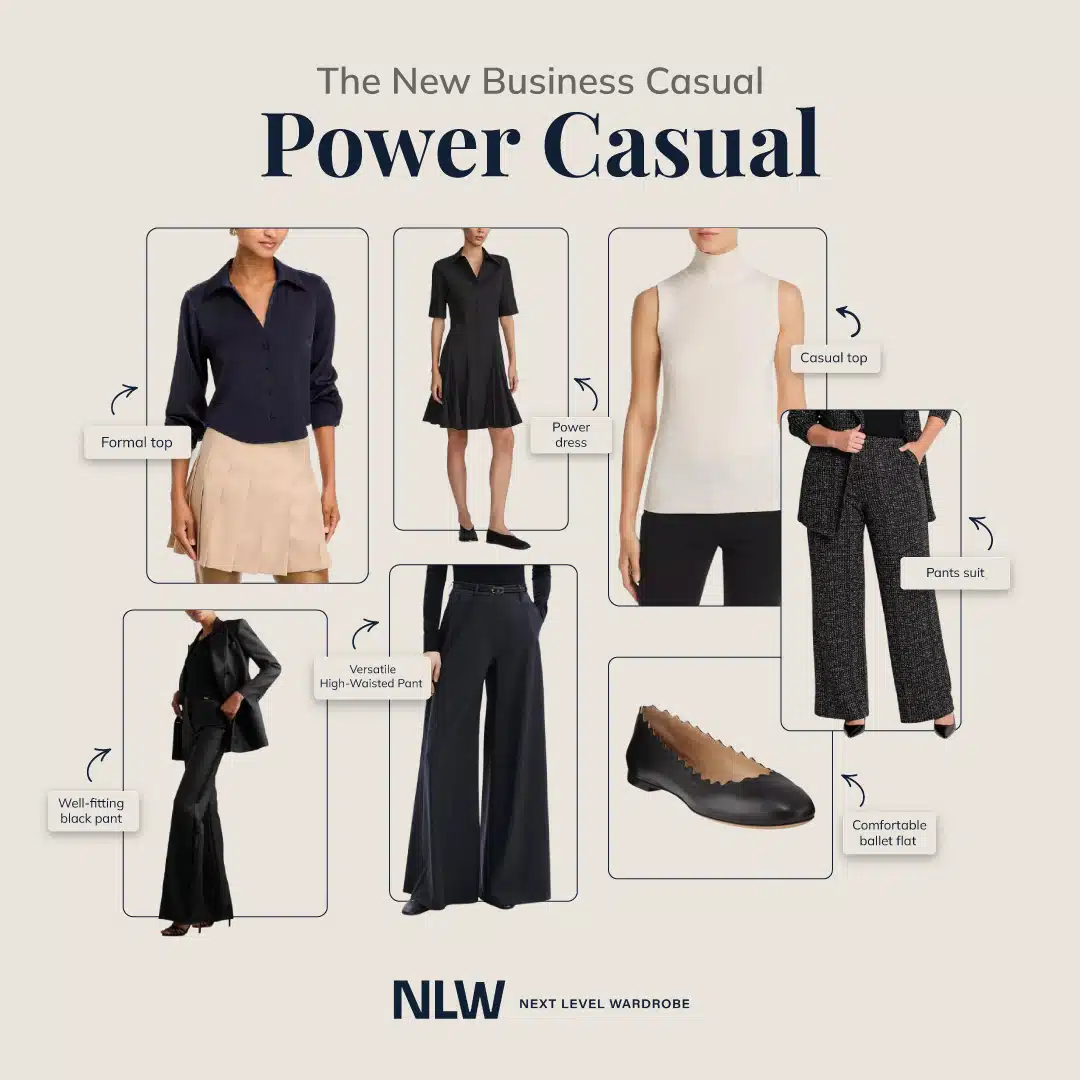
Business casual for women offers more choices, but also more confusion. The key is to keep outfits professional, comfortable, and not too flashy.
Essential Clothing Items
- Blouses or dress shirts
- Knit tops or sweaters
- Dress pants or skirts (knee-length or longer)
- Cardigans or blazers
- Closed-toe shoes (flats, loafers, low heels)
- Simple accessories
Avoid spaghetti straps, mini skirts, ripped jeans, flip-flops, and large, distracting jewelry.
Example Business Casual Outfit For Women
- White blouse
- Navy dress pants
- Gray cardigan
- Black flats
- Small silver earrings
This look is comfortable and stylish, and works for meetings or daily office wear.
Non-obvious Insights For Women
- Layering makes business casual easier. Cardigans or blazers help adjust to changing office temperatures, and add professionalism.
- Many women overlook shoe comfort. Choose shoes you can walk in all day, since sore feet distract from work.
Business Casual Vs Other Dress Codes
To understand business casual, it helps to compare it with other common dress codes. Here’s a quick look at three popular workplace styles.
| Dress Code | Typical Clothing | Formality |
|---|---|---|
| Business Formal | Suit, tie, dress shoes | High |
| Business Casual | Dress shirt, slacks, sweater | Medium |
| Casual | Jeans, t-shirt, sneakers | Low |
Business formal is strict and traditional. Casual is relaxed and informal. Business casual sits in the middle, offering balance and flexibility.
Common Confusions
Many people mix business casual with smart casual or semi-formal. Smart casual often allows jeans, but only if they’re dark and neat. Semi-formal is closer to business formal, but may drop the tie or blazer.

Credit: www.wikihow.com
Business Casual In Different Industries
Business casual is not the same everywhere. Different industries and workplaces may set their own rules.
Office Jobs
Most offices, including finance, marketing, and education, use business casual. Employees wear slacks, dress shirts, blouses, and closed-toe shoes. Blazers are optional, unless meeting clients.
Tech Companies
Tech companies often have a relaxed version of business casual. Jeans may be allowed, as long as they’re clean and not ripped. Hoodies or t-shirts are sometimes okay, but usually paired with a neat jacket.
Creative Fields
Advertising, design, and media jobs encourage personal style. Business casual might include bold colors or unique accessories, but still avoids sloppy or overly casual looks.
Healthcare And Law
Healthcare administrators and legal offices stick to stricter business casual. Suits are not required, but neat dress pants, collared shirts, and formal shoes are expected.
Building A Business Casual Wardrobe
Creating a business casual wardrobe takes planning. You want clothes that mix and match easily, fit your body, and suit your workplace.
Steps To Build Your Wardrobe
- Assess your office dress code. Ask HR or check guidelines.
- Choose basic colors. Stick to navy, gray, black, beige, and white for easy matching.
- Buy quality basics. Start with 2-3 dress shirts, 2 pairs of slacks, a cardigan or sweater, and professional shoes.
- Add layers. Get a blazer or jacket for meetings and colder days.
- Pick accessories wisely. Use belts, watches, and small jewelry to add style.
Example Wardrobe Plan For Men
- 3 dress shirts (white, blue, gray)
- 2 pairs of slacks (navy, beige)
- 1 sweater (dark color)
- 1 blazer (optional)
- 2 pairs of leather shoes (black, brown)
Example Wardrobe Plan For Women
- 3 blouses (neutral colors)
- 2 pairs of dress pants (black, navy)
- 1 skirt (knee-length)
- 1 cardigan
- 2 pairs of shoes (flats, low heels)
Cost And Quality
Business casual clothes don’t have to be expensive. Focus on quality over quantity. Good fabrics last longer and look better. According to a survey by Statista, Americans spend about $70–$150 per month on work clothing, but smart shopping can lower this.
How To Style Business Casual
Styling business casual is about combining pieces in a way that looks neat and professional. You can add personality without breaking the rules.
Tips For Men
- Tuck in shirts for a cleaner look
- Add a blazer for meetings
- Match belt and shoes
- Avoid loud patterns
Tips For Women
- Layer cardigans or blazers
- Use simple jewelry
- Pick skirts or pants that fit well
- Keep makeup natural
Mixing And Matching
Business casual works best when clothes are versatile. For example, a navy blazer can be worn with gray slacks or beige chinos. A white blouse works with skirts or pants.
Business Casual Accessories
Accessories can make business casual outfits stand out, but they must be subtle.
Men’s Accessories
- Leather belt
- Watch
- Simple cufflinks (if wearing a dress shirt)
- Briefcase or messenger bag
Women’s Accessories
- Small earrings or studs
- Simple bracelet or watch
- Classic handbag or tote
- Scarf (optional)
Avoid large, flashy items. Stick to one or two accessories per outfit.
Business Casual Shoes
Shoes are often overlooked, but they are critical in business casual. Wearing the wrong shoes can ruin your look.
Men’s Shoes
- Loafers
- Oxfords
- Derby shoes
Avoid sneakers, sandals, or boots unless your office allows them.
Women’s Shoes
- Ballet flats
- Low heels
- Loafers
Stay away from flip-flops, high heels over three inches, or very casual shoes.
Shoe Comparison Table
Here’s a comparison of common business casual shoes for men and women:
| Shoe Type | Comfort | Professional Look | Best For |
|---|---|---|---|
| Loafers | High | Medium | Daily wear |
| Oxfords | Medium | High | Meetings |
| Ballet Flats | High | Medium | Daily wear |
| Low Heels | Medium | High | Presentations |
Business Casual Colors And Patterns
Color and pattern choices matter in business casual. They help create a professional, approachable look.
Safe Colors
- Navy
- Black
- Gray
- White
- Beige
These colors are easy to mix and match. They look professional and suit most workplaces.
Acceptable Patterns
- Thin stripes
- Small checks
- Subtle prints
Avoid large, bold patterns or neon colors. They can distract or seem unprofessional.

Credit: www.boltstaffing.com
Business Casual For Different Climates
Business casual can change depending on the weather and location.
Warm Climate Tips
- Choose lightweight fabrics (cotton, linen)
- Wear short-sleeve dress shirts or blouses
- Pick skirts or dress pants that breathe
- Use lighter colors
Cold Climate Tips
- Layer sweaters and cardigans
- Wear wool or thicker fabrics
- Add scarves or gloves (if allowed)
- Stick to darker colors
Always check your company’s policy before making changes for climate.
Common Business Casual Mistakes
Even experienced employees make mistakes with business casual. Avoid these pitfalls:
- Wearing wrinkled or stained clothes
- Choosing clothes that don’t fit
- Using too many accessories
- Wearing sneakers or sandals
- Picking loud colors or patterns
If you’re unsure, ask HR or observe what others wear.
Business Casual For Remote Work
Working from home has changed dress codes. Many remote employees use a relaxed business casual style.
Tips For Remote Business Casual
- Wear a clean shirt for video calls
- Avoid pajamas or gym clothes
- Choose comfortable pants or skirts
- Keep accessories simple
Dressing well at home can help you focus and feel professional, even if you’re not in the office.
Business Casual Around The World
Business casual varies by country and culture. What’s accepted in the US may not work in Japan or Germany.
Us And Canada
Most offices use relaxed business casual. Jeans may be allowed in tech or creative industries.
Europe
Business casual is stricter. Suits without ties are common. Dark colors and formal shoes are expected.
Asia
Many Asian companies prefer conservative business casual. Bright colors or open-toe shoes may not be accepted.
If you travel for work, check local dress codes before your trip.
Business Casual For Job Interviews
Business casual is a safe choice for interviews in most companies. It shows respect, but avoids being too formal.
Interview Tips
- Choose neutral colors
- Wear clean, well-fitted clothes
- Avoid flashy accessories
- Prepare shoes and hair
If you’re unsure about the dress code, ask your recruiter or look up the company’s style. Being slightly more formal than daily office wear is smart.
Business Casual For Plus Size
Finding business casual clothes in plus sizes can be challenging, but there are more options today.
Plus Size Tips
- Choose clothes with structure (blazers, fitted pants)
- Avoid oversized items
- Pick comfortable shoes
- Look for brands that specialize in plus size workwear
Many stores now offer plus size business casual, making it easier to look professional.
Credit: nextlevelwardrobe.com
Business Casual For Young Professionals
Young professionals often worry about fitting in. Business casual helps show maturity and confidence.
Tips For Young Professionals
- Start with basics (dress shirts, slacks)
- Add a blazer for meetings
- Keep accessories simple
- Avoid trendy or flashy items
Looking professional helps build trust and opens doors for career growth.
Sustainability And Business Casual
Eco-friendly business casual is gaining popularity. Many brands offer sustainable fabrics and ethical production.
Sustainable Choices
- Buy clothes made from organic cotton, linen, or bamboo
- Choose quality over quantity
- Support brands with fair labor practices
According to the Environmental Protection Agency, Americans throw away about 11 million tons of clothing each year. Choosing sustainable options helps reduce waste.
Business Casual For Special Events
Some office events, like holiday parties or client meetings, require a slightly upgraded business casual look.
Event Tips
- Wear a blazer or dress jacket
- Choose a dress shirt or blouse
- Pick formal shoes
- Add one statement accessory
Keep the look professional, but show personality.
Business Casual For Different Body Types
Business casual works for all body types. The key is finding clothes that fit well.
Tips For Different Body Types
- If tall, choose longer shirts and pants
- If short, avoid oversized items
- If athletic, pick fitted clothes
- If curvy, use structured pieces
Many brands now offer a wide range of sizes and fits.
Business Casual For All Ages
Business casual is not just for young people. Employees of all ages can find styles that suit them.
Age-specific Advice
- Older professionals: Choose classic cuts and colors
- Younger professionals: Add modern touches (slim-fit pants, simple jewelry)
- Middle-aged: Mix traditional and modern items
Age does not limit business casual, as long as you look neat and professional.
Practical Business Casual Tips
Here are some practical tips to master business casual:
- Plan outfits the night before
- Keep clothes clean and pressed
- Invest in comfortable shoes
- Build a basic wardrobe first
- Observe colleagues for style ideas
- Ask HR if you’re unsure
Business Casual: Real-world Examples
Let’s look at some real-world business casual outfits.
Example 1: Men
- White dress shirt
- Navy chinos
- Gray cardigan
- Brown oxfords
Example 2: Women
- Light blue blouse
- Black dress pants
- Beige blazer
- Black flats
Example 3: Tech Employee
- Clean dark jeans
- Polo shirt
- Casual jacket
- Sneakers (if allowed)
These examples show how business casual can be adjusted for different jobs and workplaces.
Business Casual And Company Culture
Company culture affects business casual. A creative startup may allow brighter colors, while a traditional bank expects classic styles.
How To Match Company Culture
- Observe what managers and colleagues wear
- Ask HR about dress code
- Adjust style for meetings or presentations
Matching company culture helps you fit in and feel confident.
Business Casual Vs Smart Casual
Smart casual is similar to business casual, but a bit more relaxed. It allows jeans, trendy shoes, and creative accessories.
| Feature | Business Casual | Smart Casual |
|---|---|---|
| Jeans | Rarely allowed | Often allowed |
| Shoes | Formal | Trendy or casual |
| Accessories | Simple | Creative |
If your office allows smart casual, you can be more creative. But if unsure, stick to business casual.
Business Casual And Gender Diversity
Business casual is for everyone, regardless of gender. Many companies now support gender-neutral dress codes.
Gender-neutral Tips
- Choose simple, comfortable clothes
- Avoid items that feel too masculine or feminine
- Pick colors and patterns that suit your style
Gender diversity is respected in business casual. The focus is on professionalism and comfort.
Business Casual: Summary
Business casual is a flexible, professional dress code for modern workplaces. It blends formal and casual items, helping employees feel comfortable and confident. Key elements include dress shirts, slacks, blouses, skirts, cardigans, and closed-toe shoes. Avoid jeans, t-shirts, and flashy accessories.
Fit, cleanliness, and quality are essential.
Business casual varies by industry, country, and company culture. Building a wardrobe takes planning, but helps you look professional every day. Accessories, shoes, and color choices matter. Mistakes like wrinkled clothes or loud patterns can hurt your image.
If you’re unsure, observe colleagues or ask HR. Business casual works for men, women, all ages, and body types. Sustainable options are available. Interviews and special events may need a slightly more formal touch. With these tips, you can master business casual and succeed in any workplace.
Frequently Asked Questions
What Is Considered Business Casual Clothing?
Business casual clothing includes dress shirts, blouses, slacks, dress pants, skirts, cardigans, sweaters, and closed-toe shoes. Avoid jeans, t-shirts, shorts, sneakers, and flip-flops. The goal is to look neat and professional, but not overly formal.
Are Jeans Allowed In Business Casual?
Usually, jeans are not allowed in business casual. Some tech companies or creative workplaces may permit dark, clean jeans. Always check your company’s policy before wearing jeans.
Can I Wear Sneakers With Business Casual?
Sneakers are rarely acceptable in business casual. Leather shoes, loafers, flats, or low heels are better choices. If your office allows sneakers, choose clean, simple styles.
How Do I Know If My Outfit Is Business Casual?
If your outfit looks neat, fits well, and avoids casual items like jeans and t-shirts, it’s probably business casual. When in doubt, observe what others wear or ask HR for guidance.
Where Can I Find Business Casual Style Inspiration?
You can find business casual inspiration online, from fashion blogs, Pinterest, and company websites. The Harvard Business Review offers useful articles about workplace dress codes and style tips.
Business casual is about balancing comfort and professionalism. With the right wardrobe and attitude, you can look great and feel confident every day at work.
