

What are Apparel Brands: Top Companies Shaping Fashion Today
What Are Apparel Brands
When you look at the clothes in your closet, you might wonder: who made them? Why do people talk about certain names like Nike, Levi’s, or Zara? The answer is simple. These names are apparel brands. They create, design, and sell clothing that shapes what people wear and how they express themselves. But the world of apparel brands is much deeper than logos and labels. It is a mix of creativity, business, culture, and even technology.
Understanding apparel brands helps you make smarter shopping choices, spot quality, and see how fashion changes over time. Whether you care about style, comfort, or price, knowing about apparel brands gives you a new way to look at clothing. In this article, you’ll discover what apparel brands really are, how they work, why they matter, and how to spot the differences between them.
You’ll also see how brands use marketing, deal with sustainability, and compete in a fast-moving industry.
Defining Apparel Brands
An apparel brand is a company or label that designs, produces, and markets clothing. These brands create products like shirts, pants, jackets, dresses, underwear, and accessories. But an apparel brand is more than just a name on a tag. It is a promise to the customer about quality, style, and experience.
What Makes A Brand Different From A Manufacturer?
A manufacturer makes the actual clothes, often for different brands. An apparel brand decides how the clothes should look, what materials to use, and how to sell them. Some brands own factories, but many work with manufacturers worldwide.
Types Of Apparel Brands
There are several types of apparel brands:
- Luxury brands: These focus on high quality, exclusivity, and status. Examples include Gucci and Chanel.
- Fast fashion brands: They offer trendy styles at low prices and change collections quickly. Zara and H&M are leaders in this area.
- Sportswear brands: These focus on activewear and performance. Nike, Adidas, and Under Armour are well-known.
- Casualwear brands: They create comfortable, everyday clothing. Levi’s and Gap are examples.
- Designer brands: Often named after a designer, these offer unique and sometimes expensive items. Ralph Lauren is one such brand.
- Sustainable brands: They focus on eco-friendly materials and ethical production. Patagonia and Everlane are popular choices.
The Role Of Apparel Brands In Fashion
Apparel brands are the engines of the fashion industry. They decide what trends to follow, set prices, and influence how people dress. Brands create styles that can change quickly, sometimes every season, or stay stable for years.
How Brands Shape Fashion Trends
Brands often work with designers who predict what people will want to wear. They use data, culture, and history to create new looks. For example, a brand may notice people like vintage styles and release a “retro” collection.
Why Brands Matter To Consumers
For many, the brand is a sign of quality and trust. People may buy clothes from a favorite brand again and again because they know what to expect. Brands also offer identity. Wearing a certain brand can show your personality, status, or beliefs.
How Apparel Brands Operate
Behind every brand, there is a business. Brands must manage design, production, marketing, and sales. The process is complex and involves many steps.
The Design Process
Design teams start by studying trends, fabrics, and customer feedback. They sketch ideas, choose colors, and develop samples.
Production And Sourcing
Once designs are ready, brands decide how to make them. Some brands produce in their own factories, but most outsource to manufacturers in countries like China, Bangladesh, or Vietnam.
Distribution And Retail
Brands sell their products in different ways:
- Retail stores: Owned by the brand or third-party shops
- Online shops: Websites or apps
- Wholesale: Selling to other retailers
Some brands use all three methods, while others focus on just one.
Marketing And Branding
Marketing is key. Brands use ads, social media, influencers, and events to reach customers. They create campaigns that tell stories and build emotional connections.
The Value Of Apparel Brands
Why do people pay more for branded clothing? The answer is in the value brands offer.
Quality And Consistency
Branded apparel often means higher quality. Brands invest in better materials, skilled workers, and careful quality checks.
Emotional Connection
People sometimes feel loyal to a brand because it matches their beliefs or memories. For example, someone may love Patagonia because of its environmental values.
Status And Identity
Some brands are symbols of status. Luxury brands, in particular, are used to show wealth and taste.
Comparing Apparel Brands
Choosing between brands can be tough. Some are known for durability, others for style or price. Here’s a comparison of three well-known apparel brands:
| Brand | Style Focus | Price Range | Materials Used | Special Features |
|---|---|---|---|---|
| Nike | Sportswear, activewear | Medium to high | Synthetic, cotton blends | Performance technology |
| Zara | Fast fashion, trendy | Low to medium | Mixed fabrics | Quick style updates |
| Levi's | Casual, denim | Medium | Denim, cotton | Classic styles, durability |
This table shows that brands differ in style, price, and materials. For example, Nike focuses on performance, while Zara changes styles quickly.
Famous Apparel Brands Around The World
Many apparel brands are recognized globally. Here are some of the most influential:
- Nike: Known for sportswear and innovation.
- Adidas: Famous for activewear and street style.
- Zara: Leader in fast fashion.
- H&M: Affordable clothing for all ages.
- Levi’s: Iconic denim and casualwear.
- Gucci: Luxury with bold designs.
- Chanel: High-end fashion and elegance.
- Ralph Lauren: Classic American style.
- Uniqlo: Simple, functional clothing.
- Patagonia: Sustainable outdoor wear.
Each brand has its own story and target audience. For example, Uniqlo focuses on simplicity, while Gucci is all about luxury.
How Apparel Brands Build Their Image
A brand’s image is how people see and feel about it. Building a strong image takes time and effort.
Branding Strategies
Brands use several strategies:
- Logo and design: A recognizable logo, like Nike’s swoosh, makes a brand memorable.
- Brand story: Sharing the history and mission helps people connect.
- Celebrity endorsements: Famous people wearing a brand can boost its popularity.
- Social responsibility: Brands that support causes like sustainability attract loyal customers.
Case Study: Patagonia
Patagonia is known for its environmental activism. The brand uses recycled materials and donates profits to environmental causes. This has helped it build a loyal customer base.
The Impact Of Technology On Apparel Brands
Modern technology is changing how brands operate. From online shopping to smart fabrics, innovation is everywhere.
E-commerce And Online Presence
Brands now sell directly to customers through websites and apps. This makes shopping easier and lets brands reach more people.
Social Media Marketing
Platforms like Instagram and TikTok help brands show new collections and connect with fans. Influencers can make a brand popular overnight.
Smart Clothing
Some brands are experimenting with smart clothing, like jackets that track your steps or shirts that change color. While not common yet, this is a growing area.
Sustainability In Apparel Brands
Sustainability is a big issue. Many brands are trying to reduce their impact on the environment.
Eco-friendly Materials
Brands use recycled polyester, organic cotton, and other eco-friendly fabrics. This lowers pollution and saves resources.
Ethical Production
Some brands make sure workers are paid fairly and work in safe conditions. This is called ethical production.
Challenges
Not all brands are honest about sustainability. Some claim to be “green” but don’t make real changes. This is called greenwashing.
Challenges Faced By Apparel Brands
The apparel industry faces many challenges:
Competition
There are thousands of brands, making it hard to stand out.
Changing Trends
Fashion changes quickly. Brands must adapt or risk losing customers.
Counterfeit Products
Fake versions of popular brands hurt sales and reputation.
Supply Chain Issues
Problems in manufacturing, like delays or poor quality, can cause losses.
Environmental Concerns
Brands must balance profit with sustainability, which is not always easy.
How To Choose The Right Apparel Brand
Picking the right brand depends on your needs and values. Here are some tips:
- Check quality: Look at stitching, fabric, and fit.
- Read reviews: See what other customers say.
- Compare prices: Make sure you get value for your money.
- Consider sustainability: If this matters to you, research the brand’s practices.
- Look for style: Choose brands whose designs match your taste.
Apparel Brands By Category
Different brands focus on different types of clothing. Here’s a comparison:
| Category | Popular Brands | Main Features |
|---|---|---|
| Luxury | Gucci, Chanel, Prada | High quality, exclusivity, expensive |
| Fast Fashion | Zara, H&M, Forever 21 | Trendy, affordable, frequent updates |
| Sportswear | Nike, Adidas, Puma | Performance, comfort, active lifestyle |
| Casualwear | Levi's, Gap, Uniqlo | Comfort, simplicity, everyday use |
| Sustainable | Patagonia, Everlane, Reformation | Eco-friendly, ethical production |
This shows how brands focus on different markets. For example, luxury brands target wealthier customers, while sustainable brands appeal to eco-conscious shoppers.
Non-obvious Insights About Apparel Brands
- Brand Positioning Can Change: Some brands shift their focus over time. For example, a casual brand may move into luxury or vice versa. This happens when market trends change or the brand wants to reach new customers.
- Customer Experience Matters More Than Ever: Today, brands invest heavily in shopping experience, not just products. Stores may offer free tailoring, virtual fitting rooms, or personalized style advice. This helps brands stand out.
- Local vs. Global Reach: Many brands start locally before expanding worldwide. Sometimes, a brand is famous in one country but unknown elsewhere.
- Collaboration Boosts Popularity: Brands sometimes work together or with designers/artists. These collaborations create unique products and help both brands gain new fans.
The Life Cycle Of An Apparel Brand
Brands often go through several stages:
- Launch: The brand starts with a small collection and simple marketing.
- Growth: Sales increase, and the brand expands to new markets.
- Maturity: The brand becomes stable and well-known.
- Renewal or decline: The brand refreshes its image or loses popularity.
Some brands survive for decades by adapting, while others fade away.
How Apparel Brands Affect Society
Clothing brands shape more than just fashion. They affect culture, economy, and even politics.
Cultural Impact
Brands can influence what is “cool” or acceptable. They introduce new styles and ideas.
Economic Impact
Apparel brands create jobs in design, manufacturing, marketing, and retail. They drive the global economy, especially in countries with large textile industries.
Social Responsibility
Some brands support causes like fair wages, gender equality, or environmental protection. Consumers often reward these efforts with loyalty.
Common Misconceptions About Apparel Brands
- All brands are expensive: Many brands offer affordable options. “Brand” does not mean “high price.”
- Brands only care about profit: Some brands focus on ethics, sustainability, and social good.
- Brand equals quality: Not always. Some brands use marketing more than quality. It’s important to check product details.

Credit: www.onlineclothingstudy.com
How Apparel Brands Use Data And Analytics
Brands use data to understand customers and improve products. They track sales, website visits, and social media trends. This helps them predict what will sell and what to design next.
Example: Personalized Recommendations
Brands may use data to suggest clothes based on your past purchases or browsing. This makes shopping easier and increases sales.
The Future Of Apparel Brands
The world of apparel brands is always changing. Here are some trends:
- More Sustainability: Brands will focus more on eco-friendly materials and ethical production.
- Digital Shopping: Online sales will keep growing, with new technology like virtual fitting rooms.
- Personalization: Brands will offer more custom options, from sizing to designs.
- Globalization: Brands will reach new markets, but also face more competition.
These changes will affect how people shop and what they expect from brands.
Key Factors That Make Apparel Brands Successful
Success depends on several factors:
- Strong identity: Clear style and message.
- Quality products: Durable, comfortable, and stylish.
- Good marketing: Reaching the right customers with effective campaigns.
- Adaptability: Changing with trends and technology.
- Customer service: Helping buyers with returns, questions, or styling.
Brands that focus on these factors tend to last longer and build loyal fans.
Apparel Brands Vs. Private Labels
Some stores sell private labels—their own brands made for their shops. These are different from national brands like Nike or Levi’s.
| Aspect | Apparel Brand | Private Label |
|---|---|---|
| Recognition | Often global | Mainly store-specific |
| Quality | Varies, often higher | Usually average |
| Price | Medium to high | Low to medium |
| Marketing | Independent campaigns | Store-based promotions |
Private labels can offer good value but may not have the same recognition or quality.
The Importance Of Authenticity In Apparel Brands
Authenticity means being true to the brand’s values and promises. Brands that stay authentic build trust. For example, Levi’s is known for durable denim and keeps this promise in its products.
Brands that try to be something they’re not often lose customers. Authenticity is especially important for younger buyers, who value honesty and transparency.
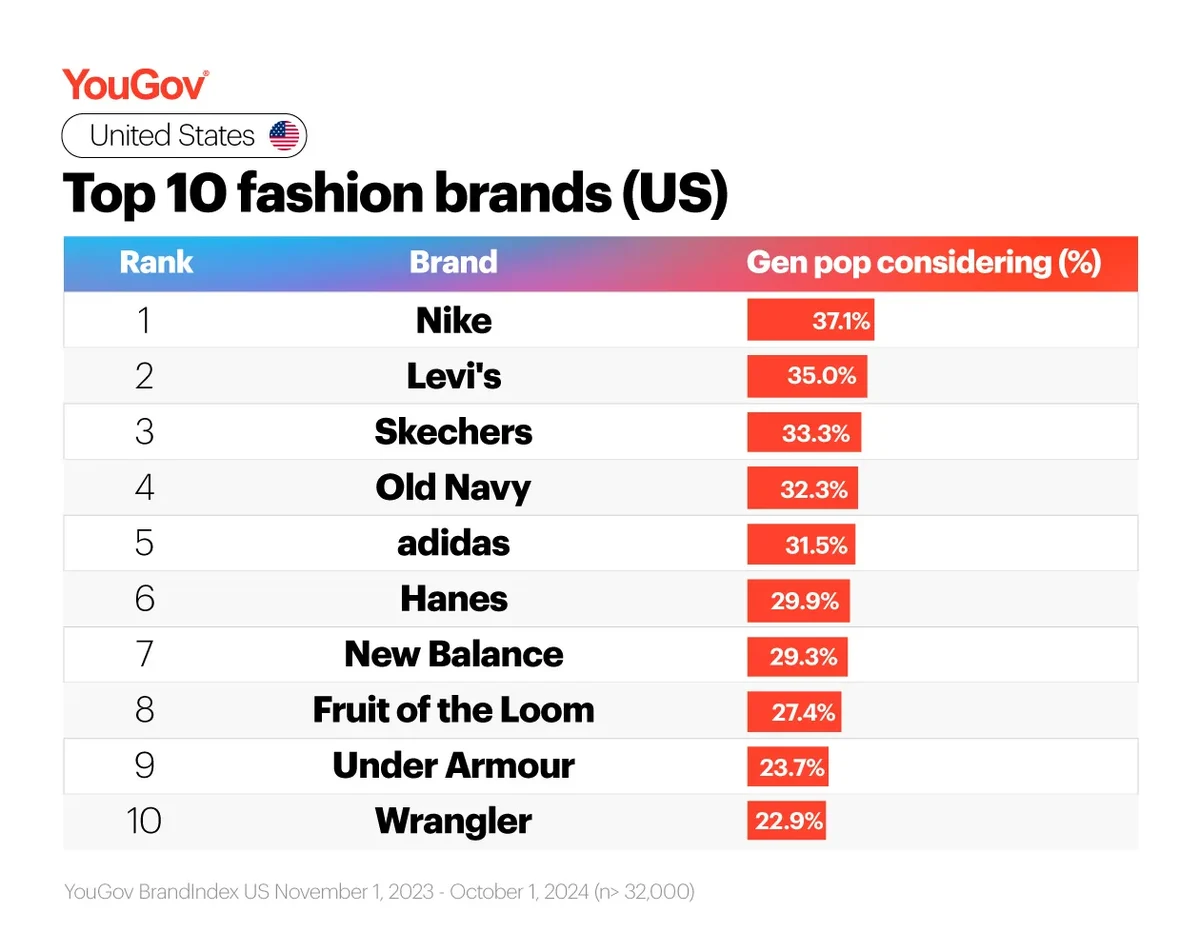
How Apparel Brands Use Influencers
Influencers are people with many followers on social media. Brands pay them to wear their clothes and share photos or videos.
This is a powerful way to reach young customers. For example, a single post by a famous influencer can boost sales in minutes.
However, brands must choose influencers carefully. The wrong choice can hurt the brand’s image.
Credit: yougov.com
The Relationship Between Apparel Brands And Retailers
Brands often work with retailers to sell their products. Retailers may be large stores, boutiques, or online platforms.
Sometimes, brands sell only in their own stores. Other times, they use many retailers. The choice depends on the brand’s goals and target audience.
Retailers help brands reach more customers but take a share of the profits. Some brands prefer direct sales to keep control and earn more.
Apparel Brands And Customer Loyalty
Customer loyalty is when people buy from the same brand again and again. Brands build loyalty by offering:
- Quality products
- Good service
- Rewards programs
- Unique styles
Loyal customers are valuable. They recommend the brand to friends and help it grow.
Credit: www.tbsnews.net
Apparel Brands And Social Media
Social media is a must for apparel brands. Platforms like Instagram, Facebook, and TikTok let brands connect directly with fans.
Brands share new collections, styling tips, and behind-the-scenes content. They also answer questions and listen to feedback.
Social media can make a brand famous quickly, but it also means brands must respond to criticism or complaints fast.
How Apparel Brands Handle Sustainability Claims
Many brands claim to be sustainable. But how do you know which are real?
- Look for certifications: Labels like Fair Trade or Organic mean the brand meets standards.
- Check materials: Recycled fabrics or organic cotton are better for the environment.
- Read reports: Some brands publish reports on their environmental impact.
- Watch for greenwashing: If a brand makes big claims but offers little proof, be careful.
For more information on sustainability, see Patagonia Sustainability.
Frequently Asked Questions
What Is An Apparel Brand?
An apparel brand is a company or label that designs, produces, and sells clothing. It offers its own style, quality, and marketing, and is different from a manufacturer or private label.
How Do Apparel Brands Differ From Designer Brands?
Designer brands are often named after a designer and focus on unique, sometimes luxury items. Apparel brands can include designer brands but also cover everyday, sports, and sustainable clothing.
Why Do People Pay More For Branded Clothes?
People pay more for branded clothes because they trust the quality, like the style, or want to show status. Brands often use better materials and invest in marketing.
Are All Apparel Brands Sustainable?
No. Some brands focus on sustainability, using eco-friendly materials and ethical production. Others do not. It’s important to research a brand’s practices if sustainability matters to you.
How Can I Spot A Fake Apparel Brand Product?
Look for poor stitching, incorrect logos, and cheap materials. Check the store’s reputation and compare with official brand websites. If the price is much lower than usual, it might be fake.
Clothing is more than just fabric—it is a mix of art, business, and culture. Understanding apparel brands lets you make informed choices and appreciate the effort behind every shirt and jacket. The world of apparel brands is always changing, but the basics of quality, style, and trust remain.
Whether you seek fashion, comfort, or sustainability, there is a brand for every need.
