

Is It Okay to Dress Business Casual for an Interview? Expert Guide
Is It Okay To Dress Business Casual For An Interview
You get the interview invitation. The excitement is real, but then the big question hits: what should you wear? For many job seekers, “business casual” feels like a safe, modern choice. But is it really the right move for your interview? The answer is not as simple as yes or no. Your outfit sends a message long before you speak, and first impressions count a lot in the hiring process.
Choosing what to wear can make you anxious—especially if you’re not sure what “business casual” even means for interviews. Is it a step down from formal? Is it too relaxed? Will it look like you’re not taking the opportunity seriously?
This article will break down what “business casual” actually means, when it’s okay (or not) for an interview, and how to make your choice with confidence. We’ll explore real examples, practical tips, and common mistakes to avoid—so you can walk into your next interview looking sharp, feeling comfortable, and ready to impress.
Understanding Business Casual: What It Means
The term business casual can be confusing. It is not as formal as a suit and tie, but it is still more polished than jeans and sneakers. The exact definition can change by company and even by city. Still, there are some common guidelines you can follow.
Key Elements Of Business Casual
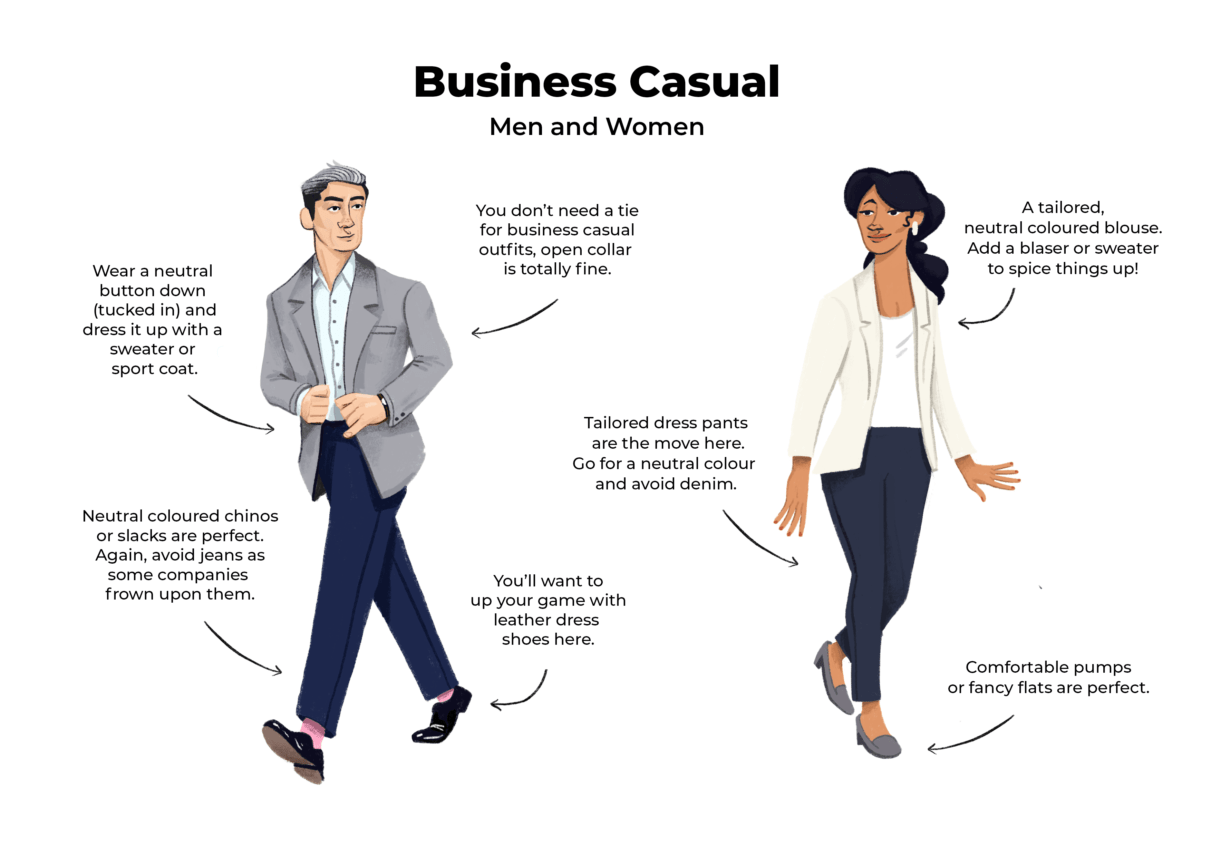
For men, business casual often means:
- Dress pants or chinos
- Collared shirt (button-down or polo)
- Optional blazer or sweater
- Dress shoes (like loafers or oxfords)
- Belt matching shoes
- No tie required, but you can wear one
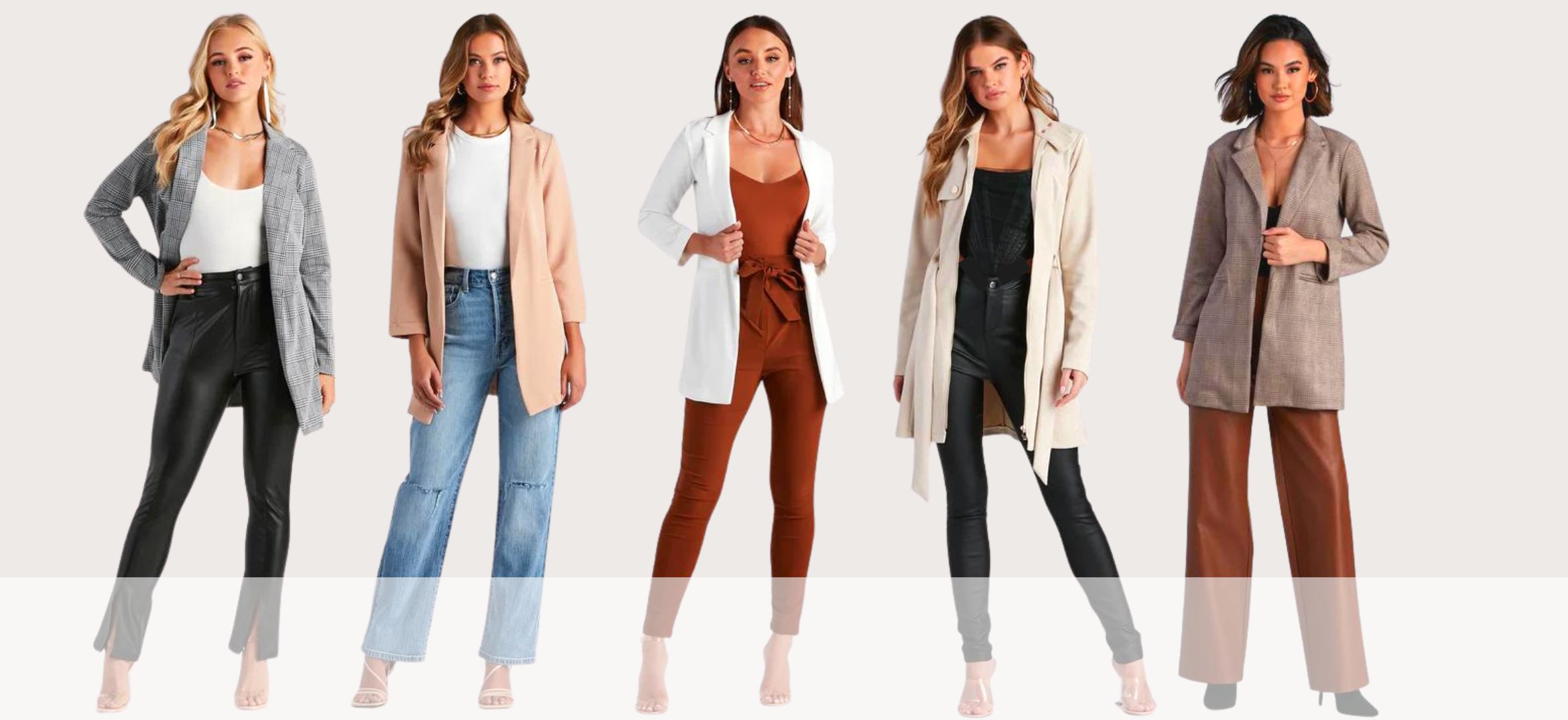
For women, business casual may include:
- Dress pants, khakis, or a modest skirt
- Blouse or smart top
- Optional cardigan or blazer
- Closed-toe shoes (flats or low heels)
- Simple accessories, not flashy jewelry
What Business Casual Is Not
- No ripped jeans or shorts
- No sneakers, sandals, or flip-flops
- No graphic t-shirts or hoodies
- No flashy or loud patterns
The aim is to look neat, professional, and approachable without the stiffness of formal business attire.
Business Casual Vs. Business Formal: Quick Comparison
Here’s a side-by-side look at typical choices for both styles:
| Business Formal | Business Casual | |
|---|---|---|
| Men | Suit, tie, dress shirt, dress shoes | Collared shirt, chinos, loafers |
| Women | Pantsuit or skirt suit, blouse, heels | Blouse, skirt or pants, flats |
Why Interview Attire Matters
The way you dress for an interview is about more than looks. It tells your future employer how you see yourself and how much you value the job. Dressing well shows respect for the company, the interviewer, and the process.
First Impressions Are Powerful
Research suggests that first impressions are formed within seconds. A Yale study found that appearance can influence hiring decisions, even before a candidate speaks. Clothes may not reflect your skills, but they do signal your seriousness and cultural fit.
Company Culture And Expectations
Every company has its own culture. Some workplaces are formal, others are relaxed. Dressing in line with their culture shows you “get it” and can fit in. If you overdress, you might seem out of touch. If you underdress, you might look unprepared.
Confidence And Comfort
Wearing the right outfit can also help you feel more confident. When you know you look appropriate, you can focus on answering questions and showing your best self, not worrying about your clothes.

Credit: www.youtube.com
When Is Business Casual Okay For An Interview?
The short answer: it depends. Let’s break down the main factors that matter when choosing business casual for an interview.
1. Industry Standards
Some industries are more traditional than others. For example:
- Finance, law, and consulting: Usually expect formal attire.
- Tech, startups, creative fields: More open to business casual.
- Retail or hospitality: May depend on the position.
If you’re unsure, research what people in your target field usually wear.
2. Company Culture
Company dress codes can vary even within the same industry. Here’s how to find clues:
- Visit the company website or social media. Look at employee photos.
- Read reviews on sites like Glassdoor.
- Ask your recruiter or HR contact about the dress code.
If employees wear jeans and t-shirts, business casual will usually be safe for an interview. If you see a lot of suits, aim more formal.
3. Position Level
Higher-level roles, like management or executive positions, often expect more formal attire. For entry-level or junior roles, business casual may be more acceptable.
4. Location And Geography
Workplace style can change by city or country. For example, companies in New York or London are often more formal than those in Silicon Valley or Austin.
5. Direct Communication
If you’re not sure, it’s fine to ask your contact: “Can you advise on the interview dress code?” This shows you care about making a good impression.
Real-world Examples
- Interviewing at a tech startup? Business casual is usually perfect.
- Meeting a law firm? Stick to formal business attire.
- Retail management interview? Business casual, but lean toward formal.
The Risks Of Dressing Too Casually
While business casual is popular, it’s not always the right call. Here are common risks if you choose business casual when you should go more formal.
You May Look Unprepared
If everyone else is in a suit, you might seem like you didn’t do your homework or don’t take the job seriously.
You Could Stand Out For The Wrong Reasons
Standing out can be good—but not if it’s because your outfit is too casual. This can distract from your skills and answers.
It Can Affect Your Confidence
If you feel underdressed, you might become self-conscious. This can hurt your performance in the interview.
You Might Send The Wrong Message
Companies may assume you will not respect their clients or culture if you don’t dress appropriately. For client-facing roles, this matters even more.
How To Decide: Step-by-step Guide
If you’re stuck, use these steps to make a smart choice about whether business casual is right for your interview.
Step 1: Research The Company
- Go to the company’s website and social media pages.
- Look for team photos, event pictures, or videos.
- Check LinkedIn for employee profiles and their pictures.
Step 2: Reach Out And Ask
- Email your recruiter or HR contact.
- Say: “I want to make a good impression at my interview. Can you tell me the expected dress code?”
Step 3: Consider The Industry Norms
- Use your knowledge of the field: Finance = formal, tech = casual, etc.
- If you’re unsure, it’s better to be slightly overdressed than underdressed.
Step 4: Plan A Safe Outfit
- Choose clothing that can be dressed up or down (like adding a blazer).
- Pick neutral colors and classic styles.
Step 5: Prepare For Surprises
- Bring a blazer or jacket with you, even if you don’t wear it at first.
- Arrive early, look at other people, and adjust your outfit in the restroom if needed.
What To Wear: Sample Outfits
Here are a few examples of business casual interview outfits that work in many settings.
For Men
- Navy or gray chinos with a white or light blue button-down shirt, dark leather belt, and brown loafers.
- Light sweater over a collared shirt, dark dress pants, and dress shoes.
- Optional navy blazer for extra polish.
For Women
- Black dress pants with a tucked-in blouse, simple necklace, and closed-toe flats.
- Knee-length skirt with a cardigan and modest heels.
- Dress with a blazer and neutral accessories.
For All Genders
- Clothes should be clean, pressed, and fit well.
- Avoid strong perfumes or colognes.
- Keep hair tidy and nails clean.
Business Casual Mistakes To Avoid
Even when business casual is okay, there are common mistakes that can hurt your impression. Here are some pitfalls and how to avoid them.
1. Dressing Down Too Much
Some people think “casual” means anything goes. It doesn’t. Avoid sneakers, t-shirts, and jeans unless you know it’s acceptable.
2. Wearing Wrinkled Or Dirty Clothes
No matter how nice your outfit is, if it looks unkempt, it sends the wrong message.
3. Overdoing Accessories
Keep jewelry, makeup, and accessories simple and professional. Flashy items can distract from your skills.
4. Forgetting About Shoes
Your shoes should be clean, polished, and not overly casual. Avoid sandals, open toes, or shoes that are too worn.
5. Ignoring Fit
Baggy or tight clothes look sloppy or uncomfortable. Make sure your outfit fits well.
6. Not Considering The Climate
If it’s hot, choose lightweight fabrics. If it’s cold, layer smartly. Looking sweaty or freezing will distract both you and the interviewer.
Data: What Employers And Candidates Say
Let’s look at what surveys and studies say about interview attire.
Employer Preferences
A CareerBuilder survey found:
- 49% of employers say dressing too casually is the most common interview mistake.
- 25% of managers say wearing the wrong clothes can ruin your chances, even if your resume is strong.
Candidate Experiences
In a LinkedIn poll, candidates reported:
- 68% felt more confident when dressed slightly more formal than the company standard.
- 15% said they regretted dressing too casually at least once.
Industry Differences
The following table shows how formal different industries expect interview attire to be:
| Industry | Business Formal Expected | Business Casual Accepted |
|---|---|---|
| Finance | Yes | Rarely |
| Technology | Sometimes | Often |
| Healthcare | Usually | Sometimes |
| Creative/Design | Rarely | Yes |
| Retail | Sometimes | Often |
The Power Of Slightly Overdressing
If you’re truly unsure, “dress one step above” the company standard. This means:
- If employees wear jeans, wear dress pants.
- If they wear polos, choose a button-down shirt.
- If they wear business casual, add a blazer or formal shoes.
This approach helps you look prepared and respectful without being out of place.
Non-obvious Insights Most People Miss
1. The Interview Format Matters
If your interview is virtual, business casual is often enough—but avoid looking too relaxed. Make sure your top half (what’s visible on camera) looks polished. Some candidates forget about pants or skirts, but if you need to stand up, you want to look professional head-to-toe.
2. Accessories And Grooming Count
Many job seekers focus only on clothes, but grooming and small details make a difference. Clean nails, tidy hair, and minimal fragrance show attention to detail. A simple watch or classic earrings can add polish without being distracting.
3. Color Psychology
Certain colors send different messages. Navy and gray are seen as trustworthy and professional. Bright red or orange can be seen as bold or aggressive. Soft blues and earth tones are usually safe.
4. Local Norms And Weather
What’s normal in one place may be strange in another. In hot climates, lighter fabrics are fine, but shorts or sleeveless tops are rarely appropriate for interviews.
5. The Power Of A Backup Plan
Have a backup outfit ready in case of spills, weather, or last-minute nerves. This reduces stress and helps you stay confident.
Adjusting Business Casual For Different Types Of Interviews
The type of interview can also influence what you wear. Here’s how to adjust:
In-person Interviews
- Lean toward more formal business casual.
- Bring a blazer or jacket.
- Shoes matter—people notice them.
Virtual Interviews
- Focus on the top half: Crisp shirt, neat hair, clean background.
- Avoid patterns that look strange on camera.
- Good lighting helps your outfit look sharp.
Group Or Panel Interviews
- Dress to match the most formal person in the room.
- Simple, classic outfits help you blend in, not stand out.
Second-round Or Follow-up Interviews
- If you noticed the office is more casual, you can relax your style slightly—but never go below business casual.
- Stick with your best-fitting, neat clothes.
Real Stories: What Happened When People Wore Business Casual
Story 1: Tech Startup Success
Maria interviewed at a small tech startup. She wore navy chinos, a white blouse, and a light sweater. The team wore jeans and t-shirts. Maria felt comfortable, and the hiring manager said she “fit in perfectly but looked ready for business.
” She got the job.
Story 2: Law Firm Misstep
Ethan applied to a legal assistant role. He wore khakis and a polo shirt. Other candidates wore full suits. Ethan later learned he was seen as “not serious enough. ” He didn’t get a callback.
Story 3: Retail Management
Sophie interviewed at a fashion retailer. She wore black dress pants, a smart blouse, and neat flats. The team dressed in similar styles. She was told her look was “professional but not intimidating”—and she landed the role.
Key Takeaway
Know your audience. Dressing business casual works best when it matches or slightly upgrades what employees wear. Too casual for formal settings hurts your chances.
The Science Behind Dressing For Success
Researchers have studied how clothing affects both performance and perception.
Enclothed Cognition
A Northwestern University study found that people who wore professional clothing performed better on attention tasks. This is called enclothed cognition—the idea that your outfit can change how you think and act.
Bias And Perception
Even trained HR professionals can be influenced by clothing. Studies show that, all else equal, well-dressed candidates are judged as more competent and confident.
Business Casual Vs. Other Dress Codes: At A Glance
Here’s a quick guide to common workplace dress codes and when business casual fits in.
| Dress Code | Typical Attire | Interview Suitability |
|---|---|---|
| Business Formal | Suit, tie, dress shoes | Best for law, finance, executive roles |
| Business Casual | Dress pants, collared shirt/blouse, flats/loafers | Safe for tech, creative, many office jobs |
| Smart Casual | Neat jeans, casual blazer, nice shoes | Sometimes okay for startups, creative fields |
| Casual | Jeans, t-shirts, sneakers | Rarely right for interviews |
How To Upgrade Your Business Casual Look
If you choose business casual, these tips can help you look more polished:
- Wear a blazer even if you skip the tie.
- Choose high-quality fabrics—wool, cotton, or blends.
- Iron your clothes and check for lint or pet hair.
- Keep your shoes clean and in good condition.
For women, a scarf or subtle jewelry can add interest without being distracting. For men, a leather belt and watch add a touch of class.
What If You Have Limited Wardrobe Options?
Not everyone owns a full business wardrobe. If you’re on a budget:
- Buy one pair of neutral dress pants and a classic shirt or blouse.
- Thrift stores and discount retailers have affordable options.
- Ask friends or family if you can borrow a blazer.
- Focus on fit and cleanliness over brand names.
Many employers care more about effort and neatness than expensive clothes.
Key Points To Remember
- Business casual is often okay for interviews, but not always.
- Research the company, industry, and job level before choosing your outfit.
- When in doubt, dress slightly more formal than the company norm.
- Avoid common mistakes like underdressing, poor fit, or messy shoes.
- Your outfit affects both how others see you and how you see yourself.
Frequently Asked Questions
Credit: www.windsorstore.com
Can I Wear Business Casual To A Job Interview At A Bank?
Most banks expect business formal attire for interviews, such as a suit and tie for men or a pantsuit or skirt suit for women. Some local branches of smaller banks may accept business casual, but it’s safer to dress more formally for the first interview.
Is Business Casual Enough For A Virtual Interview?
Usually, yes. For virtual interviews, a crisp shirt or blouse and neat appearance are key. You can skip the blazer if it feels too much, but avoid very casual clothes. Make sure your background is tidy and your camera is at eye level.
Credit: apsugis.org
What If I Don’t Have Business Casual Clothes?
Start with the neatest, most professional clothes you own. You can often find affordable options at thrift stores or borrow from friends. Focus on cleanliness and fit. Even a clean, well-pressed shirt with dark pants looks better than casual wear.
Should I Always Wear A Tie For An Interview?
Not always. In business casual settings, a tie is optional. If you’re unsure, bring one with you. You can add it if you see others wearing ties or if the setting feels more formal than expected.
How Do I Know If My Outfit Is Too Casual?
Ask yourself if your clothes would be acceptable in a client meeting. If not, they are probably too casual. If you have doubts, choose a more formal option or ask your recruiter for advice. When in doubt, it’s better to be slightly overdressed than underdressed.
Choosing what to wear for an interview can feel stressful, but with the right approach, you’ll make a strong impression. Remember to research, plan ahead, and focus on looking neat, confident, and ready for success. For more on workplace dress codes, you can check this helpful guide on Wikipedia. Good luck with your next interview—your outfit is just the beginning of your story.
