

How to Wash Gym Clothes: Keep Activewear Fresh and Odor-Free
How To Wash Gym Clothes
Whether you’re a regular at the gym or just starting your fitness journey, you’ve probably noticed something: gym clothes get dirty fast. Sweat, bacteria, and body oils build up quickly in activewear, leaving behind odors and stains that regular washing sometimes can’t handle. Washing your gym clothes the right way isn’t just about smell—it helps your gear last longer, keeps fabrics stretchy, and prevents skin problems. Many people wash gym clothes the same way as their everyday clothes, but that leads to faded colors, lingering smells, and even ruined sportswear.
In this guide, you’ll learn exactly how to wash gym clothes to keep them clean, fresh, and in top condition. From sorting and pretreating to washing and drying, we’ll cover every step with practical advice. Along the way, you’ll also find data, examples, and tips most beginners miss. Let’s make sure your activewear works as hard as you do.
Why Gym Clothes Need Special Care
Gym clothes are different from regular clothes in many ways. Most activewear is made of synthetic fabrics like polyester, nylon, or spandex. These materials wick sweat away from your skin and dry quickly. But they also hold onto odors and body oils more than cotton. Washing them the wrong way can damage the fibers, leading to sagging, stretching, or loss of moisture-wicking ability.
Sweat and bacteria can get trapped in the tiny spaces between synthetic fibers. If not washed properly, these can cause stubborn smells and even lead to skin irritation. Gym clothes also often have special features like mesh panels, zippers, or reflective strips that need gentle care.
Many people don’t realize that using too much detergent, washing in hot water, or skipping the rinse can make odors worse, not better. That’s why understanding the unique needs of gym clothes is essential.
Sorting Your Gym Clothes For Washing
Before you even start the washing machine, you need to sort your gym clothes. This step protects the fabric and helps your clothes get truly clean.
- Separate activewear from regular clothes. Synthetic fabrics can pick up lint from towels or cotton items. Wash your gym clothes together to avoid this.
- Sort by color. Wash light and dark gym clothes separately to prevent color bleeding.
- Group by fabric type. If you have delicate sports bras or mesh tops, put them in a separate pile or use a mesh laundry bag.
Sorting may seem like extra work, but it prevents damage and keeps your clothes looking new.
Pretreating Odors And Stains
Gym clothes often have strong sweat smells or stubborn stains. Pretreating helps remove these before washing.
How To Pretreat Sweat Odors
- Turn clothes inside out. Odors are stronger on the inside.
- Mix one part white vinegar with four parts cold water. Soak gym clothes for 30 minutes.
- Alternatively, use a sports-specific prewash spray.
Removing Stains
- For sweat stains, use a small amount of baking soda paste (mix baking soda with water) and rub gently on the stain.
- For protein stains (like blood), rinse the area with cold water before applying any product.
- Avoid using hot water—it can set stains.
Pretreating is often skipped, but it makes a big difference in removing odors and stains.
Choosing The Right Detergent
Not all laundry detergents are the same. Many regular detergents leave residue that traps odors in synthetic fabrics.
- Use a sports detergent designed for activewear. These break down sweat, body oils, and bacteria better than regular formulas.
- If you can’t find a sports detergent, use a mild, fragrance-free detergent. Avoid fabric softeners—they coat fibers and stop moisture-wicking.
- Use the minimum recommended amount. Too much detergent can build up and make odors worse.
Here’s a quick comparison of detergent types:
| Detergent Type | Best For | Common Issues |
|---|---|---|
| Sports Detergent | Activewear, Odor Removal | Usually more expensive |
| Regular Detergent | Everyday Clothes | Leaves residue on synthetics |
| Heavy-Duty Detergent | Work Clothes, Stains | Harsh on delicate fabrics |
Many people think more detergent means cleaner clothes, but with gym wear, less is often more.
Selecting Water Temperature And Wash Cycle
Getting the water temperature right is key for gym clothes.
- Cold water is best for synthetic fabrics. It prevents shrinking, protects elastic, and stops color fading.
- Warm water can help with very dirty gym clothes but use only if the label allows.
- Hot water can damage spandex and elastic.
Choose a gentle or delicate cycle. This uses less agitation, which protects stretchy materials and seams. If your washer has a sportswear or activewear cycle, use that.
Here’s how typical wash cycles compare:
| Cycle Type | Water Temp | Recommended For |
|---|---|---|
| Delicate | Cold | Sports bras, mesh tops, leggings |
| Normal | Cold/Warm | T-shirts, shorts |
| Sportswear | Cold | All gym clothes |
Most activewear labels recommend cold water and gentle cycles. Always check the care tag if you’re unsure.
Loading The Washing Machine
How you load your gym clothes affects how clean they get.
- Don’t overload. Give clothes enough space to move. This allows water and detergent to reach every part.
- Zip up jackets and hoodies. Close Velcro straps to prevent snagging.
- Place delicate items in mesh laundry bags. This stops tangling and stretching.
- Turn clothes inside out. This helps protect colors and removes sweat from the inside.
Many people miss the step of turning clothes inside out, but it helps remove sweat and bacteria more effectively.
Using Additives: What Helps And What Hurts
Some additives can boost cleaning power, but others can harm gym clothes.
Helpful Additives
- White vinegar: Add 1/4 cup to the rinse cycle to neutralize odors and break down detergent residue.
- Baking soda: Add 1/2 cup to the wash to boost detergent cleaning and remove smells.
Harmful Additives
- Fabric softener: Avoid it. It coats fibers, blocks moisture-wicking, and traps odors.
- Bleach: Don’t use on synthetic fabrics. It weakens fibers and fades colors.
A common mistake is using fabric softener to “freshen” gym clothes. In reality, it does the opposite.
Drying Gym Clothes The Right Way
Drying is just as important as washing. The wrong method can damage elastic, shrink fabrics, and set odors.
Best Drying Methods
- Air drying is best for most gym clothes. Hang items on a clothesline or drying rack, away from direct sunlight.
- Tumble drying on low heat is possible for some items, but check the care label. High heat damages spandex and elastic.
- For socks and towels, medium heat is usually safe.
Drying Tips
- Lay sports bras and delicate tops flat to dry. This stops stretching.
- Shake out each item before drying to prevent wrinkles.
- Don’t pile wet gym clothes in a hamper—they can mildew quickly.
Here’s a quick look at drying options:
| Drying Method | Pros | Cons |
|---|---|---|
| Air Dry | Protects fabrics, energy saving | Takes longer |
| Tumble Dry (Low Heat) | Faster, convenient | Risk of damage if too hot |
| Direct Sunlight | Natural odor removal | Can fade colors |
If you notice elastic bands losing stretch, switch to air drying.
Removing Stubborn Odors
Sometimes, even with proper washing, gym clothes still smell. This is common with older activewear or if you leave clothes wet too long.
Deep Cleaning Tips
- Soak clothes in a mixture of water and white vinegar (1: 4 ratio) for 1 hour before washing.
- Use a sports detergent with enzyme cleaners. These break down sweat and bacteria better.
- Wash immediately after wearing. The longer sweat sits, the harder it is to remove.
A non-obvious tip: Avoid dryer sheets. They add a layer that traps smells inside the fabric.
How Often To Wash Gym Clothes
Washing frequency matters for hygiene and fabric care.
- Wash after every workout. Sweat and bacteria build up fast.
- If you didn’t sweat much, you can air out the clothes, but wash after two wears.
- Sports bras and underwear should always be washed after one use.
- Shoes and gym bags need cleaning too (every few weeks).
Washing too often in hot water can wear out clothes, but skipping washes creates permanent smells.
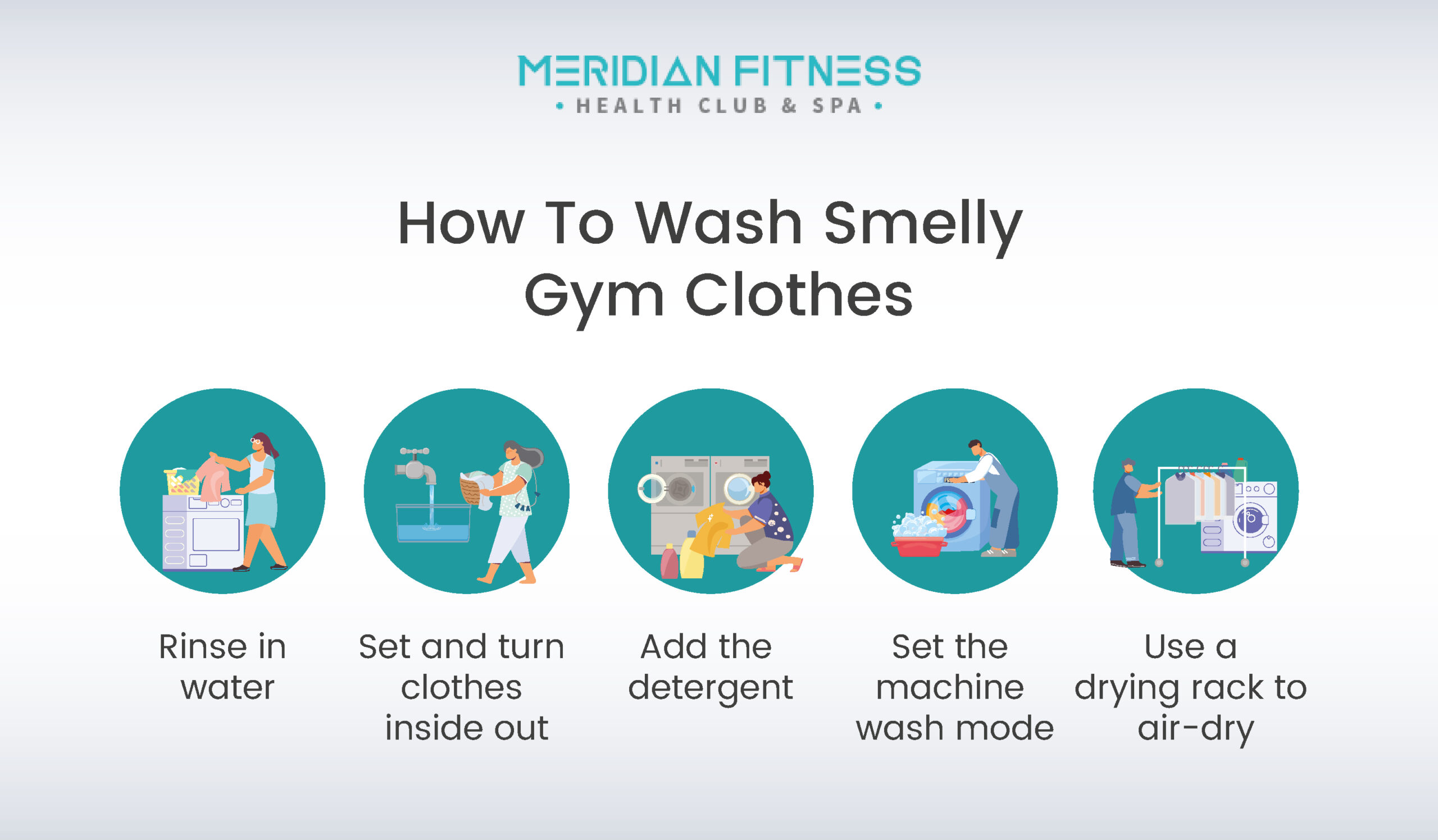
Credit: www.meridian-fitness.co.uk
Caring For Special Types Of Gym Clothes
Not all gym gear is the same. Some need extra attention.
Compression Gear
- Wash in cold water only.
- Always air dry to protect elasticity.
- Use a mesh bag to avoid snags.
Sports Bras
- Fasten hooks before washing.
- Use a gentle cycle.
- Lay flat to dry.
Gym Shoes
- Remove insoles and laces.
- Wipe with a damp cloth. Wash insoles by hand.
- Air dry completely before wearing.
Swimwear
- Rinse immediately after use.
- Hand wash with mild detergent.
- Avoid wringing; roll in a towel to remove water.
Gloves And Accessories
- Hand wash in cool water.
- Air dry away from heat.
Neglecting special gear can shorten its lifespan and cause discomfort.
Common Mistakes And How To Avoid Them
Many people make simple errors when washing gym clothes. Here’s what to avoid:
- Using too much detergent. Extra soap leaves residue that traps odors.
- Skipping pretreatment. Sweat smells need to be treated before washing.
- Drying on high heat. This ruins elastic and fit.
- Mixing with towels or jeans. Lint and rough fabrics damage synthetics.
- Not emptying gym bags daily. Leaving sweaty clothes in a bag breeds bacteria.
A less-known mistake: Letting gym clothes sit wet in the machine. This causes mildew and stubborn smells.
How To Store Gym Clothes After Washing
Proper storage keeps your activewear fresh and ready.
- Make sure all items are completely dry before putting them away.
- Store in a cool, dry place. Avoid damp bathrooms or laundry rooms.
- Fold instead of hanging delicate tops or leggings to avoid stretching.
- Use drawer dividers or bins for easy organization.
Do not store gym clothes in plastic bags or airtight containers—this traps moisture and causes odors.
Eco-friendly Washing Tips
Washing gym clothes doesn’t have to waste water or energy.
- Only run full loads to save water.
- Use cold water for most washes.
- Air dry when possible.
- Choose eco-friendly detergents without harsh chemicals.
Many modern washing machines have eco cycles designed for synthetic fabrics.

Credit: blog.beactivewear.com.au
When To Replace Gym Clothes
No matter how well you care for them, gym clothes don’t last forever. Watch for these signs:
- Loss of stretch or shape.
- Persistent odors that don’t wash out.
- Faded colors or thinning fabric.
- Broken elastic or seams.
Replacing old gym clothes helps prevent skin irritation and keeps you comfortable.
Myths About Washing Gym Clothes
Let’s clear up some common myths:
- Myth: Hot water kills all germs.
- Fact: Cold water with the right detergent cleans gym clothes well without damage.
- Myth: Fabric softener makes activewear last longer.
- Fact: It blocks breathability and moisture-wicking.
- Myth: More detergent = cleaner clothes.
- Fact: Excess detergent traps odors and ruins elasticity.
Relying on these myths can damage your gear and waste money.
Credit: rockay.com
What To Do With Smelly Gym Bags And Shoes
Gym bags and shoes often get overlooked but need regular cleaning.
- Empty your bag after every use.
- Wipe inside with a disinfecting wipe.
- Air out shoes and bags in the sun when possible.
- Sprinkle baking soda inside shoes overnight to absorb odors.
A surprising tip: Place a dryer sheet or a small bag of dry coffee grounds in your gym bag to absorb smells.
Products That Help Keep Gym Clothes Fresh
Some products make caring for activewear easier:
- Mesh laundry bags: Protect delicates during washing.
- Odor-neutralizing sprays: Use after workouts if you can’t wash right away.
- Sports detergents: Designed for sweat and bacteria.
- Drying racks: For air drying without stretching.
Investing in the right products can extend the life of your gym clothes.
The Science Behind Sweat And Odor
Sweat itself is mostly water and salt, but bacteria on your skin break it down, producing smelly acids. Synthetic fabrics trap these acids more than cotton, which is why gym clothes smell stronger. Some research shows that polyester is especially good at holding onto body odors, making washing techniques even more important.
Using enzyme detergents or vinegar can break down these odor-causing compounds better than fragrance alone. For more on the science of sweat, check out this Wikipedia page on perspiration.
Frequently Asked Questions
How Can I Stop My Gym Clothes From Smelling Even After Washing?
Try soaking your clothes in a solution of water and white vinegar before washing. Use a sports detergent, and avoid fabric softeners. Wash clothes soon after wearing and never let them sit wet.
Can I Wash Gym Clothes With Other Laundry?
It’s best to wash gym clothes separately, especially from towels, jeans, or cotton items. This prevents lint, pilling, and color transfer.
Is It Safe To Use Bleach On Activewear?
No, bleach can damage synthetic fibers, cause fading, and reduce elasticity. For tough stains, use baking soda or a sports detergent instead.
How Do I Dry Gym Clothes Quickly Without A Dryer?
Lay clothes flat on a clean towel and roll them up to press out water. Hang on a rack in a well-ventilated area. Use a fan to speed up drying if needed.
How Often Should I Replace My Gym Clothes?
Replace items when they lose stretch, develop permanent odors, or show thinning fabric. For most people, this is every few dozen washes or when you notice changes in fit or comfort.
Taking care of your gym clothes may seem like extra effort, but it pays off in freshness, comfort, and longer-lasting gear. With the right steps, you’ll keep your activewear looking and smelling great—so you can focus on your workout, not your laundry.
