

How to Say Casual Attire: Stylish Ways to Dress Down
How to Say Casual Attire: A Complete Guide for Clear Communication
When you want to tell someone to wear casual attire, how do you say it clearly? This question matters more than you might think. Different cultures, workplaces, and events have their own ideas of “casual.” If you use the wrong words, guests may arrive too formal or too relaxed. Maybe you’re writing an invitation, making a dress code for your office, or just trying to explain it to a friend. Getting the message right is important.
This article will show you how to say casual attire in many situations. You’ll learn simple phrases, examples, and real-life tips. We’ll cover how to explain casual attire in spoken and written English, what counts as casual in different places, and how to avoid confusion. By the end, you’ll feel confident in describing casual attire without misunderstanding.
What Does Casual Attire Mean?
Casual attire usually means comfortable, everyday clothing that is not too formal. It is suitable for relaxed settings, like meeting friends, informal office days, or low-key events. But “casual” can look different depending on the country, workplace, or occasion.
For example:
- In some offices, casual attire means jeans and a polo shirt.
- At some events, it might mean you can wear sneakers.
- In other places, “casual” still expects neat, tidy clothes, not gym shorts.
Understanding what “casual attire” really means helps you explain it to others. Here are some common items:
- Jeans or khakis
- T-shirts or casual shirts
- Sneakers or loafers
- Sweaters or light jackets
But avoid:
- Flip-flops
- Tank tops
- Short shorts
- Clothes with holes
Why Clear Communication Matters
When you ask someone to wear casual attire, being clear avoids embarrassment. People often worry about being too dressed up or too relaxed. If your message is not clear, guests might not feel comfortable.
Here are common reasons to communicate dress codes:
- Events: Parties, meetings, or dinners where you want a relaxed atmosphere.
- Workplaces: Offices that allow casual dress on certain days.
- Schools: Days when uniforms are not required.
- Social gatherings: Family get-togethers or outings.
If you give clear instructions, people know what to expect. They feel confident and enjoy the event more.
Credit: www.temu.com
How To Say Casual Attire In Invitations
Invitations are one place where the phrase casual attire is often used. But sometimes, just saying “casual attire” is not enough. People may have different ideas.
Here are ways to say it more clearly:
- Simply State “Casual Attire”
- “Dress code: Casual attire.”
- “Please wear casual clothes.”
- Give Examples
- “Casual attire (jeans, polos, sneakers).”
- “Dress comfortably—no suits needed.”
- Add Extra Details
- “Casual attire—no shorts, please.”
- “Casual dress, but neat and tidy.”
- Explain What Not to Wear
- “Casual attire; please avoid flip-flops and tank tops.”
- Use a Friendly Tone
- “Come as you are! Casual attire is perfect.”
Sample Invitation Wording
Here are some real-life examples you can use:
- “We’re keeping it relaxed—casual attire is welcome.”
- “Casual dress—think jeans, t-shirts, and sneakers.”
- “Dress for comfort, not formality. Casual attire fits the mood.”
- “Casual attire. Please avoid athletic wear and slippers.”
How To Say Casual Attire In The Workplace
Workplaces often have their own rules for casual attire. Some companies allow it only on certain days, like “Casual Fridays.” Others are casual every day.
You need to be clear so employees know what is acceptable. Here are ways to say it:
- Policy Statement
- “Employees may wear casual attire on Fridays.”
- “Casual attire includes jeans, sneakers, and polo shirts.”
- Guidelines
- “Casual attire: No shorts, ripped jeans, or graphic tees.”
- Examples
- “Jeans, t-shirts, and comfortable shoes are acceptable on casual days.”
- Restrictions
- “Please avoid flip-flops and gym clothes.”
Workplace Dress Code Table
Below is a simple comparison of dress codes in the office:
| Dress Code | Allowed Items | Not Allowed |
|---|---|---|
| Business Formal | Suits, dress shoes, ties | Jeans, sneakers |
| Business Casual | Khakis, collared shirts, loafers | Shorts, flip-flops |
| Casual Attire | Jeans, t-shirts, sneakers | Tank tops, ripped clothes |
How To Explain Casual Attire In Conversation
When talking face-to-face, you may need to explain casual attire. Sometimes just saying “casual” is not enough. People might ask for more details.
Here’s how to do it:
- Describe What to Wear
- “Just wear jeans and a t-shirt.”
- “Anything comfortable is fine.”
- Explain What to Avoid
- “No need for suits or dresses.”
- “Please don’t wear flip-flops or gym clothes.”
- Use Comparisons
- “Think about what you’d wear to a coffee shop, not a formal dinner.”
- Offer Examples
- “You can wear sneakers, but avoid sandals.”
Common Questions
People might ask:
- “Can I wear shorts?”
- “Are sneakers okay?”
- “Should I avoid graphic tees?”
Answer with details:
- “Yes, shorts are fine as long as they’re not too short.”
- “Sneakers are perfect.”
- “Graphic tees are okay, just avoid offensive images.”
How To Write Casual Attire In Different Contexts
Different situations need different ways to say casual attire. Here are some examples:
Family Gatherings
- “Casual attire—dress comfortably, but please no pajamas.”
- “Wear what you’d wear for a relaxed dinner at home.”
School Events
- “Casual attire for students—no uniforms required.”
- “Dress comfortably; jeans and sneakers are welcome.”
Outdoor Activities
- “Casual attire suitable for walking or sitting outdoors.”
- “Wear comfortable clothes and shoes for outdoor fun.”
International Differences In Casual Attire
“Casual attire” means different things in different countries. For example:
- In the US, casual attire often includes jeans, t-shirts, and sneakers.
- In Japan, casual may still mean neat and modest clothing.
- In some European countries, casual is a bit more stylish—no baggy clothes.
If you work with people from other cultures, it’s wise to give extra details.
International Comparison Table
Here’s a comparison of casual attire in different regions:
| Country | Common Casual Attire | Notes |
|---|---|---|
| United States | Jeans, t-shirts, sneakers | Very relaxed, but neat |
| Japan | Polo shirts, slacks, closed shoes | Modest, clean |
| Italy | Stylish jeans, casual shirts | Fashionable, tidy |
| India | Kurta, jeans, sandals | Comfortable, local styles |
How To Translate “casual Attire” For Non-native Speakers
If English is not someone’s first language, saying “casual attire” can be confusing. Here are tips to make it clearer:
- Use Simple Words
- “Wear comfortable clothes.”
- “Dress in relaxed, everyday clothes.”
- Avoid Slang
- Don’t use phrases like “dress down” or “laid-back.” These may not be clear.
- Show Pictures
- If possible, share images of what counts as casual.
- Give Examples
- “Jeans and a nice shirt are perfect.”
- Explain Restrictions
- “No formal wear, no sportswear.”
Sample Translation Tips
- “Casual attire means jeans, shirts, and comfortable shoes.”
- “No need for ties, dresses, or formal shoes.”
How To Say Casual Attire For Specific Events
Some events need a special touch when describing casual attire. Here are examples:
Parties
- “Casual attire is perfect—come relaxed and comfortable.”
- “Dress for fun, not formality.”
Weddings (informal)
- “Casual attire welcome—think nice jeans or a casual dress.”
- “Dress to enjoy the celebration, not to impress.”
Company Picnics
- “Casual attire recommended—bring comfortable shoes.”
- “Dress for outdoor fun.”
Charity Events
- “Casual attire—no need for fancy clothes.”
- “Dress comfortably, but avoid shorts.”
Alternatives To Saying “casual Attire”
Sometimes, you want to use other words to say casual attire. Here are popular alternatives:
- “Dress comfortably”
- “Wear relaxed clothing”
- “Come as you are”
- “Informal dress”
- “Everyday clothes”
- “No dress code”
Each phrase can help set the right mood, but always give examples or restrictions if possible.
Examples Of Casual Attire In Real Life
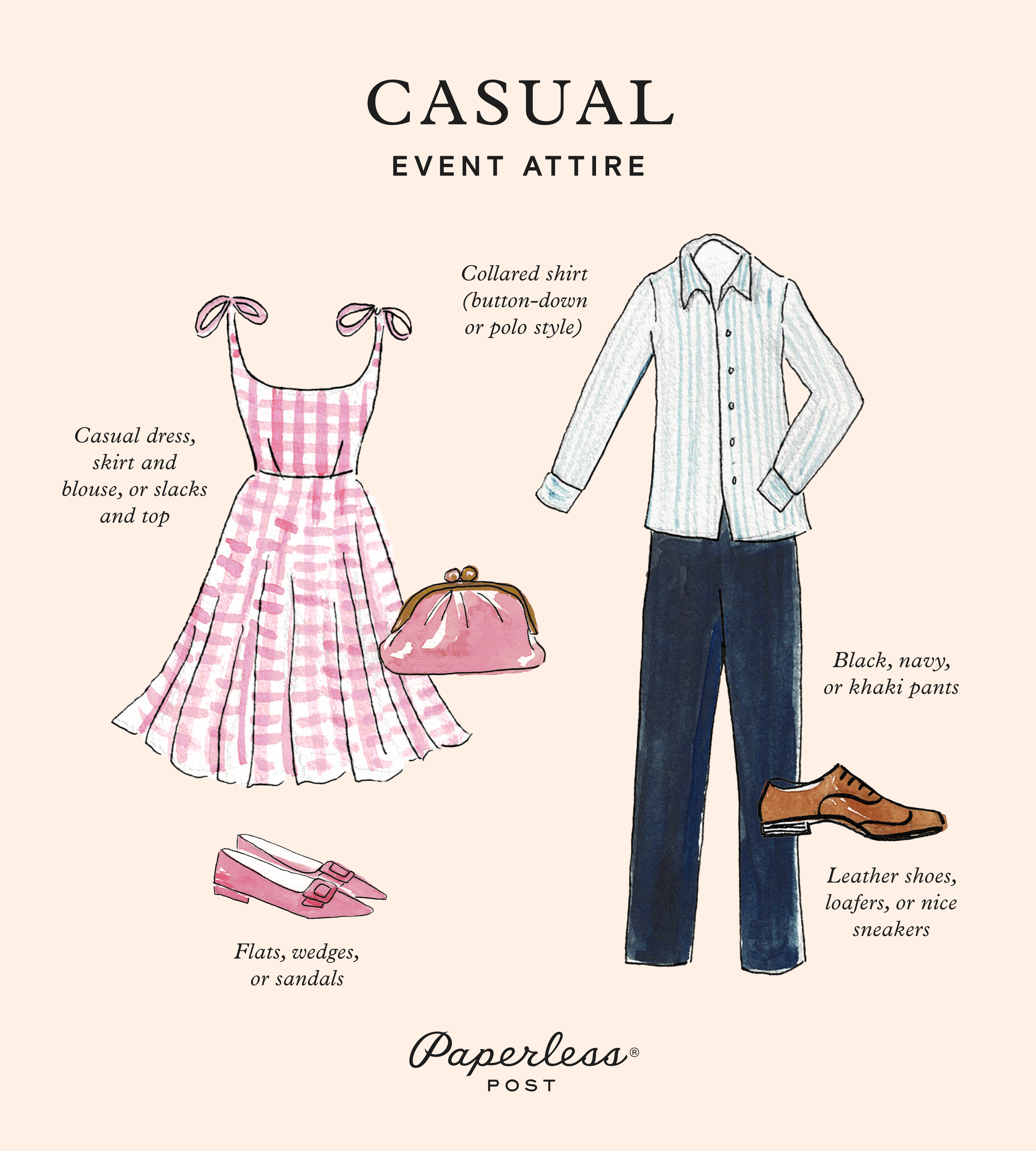
Knowing what counts as casual attire helps you explain it. Here are some real-life examples:
For Men
- Jeans or chinos
- Plain t-shirt or polo shirt
- Casual button-down shirt
- Sneakers or loafers
For Women
- Jeans or leggings
- Casual blouse or top
- Simple dress (not formal)
- Flats or sneakers
For Kids
- Shorts or jeans
- T-shirt
- Sneakers
Common Mistakes When Describing Casual Attire
Many people make mistakes when trying to say casual attire. Here are a few:
- Being Too Vague
- Just saying “casual” without examples.
- Using Confusing Words
- Using “smart casual” when you mean “casual.”
- Not Explaining Restrictions
- Failing to say what is not allowed.
- Assuming Everyone Knows
- Not considering cultural differences.
How To Avoid Mistakes
- Always add examples.
- Clearly state what is not allowed.
- If in doubt, show a picture.
How To Respond When Asked About Casual Attire
If someone asks you what to wear, here’s how to answer:
- “Wear anything comfortable, like jeans and a t-shirt.”
- “No need for formal clothes—just casual.”
- “Sneakers are okay, but please avoid flip-flops.”
If you’re not sure, ask about the event or place.
How To Set A Casual Attire Policy
For organizations, creating a casual attire policy helps everyone understand what’s acceptable. Here’s how:
- Define Casual Attire
- List acceptable clothes.
- Give examples.
- Set Restrictions
- Explain what is not allowed.
- Communicate Clearly
- Share the policy in emails or meetings.
- Review Regularly
- Update as needed.
Sample Casual Attire Policy
“Our company allows casual attire on Fridays. Acceptable items include jeans, polos, sneakers. Please avoid shorts, flip-flops, and clothing with offensive graphics. ”
How To Use Casual Attire In Written Communication
When writing emails, signs, or policies, the way you say casual attire matters. Here are tips:
- Use simple sentences.
- Add examples.
- Mention what is not allowed.
- Use a friendly tone.
Sample Email
“Hi team, Friday is casual attire day! Feel free to wear jeans, t-shirts, and sneakers. Please avoid shorts or sandals. Enjoy!”
How To Say Casual Attire For Different Age Groups
Different age groups may need different explanations.
Children
- “Wear play clothes—jeans, t-shirts, sneakers.”
Teenagers
- “Dress comfortably; jeans and casual tops are perfect.”
Adults
- “Casual attire means neat jeans, polos, or casual dresses.”
Seniors
- “Dress comfortably in relaxed but tidy clothes.”
How To Say Casual Attire For Different Seasons
Seasons affect what counts as casual attire.
Summer
- “Casual attire—short sleeves, jeans, or shorts (if allowed).”
- “Dress for warm weather.”
Winter
- “Casual attire—sweaters, jeans, closed shoes.”
- “Dress warmly and comfortably.”
How To Say Casual Attire For Different Body Types
Everyone wants to feel comfortable. Here’s how to explain casual attire for different body types:
- “Wear clothes you feel good in—jeans, tops, sneakers.”
- “Choose comfortable, relaxed clothing.”
How To Say Casual Attire Online
Online events may also have dress codes, even if only seen on camera.
- “Casual attire for video meetings—no need for formal wear.”
- “Dress comfortably, but avoid pajamas.”
How To Say Casual Attire For Formal Events With Relaxed Dress Codes
Some formal events allow casual attire. Here’s how to phrase it:
- “Casual attire welcome—no need for formal suits.”
- “Dress relaxed but neat.”
Casual Attire Vs. Other Dress Codes
Understanding the difference helps you explain better.
Comparison Table: Casual Vs. Smart Casual Vs. Formal
| Dress Code | Description | Common Items |
|---|---|---|
| Casual Attire | Relaxed, comfortable, everyday | Jeans, t-shirts, sneakers |
| Smart Casual | Neat, stylish, not formal | Blazers, nice jeans, loafers |
| Formal | Strict, elegant | Suits, ties, dresses |
Real-life Data: How People Interpret Casual Attire
A survey from Dress Code Research found:
- 65% of people see casual attire as jeans and t-shirts.
- 20% expect neat, stylish clothes.
- 15% are unsure and need more guidance.
This shows most people need examples or extra details.
Practical Tips For Saying Casual Attire
Here are simple tips to help you communicate casual attire:
- Always give examples.
- Explain what not to wear.
- Consider the event and location.
- Use images if possible.
- Keep your language simple.
- Be friendly and clear.
Advanced Insights: What Beginners Miss
Many beginners forget that casual attire depends on:
- Cultural context: Casual in one country can be formal in another.
- Event type: Casual for a picnic is different from casual at work.
Another insight: If you don’t explain, people may overdress to avoid embarrassment. Giving examples and restrictions helps everyone feel at ease.

Credit: www.wikihow.com
When To Use “casual Attire” And When To Avoid It
Use “casual attire” when:
- You want a relaxed atmosphere.
- You don’t mind how people dress, as long as it’s neat.
Avoid “casual attire” if:
- The event needs some formality.
- You expect people to follow specific rules.
How To Handle Questions About Casual Attire
If guests or employees have questions, answer with:
- Clear examples.
- Restrictions.
- Friendly guidance.
If they’re unsure, suggest safe options: “If you’re not sure, jeans and a plain shirt are always okay.”
Frequently Asked Questions
What Is Casual Attire?
Casual attire means comfortable, everyday clothes that are not formal. It often includes jeans, t-shirts, sneakers, and casual shirts. It should be neat and tidy, not messy or dirty.
Can I Wear Shorts For Casual Attire?
It depends on the event and location. For many casual events, shorts are fine if they are not too short or revealing. Always check if the organizer has restrictions.
How Is Casual Attire Different From Smart Casual?
Smart casual is a step above casual. It is still relaxed but more stylish and neat. You might wear a blazer, nice jeans, or dress shoes for smart casual, but not for casual attire.
What Should I Avoid When Dressing Casual?
Avoid clothes that are messy, dirty, or too revealing. Do not wear flip-flops, tank tops, gym clothes, or pajamas. Always aim for comfort and tidiness.
How Do I Explain Casual Attire To Someone Who Doesn’t Speak English Well?
Use simple words and examples: “Wear comfortable clothes, like jeans and t-shirts. No formal clothes needed.” If possible, show pictures or give extra details.
Final Thoughts
Communicating casual attire is not just about saying two words. It’s about making people comfortable and confident in how they dress. Whether you’re planning an event, making a policy, or helping a friend, clear communication is key. Give examples, explain what’s not allowed, and be friendly. Remember, casual attire changes by country, season, and event—so always add details when needed. With these tips, you can say “casual attire” in a way that everyone understands and appreciates.
For deeper understanding about dress codes, check Wikipedia’s Dress Code page.
Credit: www.paperlesspost.com
