

How to Make Tee Shirt Dress: Easy DIY Guide for Beginners
How To Make Tee Shirt Dress
Making a tee shirt dress is an exciting way to create a stylish and comfortable outfit using simple materials. You don’t need advanced sewing skills or expensive equipment. With the right guidance, even beginners can transform an ordinary tee shirt into a fashionable dress that fits their personality. Many people love the versatility of a tee shirt dress because it works for casual days, parties, or even as a beach cover-up. This article will walk you through every step, from choosing the right tee shirt to adding personal touches, so you end up with a dress you’re proud to wear.
Why Make A Tee Shirt Dress?
Many people buy dresses from stores, but making your own tee shirt dress gives you control over the look and fit. It’s also a sustainable choice, as you can upcycle old shirts instead of throwing them away. You save money, learn a new skill, and create something unique that no one else has. If you love DIY projects, this is a fun way to show your creativity.
Some people worry about making mistakes, but working with a tee shirt is low risk. Mistakes are easy to fix, and the materials are often cheap or even free. You also learn how different fabrics behave, which helps you in other sewing projects.
Choosing The Right Tee Shirt
The tee shirt you choose is the base for your dress. Choosing carefully can make the difference between a dress you love and one you never wear.
Size Matters
A tee shirt dress should be roomy enough to move but not look baggy. Oversized shirts work best, especially if you want a relaxed or loose style. As a rule, pick a shirt at least two sizes bigger than your usual top. This gives enough fabric for the skirt part and lets you adjust the shape.
Fabric Type
The most common tee shirts are cotton or a cotton blend. Pure cotton is soft and breathable, but it can shrink. Blends with polyester keep their shape better and resist wrinkles. For a summer dress, lightweight fabric is best. For a fall or winter look, choose something thicker.
Color And Pattern
Solid colors are easy to style, but don’t be afraid to try stripes, graphics, or tie-dye. If you want to add decorations later, start with a plain shirt. Darker colors hide mistakes better, while light colors show off details.
Condition
Pick a shirt in good condition. Check for holes, stains, or stretched necklines. If you’re using a shirt from your closet, wash it before starting, so you know how the fabric behaves.
Tools And Materials
Gather your tools before starting to avoid interruptions. Here’s what you’ll need:
- Oversized tee shirt (washed and dried)
- Fabric scissors (sharp scissors make clean cuts)
- Sewing machine or needle and thread
- Measuring tape or ruler
- Chalk or washable fabric marker
- Straight pins or clips
- Elastic band (optional, for fitted styles)
- Iron and ironing board
- Extra fabric (if adding panels or ruffles)
- Decorative items (patches, lace, buttons, etc.)
Having the right tools makes the process smoother. If you don’t have a sewing machine, hand-sewing works too, though it takes longer.
Planning Your Dress Style
There are many ways to design a tee shirt dress. Before you cut or sew, think about what style you want.
Popular Tee Shirt Dress Styles
- Straight dress: Simple, loose, and comfortable. It keeps the shirt’s original shape but is long enough to be a dress.
- Fitted waist: Adds elastic or a drawstring to create a waistline.
- A-line: Wider at the bottom, giving a feminine shape.
- Asymmetrical: Hem is longer on one side or has a high-low effect.
- Off-the-shoulder: Cut the neckline wider for a trendy look.
- Layered: Add ruffles, panels, or lace for extra detail.
Decide what suits your personality and needs. You can always combine ideas or add your own twist.
Measuring And Sizing
Getting the right fit starts with accurate measurements. Don’t skip this step, even if you think you know your size.
- Length: Decide how long you want the dress. Use a measuring tape to measure from your shoulder (where the shirt sits) to your desired hemline (above the knee, knee-length, or longer).
- Width: Check the shirt’s width at the chest, waist, and hips. Make sure it’s not too tight.
- Waist placement: If adding a waist, measure from the shoulder down to where you want the elastic or seam.
Write down your numbers and add a little extra (about 1-2 centimeters) for seam allowance. Mark the shirt with chalk or a fabric marker.
Cutting The Tee Shirt
Cutting can be scary, but it’s easier if you plan well. Always cut less than you think—you can trim more, but you can’t add fabric back.
Basic Cutting Steps
- Lay the shirt flat on a smooth surface.
- Use chalk to mark the new hemline. For an A-line, angle the lines out from the underarms.
- If making an off-the-shoulder dress, mark a new neckline.
- For a fitted waist, mark where you’ll place the elastic or seam.
Cut slowly, following your marks. Save extra pieces; you might use them for pockets or decoration.
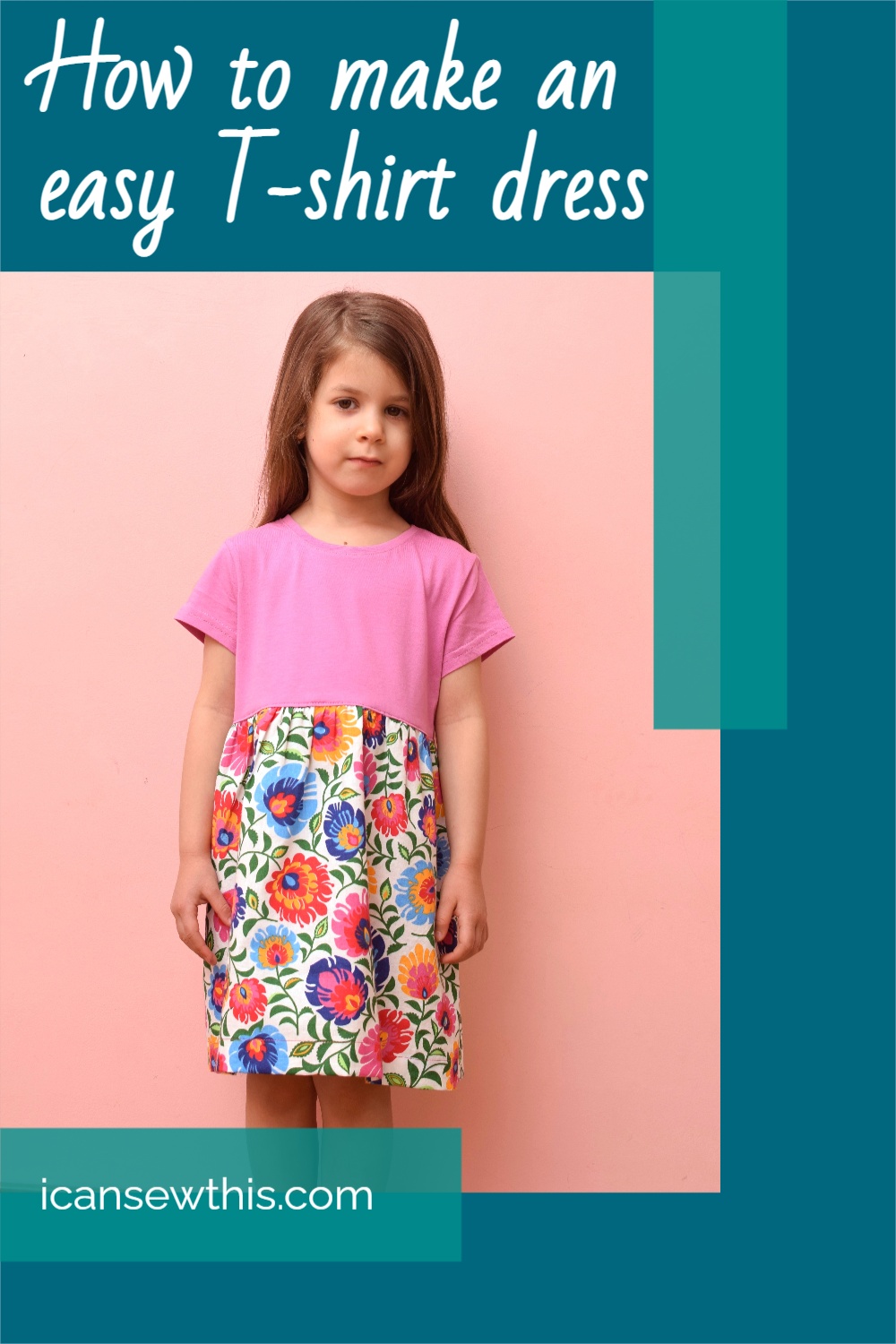
Credit: icansewthis.com
Sewing The Dress
You don’t need advanced skills to sew a tee shirt dress. Most of the sewing is straight lines. If you make a mistake, it’s easy to undo and try again.
Sewing The Hem
Fold the bottom edge under about 1 centimeter and pin it in place. Use a straight stitch (or a zigzag for stretchy fabric) to sew the hem. Go slowly to keep the line neat.
Adding A Waist
If you want a fitted waist, cut a piece of elastic to fit around your waist. Sew the elastic to the inside of the shirt at your marked line. Stretch the elastic as you sew so the fabric gathers evenly.
Adjusting The Sides
For a slimmer shape, turn the shirt inside out. Pin along the sides to create your desired fit. Try the dress on before sewing. Sew new side seams with a straight stitch, then trim away the extra fabric.
Neckline Changes
For an off-the-shoulder style, cut a wider neckline. Fold the edge under and stitch, or add a decorative trim.
Adding Extra Length Or Layers
If your shirt is too short, don’t worry. You can add fabric to the bottom for a unique look.
Using Extra Fabric
Cut a strip of matching or contrasting fabric. Gather it slightly to make a ruffle, or attach it flat for a color block effect. Pin the fabric to the bottom edge of the dress, right sides together. Sew the seam, then fold the fabric down and press with an iron.
Multi-layered Styles
You can add more than one layer for a playful look. Mix colors, patterns, or textures for a creative design.
Pockets And Details
Pockets make any dress more practical. Use leftover fabric to cut pocket shapes. Pin them to the sides at hip level, making sure both are even. Sew around the edges, leaving the top open.
Other fun details:
- Lace trim: Sew lace along the hem or sleeves.
- Decorative buttons: Add to the front or shoulders.
- Iron-on patches: Personalize with graphics or initials.
- Embroidery: Stitch simple designs for a handmade touch.
Finishing Touches
A good finish makes your dress look professional. Press all seams with an iron for a crisp look. Trim any loose threads inside the dress. If you want, wash the dress to see how it holds up. Make any final adjustments needed.
Styling Your Tee Shirt Dress
A tee shirt dress is easy to style for many occasions. Here are some ideas:
- Casual: Wear with sneakers and a denim jacket.
- Office: Add a belt and blazer for a smart look.
- Beach: Use as a cover-up with flip-flops.
- Night out: Pair with boots and bold jewelry.
Try different accessories to see what you like best. The dress can be as simple or fancy as you want.
Example: Step-by-step Basic Tee Shirt Dress
Let’s walk through making a simple straight tee shirt dress with an optional fitted waist.
- Choose a shirt at least two sizes larger than your normal top.
- Mark the length you want (e.g., just above the knee).
- Cut the hem straight across.
- Fold the bottom edge under 1 centimeter, pin, and sew the hem.
- Try on the dress. Mark your waistline with chalk.
- Cut elastic to fit your waist. Pin it inside the shirt at your waist mark.
- Sew the elastic to the shirt, stretching it as you go.
- Trim extra fabric if needed from the sides for a closer fit.
- Add pockets or decorations as you like.
- Iron the dress and check for loose threads.
You Now Have A Finished Tee Shirt Dress!

Credit: www.youtube.com
Common Mistakes And How To Avoid Them
Many beginners repeat simple mistakes. Here’s how to prevent them:
- Not measuring carefully: Always measure twice and cut once. Mistakes here are hard to fix.
- Choosing the wrong size: Too small, and the dress won’t fit. Too large, and it may look shapeless.
- Skipping seam allowance: Leave extra fabric when cutting for sewing room.
- Sewing elastic without stretching: If you sew elastic flat, it won’t gather the fabric.
- Not pressing seams: Ironing makes the dress look neat and finished.
Tee Shirt Dress Variations
There’s no limit to how you can customize your dress. Here are some creative ideas:
High-low Hem
Cut the front hem shorter than the back for a trendy high-low effect. Mark your lines before cutting, and sew the hem carefully.
Ruffled Sleeves
Use extra shirt fabric or a contrasting color to make ruffled sleeves. Cut strips, gather the edges, and sew to the armholes.
Patchwork Style
Use pieces from different shirts to make a color-block or patchwork dress. This style is great for using up leftover fabric.
Drawstring Waist
Instead of elastic, sew a casing at the waist and thread a drawstring through. This lets you adjust the fit each time you wear the dress.
Off-the-shoulder
Cut the neckline wider, then sew elastic around the edge to keep it in place. This style is perfect for summer.
Upcycling Old Tee Shirts
Turning old shirts into dresses is eco-friendly. It keeps fabric out of landfills and lets you create something new from what you already own. Try using shirts with fun graphics, or mix two shirts for a double-layered look.
Comparing Tee Shirt Dress Styles
To help you choose, here’s a comparison of popular tee shirt dress styles.
| Style | Fit | Difficulty | Best For |
|---|---|---|---|
| Straight | Loose | Easy | Casual wear |
| Fitted waist | Shaped | Medium | Dressy/casual |
| A-line | Flared | Medium | Feminine look |
| Off-the-shoulder | Relaxed | Medium | Summer style |
Cost And Time Comparison
People often ask if making a tee shirt dress is worth the effort compared to buying one. Here’s a simple breakdown.
| Option | Average Cost | Time Needed | Customization |
|---|---|---|---|
| DIY Tee Shirt Dress | Low (often under $10) | 1–2 hours | High |
| Store-bought Dress | Medium to High | None | Low |
As you can see, making your own is usually cheaper and lets you create a truly personal piece.
Care And Washing Tips
To keep your tee shirt dress looking good:
- Wash in cold water to prevent shrinking.
- Hang to dry, or use low heat in the dryer.
- Iron on low if needed.
- Avoid bleach, which can weaken fabric and fade color.
If you added decorations like lace or patches, turn the dress inside out before washing.
Non-obvious Tips For Success
- Test your stitches on a fabric scrap before sewing the dress. This prevents skipped stitches or tension problems.
- Use ballpoint needles when sewing knit fabrics. These special needles prevent snags and holes.
- If you want a super-clean hem, use hem tape before sewing. It helps keep the edge flat.
- For a dress with more movement, cut the side seams open from the bottom up a few inches and hem the edges for side slits.
- Try adding a hidden pocket inside the dress for keys or money. Cut a small square of fabric, sew it to the inside seam, and you have a secret storage spot.
Real-world Example
Alex wanted a dress for a summer picnic. She found an oversized, bright blue tee shirt at a thrift store for less than $2. She measured and cut the shirt, added a ruffled white band at the bottom, and used iron-on patches for decoration.
The whole project took her just over an hour. The result was a cool, one-of-a-kind dress that got lots of compliments. She even made a matching headband from the leftover fabric.
Where To Find Inspiration
If you need design ideas, check fashion blogs, Pinterest, or social media. Many people share their projects and tips. You can also visit sewing forums or watch video tutorials for help with tricky steps. For more technical knowledge about knit fabrics, you can visit Wikipedia.
Frequently Asked Questions
What Size Tee Shirt Should I Use For A Tee Shirt Dress?
Choose a shirt at least two sizes bigger than your usual size. This gives you enough room for comfort and lets you adjust the fit. If you like a tighter style, you can always take in the sides later.
Can I Make A Tee Shirt Dress Without A Sewing Machine?
Yes, you can sew by hand using a needle and thread. Use small, tight stitches for strength. It takes longer, but the result is just as good if you’re careful.
What If My Tee Shirt Is Too Short For A Dress?
Add a band of fabric, lace, or a ruffle to the bottom. You can use material from another shirt or buy a small piece of matching fabric. This not only adds length but also a unique style.
How Do I Make The Waist Fitted?
There are two easy methods: sew an elastic band inside at the waist, or create a casing and thread a drawstring through. Both options are simple and let you adjust the dress for your body.
Is It Possible To Add Sleeves Or Change The Style Later?
Yes, you can add sleeves using fabric from another shirt, or change the neckline and hem anytime. One benefit of a tee shirt dress is that it’s easy to update or repair as your style changes.
Making your own tee shirt dress is not just about saving money—it’s about expressing creativity and learning new skills. With a little time and practice, you’ll have a wardrobe of comfortable, personal dresses that suit every occasion. Enjoy your project and don’t be afraid to experiment!

Credit: www.youtube.com
