

How to Make a Large T Shirt Fitted: Easy DIY Tailoring Tips
Most people have a large T shirt in their closet that doesn’t quite fit right. Maybe you got it as a gift, or you bought it for comfort, but now you want to wear it with style. Wearing a large shirt can look sloppy if it’s too loose or baggy, but you don’t have to leave it unused.
With a few smart adjustments, you can make a large T shirt fitted and flattering for your body shape. This guide will take you step-by-step through practical, simple ways to transform an oversized T shirt into your new favorite fitted top, even if you’re not an expert at sewing.
The process can be as basic as tying a knot or as advanced as using a sewing machine. You don’t need special skills or expensive tools—just a bit of creativity and patience. Along the way, you’ll learn how to avoid common mistakes, choose the right method for your needs, and make the most out of what you already have.
Let’s explore how you can make any large T shirt look custom-fitted and stylish, and give your wardrobe a fresh twist.
Why Make A Large T Shirt Fitted?
Large T shirts are comfortable, but they often hide your natural shape. Wearing a fitted shirt helps you look polished and put-together. It’s not just about fashion—fitted shirts feel better and stay in place, whether you’re working, exercising, or relaxing.
Making a T shirt fitted can also save money, since you don’t need to buy new clothes when your style changes or your size shifts.
Another advantage is the chance to personalize your look. When you adjust a shirt yourself, you can create a fit that’s unique to you. This is especially helpful if you have a hard time finding the perfect size in stores.
Plus, transforming a large shirt can be satisfying and eco-friendly, as you reuse and upcycle what you already own.
Understanding Fit: What Does “fitted” Mean?
Before you start, it’s important to know what a fitted T shirt should look like. A fitted shirt is not tight or uncomfortable. Instead, it gently follows the lines of your body. The sleeves should not be too loose or too tight, the shoulders should sit correctly, and the body of the shirt should have a little shape at the waist.
Here are some signs your shirt fits well:
- The shoulder seam lines up with the edge of your shoulder.
- The sleeves hug your arms but don’t squeeze.
- The shirt tapers slightly at your waist.
- The hem ends around your hips, not too long or short.
A good fit helps you look neat and feel confident. The goal is to adjust the shirt so it flatters you, not to make it skin-tight or uncomfortable.
Methods To Make A Large T Shirt Fitted
There are many ways to make a large T shirt fitted. Some require sewing, while others use knots, ties, or simple tricks. Let’s break down the most effective methods and help you choose the right one for your situation.
1. Simple Knotting Techniques
Knotting is one of the easiest ways to make a large T shirt fitted. You don’t need any tools or sewing knowledge. This method works best for casual looks or when you want a quick fix.
Basic Front Knot
- Gather the excess fabric at the front, near your waist.
- Twist the fabric into a tight rope.
- Tie a small knot and tuck the ends under.
This instantly pulls the shirt in at your waist and creates a trendy, cropped effect.
Side Knot
- Pull the extra fabric to one side of your waist.
- Tie a knot for an asymmetrical look.
Side knots add a bit of style and work well with high-waisted pants or skirts.
Back Knot
- Gather the fabric at the back, in the middle or to one side.
- Tie a knot and tuck it under the shirt.
Back knots create a clean look in the front and are great for layering.
Pro Tip: Use a small clear elastic or hair tie for a neater knot that stays in place.
2. Using Safety Pins Or Clips
If you want a temporary fitted look without sewing, you can use safety pins or clips on the inside of the shirt.
- Turn the shirt inside out.
- Pinch the fabric at both sides of your waist.
- Use safety pins or small binder clips to hold the excess fabric.
Turn the shirt right side out, and you’ll have a more tailored shape. This method is perfect if you want to test the fit before making permanent changes.
3. No-sew Tucking Methods
Tucking your shirt in different ways can also make it look fitted. Here are a few popular styles:
Full Tuck
- Tuck the entire shirt into your pants or skirt.
- Pull up gently to create a little puff for a relaxed, fitted look.
French Tuck
- Tuck in only the front part of your shirt.
- Leave the back loose.
The French tuck is popular because it gives shape without looking too formal.
Side Tuck
- Tuck one side of your shirt into your waistband.
- Let the other side hang loose for a modern, casual fit.
Non-Obvious Insight: The way you tuck can change your whole silhouette. For example, a French tuck works well for hiding a tummy, while a side tuck highlights your waist.
4. Shrinking With Heat
If your T shirt is made from cotton or a cotton blend, you can shrink it with heat. This method is simple, but you need to be careful not to overdo it.
Steps:
- Wash the shirt in hot water.
- Dry it on high heat in a dryer.
Check the fit after one cycle. Repeat if needed, but avoid shrinking it too much, as the fabric can become stiff or uneven.
Warning: Some shirts won’t shrink evenly, and this method may not work for polyester or synthetic fabrics.
5. Diy Sewing Adjustments
Sewing offers the most control and a professional finish. You can use a sewing machine or sew by hand. Here are the main techniques:
Taking In The Sides
- Turn the shirt inside out and put it on.
- Pin along the sides to mark how much you want to take in.
- Remove the shirt and sew along the pinned lines.
- Trim the excess fabric and finish the edges.
This method creates a custom fit at the waist, hips, and chest.
Creating Darts
Darts are small, sewn folds that remove extra fabric and shape the shirt.
- Try the shirt on inside out.
- Pinch the fabric at the back or sides where it’s too loose.
- Pin these spots and sew straight lines to create darts.
Darts are great for adding shape at the waist or bust.
Shortening The Hem
If your shirt is too long, you can cut and hem the bottom.
- Mark the new length with chalk.
- Cut off the excess fabric.
- Fold and sew a new hem.
Pro Tip: Use a zigzag stitch or a serger for stretchy fabric to keep the seam strong.
6. Adding Elastic For A Fitted Look
Adding elastic is a smart way to create a fitted waist or sleeves. This technique works well for T shirts that are too boxy.
Steps:
- Turn the shirt inside out.
- Stretch elastic around your waist or sleeve area and pin it in place.
- Sew the elastic while gently stretching it, so the fabric gathers as you sew.
When you turn the shirt right side out, it will have a ruched, fitted look.
7. Tie-back Or Corset Style
For a trendy, adjustable fit, you can cut the back of your shirt and add laces or ties.
- Cut straight slits down the back of the shirt.
- Thread ribbon or shoelaces through the slits.
- Tie them for a custom, cinched look.
This method is bold and perfect for festival or streetwear styles.
8. Layering Tricks
Wearing layers can make a large shirt look more fitted. For example:
- Wear a fitted tank top underneath, then tuck or knot the shirt.
- Add a belt over the shirt to define your waist.
- Layer with a jacket or cardigan to hide loose fabric.
Layering is a great option if you want a fitted look without changing the shirt permanently.
9. Professional Tailoring
If you want a perfect fit and don’t want to DIY, a tailor can help. Taking a shirt to a professional is a good choice for expensive or sentimental items. Tailors can adjust the sides, shoulders, sleeves, and hem for a custom look.
Non-Obvious Insight: Tailoring is often more affordable than buying a new fitted shirt, especially for high-quality or branded T shirts.
Choosing The Best Method For Your Needs
Not every method works for every shirt or situation. Here’s a quick comparison of the most popular ways to make a large T shirt fitted:
| Method | Best For | Time Needed | Permanence | Skill Level |
|---|---|---|---|---|
| Knotting | Quick, casual styles | 1-2 minutes | Temporary | Beginner |
| Safety Pins/Clips | Testing fit | 5-10 minutes | Temporary | Beginner |
| Sewing | Custom fit, permanent | 30-60 minutes | Permanent | Intermediate |
| Elastic | Adding shape | 20-30 minutes | Permanent | Intermediate |
| Shrinking with Heat | Cotton shirts | 1 hour | Semi-permanent | Beginner |
| Tie-Back | Trendy, bold looks | 30-45 minutes | Permanent | Intermediate |
| Tailoring | Special shirts | Varies | Permanent | Professional |
Think about your goal. Do you want a quick fix, or are you ready for a permanent change? Are you comfortable sewing, or do you prefer no-sew tricks? Pick the method that matches your skills, needs, and style.
Tools And Materials You Might Need
Depending on the method, you may need some of these tools:
- Sewing machine (for permanent adjustments)
- Needle and thread
- Pins or safety pins
- Fabric scissors
- Chalk or fabric marker
- Measuring tape
- Elastic band
- Ribbons or shoelaces (for tie-back style)
- Iron and ironing board
Most items are easy to find at home or in a basic sewing kit.
How To Take Accurate Measurements
Getting the right fit starts with good measurements. Here’s how to measure yourself for a fitted T shirt:
- Chest: Measure around the fullest part of your chest, under your arms.
- Waist: Measure around the smallest part of your waist.
- Hips: Measure around the widest part of your hips.
- Shoulders: Measure from one shoulder edge to the other.
- Sleeve Length: Measure from shoulder to where you want the sleeve to end.
Write down your measurements and compare them to your T shirt. This will help you decide where to take in or adjust the fabric.
Step-by-step Guide: Sewing A Large T Shirt To Make It Fitted
If you want a permanent, professional look, sewing is the best method. Here’s a complete guide:
What You’ll Need
- Large T shirt
- Pins or chalk
- Sewing machine or needle and thread
- Scissors
- Measuring tape
Instructions
- Try on the shirt inside out. This lets you pin or mark the areas you want to adjust.
- Pin along the sides. Start at the armpit and go down to the hem. Shape the sides for your waist and hips.
- Mark the lines. Use chalk or a fabric marker to draw along the pin lines.
- Take off the shirt and lay it flat.
- Sew along the lines. Use a straight stitch for cotton, or a zigzag stitch for stretch fabrics.
- Try it on again. Check the fit and make any extra adjustments.
- Trim the excess fabric. Leave a small edge (about 1 cm) to prevent fraying.
- Finish the seams. Use a zigzag stitch or serger if you have one.
- Press the seams. Use an iron to flatten them for a neat look.
Extra Tip: If you’re new to sewing, practice on a scrap piece of fabric first.
Common Mistakes To Avoid
Many people make simple mistakes when trying to make a large T shirt fitted. Here’s how to avoid them:
- Cutting off too much fabric: Always start with small adjustments. You can take off more, but you can’t add it back.
- Ignoring fabric type: Cotton shrinks, but polyester does not. Stretchy fabrics need zigzag stitches.
- Not measuring: Guessing can lead to an uneven or too-tight fit.
- Sewing before pinning: Always pin and check the fit before sewing.
- Forgetting seam finishing: Raw edges can unravel. Finish seams with zigzag or overlock stitches.
- Over-shrinking: Too much heat can make fabric stiff and uncomfortable.
- Skipping a test fit: Try on the shirt after each step, especially before making permanent cuts.
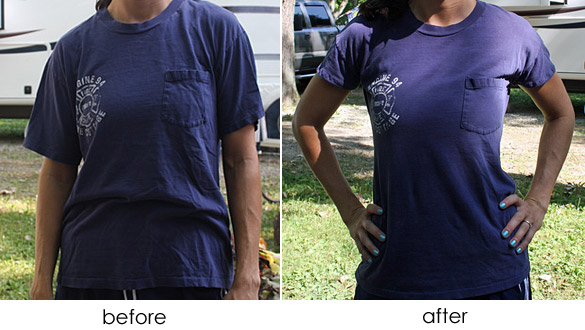
Credit: www.andreasteed.com
How Different Body Shapes Affect Fit
Not everyone wants the same kind of fitted shirt. Here’s how to adjust for different body types:
- Hourglass: Take in at the waist, keep room at the hips and bust.
- Pear: Focus on shaping the waist and upper body, leave space at the hips.
- Apple: Add shape at the sides but avoid a too-tight waist.
- Rectangle: Add darts or elastic to create the illusion of curves.
Non-Obvious Insight: Sometimes, small changes like adjusting the sleeve length or neckline can make a shirt look much more fitted, even without changing the body.
Diy Vs. Professional Tailoring: Which To Choose?
Here’s a quick comparison to help you decide whether to DIY or go to a tailor:
| Factor | DIY | Tailor |
|---|---|---|
| Cost | Low | Medium to High |
| Time | Immediate | Several days |
| Skill Needed | Basic to Intermediate | None |
| Quality | Varies | Professional |
| Customization | High | Very High |
If you want a quick and cheap solution, DIY works well. For special shirts or perfect results, a tailor is worth considering.
Creative Customization Ideas
Once your shirt is fitted, you can add extra style:
- Iron-on patches or embroidery for a unique look
- Fabric paint for custom designs
- Cut-out shoulders or necklines for a trendy finish
- Add pockets or trim for detail
Personalizing your fitted T shirt makes it stand out and reflects your style.
Caring For Your Fitted T Shirt
After adjusting your shirt, take care to keep it looking good:
- Wash in cold water to prevent shrinking.
- Air dry or use low heat to protect seams.
- Store folded, not hung, to keep its shape.
If you added elastic or sewed new seams, check them regularly and repair as needed.
When To Buy A New Shirt Instead
Sometimes, a shirt is simply too big or the fabric is too worn out to fit well, even with adjustments. If the seams are tearing, the fabric is see-through, or it just won’t hold a new shape, it might be time to recycle the shirt or use it as a cleaning rag.
Non-Obvious Insight: Sometimes, the cost of altering a shirt is higher than getting a new one—especially for basic T shirts. Know when to let go and invest in a better base garment.
Real-world Examples
Let’s look at a couple of examples:
- Case 1: Maria has a large cotton T shirt from a concert. She uses the side knot method for casual days. For work, she uses safety pins inside the shirt to create a waist shape.
- Case 2: Alex tries the shrinking method but finds the sleeves are still too loose. He decides to sew in the sides using his home sewing machine and gets a perfect fit.
- Case 3: Priya wants a bold look for a party. She cuts slits in the back and threads a bright ribbon, tying it in a bow for a custom corset effect.
These examples show that you can find a method that matches your style, skills, and needs.
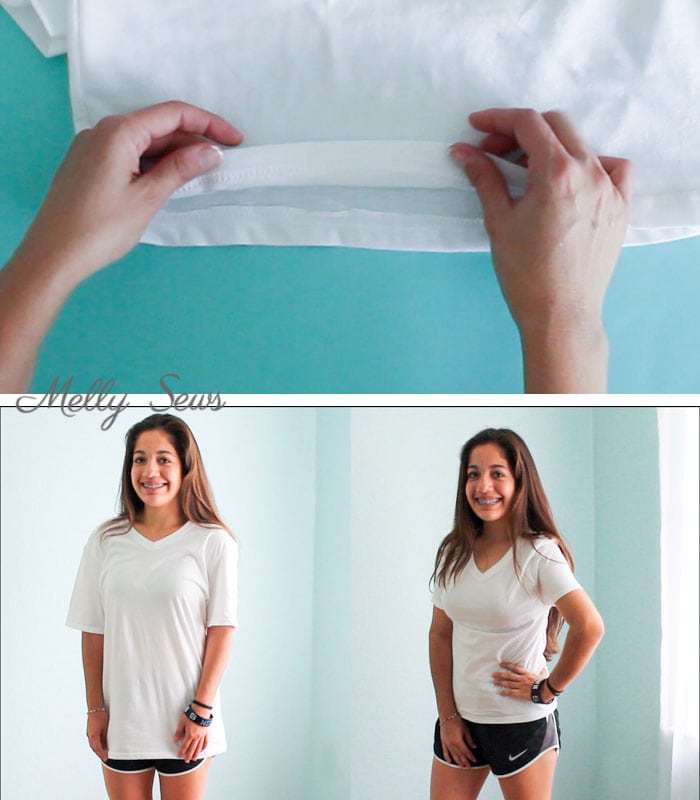
Credit: mellysews.com
Sustainability And Upcycling
Making a large T shirt fitted is a great way to be eco-friendly. Instead of throwing away or donating old shirts, you give them new life. Upcycling your clothes reduces waste and can even become a fun hobby. You might even inspire others to customize and reuse their clothes, helping the environment and saving money.
If you’re interested in more upcycling ideas, check out resources like Treehugger for inspiration and tips.
Frequently Asked Questions
How Do I Make A T Shirt Fitted Without Sewing?
You can use knots, tucks, or safety pins to shape a large T shirt without sewing. Try a front or side knot, tuck the shirt into your waistband, or use pins inside the shirt to pull in the sides. These methods are quick, easy, and don’t damage the shirt.
Will Shrinking A Shirt In The Dryer Make It Fitted?
Shrinking works for cotton shirts, but results can be uneven. Wash the shirt in hot water and dry on high heat, but check often to avoid over-shrinking. This method doesn’t work well for polyester or blends and won’t adjust the fit at the shoulders or sleeves.
Can I Add Elastic To Any T Shirt?
Yes, you can add elastic to most shirts, but it works best with cotton or stretch fabrics. Sew elastic at the waist, hem, or sleeves to create a gathered, fitted look. Make sure to use a stretch stitch for best results.
Is It Better To Tailor A T Shirt Or Buy A New One?
If your shirt has sentimental value or is high-quality, tailoring is a good choice. For basic shirts, it may be cheaper to buy a new fitted one. Weigh the cost, effort, and the shirt’s value before deciding.
What If I Make A Mistake While Altering My Shirt?
Start with small changes, and always try on the shirt after each step. If you cut too much fabric, you can sometimes add panels or patches, but not all mistakes are fixable. Practicing on an old shirt first can help you avoid errors.
A fitted T shirt can make you look and feel your best. Whether you choose a quick knot, a clever sewing hack, or a creative upcycle, you now have all the tools you need to turn any large T shirt into a favorite, custom-fit piece.
Enjoy the process and wear your new look with confidence!
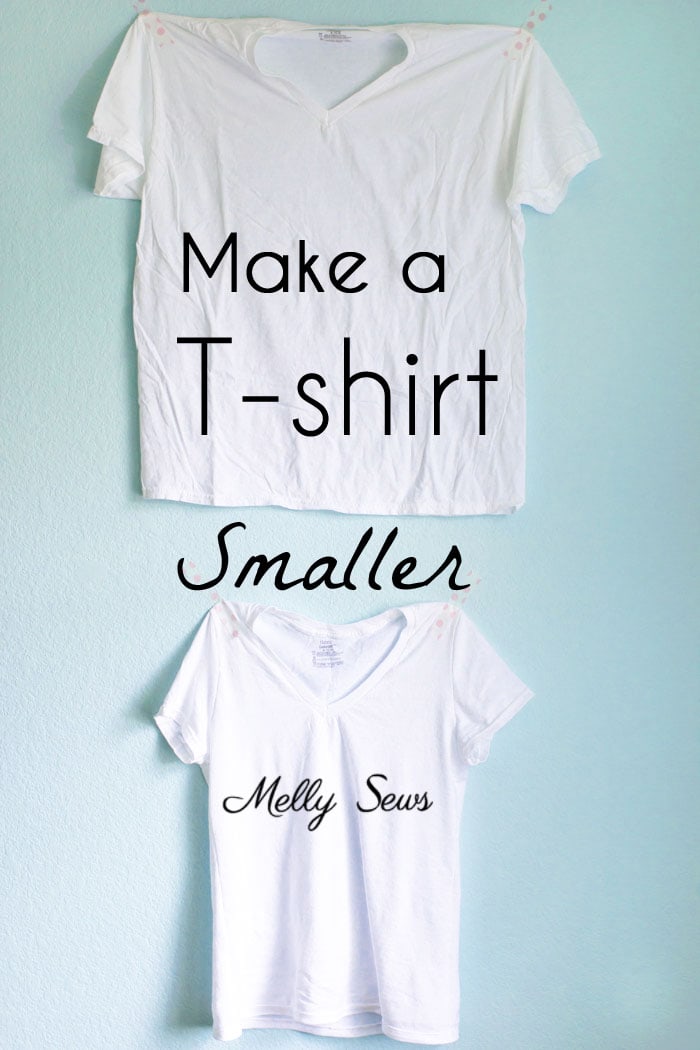
Credit: mellysews.com
