

How to Look Good in Business Casual: Expert Tips for Effortless Style
How To Look Good In Business Casual
Business casual is a style that mixes professional and relaxed clothing. It’s popular in many workplaces because it feels comfortable, but also looks neat. Some people find business casual confusing: What does it really mean? How can you look sharp without being too formal? This guide will help you understand business casual, choose the right pieces, and look your best at work. You’ll learn practical tips, see real examples, and discover details that most beginners miss.
What Is Business Casual?
Business casual is not the same everywhere. Some companies are more relaxed, while others expect a polished look. In general, business casual means you don’t need a suit and tie, but you should still look professional. For men, this usually means slacks or chinos, a button-down shirt, and dress shoes.
For women, it can mean tailored pants or skirts, blouses, and closed-toe shoes.
The main goal: professional, comfortable, and tidy. Jeans, t-shirts, and sneakers are usually not business casual. But you don’t need to wear a blazer every day, either.
Business casual is popular because it helps employees feel at ease. Studies show that people perform better when they’re comfortable, but also that dressing well can boost confidence and respect. According to research from the Society for Human Resource Management, about 60% of companies now have a business casual dress code.
Essential Pieces For Business Casual
Choosing the right clothing is the first step. You don’t need a big wardrobe, but you do need some key items.
For Men
- Slacks and chinos: Choose neutral colors like navy, gray, or khaki.
- Button-down shirts: Solid colors or subtle patterns work best.
- Polo shirts: Acceptable in many offices, but avoid bright colors.
- Sweaters: A fine-knit sweater is good over a shirt.
- Dress shoes: Leather loafers or oxfords are ideal.
For Women
- Tailored pants: Black, navy, or beige are easy to match.
- Knee-length skirts: Avoid too short or too long styles.
- Blouses: Simple patterns or solid colors look professional.
- Cardigans and sweaters: Good for layering.
- Closed-toe shoes: Flats, low heels, or loafers.
A practical insight: buy fewer, better-quality pieces. Many beginners buy lots of cheap clothes, but two good shirts and one pair of tailored pants will look better and last longer than five poor-quality items.
How To Choose Colors And Patterns
Color is important in business casual. Too many colors can look messy, and loud patterns can seem unprofessional.
Safe Colors
Stick to neutral tones: black, navy, gray, beige, and white. These colors mix well and always look clean.
You can add a pop of color with accessories or a shirt, but keep it simple. For example, a light blue shirt or a burgundy blouse.
Patterns
Small patterns are fine: stripes, checks, or dots. Avoid big, bold prints or anything too flashy.
Here’s a quick comparison of color and pattern choices:
| Safe Options | Risky Choices |
|---|---|
| Navy, Gray, Beige | Bright Red, Neon Green |
| Small Stripes, Checks | Large Floral Prints |
| White Shirt | Graphic T-shirts |
A common mistake: choosing too many colors in one outfit. Keep it simple—three colors or less.
Fit And Tailoring: Why It Matters
Fit is the most important part of looking good in business casual. Even expensive clothes look bad if they don’t fit.
Signs Of Good Fit
- Shoulders line up with your own.
- Sleeves reach your wrist (for men) or just past your wrist (for women).
- Pants are not too tight or too loose.
- Skirts sit comfortably at your waist.
Many beginners overlook tailoring. If your pants or shirt don’t fit perfectly, take them to a tailor. It costs less than buying new clothes and makes a big difference. According to a survey by Business Insider, tailored clothing boosts perceived professionalism by nearly 40%.
Here’s a quick table showing the effect of fit:
| Fit Type | Professional Impact |
|---|---|
| Tailored | Looks sharp, confident |
| Too loose | Appears sloppy |
| Too tight | Uncomfortable, unprofessional |
A non-obvious tip: tailor your sleeves and pant length. Most people only think about waist size, but the right sleeve and pant length make your outfit look much more polished.
Business Casual For Different Body Types
Everyone’s body is different, so it’s important to find styles that suit your shape.
Men
- Slim builds: Choose fitted shirts and pants. Avoid baggy clothing.
- Broad builds: Look for shirts with a bit more room, but not too loose. Straight-leg pants are better than skinny jeans.
- Tall men: Avoid shirts that are too short. Longer jackets and untucked shirts can help.
Women
- Petite: Go for clothes that are close-fitting, but not tight. Avoid big patterns or bulky sweaters.
- Curvy: Look for clothes that follow your shape. V-neck blouses and wrap dresses are flattering.
- Tall: Try midi skirts and longer blouses.
A practical advisor tip: try on different brands. Some brands are designed for specific body types. One brand’s size 6 may be another’s size 8. Don’t rely on numbers—use the mirror.
Accessories: Small Details, Big Impact
Accessories can make your business casual look more interesting, but too many can be distracting.
For Men
- Watch: A simple watch adds class.
- Belt: Match your belt to your shoes.
- Tie: Optional, but a knit or slim tie can work in business casual.
- Pocket square: Adds personality if you wear a blazer.
For Women
- Jewelry: Small earrings or a simple necklace.
- Scarf: Adds color and warmth.
- Bag: Choose a structured bag, not a backpack.
- Belt: Helps define your waist.
Avoid over-accessorizing. One or two items are enough. A non-obvious insight: choose accessories that are functional—for example, a watch or a belt, not just decorative.

Credit: www.cottoncashmerecathair.com
Shoes: The Foundation Of Your Look
Shoes are often overlooked in business casual, but they are very important. Dirty or worn shoes can ruin your outfit.
Men
- Leather loafers
- Oxfords
- Brogues
- Avoid sneakers or sandals.
Women
- Flats
- Low heels
- Loafers
- Avoid open-toe shoes or high stilettos.
Here’s a comparison of shoe choices:
| Recommended Shoes | Not Recommended |
|---|---|
| Leather loafers | Flip-flops |
| Flats | Running shoes |
| Low heels | High heels |
Keep your shoes clean and polished. Replace worn soles when needed. This small step makes a big difference.
Grooming And Personal Care
Clothing is only part of looking good. Grooming matters just as much.
For Men
- Hair: Keep it neat and trimmed.
- Face: Shave or keep facial hair tidy.
- Nails: Clean and short.
- Cologne: Use lightly, not strongly.
For Women
- Hair: Style simply—avoid messy buns or wild styles.
- Makeup: Keep it natural and light.
- Nails: Neutral colors, not bright or chipped.
- Perfume: Use lightly.
A practical tip: check yourself in the mirror before leaving home. Many people forget the small things—wrinkled shirt, messy hair, or stained shoes.
Layering: Staying Comfortable And Stylish
Layering is a smart way to handle changing office temperatures. It also adds depth to your outfit.
How To Layer
- Start with a base: Shirt or blouse.
- Add a sweater or cardigan.
- Top with a blazer or light jacket.
Choose light materials. Heavy coats or thick sweaters can look bulky.
A non-obvious insight: layering can help hide flaws. For example, a cardigan covers a tight shirt, or a blazer hides a wrinkled blouse.
Business Casual For Different Seasons
Your outfit should change with the seasons. Here’s how to stay comfortable and stylish all year.
Spring
- Light colors and fabrics.
- Layer with a thin sweater or jacket.
- Closed-toe shoes.
Summer
- Short-sleeve shirts or blouses.
- Linen or cotton pants.
- Avoid sandals.
Fall
- Darker colors.
- Layer with sweaters or scarves.
- Leather shoes.
Winter
- Wool pants or thick skirts.
- Layer with a blazer or coat.
- Avoid boots unless they’re dressy.
A tip for beginners: plan your wardrobe for the season. Don’t wear summer clothes in winter just because you have them.
Common Mistakes In Business Casual
Many people make mistakes with business casual. Here are some to avoid.
- Too casual: Jeans, t-shirts, and sneakers.
- Too formal: Wearing a full suit or dress.
- Poor fit: Baggy or tight clothes.
- Dirty or wrinkled clothing: Always check before you leave home.
- Too many accessories: Keep it simple.
- Ignoring shoes: Shoes must be clean and professional.
- Overusing perfume or cologne: Strong scents are distracting.
- Forgetting grooming: Hair, nails, and face matter.
- Mixing too many colors or patterns: Stick to simple combinations.
- Not following company culture: Some offices are stricter than others.
A calm expert tip: ask your HR or supervisor if you’re unsure. Each company is different, and it’s better to check than make a mistake.
Building A Business Casual Wardrobe On A Budget
You don’t need to spend a lot to look good in business casual. Here’s how to build your wardrobe without wasting money.
- Buy basics first: Two pairs of pants, three shirts, one sweater, and one pair of shoes.
- Choose quality over quantity: A good shirt will last longer than three cheap ones.
- Shop sales: Many stores offer discounts.
- Mix and match: Neutral colors can create many outfits.
- Tailor your clothes: It’s cheaper than buying new items.
A practical advisor tip: track your spending and outfit choices. Many beginners buy too much, then wear only a few items. Make a list of what you actually wear.
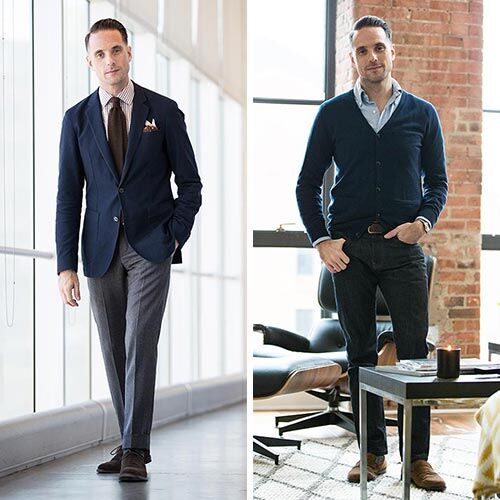
Credit: hespokestyle.com
Real-life Examples: Business Casual Outfits
Seeing examples can help you understand business casual better.
Example 1: Men
- Navy chinos
- Light gray button-down shirt
- Brown leather loafers
- Black belt
- Simple watch
This look is clean, comfortable, and fits most workplaces.
Example 2: Women
- Black tailored pants
- Light blue blouse
- Beige cardigan
- Black flats
- Small earrings
This outfit works for meetings, presentations, or daily office work.
Example 3: Men
- Gray slacks
- White polo shirt
- Navy sweater
- Black oxfords
This is a smart choice for cooler days.
Example 4: Women
- Knee-length navy skirt
- Cream blouse
- Burgundy scarf
- Navy low heels
This look adds a pop of color, but stays professional.
A non-obvious tip: take photos of your outfits. You’ll see what works and what needs changing.
Adapting Business Casual For Remote Work
Many people now work from home, but business casual still matters. When you join a video call, your appearance affects how others see you.
Tips For Remote Work
- Wear a clean shirt or blouse.
- Avoid pajamas, even if you’re off camera.
- Keep your hair neat.
- Use natural light if possible.
- Avoid busy backgrounds.
According to a survey by Harvard Business Review, employees who dress professionally for remote meetings feel more confident and are seen as more reliable.
A practical insight: have a “video call outfit” ready. Keep one shirt or blouse handy for quick changes.
Business Casual In Different Industries
Business casual changes depending on the industry.
Finance And Law
- More formal: Slacks, button-down shirts, blazers.
- Women: Tailored pants, skirts, blouses, closed-toe shoes.
Tech And Creative
- More relaxed: Polos, sweaters, neat jeans (sometimes allowed).
- Women: Casual blouses, cardigans, stylish flats.
Retail And Hospitality
- Varies: Some require uniforms, others allow more relaxed business casual.
A straight-to-the-point helper tip: observe what managers wear. This helps you see what’s expected in your workplace.
How To Transition From Formal To Business Casual
If your company moves from formal dress to business casual, it can feel confusing. Here’s how to make the change smoothly.
- Start slow: Replace your suit with slacks and a button-down.
- Keep one formal piece: A blazer or smart shoes.
- Ask for feedback: Check with coworkers or supervisors.
- Experiment: Try different combinations to find what fits.
A non-obvious insight: keep your formal clothes handy. You may need them for special events or meetings.
The Impact Of Business Casual On Confidence And Productivity
What you wear affects how you feel and work. Studies show that dressing professionally, even in business casual, can boost your confidence and productivity.
According to the American Psychological Association, wearing business casual increases self-esteem and motivation. People feel more respected and work harder.
A practical tip: dress for yourself, not just your boss. When you feel good, you perform better.
Frequently Asked Questions
What Should I Avoid In Business Casual?
Avoid jeans, t-shirts, sneakers, and loud patterns. Stick to neutral colors, simple styles, and professional shoes.
Can I Wear Jeans In Business Casual?
Usually, jeans are not allowed. Some creative offices may allow dark, neat jeans, but check your company’s policy.
How Many Outfits Do I Need For Business Casual?
You can start with five to seven outfits. Mix and match basics to create more combinations.
How Do I Know If My Outfit Is Business Casual?
Ask yourself: Is it professional, comfortable, and tidy? If you’re unsure, check with your HR or supervisor.
Where Can I Learn More About Business Casual?
For detailed guidelines, visit the Business News Daily guide on business casual dress codes.
Business casual lets you show your personality while staying professional. With the right pieces, good fit, and careful choices, you can look great every day—no matter your job or office. Remember, confidence comes from feeling comfortable and looking sharp. Use these tips to build your style and make business casual work for you.

Credit: www.youtube.com
