

How to Fix Loose Flare Pants: Simple Solutions for a Perfect Fit
How To Fix Loose Flare Pants
Flare pants have made a strong comeback in fashion. They’re comfortable, stylish, and flattering for many body types. But what happens when your favorite pair starts feeling loose? Maybe they fit perfectly before, but after a few washes or weight changes, they begin to sag at the waist or bag out at the thighs and knees.
Loose flare pants can look sloppy and feel uncomfortable, but the good news is you don’t have to give up on them. With some simple steps and the right techniques, you can fix loose flare pants and make them look and feel like new.
This guide will walk you through everything you need to know to fix loose flare pants—by yourself, with basic sewing tools, or with the help of a tailor. You’ll learn how to diagnose the real fit problem, choose the best method, and avoid beginner mistakes.
Whether you want a quick no-sew fix or a permanent alteration, you’ll find clear answers here.
Understanding Why Flare Pants Get Loose
Before you start fixing, it’s important to know why flare pants become loose. There are several common reasons:
- Fabric stretching: Many flare pants are made from cotton, denim, or blends. These materials stretch over time, especially around the waist and knees.
- Washing and drying: Heat and water can loosen fibers, making the pants baggy.
- Weight changes: Gaining or losing weight will change how your pants fit.
- Design: Some pants are cut wider or have elastic that loses strength.
Knowing the root cause helps you pick the right solution. For example, if your pants only feel loose after laundry, you might fix them differently than if they’re always baggy.
Diagnosing The Fit Problem
Not all loose pants have the same issue. Take a close look at your flare pants and ask:
- Are they loose at the waist, hips, thighs, or only at the flares?
- Do they slide down, or just feel baggy?
- Is the fabric stretched out, or is the stitching coming undone?
- Are they consistently loose, or just after wearing for a while?
Stand in front of a mirror and move around. Pinch the fabric to see how much extra room there is. Sometimes, only a small section needs fixing.
Common Loose Areas In Flare Pants
- Waistband: Pants fall down or need a belt.
- Seat and hips: Extra fabric at the back.
- Thighs: Pants look baggy and lose shape.
- Knee and flare: The bottom looks wider than desired.
Understanding which part is loose will help you choose the best adjustment method.
Quick No-sew Fixes For Loose Flare Pants
If you’re short on time or don’t want to sew, there are easy ways to tighten loose flare pants. These solutions are temporary but work well for a fast fix.
1. Using A Belt
The simplest way to fix loose pants is to add a belt. Choose a stylish belt that matches your pants. Thread it through the loops and adjust to fit your waist. This works best for pants that are only loose at the waist.
Pro tip: Thin belts are less bulky under shirts, but wide belts give more support.
2. Elastic Waistband Hacks
If your pants have a waistband but no elastic, try adding a temporary elastic band inside. You can use a hair tie or a thick rubber band:
- Turn pants inside out.
- Thread the band through a belt loop at the back.
- Tie or pin the band to pull the waistband tighter.
This is invisible under most shirts and can make a big difference.
3. Safety Pin Cinching
For a quick fix, use safety pins. Gather the loose fabric at the back of the waistband, and secure with a safety pin on the inside. Make sure the pin is strong and lies flat, so it doesn’t poke you.
Caution: Don’t use safety pins on thin or delicate fabric—they can leave holes.
4. Shrinking The Fabric
If your flare pants are cotton or denim, you can try shrinking them:
- Wash in hot water.
- Dry on high heat.
This will tighten the fibers, but be careful—shrinking can be uneven, and sometimes pants get too short. Always check the fabric label before using heat.
5. Double-sided Clothing Tape
Double-sided tape can help hold loose fabric in place, especially at the waist or hips. Stick the tape to the inside of the pants, and press the fabric down. This works for a night out but washes off with water.
6. Wear Layered Clothing
Adding tucked-in shirts, tank tops, or bodysuits can fill out loose pants and make them fit better. This works best for mild looseness and colder weather.
Basic Sewing Fixes (beginner Friendly)
If you want a stronger and more permanent fix but have little sewing experience, there are beginner sewing methods that can help.
1. Taking In The Waistband
If the waistband is too loose, you can take it in by sewing. Here’s how:
- Put pants on inside out.
- Pinch the excess fabric at the center back.
- Use pins or clips to hold the fabric.
- Take pants off and sew a straight line down the center back, from the top of the waistband to the seam below.
- Try on pants to check fit. If good, trim excess fabric and zigzag stitch to prevent fraying.
This method works for 1-2 inches of extra room.
2. Adding Elastic To Waistband
For pants that have a casing but no elastic, you can add an elastic band:
- Open a small section inside the waistband.
- Cut elastic to your waist size minus 1 inch (for stretch).
- Thread elastic through the casing using a safety pin.
- Sew ends of elastic together, then close the opening.
This method gives flexibility and is especially good for high-waisted flare pants.
3. Side Seam Adjustment
If your pants are loose at the hips or thighs, adjust the side seams:
- Turn pants inside out.
- Pin along each side seam, removing equal fabric from both sides.
- Sew along the new line with a straight stitch.
- Trim excess and finish with zigzag or overlock stitch.
Even a small adjustment can make a big difference.
4. Darts For A Better Fit
Darts are small, triangle-shaped seams that remove fabric at the waist or back. To add darts:
- Try on pants and mark where fabric bunches.
- Pinch the fabric and pin in a triangle shape.
- Sew along the pin line, tapering to a point.
- Press with an iron for a smooth finish.
Darts are almost invisible and good for a professional look.
5. Temporary Basting Stitch
If you’re not sure about the fit, use a basting stitch (large, loose sewing) first. Try on the pants, and if they fit well, make the stitch permanent.

Credit: www.amazon.com
Advanced Sewing Alterations
For those with more sewing skills or access to a sewing machine, you can make more advanced changes for a perfect fit.
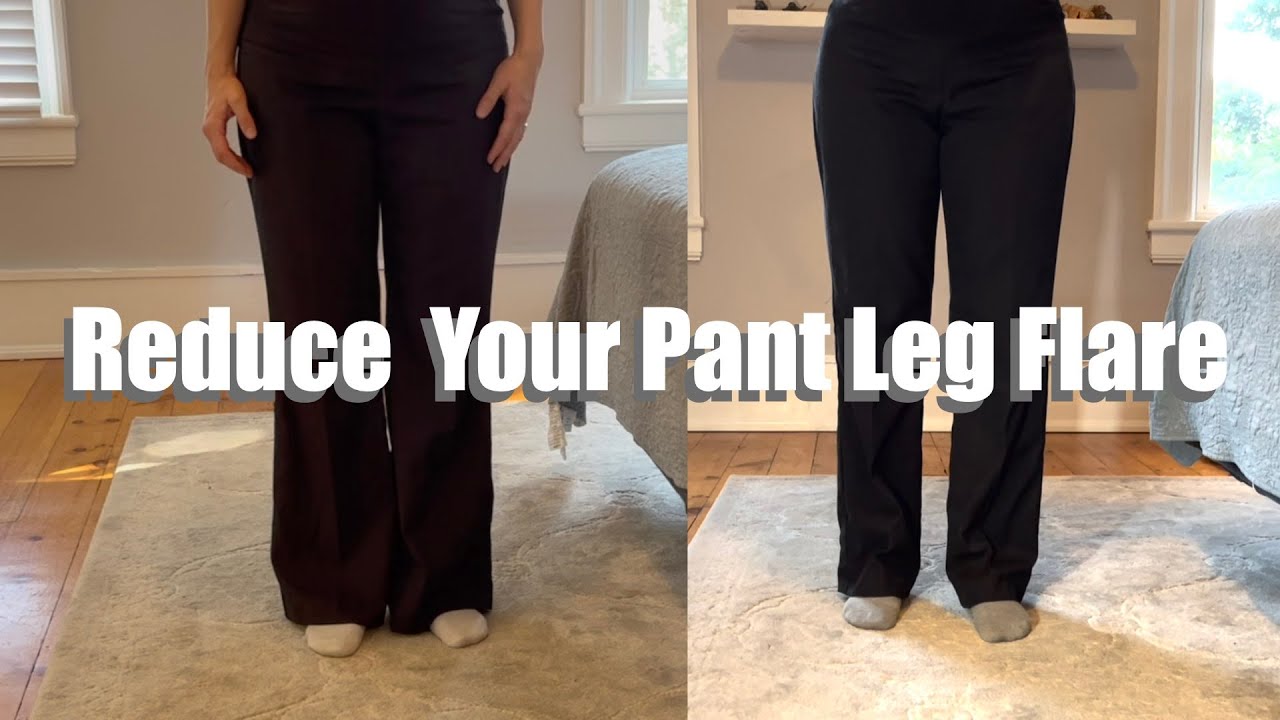
1. Reshaping The Flare
If your pants are loose at the bottom or the flare is too wide, reshape them:
- Put pants on and mark the desired flare width.
- Turn inside out and pin along the new flare line.
- Sew from the knee down along the pins.
- Trim and finish the seam.
This creates a custom flare that matches your style.
2. Full Seat And Thigh Adjustments
Sometimes, flare pants are loose all over. You may need to adjust the seat (backside) and thighs:
- Turn inside out and try on.
- Pin excess fabric along the inner and outer seams.
- Sew along the new lines, blending smoothly from the seat down to the knee.
- Trim and finish.
Tip: Always remove equal fabric from both sides for balance.
3. Replacing The Waistband
If the waistband is stretched out or damaged, replace it with a new one:
- Remove the old waistband carefully.
- Measure and cut a new waistband from matching fabric or elastic.
- Attach with a straight stitch, stretching the elastic slightly for a snug fit.
- Topstitch for a clean look.
This is a more advanced fix but can save your favorite pants.
4. Taking In The Center Back Seam
Many tailors use the center back seam to adjust fit. Here’s how:
- Open the waistband at the center back.
- Pinch and pin excess fabric.
- Sew a new seam from waistband down to the seat.
- Trim and finish. Close the waistband neatly.
This method keeps side seams in place for a clean look.
5. Tapering The Legs
If the flare is too wide for your taste, you can taper the legs:
- Mark how much you want to remove from each side.
- Pin along the new line.
- Sew and trim the extra fabric.
- Press seams flat.
Tapering gives a more modern look and custom fit.
Professional Tailoring Options
If you’re not confident with sewing or the pants need major work, a professional tailor can help. Tailoring is not just for expensive clothes—well-fitted pants are worth the investment.
What A Tailor Can Do
- Take in the waist, seat, or thighs
- Adjust the flare width
- Add or replace elastic
- Shorten or lengthen the legs
- Reinforce weak seams
- Add darts or reshape the fit
Tailors use industrial machines for strong, clean results. If your pants have complex linings, zippers, or delicate fabric, it’s best to get professional help.
How Much Does Tailoring Cost?
Here’s a comparison of average tailoring costs for common fixes:
| Alteration Type | Estimated Cost (USD) | Turnaround Time |
|---|---|---|
| Take in Waistband | $15–$30 | 2–5 days |
| Add Elastic | $10–$25 | 1–3 days |
| Reshape Flare | $20–$40 | 3–7 days |
| Replace Waistband | $25–$50 | 3–7 days |
Prices vary by location and tailor experience. Always ask for a quote before starting.
When To Choose A Tailor
- Expensive or designer flare pants
- Delicate or stretchy fabrics
- Complex alterations (e.g., full seat adjustment)
- Pants with lining or special details
- If you want a perfect, long-lasting fit
Choosing The Best Method For Your Needs
Not all methods fit every situation. Here’s a quick decision guide to help you pick:
| Problem Area | No-Sew Fix | Basic Sewing | Advanced Sewing | Tailor |
|---|---|---|---|---|
| Waistband | Belt, elastic band, safety pin | Take in waistband, add elastic | Replace waistband | Waistband alteration |
| Seat/Hips | Layered clothing | Side seam, darts | Seat adjustment | Seat/hip tailoring |
| Thighs | Layered clothing | Side seam adjustment | Full leg taper | Thigh/leg tailoring |
| Flare | None | None | Reshape flare | Flare adjustment |
If you’re not sure, start with a no-sew or basic sewing method. You can always try a more advanced fix later.
Tools And Materials You Might Need
Whether you’re doing a quick fix or a major alteration, having the right tools makes the job easier.
Essential tools:
- Pins or fabric clips
- Sharp scissors
- Measuring tape
- Seam ripper (for undoing stitches)
- Sewing needles or machine
- Thread (matching color)
- Elastic band (if needed)
- Iron and ironing board
Optional but helpful:
- Fabric chalk or washable marker for marking lines
- Safety pins for temporary holds
- Double-sided clothing tape
- Heavy-duty needle (for thick fabrics like denim)
Pro tip: Always test your stitch or tape on a hidden area to make sure it won’t damage the fabric.
Common Mistakes To Avoid
Many beginners make similar mistakes when fixing loose flare pants. Avoid these for the best results:
- Taking in too much at once: Always start with small adjustments. It’s easier to take in more fabric than to undo a mistake.
- Ignoring fabric type: Stretch fabrics need special handling. Use stretch thread or zigzag stitches.
- Not checking symmetry: Remove equal fabric from both sides for balance.
- Skipping fitting: Always try on pants after pinning but before sewing permanently.
- Poor finishing: Raw edges can fray. Always finish seams with zigzag or overlock stitches.
- Using weak fasteners: Safety pins or weak thread can break. Choose quality materials.
Keeping Flare Pants Fitted: Maintenance Tips
Once you’ve fixed your pants, keep them fitting well with good care:
- Wash in cold water and hang dry to keep fabric tight.
- Avoid high heat in the dryer.
- Store pants folded or hung up to prevent stretching.
- Use belts or suspenders as needed for support.
- Check seams and elastic regularly—fix small problems before they get worse.

Credit: www.walmart.com
Real-world Examples: Fixing Loose Flare Pants
Let’s look at two examples to see these methods in action.
Example 1: Loose Waistband on High-Waisted Flares
Maria’s cotton flare pants kept sliding down. She didn’t want to wear a belt. She opened the waistband seam, inserted a new elastic band, and stitched it shut. Now, her pants stay up all day, and the fix is invisible.
Example 2: Baggy Thighs and Flares
Sam’s vintage flares fit at the waist but were baggy at the thighs and below the knee. He turned the pants inside out, pinned along the inner and outer seams to remove about one inch from each side, and sewed the new seam.
The pants now have a modern shape without looking too tight.
Non-obvious insight: Sometimes, old flare pants stretch unevenly—only at the knees or lower legs. In these cases, reshaping just the lower part often gives a better look than adjusting the waist or hips.
When To Buy New Flare Pants
Even the best fixes can’t save every pair. Consider buying new flare pants if:
- The fabric is thin, see-through, or worn out.
- There are large holes or tears.
- You’ve outgrown the pants by several sizes.
- The style no longer suits your taste.
If you love flare pants, look for options with a bit of stretch and a sturdy waistband. Try on several brands—fit can vary a lot. Read reviews and check size charts. Brands like Levi’s, Free People, and Wrangler are known for quality flare pants.
For more about fabric types and fit, see this Wikipedia page on flare jeans.
Credit: www.youtube.com
Frequently Asked Questions
What’s The Easiest Way To Fix Loose Flare Pants Without Sewing?
The easiest method is using a belt, followed by safety pins or double-sided clothing tape. These are quick, don’t require tools, and can be reversed at any time.
Can You Permanently Shrink Flare Pants?
You can try washing in hot water and drying on high heat to shrink cotton or denim flare pants. However, results are unpredictable. Sometimes the pants shrink too much or in the wrong areas, and the length can get shorter.
Sewing offers more control for permanent results.
How Do I Make Flare Pants Tighter At The Bottom?
To make the flare smaller, turn the pants inside out, mark the new flare line from the knee down, and sew along that line. Try on the pants first to check the new shape before cutting any fabric.
Is It Better To Fix Loose Flare Pants Myself Or Use A Tailor?
If the pants are inexpensive or you want to learn, try a DIY fix. For expensive, delicate, or complex pants, a tailor is best. They have experience and tools for a professional look.
What Type Of Elastic Should I Use For The Waistband?
Use a soft, non-roll elastic that matches your waistband width (usually 1–2 inches wide). Cut it to your waist size minus 1 inch, so it stretches but is not too tight.
Fixing loose flare pants is easier than you might think. With the right method, your favorite pants can fit perfectly again—so you can wear them with confidence and style.
