

How to Dress Business Casual: Essential Tips for Effortless Style
How To Dress Business Casual
Business casual is one of the most common dress codes in today’s workplaces. But it can also be confusing. Many people wonder, “What exactly does business casual mean? ” “How do I look professional but not too formal? ” If you are new to this style, you might worry about making mistakes.
This guide will help you understand what business casual really is, how to put together the right outfits, and how to avoid the pitfalls that many beginners face. You will learn practical advice that can help you feel confident and comfortable every day at work.
What Is Business Casual?
Business casual is a blend of professional and relaxed clothing. It is not as formal as a suit and tie, but not as relaxed as jeans and a T-shirt. The goal is to look neat, polished, and ready for work, but also comfortable.
Many offices use business casual to help employees feel at ease while maintaining a sense of professionalism.
The details of business casual can vary from one company to another. Some workplaces allow jeans, while others do not. Some expect collared shirts, others accept sweaters. This flexibility is both helpful and challenging. It means you need to pay attention to your company’s culture and observe what others wear.
Key elements of business casual:
- Clean, pressed clothing
- Neutral or muted colors
- Simple patterns
- Closed-toe shoes
- Minimal accessories
Business casual is not a fixed list of clothing. It is a style that adapts to your environment and your needs.
Core Pieces For Business Casual
Understanding the main parts of a business casual wardrobe will help you make the right choices. Here are the most important pieces for men and women.
Business Casual For Men
Shirts: Collared shirts are the standard. Button-downs, polos, or sweaters are all acceptable. Avoid T-shirts and shirts with loud logos.
Pants: Dress pants, chinos, or khakis are ideal. Jeans may be allowed if they are dark, clean, and free of rips.
Jackets: Blazers or sport coats add a touch of formality but are not required every day.
Shoes: Loafers, oxfords, or dress shoes. Sneakers are usually not business casual.
Belts: Match your belt to your shoes for a polished look.
Accessories: Keep it simple. Watches or a single bracelet are fine. Avoid flashy jewelry.
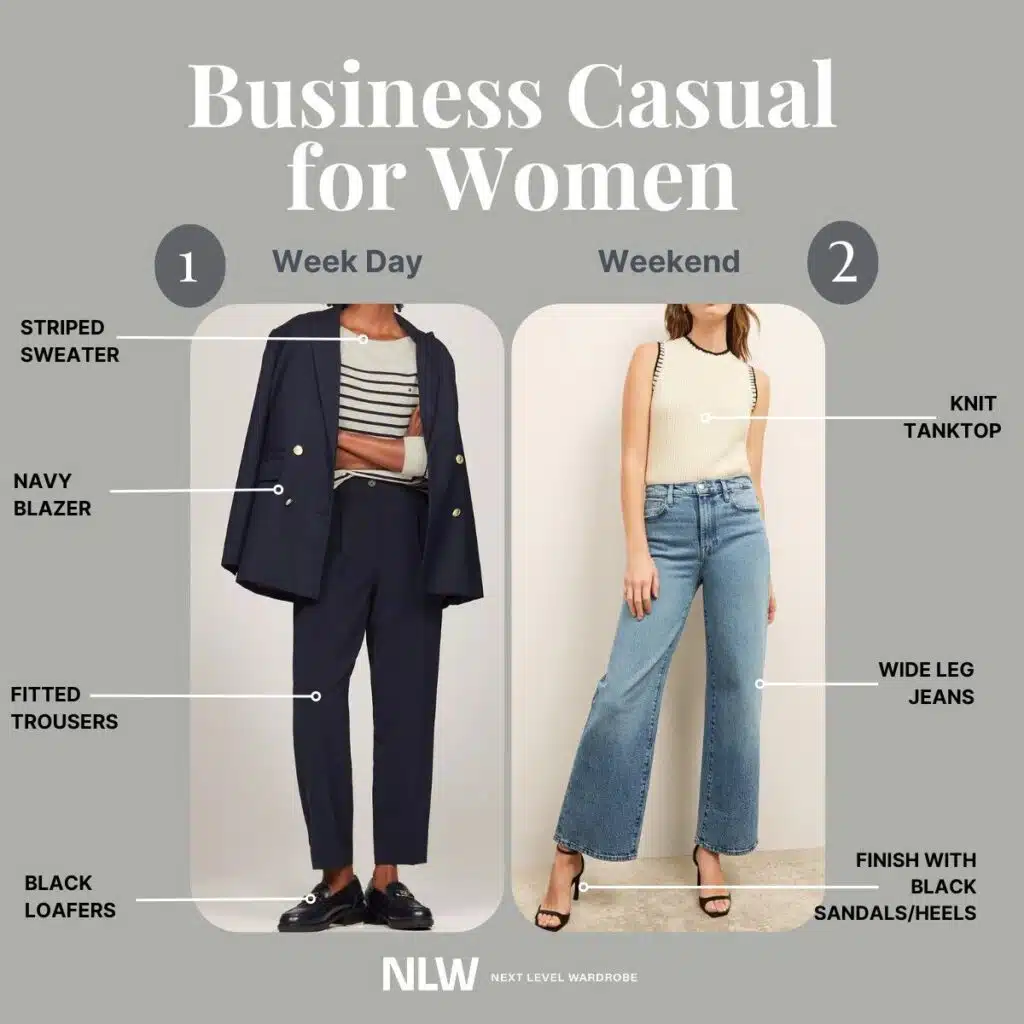
Business Casual For Women
Tops: Blouses, sweaters, and tops with sleeves. Avoid tank tops or tops with deep cuts.
Pants/Skirts: Dress pants, tailored trousers, pencil skirts, or knee-length skirts. Leggings and shorts are not business casual.
Dresses: Simple, knee-length dresses are perfect. Avoid very short or flashy dresses.
Jackets/Cardigans: Blazers, cardigans, or structured jackets can help complete the look.
Shoes: Flats, loafers, low heels, or ankle boots. Open-toed shoes may be allowed but should look professional.
Accessories: Minimal jewelry, small bags, and subtle makeup work best.
How To Build Your Business Casual Wardrobe
Creating a business casual wardrobe does not mean you have to buy many new clothes. Start with basic pieces and add items as you go. Here’s how to build your collection step-by-step:
- Choose neutral colors: Start with black, navy, gray, beige, and white. These colors match easily and look professional.
- Buy quality basics: Invest in shirts, pants, and shoes that fit well and last long.
- Add a few accent pieces: Use scarves, ties, or jewelry to add personality.
- Mix and match: Combine tops and bottoms to create new outfits.
- Check your company’s dress code: Make sure your choices fit the office rules.
Pro tip: When shopping, ask yourself, “Would I wear this to meet a client?” If the answer is yes, it is likely business casual.
Business Casual Vs. Other Dress Codes
Understanding the difference between business casual and other dress codes can help you avoid mistakes. Here’s a quick comparison:
| Dress Code | Typical Clothing | Level of Formality |
|---|---|---|
| Business Formal | Suit, tie, dress shirt, dress shoes | High |
| Business Casual | Collared shirt, chinos, skirt, dress shoes | Medium |
| Casual | Jeans, T-shirt, sneakers | Low |
Business casual sits in the middle. It is less formal than business formal but more professional than casual.

Credit: www.hockerty.com
How To Choose The Right Outfit
Picking the right business casual outfit depends on your role, your company, and the day’s activities. Here are some practical steps:
Observe Your Environment
Look at what your coworkers and managers wear. This will tell you what is acceptable. If you are unsure, start with more formal business casual pieces.
Dress For Your Role
Some jobs require more formal clothing. For example, if you meet clients often, choose a blazer and dress pants. If you work in a creative office, you can use more color and relaxed styles.
Consider The Occasion
If you have a meeting, presentation, or interview, aim for the more formal side of business casual. For routine office days, you can be a bit more relaxed.
Layer Smartly
Layering helps you adapt to changing temperatures and looks polished. Try a sweater over a shirt or a blazer over a blouse.
Non-obvious insight: Layers also help if your outfit feels too casual. Adding a blazer can instantly upgrade your look.
Common Business Casual Mistakes
Many people make simple errors when dressing business casual. Here are mistakes to avoid:
- Wearing athletic shoes: Sneakers or running shoes are not business casual.
- Ignoring fit: Clothes should not be too tight or too loose. Proper fit is key.
- Showing too much skin: Avoid shorts, tank tops, or low-cut clothing.
- Over-accessorizing: Keep jewelry simple and avoid flashy items.
- Choosing wrinkled or stained clothes: Always wear clean and pressed items.
- Wearing loud patterns or logos: Stick to simple designs and colors.
Practical tip: Take a photo of yourself before leaving for work. If your outfit looks out of place, adjust it.
Business Casual Outfit Examples
Seeing real examples can help you understand business casual better. Here are some outfit ideas for men and women.
Men
- Collared shirt + chinos + loafers
- Sweater over shirt + dress pants + belt
- Blazer + polo + khakis
- Button-down shirt + dark jeans + dress shoes
Women
- Blouse + pencil skirt + flats
- Knee-length dress + cardigan + low heels
- Sweater + tailored pants + loafers
- Blazer + top + skirt
You can change accessories or add layers to create new looks.
Business Casual For Different Seasons
Your business casual wardrobe should adapt to the weather. Here’s how to dress for each season:
Spring
Lightweight fabrics, soft colors, and layers. Try a cotton shirt with chinos and a light blazer.
Summer
Breathable materials like linen or cotton. Choose short-sleeve shirts, skirts, and comfortable shoes. Avoid sandals unless your office allows them.
Fall
Add sweaters, cardigans, and darker colors. Layering is important as temperatures change.
Winter
Warm fabrics like wool, thick sweaters, and closed-toe shoes. Use scarves and coats for extra warmth.
Non-obvious insight: Offices often use air conditioning, so bring a layer even in summer.
Business Casual For Remote Work
Many people work from home now. Business casual still matters in remote meetings, especially with video calls. Here’s how to look professional online:
- Wear a collared shirt or blouse.
- Choose neat, simple colors.
- Avoid pajamas or T-shirts.
- Use good lighting to show your outfit.
- Keep your background tidy.
Even if you are at home, dressing business casual helps you feel productive and confident.
How To Maintain Your Business Casual Clothes
Taking care of your clothing is important. Here are some tips:
- Wash clothes regularly: Keep them clean and fresh.
- Press or iron shirts and pants: Wrinkles look unprofessional.
- Store items properly: Hang jackets and shirts, fold pants and skirts.
- Repair small damages: Fix buttons, zippers, or loose threads quickly.
- Rotate your wardrobe: Do not wear the same outfit every day.
Practical tip: Set aside a few minutes each week to check your clothes and plan your outfits.
Business Casual For Different Body Types
Business casual is for everyone. Here are tips for different body shapes:
For Taller People
- Try longer jackets and pants.
- Avoid too-short sleeves or hems.
- Use belts to add definition.
For Shorter People
- Choose fitted clothes that do not overwhelm your frame.
- Avoid oversized jackets.
- Use vertical stripes to look taller.
For Plus-size
- Wear structured pieces that highlight your shape.
- Avoid clothes that are too tight or too loose.
- Choose darker colors for a slimming effect.
For Slim Build
- Layer with sweaters or jackets.
- Choose clothes with some texture.
- Avoid baggy or oversized items.
Pro tip: Tailoring your clothes can make a big difference. Even small adjustments help clothes fit better.
How To Accessorize Business Casual
Accessories can make your outfit stand out. Here are some ideas:
- Watches: Simple, classic watches are best.
- Belts: Match your belt to your shoes.
- Jewelry: Small earrings, necklaces, or bracelets.
- Scarves: Add color or pattern without being too bold.
- Bags: Choose structured bags or briefcases.
Common mistake: Over-accessorizing. Choose one or two items for a balanced look.
Business Casual For Different Professions
Business casual is not the same for every job. Here’s how it changes:
Creative Fields
You can use more color, patterns, and relaxed styles. For example, graphic designers may wear bold shirts or unique shoes.
Corporate Offices
Stick to classic pieces and neutral colors. Finance, law, or consulting offices often prefer more formal business casual.
Tech Companies
Tech companies are usually more relaxed. Clean jeans and simple shirts are often accepted.
Education
Teachers often wear comfortable, durable clothing. Cardigans, khakis, and flats are common.
Healthcare
Healthcare professionals may need practical clothing. Choose easy-to-clean fabrics and comfortable shoes.
Non-obvious insight: Always check your company’s dress code policy. Some industries have hidden rules about colors or accessories.
Business Casual Outfit Planning
Planning your outfits saves time and reduces stress. Here’s a step-by-step approach:
- Check your calendar: Look at meetings, events, or presentations.
- Pick main pieces: Choose a shirt, pants/skirt, and shoes.
- Add layers and accessories: Use blazers, cardigans, or jewelry.
- Lay out clothes the night before: This prevents last-minute rush.
- Prepare backups: Keep an extra shirt or pair of shoes at work.
Practical tip: Keep a list of outfit combinations that work. Rotate them so your style feels fresh.
Business Casual Color And Pattern Guide
Choosing the right colors and patterns makes your outfit look professional. Here’s how to do it:
Best Colors
- Neutral: Black, navy, gray, beige, white
- Muted: Olive, burgundy, soft blue
- Accent: Soft pastels or deep greens
Patterns
- Stripes: Thin, subtle stripes are fine.
- Checks: Small checks or plaid are acceptable.
- Solids: Always safe and easy to match.
Avoid loud prints, bright neon colors, or flashy designs.
Shopping Tips For Business Casual
Buying business casual clothes can be tricky. Here are tips to help you shop smart:
- Try clothes on: Fit is more important than brand.
- Read reviews: Check how others rate the item.
- Look for deals: Quality does not mean expensive.
- Choose easy-care fabrics: Cotton, wool, and blends are practical.
- Buy slowly: Build your wardrobe over time.
Pro tip: If possible, buy two pairs of pants for every shirt. Pants wear out faster and are harder to match.

Credit: www.youtube.com
Business Casual Price Comparison
You do not need to spend a lot to look professional. Here’s a comparison of typical business casual clothing prices:
| Item | Budget Range | Mid-Range | Premium |
|---|---|---|---|
| Shirt | $20-$40 | $40-$80 | $80+ |
| Pants | $30-$50 | $50-$100 | $100+ |
| Shoes | $40-$60 | $60-$120 | $120+ |
| Blazer | $50-$100 | $100-$200 | $200+ |
You can mix budget and premium items for your wardrobe. Quality basics are more important than expensive brands.
Business Casual For Plus-size And Petite
Finding the right business casual clothes can be hard for plus-size and petite people. Here’s how to solve common problems:
Plus-size
- Look for brands with extended sizes.
- Use structured jackets or blazers.
- Avoid clothes that are too tight or shapeless.
Petite
- Choose clothes with shorter sleeves and hems.
- Look for brands with petite sizing.
- Use vertical lines to add height.
Non-obvious insight: Online stores often have more size options than local shops.
Adapting Business Casual For Different Cultures
Business casual varies around the world. In some countries, bright colors and patterns are common. In others, neutral colors are standard. Respect local customs when traveling or working with international teams.
- Observe local style
- Ask colleagues for advice
- Check company guidelines
Pro tip: If you are unsure, choose classic business casual items in neutral colors.
How Business Casual Improves Productivity
Dressing business casual can make you feel more confident and ready for work. Studies show that people who dress professionally have higher productivity and motivation. One survey found that 61% of employees say dressing well improves their mood and focus.
When you feel good about your appearance, you are more likely to perform better. Business casual helps you find a balance between comfort and professionalism.
Business Casual For Interviews
Job interviews often use business casual as the expected dress code. Here’s how to dress for success:
- Choose simple, clean pieces.
- Avoid bright colors or patterns.
- Wear closed-toe shoes.
- Check the company’s style before your interview.
Practical tip: When in doubt, dress a bit more formally. It is better to be slightly overdressed than too casual.
How To Transition From Business Casual To Business Formal
Sometimes, you need to switch from business casual to business formal. Here’s how to do it quickly:
- Add a blazer or suit jacket
- Change into dress shoes
- Wear a tie or scarf
- Use a structured bag or briefcase
Keep a few formal items at work for emergencies.
Credit: nextlevelwardrobe.com
Sustainability In Business Casual
More people are choosing sustainable clothing. Here’s how to make your business casual wardrobe eco-friendly:
- Buy clothes made from organic cotton or recycled materials.
- Choose quality items that last longer.
- Avoid fast fashion.
- Donate or recycle old clothes.
Sustainable fashion is becoming more popular in business casual offices.
Quick Checklist For Business Casual Success
- Clothes are clean and pressed
- Fit is comfortable and professional
- Colors are neutral or muted
- Shoes are closed-toe and polished
- Accessories are simple
- No loud prints or logos
- Layers are ready for changing weather
- Respect company culture
Business Casual For Travel
Traveling for work? Business casual is easy to pack and wear. Here are tips:
- Choose wrinkle-resistant fabrics.
- Pack versatile pieces that mix and match.
- Use a travel steamer or iron.
- Keep shoes in separate bags.
Non-obvious insight: Use compression bags to save space and keep clothes tidy.
Business Casual For Special Events
Sometimes, business casual is required for events like conferences, dinners, or networking. Here’s how to stand out:
- Add a smart blazer or jacket.
- Use subtle accessories.
- Choose polished shoes.
- Avoid too casual or too flashy clothing.
Prepare your outfit ahead of time to avoid stress.
Data: Business Casual Trends
Business casual is becoming more popular. A recent report shows that 43% of US workplaces use business casual as the main dress code. Younger employees are more likely to prefer this style. Companies find that business casual helps attract talent and improve morale.
Practical tip: Keep up with trends, but do not follow every fashion change. Focus on timeless basics.
Frequently Asked Questions
What Is Business Casual For Men?
Business casual for men means wearing a collared shirt, dress pants or chinos, and closed-toe shoes. Blazers and sweaters are optional. Avoid T-shirts, shorts, and athletic shoes.
What Is Business Casual For Women?
For women, business casual includes blouses, tailored pants or skirts, dresses, and closed-toe shoes. Cardigans or blazers are optional. Avoid tank tops, very short skirts, and casual sandals.
Can I Wear Jeans For Business Casual?
Some offices allow jeans if they are dark, clean, and free of rips. Always check your company’s dress code first. When in doubt, choose chinos or dress pants.
Are Sneakers Business Casual?
Most sneakers are not considered business casual. Loafers, oxfords, flats, or low heels are better choices. Some creative or tech companies may allow clean, simple sneakers.
Where Can I Find More Information On Business Casual?
You can learn more from HR guides, workplace etiquette books, or fashion websites. For an overview of business casual dress codes, see Wikipedia.
Business casual is a flexible style that helps you look professional and feel comfortable. By following these tips and avoiding common mistakes, you can build a wardrobe that fits your role, your company, and your personality. Remember, confidence comes from feeling good in your clothes.
With the right approach, business casual can make every workday easier and more successful.
