

How to Decide T Shirt Size: The Ultimate Fit Guide
Choosing the right t-shirt size can be more complicated than it seems. Many people buy t-shirts online or in stores only to find out they don’t fit well—too tight at the chest, too loose at the waist, sleeves hanging awkwardly, or the length looking odd.
A good fit makes you look better and feel comfortable. But with brands using different sizing charts, unisex cuts, and body shapes, it’s easy to get confused. This article guides you through everything you need to know about how to decide t-shirt size, from understanding measurements to practical tips, so you can buy with confidence every time.
Why T-shirt Fit Matters
A t-shirt is one of the simplest, most common pieces of clothing. Yet, the way it fits can change your whole appearance. A well-fitted t-shirt enhances your body shape, shows you care about your style, and makes you feel more comfortable.
An ill-fitting t-shirt can make you look untidy and feel uncomfortable during daily activities.
Poor fit isn’t just about style—sometimes, it can even restrict movement or make you self-conscious. For example, a t-shirt that is too tight around the chest can limit arm movement, while one that is too loose may look sloppy and distract you at work or social events. So, paying attention to your t-shirt size is important for both confidence and comfort.
Understanding T-shirt Sizing Basics
T-shirt sizes are usually labeled as XS, S, M, L, XL, XXL, and sometimes go higher or lower. However, these letters can mean different things across brands and countries. For example, a "Medium" from one company could be closer to a "Large" from another. Sizing can also change between men’s, women’s, and unisex t-shirts.
Common Sizing Systems
- Alpha Sizes (S, M, L, etc. ): The most common system. Easy to understand but can be inconsistent.
- Numeric Sizes (34, 36, 38, etc. ): More exact but less common for t-shirts.
- International Differences: A "Large" in Asia may be smaller than a "Large" in the US or Europe.
Why Size Labels Are Not Enough
Trusting only the label can lead to mistakes. Some brands use "vanity sizing," making sizes larger to flatter customers. Others may shrink after washing, while some use pre-shrunk fabric. Always check the brand’s specific size chart before buying, especially online.
Key Body Measurements For T-shirts
To find your perfect t-shirt size, measure your body and compare it with the brand’s size chart. Here are the most important measurements:
1. Chest/bust
Wrap a measuring tape around the fullest part of your chest, under your armpits, and across your shoulder blades. This is the main measurement for t-shirt sizing.
2. Shoulder Width
Measure from one shoulder bone to the other, straight across your back. Shoulder fit affects how the t-shirt drapes and moves.
3. Body Length
Measure from the top of your shoulder (next to the collar) straight down to where you want the t-shirt to end. Ideal length depends on your height and personal style.
4. Sleeve Length
For short sleeves, measure from the shoulder seam to the end of the sleeve. For long sleeves, measure all the way to your wrist.
5. Waist
Not always needed, but helpful if you have a slim or athletic build. Measure around your natural waistline.
Measurement Tips
- Use a soft measuring tape.
- Stand relaxed but straight.
- Ask someone to help for better accuracy.
- Measure over underwear or a thin t-shirt for best results.
How To Measure An Existing T-shirt
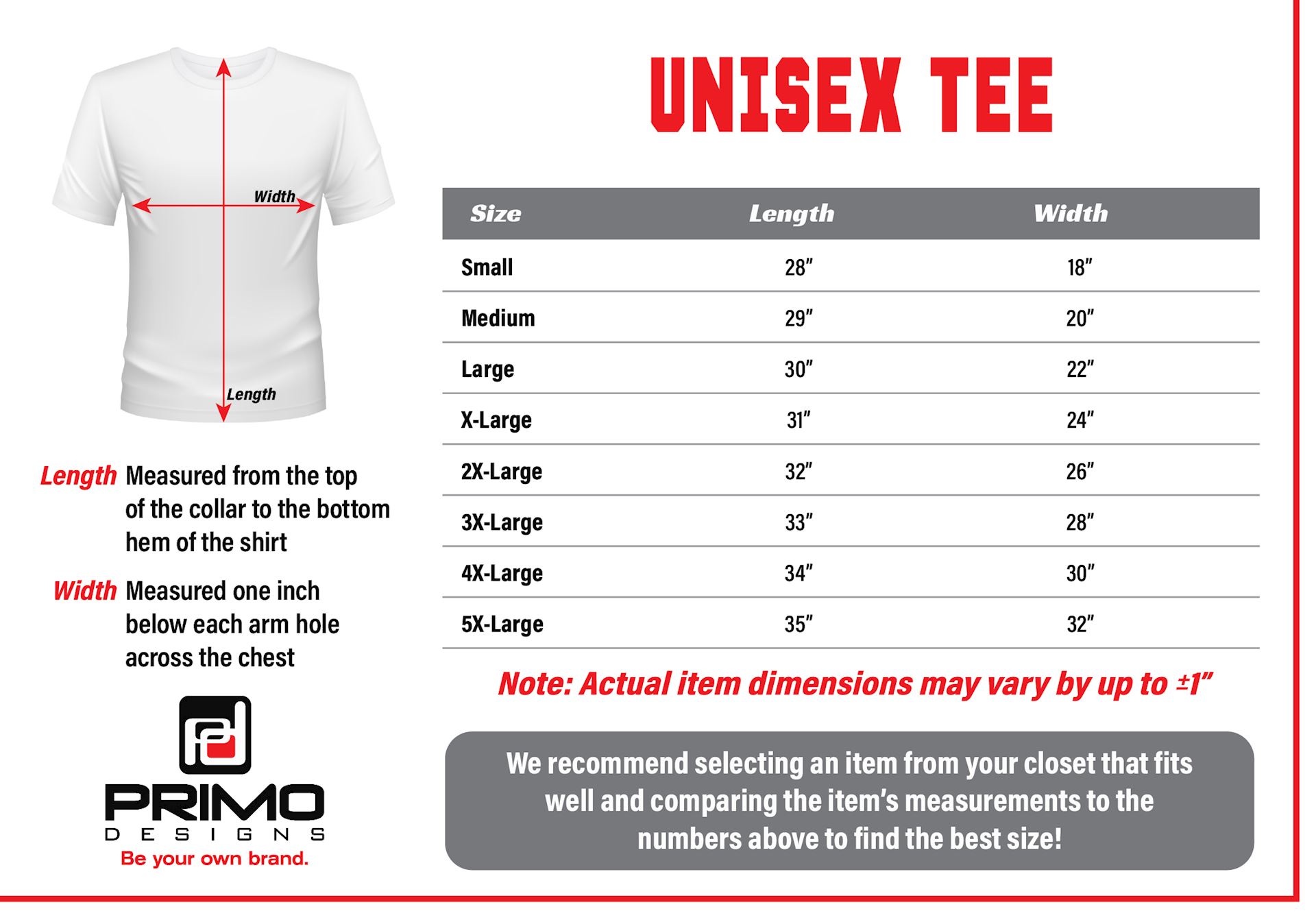
If you already own a t-shirt that fits well, use it as a reference. Lay it flat and measure:
- Chest: Across the front, from armpit to armpit.
- Shoulders: From one shoulder seam to the other.
- Length: From the highest point of the shoulder to the bottom hem.
- Sleeve: From shoulder seam to sleeve end.
Compare these numbers to the size chart of the new t-shirt you want to buy.
Comparing Brand Size Charts
Brand size charts often differ. Some are more generous, others more fitted. Here’s an example comparison of chest measurements for a "Medium" size:
| Brand | Chest (inches) | Fit Style |
|---|---|---|
| Brand A | 38-40 | Regular |
| Brand B | 40-42 | Loose |
| Brand C | 36-38 | Slim |
Always check the specific chart for the brand you’re buying. Don’t assume your usual size will always work.
Understanding T-shirt Fit Types
T-shirts come in different "fits"—how they’re cut and shaped. The same size can look and feel very different based on the fit.
1. Regular Fit
This is the classic t-shirt shape. It’s comfortable, not too tight, not too loose. Great for most body types.
2. Slim Fit
Slim fit t-shirts are cut closer to the body, especially at the waist and arms. They look modern and stylish but may feel tight if you have a broad chest or prefer a relaxed style.
3. Relaxed Or Oversized Fit
These are loose, comfortable, and often longer. Popular in streetwear and casual fashion.
4. Athletic Fit
Designed for people with broad shoulders and narrow waists. More room at the chest and shoulders, tapered at the waist.
Fit Comparison Example
| Fit Type | Chest (inches) | Waist (inches) |
|---|---|---|
| Slim | 38 | 36 |
| Regular | 40 | 40 |
| Relaxed | 44 | 44 |
A "Medium" can have different measurements depending on fit type. Always check both the size and the fit.
Men’s Vs Women’s Vs Unisex T-shirts
T-shirts are often categorized as men’s, women’s, or unisex. Each is cut differently.
Men’s T-shirts
Usually broader at the shoulders, straight at the waist, and longer in body and sleeve.
Women’s T-shirts
Narrower shoulders, more fitted at the waist, shorter sleeves, and sometimes shorter length.
Unisex T-shirts
Supposed to fit everyone, but usually based on men’s sizing—so they may feel loose or long for women.
Choosing The Right Category
- If you’re a woman buying a men’s or unisex t-shirt, consider sizing down.
- If you’re a man buying a women’s t-shirt for a fitted look, you may need to size up.
How Fabric Type Affects Fit
Not all t-shirts are made from the same material. Fabric affects stretch, shrinkage, and overall comfort.
1. 100% Cotton
Soft, breathable, but may shrink after washing. Pre-shrunk cotton is more stable.
2. Cotton/polyester Blend
Less likely to shrink, holds shape better, dries faster, but may feel less soft.
3. Stretch Fabrics (with Spandex Or Elastane)
Fits closer to the body, allows more movement, but can feel tight if you choose your usual size.
4. Heavyweight Vs Lightweight
Heavyweight t-shirts drape differently and may fit looser. Lightweight ones cling more to the body.
Fabric Shrinkage Table
| Fabric Type | Likely Shrinkage (%) | Fit After Wash |
|---|---|---|
| 100% Cotton | 3-5 | May feel tighter |
| Cotton/Poly Blend | 1-2 | More stable |
| With Spandex | 0-1 | Retains shape |
Always read the fabric info before choosing your size, especially if you plan to machine wash and dry your t-shirt.
Credit: magroadvogados.com
How To Decide T-shirt Size When Shopping Online
Buying t-shirts online is convenient but risky if you’re not careful about sizing. Here’s how to improve your chances of a perfect fit:
- Check the Brand’s Size Chart: Never skip this. Compare your measurements to the chart.
- Read Reviews: Look for comments about fit, shrinkage, or unexpected sizing.
- Look for Fit Notes: Some brands note if a t-shirt "runs small" or "runs large."
- Study the Photos: See how the shirt fits the model. Check model’s height and the size they wear.
- Measure a Favorite T-Shirt: Compare its measurements to those listed online.
- Understand Return Policies: Only buy from stores with a fair return or exchange policy, in case the fit isn’t right.
Non-obvious Online Shopping Tips
- If you’re between sizes, size up for cotton (it can shrink) and size down for stretchy fabrics.
- Some sites let you filter by fit (slim, relaxed) or body type. Use these tools for better results.
How To Decide T-shirt Size In Stores
Shopping in person gives you a big advantage: you can try before you buy.
Steps To Follow
- Try Multiple Sizes: Don’t just grab your usual size. Try one size up and one down.
- Move Around: Stretch your arms, sit down, and move to see how it feels.
- Check the Mirror: Look from the side and back, not just the front.
- Examine the Shoulders: The seam should sit at the edge of your shoulder bone.
- Check Sleeve Length: Should hit between mid-bicep and just above the elbow for short sleeves.
- Look at Length: The bottom hem should cover your waistband and not show your stomach when you stretch.
Store Shopping Insights
- Lighting and mirrors can be misleading. Trust how you feel in the shirt more than just how it looks.
- Fitted t-shirts may look great standing still but feel restrictive when you move.
Special Sizing Considerations
Sometimes, standard sizes don’t fit everyone. Consider these situations:
1. Athletic Or Muscular Build
Broad shoulders, narrow waist—regular t-shirts may feel tight at the chest and loose at the waist. Look for athletic fit or try sizing up and tailoring the waist.
2. Tall Or Petite Height
Tall people may need "tall" sizes with longer body and sleeves. Petite people may need to shop from youth or women’s sections, or look for shorter lengths.
3. Plus Sizes
Many brands now offer extended sizes, but fit can vary. Read reviews from other plus-size buyers and check if the cut is just "bigger" or also shaped for curves.
4. Kids/teens
Kids grow quickly. Allow for extra room, but not so much that the shirt looks oversized and awkward.
How Your Style Preferences Affect Size Choice
How you want your t-shirt to fit can be just as important as what the size chart says.
Fitted Vs. Loose
- Fitted: Shows off physique, modern look, but less forgiving.
- Loose: More casual, hides body shape, feels relaxed.
Tucked Vs. Untucked
If you often tuck your t-shirt, you may want a longer length. If you wear untucked, watch for shirts that are too long and look sloppy.
Layering
If you plan to wear your t-shirt under jackets or sweaters, a slimmer fit works better. For standalone wear, you might prefer relaxed fits.
Mistakes To Avoid When Choosing T-shirt Size
Many people make the same errors when buying t-shirts. Here’s what to watch out for:
- Ignoring Body Changes: Weight loss or gain, muscle growth, and aging can change your best size over time.
- Assuming All Brands Are Equal: Always check sizing—even your "usual" size can vary.
- Forgetting About Shrinkage: Cotton shrinks. Buy a little roomy if you plan to tumble dry.
- Not Considering Fit Type: Slim, regular, and relaxed fits can feel very different even with the same size label.
- Not Trying On Multiple Sizes: If possible, always test more than one size.
- Not Moving Around: A shirt that feels fine standing may not work when you sit or reach.
Special Tips For Group Orders (teams, Events, Bulk Buying)
Ordering t-shirts for a group—like a company, sports team, or event—adds extra challenges.
How To Get Accurate Sizes
- Ask everyone for their chest measurement, not just their "usual" size.
- Provide a clear size chart with measurement instructions.
- For mixed groups, consider unisex sizing and offer a fit guide.
Padding The Order
- Order a few extra in common sizes (M, L, XL) for last-minute changes.
- For kids or teens, order larger to allow for growth.
Printing And Customization
- Printed designs may affect fit—thick prints can make the shirt feel tighter.
- Check with the printer for their advice on best fit for their shirt type.
Caring For Your T-shirt To Maintain Fit
Even the best-fitting t-shirt can shrink, stretch, or lose shape if not cared for properly.
Washing Tips
- Wash in cold water to minimize shrinkage.
- Avoid high heat when drying—air dry or tumble dry low.
- Turn shirts inside out to protect prints and color.
Storing
- Fold t-shirts instead of hanging to avoid stretching at the shoulders.
- Store in a dry, cool place.
Dealing With Shrinkage
If your t-shirt shrinks too much, try soaking it in lukewarm water with hair conditioner, then gently stretch it while damp.
Real-world Example: Choosing Size For An Online Purchase
Imagine you want to buy a t-shirt from a popular online brand. Here’s how you might decide your size:
- You measure your chest at 41 inches.
- The brand’s Medium is 38-40 inches, Large is 41-43 inches.
- You prefer a regular fit.
- The t-shirt is 100% cotton and not pre-shrunk.
In this case, you’d likely choose a Large to allow for shrinkage and comfort. If you preferred a slim fit and rarely use the dryer, you might risk a Medium, but it could feel tight after washing.
How Body Shape Affects T-shirt Fit
Not everyone has the same body type, and t-shirts fit differently based on your proportions.
Common Body Shapes
- Rectangle: Shoulders and waist about the same width. Most fits work well.
- Triangle: Narrow shoulders, wider waist. Look for structured shoulders, avoid tight fits at waist.
- Inverted Triangle: Broad shoulders, narrow waist. Athletic or regular fit is best.
- Oval: Rounder midsection. Relaxed or regular fit is more comfortable.
Adjusting For Your Shape
If you have a unique body shape, don’t be afraid to have your t-shirts tailored. A simple adjustment can turn an "okay" fit into a "perfect" one.
Gender-neutral And Unisex Sizing
As fashion becomes more inclusive, more brands offer unisex or gender-neutral t-shirts. These usually follow men’s sizing, so:
- Women may need to size down.
- Men may find their usual size fits looser.
- Always check the brand’s fit notes and reviews.
Using Size Calculators And Fit Apps
Some online stores offer "fit calculators" or let you enter your height, weight, and body shape for a size recommendation. These can be helpful, especially if you’re between sizes, but always double-check with your own measurements.
When To Size Up Or Down
Sometimes, it’s smart to go up or down a size:
- Size Up: If you’re between sizes, want a relaxed fit, or the fabric may shrink.
- Size Down: If you prefer a tight fit, the shirt is very stretchy, or you plan to layer it under other clothes.
Cultural And Regional Fit Preferences
Different countries and cultures have different ideas of what is "good fit. "
- In some places, tight t-shirts are trendy.
- In others, looser fits are the norm.
- If you’re buying from an international store, read reviews from local customers to get a sense of fit expectations.
Final Fitting Checklist
Before you buy or keep a t-shirt, ask yourself:
- Does the shoulder seam hit at the right place?
- Is the chest roomy but not baggy?
- Does the sleeve end between mid-bicep and just above the elbow?
- Is the length appropriate for your style (tucked or untucked)?
- Do you feel comfortable moving, sitting, and stretching?
If you answer "yes" to all, you’ve found your size.
Credit: www.primodesigns.net
Where To Learn More
For more detailed information about sizing systems and international conversions, you can visit the Wikipedia page on clothing sizes.
Frequently Asked Questions
How Do I Know If My T-shirt Is Too Tight Or Too Loose?
A t-shirt is too tight if you can see the outline of your chest muscles or it restricts arm movement. It’s too loose if it hangs away from your body, the shoulder seams fall off your shoulders, or the sleeves cover your elbows.
Aim for a fit that skims your body without clinging or sagging.
Should I Buy A Bigger Size If My T-shirt Is 100% Cotton?
Yes, if the t-shirt is not labeled "pre-shrunk," cotton can shrink 3-5% after washing and drying. Buying one size larger can help ensure a better fit after the first wash.
Can I Wear A Men’s T-shirt If I’m A Woman?
Yes, but remember that men’s t-shirts are usually broader at the shoulders and longer. Women may want to size down or choose a unisex style for a better fit.
What Should I Do If I’m Between Two Sizes?
If you’re between sizes, think about how you want the shirt to fit. Size up for a looser, more comfortable feel, or size down for a snug, modern look. Also consider fabric type—cotton may shrink, but blends and stretch fabrics are more stable.
Why Do T-shirt Sizes Change Between Brands?
Brands have their own "fit models" and sizing standards, which can cause variations. Some use vanity sizing, while others use international systems. Always check the brand’s specific size chart and, if possible, try before you buy.
Choosing the right t-shirt size is not just about the label—it’s about understanding your body, the shirt’s fit, the fabric, and how you want to look and feel. Take a few minutes to measure, compare, and consider your preferences. The extra effort leads to t-shirts that look great and feel even better, every single time.

Credit: www.pnwprintco.com
