

How Much Gym Clothes Do I Need? Your Ultimate Guide
How Much Gym Clothes Do I Need
Choosing the right amount of gym clothes is not as simple as grabbing a few shirts and shorts. Many people ask, “How much gym clothes do I need? ” The answer depends on your workout routine, how often you exercise, your laundry habits, and your personal preferences.
It’s easy to underbuy and end up reusing sweaty gear, or overbuy and waste money. If you want to feel comfortable, confident, and hygienic at the gym, you need to plan carefully.
This guide will help you figure out exactly what you need. You’ll learn how many pieces are ideal for different workout routines, the types of gym clothes to consider, how to match your wardrobe to your lifestyle, and tips for maintaining your clothes.
You’ll also find practical advice for beginners and experienced gym-goers. By the end, you’ll know how to build a gym wardrobe that fits your needs, keeps you fresh, and saves you money.
Factors That Affect How Much Gym Clothes You Need
Before you start shopping, it’s important to understand the key factors that affect how many gym clothes you need. These will help you personalize your wardrobe so you don’t waste money or run out of clean gear.
Workout Frequency
The number of times you exercise each week is the biggest factor. If you go to the gym once a week, you only need one or two sets. But if you work out daily, you need enough clothes to last between laundry days. Most people exercise three to five times a week, which means you’ll need more than just a couple of outfits.
Types Of Activities
Different workouts require different clothes. For example, yoga needs flexible, tight-fitting gear, while weightlifting or cardio can use standard shorts and shirts. If you do a mix of activities, you’ll need a variety.
Laundry Schedule
How often you wash your clothes matters. If you do laundry twice a week, you can get by with fewer clothes. But if you wash once a week, you need enough to last until your next laundry day.
Sweat And Comfort
Some people sweat more than others. If you sweat a lot, you’ll want to change after every workout. If you sweat less, you might reuse some gear. Comfort is also important—wearing fresh clothes feels better and prevents skin problems.
Climate And Season
In colder months, you’ll need layers like hoodies or jackets. In hot weather, you’ll need more breathable, lightweight pieces. If your gym is air-conditioned, this might change your needs.
Personal Style
Some people want to match colors or look stylish. Others just want basic, functional clothes. Your style will affect how many pieces you buy and how varied they are.
Essential Gym Clothes: What You Really Need
Now that you know the factors, let’s break down the basic gym clothes everyone should have. These are the foundation of your gym wardrobe.
Tops
You need moisture-wicking shirts that keep you dry and comfortable. Cotton can get heavy and sticky, so look for synthetic fabrics.
- Short-sleeved shirts: Great for most workouts.
- Long-sleeved shirts: Useful for colder weather or outdoor exercise.
- Tank tops: Good for hot days or high-intensity workouts.
Bottoms
Choose shorts, leggings, or joggers based on your activity and comfort.
- Shorts: Best for cardio and weightlifting.
- Leggings: Ideal for yoga, pilates, or stretching.
- Joggers: Useful for outdoor or winter workouts.
Sports Bras (for Women)
A good sports bra is essential for support and comfort. Choose the right level of support for your activity.
Socks
Invest in moisture-wicking socks. Cotton socks can cause blisters and discomfort.
Underwear
Choose athletic underwear designed for movement and sweat. Avoid regular cotton.
Shoes
The right shoes protect your feet and enhance performance. You may need:
- Running shoes
- Cross-trainers
- Flat-soled shoes for lifting
Outer Layers
For cold weather or outdoor workouts, you’ll need:
- Hoodies
- Jackets
- Windbreakers
Accessories
Optional but useful:
- Headbands
- Gloves (for weightlifting)
- Sweat towels
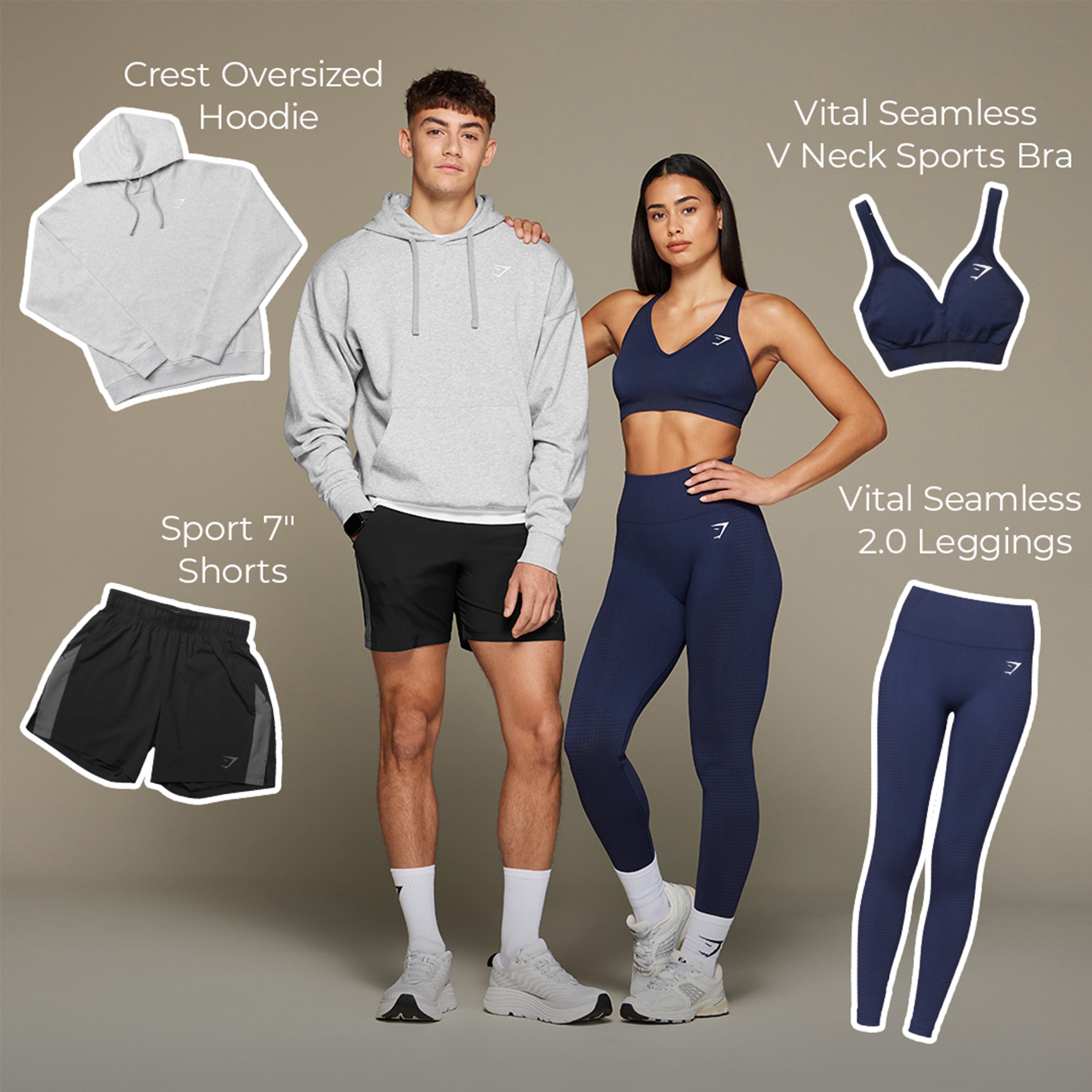
Credit: www.gymshark.com
How Many Of Each Gym Clothing Item Do You Need?
This is where most people get confused. Let’s break it down by the most common items, with practical advice for both men and women.
Tops
For most people, you’ll need 3–5 workout tops if you exercise three times a week and do laundry weekly. If you sweat more or work out daily, aim for 6–7 tops.
Bottoms
You can often reuse bottoms unless they get very sweaty. Most people need 2–4 pairs. If you do different activities (like yoga and running), add extra pairs for variety.
Sports Bras
Women should have 2–4 sports bras. If you exercise daily, aim for 5–7 so you always have a clean one.
Socks
You’ll need at least 5 pairs of athletic socks, but having 7–10 pairs is safer, especially if you do laundry less often.
Underwear
Aim for 5–7 pairs of athletic underwear. You want a fresh pair for every workout.
Shoes
Most people need one pair for their main activity. If you do multiple types of workouts, you may need two or three pairs.
Outer Layers
You need 1–2 hoodies or jackets. One for regular use, and another as backup.
Accessories
One or two sweat towels, and any other items you use regularly.
Here’s a quick overview in a comparison table:
| Item | Minimum Needed | Recommended for Active Users |
|---|---|---|
| Tops | 3 | 6–7 |
| Bottoms | 2 | 4–5 |
| Sports Bras | 2 | 5–7 |
| Socks | 5 | 7–10 |
| Underwear | 5 | 7 |
| Shoes | 1 | 2–3 |
| Outer Layers | 1 | 2 |
Building Your Gym Wardrobe For Different Workout Routines
Not everyone has the same routine. Your gym wardrobe will change depending on your schedule and the types of workouts you do.
Occasional Gym-goer (1–2 Times A Week)
If you only work out once or twice a week, you don’t need a huge wardrobe. Here’s what’s ideal:
- 2 tops
- 2 bottoms
- 2 pairs of socks
- 1 sports bra
- 2 pairs of athletic underwear
- 1 pair of shoes
You can manage with minimal gear and wash after each workout.
Regular Gym-goer (3–5 Times A Week)
This is the most common routine. You need enough clothes to cover the week between laundry days.
- 5 tops
- 3 bottoms
- 3–4 pairs of socks
- 2–3 sports bras
- 5 pairs of underwear
- 1–2 pairs of shoes
- 1 hoodie
This allows you to always have something clean and ready.
Daily Gym-goer (6–7 Times A Week)
If you work out every day, you need more clothes to avoid running out.
- 7 tops
- 5 bottoms
- 7 pairs of socks
- 5–7 sports bras
- 7 pairs of underwear
- 2–3 pairs of shoes
- 2 hoodies
You may want to buy extra so you don’t stress about laundry.
Multi-activity Athlete
If you do different workouts (running, yoga, weightlifting), you need gear for each activity.
- At least 2 tops per activity
- At least 2 bottoms per activity
- Activity-specific shoes
- Special accessories (like gloves or headbands)
It’s smart to keep gear separated so you don’t mix up clean and dirty items.
Gym Clothes For Different Seasons And Climates
Your gym wardrobe should change as the weather shifts.
Warm Weather
In hot climates, you’ll want more lightweight and sweat-wicking items.
- Short-sleeved shirts
- Tank tops
- Shorts
- Light socks
- Sweat towels
You may need extra tops because you sweat more.
Cold Weather
When it’s cold, you need layers.
- Long-sleeved shirts
- Joggers or leggings
- Hoodies
- Jackets
- Warm socks
You can reuse outer layers more often, but you’ll need enough base layers.
Rainy Or Humid Climate
If you exercise outdoors, invest in water-resistant jackets and quick-dry fabrics.
- Windbreakers
- Waterproof shoes
- Extra socks
Humidity means you’ll need more tops and socks.
Gym Clothes For Men Vs. Women: What’s Different?
While the basics are similar, there are some differences in needs and preferences.
Men
- Usually prefer shorts and t-shirts
- May need compression shorts for comfort
- Less likely to need multiple layers unless training outdoors
- May want lifting gloves or accessories
Women
- Need sports bras for support
- Often use leggings or capris
- May want tops with built-in bras
- Layering is more common, especially for yoga or pilates
Here’s a comparison of typical gym wardrobes:
| Item | Men | Women |
|---|---|---|
| Tops | T-shirts, tanks | T-shirts, tanks, built-in bras |
| Bottoms | Shorts, joggers | Leggings, shorts |
| Sports Bras | Not needed | Essential |
| Outer Layers | Hoodies, jackets | Hoodies, jackets |
| Accessories | Gloves, headbands | Headbands, gloves, towels |
Gym Clothes For Beginners: Common Mistakes And How To Avoid Them
Starting at the gym is exciting, but many beginners make mistakes with their gym wardrobe. Here are some you should avoid:
- Buying too many clothes: You don’t need a huge wardrobe. Start small and build as you understand your needs.
- Using cotton: Cotton absorbs sweat but dries slowly. This can cause discomfort and even skin issues.
- Skipping specialized gear: For activities like yoga or running, buy clothes designed for those workouts.
- Ignoring socks and underwear: Athletic socks and underwear are important for hygiene and comfort.
- Not considering laundry habits: If you don’t do laundry often, buy enough clothes to last.
- Buying only stylish clothes: Focus on function first, then style.
- Reusing sweaty clothes: This can cause skin problems and odor.
A non-obvious tip: If you’re unsure, buy one of each item and test how often you need to wash. This will help you decide how many you really need.
Gym Clothes For Experienced Athletes: Advanced Tips
If you’ve been working out for a while, you already know the basics. Here are some advanced tips:
- Rotate your gear: Keep a rotation so clothes last longer.
- Buy high-quality items: Premium fabrics last longer and perform better.
- Match gear to your workout: Use different clothes for cardio and strength training.
- Keep backups: Always have spare socks and a shirt in your gym bag.
- Plan for travel: If you travel, pack enough clothes plus extras for emergencies.
- Consider odor control: Some fabrics have anti-odor properties—worth investing in.
An insight many miss: Having too many clothes can make laundry confusing. Stick to a manageable number and replace items as needed.
How To Maintain And Store Gym Clothes
Buying the right number of clothes is important, but so is keeping them in good condition.
Washing Tips
- Wash gym clothes after every use to prevent bacteria and odor.
- Use cold water to protect fabrics.
- Avoid fabric softeners—they can damage moisture-wicking properties.
- Air dry when possible.
Storage Tips
- Store in a dry, ventilated area.
- Avoid leaving sweaty clothes in your bag—this causes odor and mold.
- Use separate bins for clean and dirty clothes.
When To Replace Gym Clothes
- Replace items when they lose elasticity or start smelling, even after washing.
- Shoes should be replaced when soles wear out.
A practical tip: Keep one spare set in your gym bag for emergencies. Many people forget and end up missing workouts.
Budgeting For Gym Clothes
You don’t have to spend a lot to build a good gym wardrobe. Here’s how to budget:
Buy In Bulk
Many brands offer discounts for buying packs of shirts or socks.
Focus On Essentials First
Buy tops, bottoms, and socks before accessories.
Invest In Quality
Higher-quality clothes last longer. It’s better to buy a few good items than many cheap ones.
Shop During Sales
Many stores offer sales at the start of new seasons.
Compare Prices
Check online reviews and compare prices. For example, Consumer Reports gives data on durability and value.

Credit: kftbrands.com
Eco-friendly Gym Clothes: Should You Care?
Many people now prefer sustainable gym clothes. These use recycled materials and eco-friendly production.
- Benefits: Less environmental impact, often more breathable.
- Drawbacks: Sometimes higher cost.
If you care about the environment, look for brands with certifications and sustainable practices.
The Real Cost Of Not Having Enough Gym Clothes
Some people try to save money by buying fewer clothes. But this can lead to problems:
- More wear and tear: Clothes wear out faster if used daily.
- Hygiene issues: Wearing sweaty clothes increases risk of skin infections.
- Missed workouts: If you run out of clean gear, you may skip the gym.
- Lower confidence: Fresh clothes help you feel better and perform better.
A non-obvious insight: It’s not just about quantity, but also rotation. Having a regular cycle keeps your wardrobe fresh.
Frequently Asked Questions
How Often Should I Wash Gym Clothes?
You should wash gym clothes after every workout. Sweat and bacteria build up quickly, causing odor and skin problems if you reuse unwashed clothes.
Can I Use Regular Clothes For The Gym?
Regular clothes are not ideal. Gym clothes are designed to wick sweat, stretch, and keep you comfortable. Regular clothes may cause discomfort, chafing, and don’t dry quickly.
How Do I Know When To Replace Gym Clothes?
Replace gym clothes when they lose elasticity, show holes, or smell even after washing. Shoes should be replaced when soles are worn out or support is lost.
Are Expensive Gym Clothes Worth It?
Sometimes, yes. Higher-quality gym clothes last longer, perform better, and stay odor-free. If you exercise regularly, investing in quality can save money over time.
Is It Okay To Reuse Gym Clothes Without Washing?
It’s not recommended. Reusing unwashed gym clothes can cause skin problems and odor. If you must, only reuse items that didn’t get sweaty, and always change socks and underwear.
Final Thoughts
Choosing how much gym clothes you need is a personal decision. It depends on your workout schedule, laundry habits, activities, and budget. Start with the basics and build your wardrobe as you learn what works best for you. Aim for comfort, hygiene, and practicality.
Remember that quality matters more than quantity, and keeping your clothes clean is essential for both performance and confidence. With a smart approach, you’ll have just enough gym clothes to keep you motivated and healthy, without overspending or feeling overwhelmed.
Credit: inphormnyc.com
