

How is Business Casual Dress Defined? Essential Style Guide
How Is Business Casual Dress
What do you wear when you want to look professional but not too formal? That is the question behind business casual dress. For many people, this style feels confusing. There is no single definition, and rules change from one company to another. Still, business casual is everywhere—from big offices to small startups. If you want to understand what it really means, you’re in the right place.
This guide covers everything about business casual dress, including key pieces, what to avoid, and how to adapt your look. You’ll find practical advice, examples, and comparisons to help you make smart choices. Whether you’re starting a new job or just want to polish your wardrobe, you’ll learn how to dress business casual with confidence.
What Is Business Casual?
Business casual is a mix of professional and relaxed clothing. It sits between formal business wear (like suits and ties) and casual clothes (like jeans and T-shirts). The goal is to look neat and trustworthy, but also comfortable.
In most offices, business casual means:
- No full suit
- No tie required
- Clean, ironed clothes
- No flashy or sporty items
But the details depend on the company, location, and industry. For example, tech companies may allow more casual items than banks. Some offices expect dress pants and blouses, while others accept dark jeans and polo shirts.
The Origin Of Business Casual
Business casual started as a way to make work more comfortable. As offices became less formal, people wanted clothing that felt good but still looked professional. This change happened slowly, with different companies testing relaxed dress codes. Today, business casual is standard in many places.
Key Differences: Business Casual Vs Formal And Casual
Let’s see how business casual compares to other dress codes:
| Dress Code | Common Pieces | Formality Level |
|---|---|---|
| Formal Business | Suits, ties, dress shoes | High |
| Business Casual | Dress pants, blouses, polos, loafers | Medium |
| Casual | Jeans, T-shirts, sneakers | Low |
Business casual keeps the neat look of formal wear, but removes some strict elements. It also avoids the relaxed style of casual dress.
Essential Business Casual Clothing
What items fit the business casual dress code? Let’s break it down for men and women.
Men’s Business Casual
For men, business casual is about mixing classic pieces with comfort.
- Dress pants: Neutral colors like black, navy, or gray. Chinos also work.
- Collared shirts: Button-down shirts, polos, or long-sleeve shirts.
- Sweaters: V-neck or crew-neck sweaters (worn over a shirt).
- Blazers: Optional, but adds polish.
- Shoes: Loafers, dress shoes, or clean leather sneakers.
- Belts: Leather, matching shoes.
- Socks: Neutral colors, no wild patterns.
Avoid wearing shorts, flip-flops, flashy sneakers, or T-shirts.
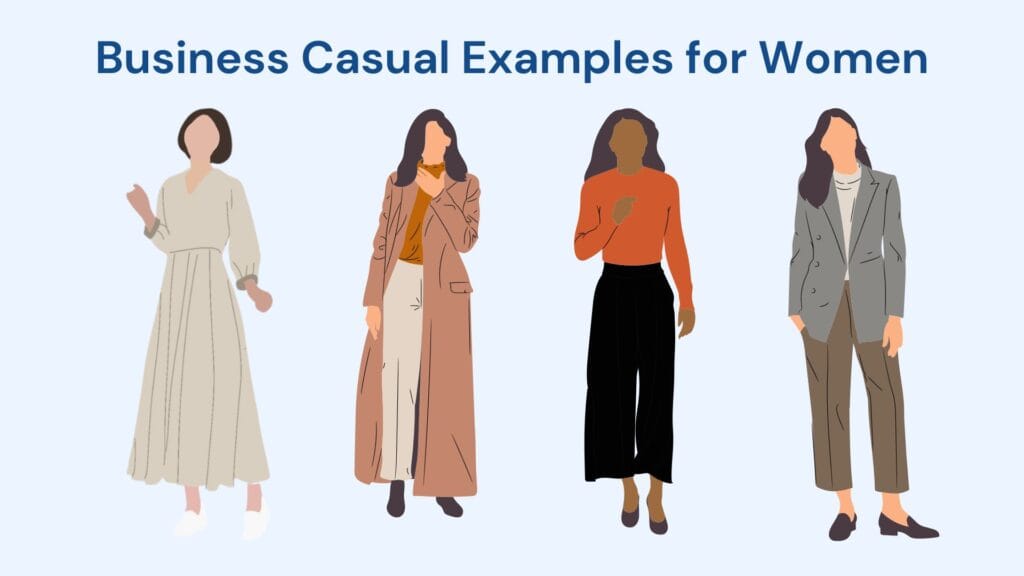
Women’s Business Casual
Women have more choices, but the basics stay the same.
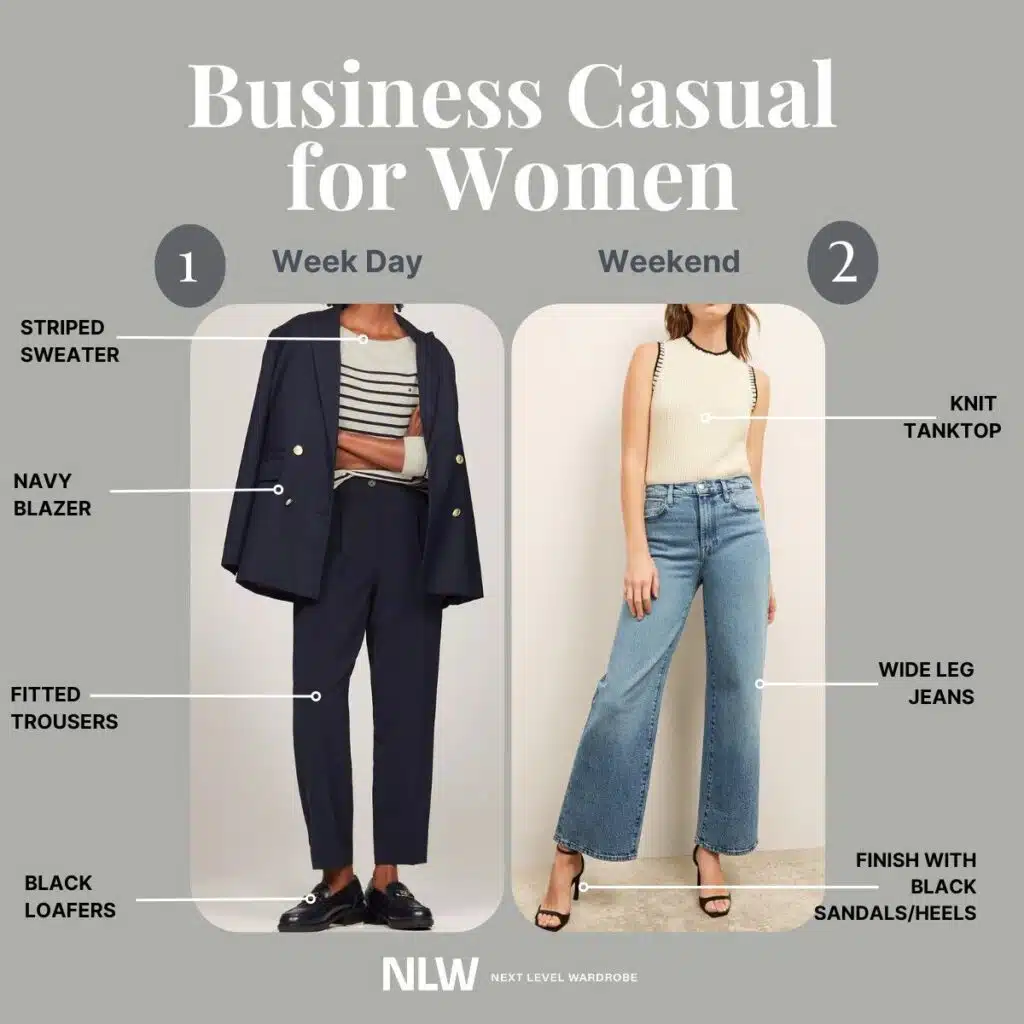
- Dress pants or skirts: Knee-length or longer. Neutral colors work best.
- Blouses or shirts: Simple patterns or solid colors. Avoid low-cut tops.
- Sweaters or cardigans: Layer for style and comfort.
- Blazers: Optional, but always neat.
- Shoes: Flats, low heels, loafers. Closed-toe preferred.
- Accessories: Simple jewelry, nothing too bold.
Avoid mini-skirts, casual sandals, tank tops, or athletic wear.
Examples Of Complete Outfits
Men’s Example: Navy chinos, light blue button-down shirt, gray sweater, brown loafers.
Women’s Example: Black dress pants, white blouse, beige cardigan, black flats.
Business Casual Accessories
Accessories are part of business casual, but should be subtle.
- Watches: Simple, not flashy
- Bags: Structured, neutral colors
- Belts: Classic designs
- Jewelry: Small earrings, simple necklaces
If you wear too many bold accessories, your outfit may look less professional.
Credit: www.theforage.com
Business Casual Mistakes People Make
Many beginners make mistakes with business casual. Here are some common ones to avoid:
- Wearing wrinkled or stained clothes
- Choosing bright, loud patterns
- Wearing athletic shoes or flip-flops
- Showing too much skin (short skirts, tank tops)
- Forgetting to match belt and shoes
- Mixing casual items like hoodies with dress pants
A good tip: If you’re not sure, choose the more professional option.
Non-obvious Insight: Fit Matters
Many people forget about fit. Even if your clothes are business casual, a poor fit looks sloppy. Shirts should not be too tight or too loose. Pants should end just above your shoes. If you want to look sharp, consider tailoring your main pieces.
Adapting Business Casual To Your Workplace
Every company has its own version of business casual. It’s important to know your office culture.
How To Read Your Office Dress Code
Some offices have written dress codes. Others expect you to learn by watching. Here’s how to adapt:
- Ask HR or your manager for guidelines
- Observe what others wear, especially managers
- Start slightly more formal, then adjust
If you dress too casually, you may look unprofessional. Too formal, and you may seem out of touch.
Example: Tech Vs Finance
Let’s compare two industries:
| Industry | Allowed Items | Typical Style |
|---|---|---|
| Tech | Jeans, polos, sneakers | Relaxed business casual |
| Finance | Dress pants, button-downs, blazers | Classic business casual |
Tech offices may allow jeans and sneakers. Finance firms expect dress pants and formal shoes.
Non-obvious Insight: Season And Location
Business casual can change by season or city. In warmer places, lightweight fabrics are common. In colder areas, layers and dark colors are popular. Also, big cities tend to be more formal than small towns.
Business Casual For Special Events
Sometimes you need business casual for meetings, interviews, or company events.
Job Interviews
For interviews, business casual is safer than casual. Choose:
- Dress pants
- Button-down shirt
- Simple shoes
- Avoid bold patterns
If you’re unsure, dress one step up. A blazer or extra layer is smart.
Meetings And Presentations
When you present or meet clients, look sharp. Choose neat, ironed clothes and subtle accessories. Avoid anything distracting.
Company Parties
Company events may allow more color or style. But always check the invitation or ask HR. If in doubt, stay neat and simple.
Business Casual For Remote Work
Many people work from home now. Does business casual matter? Yes—especially for video calls.
Video Meetings
Wear business casual tops for video calls:
- Solid shirts or blouses
- Simple sweaters
- Avoid flashy prints
You don’t need full dress pants, but avoid pajamas. Looking professional on screen builds trust.
Why Dress Up At Home?
Dressing business casual at home can help you focus and feel ready for work. Many remote workers notice higher productivity when they dress up.
How To Build A Business Casual Wardrobe
You don’t need to buy everything at once. Start with basics, then add more as needed.
Key Pieces For Men
- Two pairs of dress pants (black and navy)
- Three shirts (white, blue, gray)
- One sweater
- One pair of loafers
- One blazer
Key Pieces For Women
- Two pairs of dress pants or knee-length skirts
- Three blouses (white, blue, soft print)
- One cardigan
- One pair of flats
- One blazer
Shopping Tips
- Choose neutral colors—they mix well
- Buy quality over quantity
- Fit is more important than brand
- Shop sales and outlets for savings
Common Mistake: Ignoring Quality
Many people buy cheap clothes that wear out fast. It’s smarter to invest in a few quality items that last. Good fabrics and stitching make a big difference.
Choosing Fabrics And Colors
The right fabrics and colors help you look neat and feel comfortable.
Best Fabrics
- Cotton: Breathable, easy to care for
- Wool: Warm, classic for sweaters and blazers
- Polyester blends: Wrinkle-resistant
- Linen: Good for summer, but can wrinkle easily
Avoid fabrics like denim (unless allowed), velvet, or anything shiny.
Safe Colors
- Black
- Navy
- Gray
- Beige
- White
Bright colors or bold patterns are risky. Small patterns are fine, but keep them subtle.
Credit: nextlevelwardrobe.com
Business Casual Shoes
Shoes are important in business casual. They finish your look.
Men’s Shoes
- Loafers: Classic and comfortable
- Oxfords: Dressy, but not too formal
- Leather sneakers: Only if clean and simple
Avoid sandals, athletic shoes, or boots (unless weather requires).
Women’s Shoes
- Flats: Comfortable and professional
- Low heels: Not too high
- Loafers: Easy to match
Avoid flip-flops, platform shoes, or very casual sneakers.
Business Casual For Different Body Types
Everyone wants to feel comfortable. Business casual can be adapted for all shapes and sizes.
Tips For Men
- Choose shirts with enough room at shoulders and chest
- Pants should not be tight at the waist
- If tall, avoid shirts that are too short
Tips For Women
- Blouses with adjustable buttons work well
- Pants with stretch fabric help comfort
- If petite, try cropped pants and fitted blazers
Common Mistake: Ignoring Body Shape
Many people wear clothing that does not match their shape. Trying different cuts and styles can help you find what looks best.
Business Casual In Different Countries
Business casual is not the same everywhere. Some cultures expect more formal wear, others are relaxed.
United States
Most offices use classic business casual: dress pants, blouses, and neat shoes.
Europe
Some countries (like UK or Germany) are more formal. Expect blazers and button-downs.
Asia
Business casual often means formal pants and shirts, with less use of polos or sweaters.
Latin America
Color and patterns may be more common, but neatness is always key.
If you travel or work with other countries, ask for advice or observe local styles.
Caring For Business Casual Clothes
Keeping your clothes neat is part of business casual.
Laundry Tips
- Wash dress shirts in cold water to protect color
- Iron or steam clothes before wearing
- Hang pants and shirts to avoid wrinkles
Storage Tips
- Use hangers for shirts and blazers
- Fold sweaters to avoid stretching
- Store shoes in a cool, dry place
Common Mistake: Not Checking Labels
Some fabrics need special care. Always check labels for washing instructions. Ignoring this can ruin clothes quickly.
Cost Of Business Casual
Many people worry about cost. Business casual can be affordable if you shop smart.
Price Range Example
A typical business casual outfit can cost:
| Item | Low Price | High Price |
|---|---|---|
| Dress Pants | $30 | $120 |
| Button-down Shirt | $25 | $80 |
| Blazer | $60 | $250 |
| Shoes | $40 | $150 |
You don’t need to buy expensive brands. Focus on quality and fit. Shopping during sales, at outlets, or online can save money.
Business Casual For Plus Sizes
Many brands now offer plus-size options. Look for stores that carry a range of sizes. Tailoring can also help clothes fit better. Don’t settle for uncomfortable clothing—business casual should help you feel confident.
Business Casual For Young Professionals
If you’re new to the workplace, business casual can feel confusing. Here are tips for young professionals:
- Start with basic pieces, build slowly
- Avoid trendy items that may look too casual
- Ask mentors or managers for advice
- Always iron or steam clothes before important days
Many young workers make the mistake of following fashion trends too closely. Stick to classic, neat pieces first.
Gender Neutral Business Casual
Some workplaces support gender neutral dress. Key tips:
- Choose pants, shirts, sweaters in neutral colors
- Avoid highly fitted or revealing clothes
- Focus on comfort and neatness
Gender neutral business casual is about looking professional, not about fashion. Ask your company if you’re unsure.

Credit: www.wikihow.com
Business Casual For Different Age Groups
Business casual works for all ages. Older workers may prefer classic cuts and colors. Younger workers may add subtle style (like a patterned blouse or colorful sweater).
Tip For Older Workers
Stick to clean lines and simple accessories. Avoid anything too trendy or bold.
Tip For Younger Workers
Add personality with small patterns or creative layering. But never go too casual.
Business Casual In The Post-pandemic World
After the rise of remote work, business casual changed. Many companies are now more flexible. Still, dressing neatly helps you stand out.
Hybrid Offices
In hybrid settings, keep a business casual look for office days. At home, dress up for video calls.
Why It Matters
Research shows that dressing up—even at home—improves confidence and helps you focus. A study from Harvard found that workers who wore professional clothes felt more powerful and made better decisions.
Business Casual For Different Occasions
Business casual is not just for the office. It works for networking events, conferences, and more.
Networking Events
Choose classic pieces and avoid anything distracting. You want to look approachable and confident.
Conferences
Dress slightly more formal than your everyday business casual. Add a blazer or better shoes.
Non-obvious Insight: Business Casual Can Build Trust
Many people don’t realize that business casual dress helps build trust. When you look neat but not stiff, coworkers and clients feel comfortable talking to you.
Business Casual And Personal Branding
Your clothing is part of your brand at work. Business casual lets you show professionalism without being boring.
How To Use Business Casual For Branding
- Choose colors and styles that match your personality
- Keep your look consistent—avoid big changes day to day
- Use accessories to show style, but stay subtle
If you want to stand out, add one unique item (like a patterned scarf or watch). But always stay within your company’s guidelines.
Business Casual And Sustainability
Many people now care about sustainability. You can build a business casual wardrobe that’s eco-friendly:
- Buy clothes made from natural fibers (cotton, wool)
- Choose brands with ethical practices
- Buy fewer, better pieces
Sustainable business casual is about quality, not quantity.
For more on sustainable clothing, see Good On You.
Frequently Asked Questions
What Is The Difference Between Business Casual And Smart Casual?
Business casual is more formal than smart casual. Business casual avoids jeans, T-shirts, and sneakers, while smart casual may allow them if they’re neat. Smart casual is common for social events, not offices.
Can I Wear Jeans In Business Casual?
Some offices allow dark, neat jeans as part of business casual. But many companies do not. Always check your company’s dress code before wearing jeans.
Are Open-toed Shoes Allowed In Business Casual?
Usually, closed-toe shoes are safer for business casual. Some offices allow open-toed shoes for women, but they should be neat and not too casual (like sandals or flip-flops).
How Do I Know If My Outfit Is Too Casual?
If your outfit includes items like T-shirts, shorts, athletic shoes, or flashy patterns, it’s likely too casual. Stick to dress pants, blouses, shirts, and simple shoes for business casual.
Does Business Casual Mean No Tie?
In most places, business casual does not require a tie. But some companies or events may expect one. If you’re unsure, ask HR or wear a tie for safety—you can always remove it if it’s not needed.
Final Thoughts
Business casual dress is about finding balance. You want to look professional, but not too formal. The right clothes help you feel confident and comfortable at work. Every company has its own rules, so always check your dress code and observe others.
Start with basic, classic pieces, then add your own style. Remember, fit and quality matter more than brand or price.
When you understand business casual, you stand out for the right reasons. You build trust, show respect, and make a good impression—whether in the office or on a video call. Use these tips to build a wardrobe that works for you, and adapt as your career grows.
Business casual is not just a dress code—it’s a tool for success.
