

Does Business Casual Women Include Jeans? Style Guide Explained
Does Business Casual Women Include Jeans
The idea of business casual for women often creates confusion, especially when it comes to jeans. Many professionals wonder if jeans can truly be part of business casual attire or if they should be reserved for weekends and casual Fridays. This confusion exists because business casual means different things in different workplaces, industries, and cultures. Some companies embrace jeans as acceptable, while others see them as too informal.
With more offices moving away from strict dress codes, women are searching for ways to look polished but comfortable. Jeans seem like an easy choice—after all, they’re durable, easy to style, and available everywhere. But does business casual women include jeans?
In this article, you'll discover how jeans fit into business casual, which styles work best, and how to avoid common mistakes. You'll also see real-world examples, expert advice, and the latest trends for professional women.
Understanding Business Casual For Women
Business casual is a dress code that blends professional and relaxed clothing. It sits between formal office wear and casual everyday clothes. For women, this usually means avoiding items like ripped jeans, graphic T-shirts, sneakers, or shorts. Instead, the focus is on clean lines, modest cuts, and subtle colors.
What Does Business Casual Usually Include?
Here are the common elements of business casual for women:
- Dress pants or slacks
- Knee-length skirts or dresses
- Blouses and button-down shirts
- Cardigans and tailored blazers
- Closed-toe shoes such as loafers or pumps
Business casual is not about dressing down completely. The aim is to look professional without feeling overdressed. This means choosing clothes that are neat, well-fitted, and comfortable.
How Dress Codes Evolve
Workplace dress codes have changed over time. Many companies used to require suits, but now allow more flexible clothing. Tech firms, creative agencies, and startups often lead the way in relaxing rules. Still, traditional industries like banking or law may hold onto stricter standards.
Employees are more likely to see jeans in modern offices, but the acceptance of jeans depends on several factors:
- Company culture
- Industry norms
- Job position
- Location
Jeans may be fine in a marketing agency, but not in a courtroom. Even within the same company, the rules may differ between departments.
Are Jeans Accepted In Business Casual?
The simple answer: sometimes. Jeans can be part of business casual for women, but there are important limits and guidelines. Not every workplace or situation will allow them.
When Are Jeans Appropriate?
Jeans are usually allowed when:
- The company explicitly permits jeans in their dress code
- The office environment is creative or relaxed
- You work in tech, media, or startups
- It’s a casual Friday or a designated dress-down day
Even if jeans are allowed, they should still look polished. Avoid distressed styles, bold patterns, and flashy accessories.
When Should You Avoid Jeans?
Skip jeans in these situations:
- Formal meetings with clients or executives
- Job interviews in traditional industries
- Company events with strict dress codes
- Workplaces with conservative cultures
If you’re ever unsure, check your company handbook or ask your HR department. It’s better to be cautious than to stand out for the wrong reason.
Real-world Example
Sarah works as a project manager in a tech company. Her office allows jeans, but she always wears dark, straight-leg jeans with a blazer and loafers. She avoids ripped, faded, or embellished jeans. When she meets clients, she switches to dress pants.
This approach keeps her looking professional while enjoying the comfort of jeans.
Choosing The Right Jeans For Business Casual
Not all jeans are created equal. The right style can make you look polished, while the wrong one can make you look sloppy.
Best Types Of Jeans For Business Casual Women
- Dark wash jeans: Deep blue or black jeans look more professional.
- Straight-leg jeans: Clean lines and a classic fit suit most body types.
- Bootcut jeans: Slightly flared at the bottom, they pair well with heels.
- Slim or tailored jeans: Fitted but not tight, these jeans look neat and modern.
Avoid jeans that are baggy, faded, distressed, or decorated with sequins and patches.
Styles To Avoid
- Ripped or distressed jeans
- Light wash or overly faded jeans
- Skin-tight jeans
- Jeans with holes or frayed hems
- Bold prints or flashy embellishments
These styles can make your outfit look too casual or unprofessional.
How Fit And Fabric Matter
The fit and fabric of your jeans play a big role in business casual. Jeans should:
- Sit comfortably at the waist
- Have a tailored fit—not too tight or loose
- Use sturdy, smooth denim with minimal stretch
Avoid stretchy jeggings or thin fabrics that lose shape. Look for jeans with a classic structure.
Comparison Of Jeans Styles
Here’s a comparison of popular jeans styles for business casual:
| Style | Professional Look | Comfort | Best Pairings |
|---|---|---|---|
| Dark Wash Straight-Leg | High | Good | Blazers, blouses |
| Bootcut | Medium | High | Button-downs, sweaters |
| Slim/Tailored | High | Medium | Cardigans, structured tops |
| Light Wash | Low | Good | Casual Fridays only |
| Distressed | Very Low | High | Not recommended |
How To Style Jeans For Business Casual
Wearing jeans doesn’t mean you can ignore the rest of your outfit. You need to balance the casual nature of jeans with professional elements.
Pairing Jeans With Professional Tops
Choose tops that add structure and polish:
- Blazers: Instantly upgrade jeans to business casual
- Button-down shirts: Classic and professional
- Fine knit sweaters: Simple and neat
- Blouses: Feminine and elegant
Avoid T-shirts, tank tops, or oversized hoodies.
Shoes That Complete The Look
The right shoes can make jeans look more professional. Try:
- Loafers
- Pumps
- Ankle boots
- Ballet flats
Avoid sneakers, flip-flops, or sandals with jeans in a business casual setting.
Accessories: Less Is More
Keep accessories simple:
- Structured handbags
- Minimal jewelry
- Classic belts
Too many accessories or bold items can make the outfit feel too casual.
Layering For Professional Impact
Layering helps jeans appear more polished. Try:
- Wearing a blazer or cardigan over your shirt
- Adding a scarf in a neutral color
- Using a belt for a tailored look
Real-life Scenario
Jessica works in marketing and often wears dark jeans. She pairs them with a white blouse, navy blazer, and black loafers. She adds a silver watch and a simple necklace. Her look is business casual, comfortable, and ready for meetings.
Jeans Vs. Other Business Casual Bottoms
Jeans are just one option. Women can choose from several business casual bottoms.
Comparison Table: Business Casual Bottoms
| Bottom Type | Formality | Comfort | Best For |
|---|---|---|---|
| Dark Jeans | Low to Medium | High | Creative offices, casual Fridays |
| Dress Pants | High | Medium | Formal meetings, traditional offices |
| Pencil Skirts | High | Medium | Client presentations, interviews |
| Khakis | Medium | High | Tech, education, business casual |
| Tailored Shorts | Low | High | Summer, casual days |
Jeans offer comfort and versatility, but dress pants and skirts often look more formal. Khakis are a safe middle ground.
Common Mistakes Women Make With Business Casual Jeans
Jeans can be tricky. Here are mistakes to avoid:
- Choosing jeans that are too casual: Ripped, faded, or overly tight jeans don’t belong in the office.
- Ignoring fit and tailoring: Baggy or poorly fitted jeans look sloppy.
- Pairing jeans with casual tops or shoes: Avoid T-shirts, sneakers, or sandals.
- Skipping the office dress code: Always check guidelines before wearing jeans.
- Over-accessorizing: Too many bold accessories can ruin the professional look.
A non-obvious tip: Some offices allow jeans, but only certain colors. Always check if black or dark blue are preferred over lighter shades.
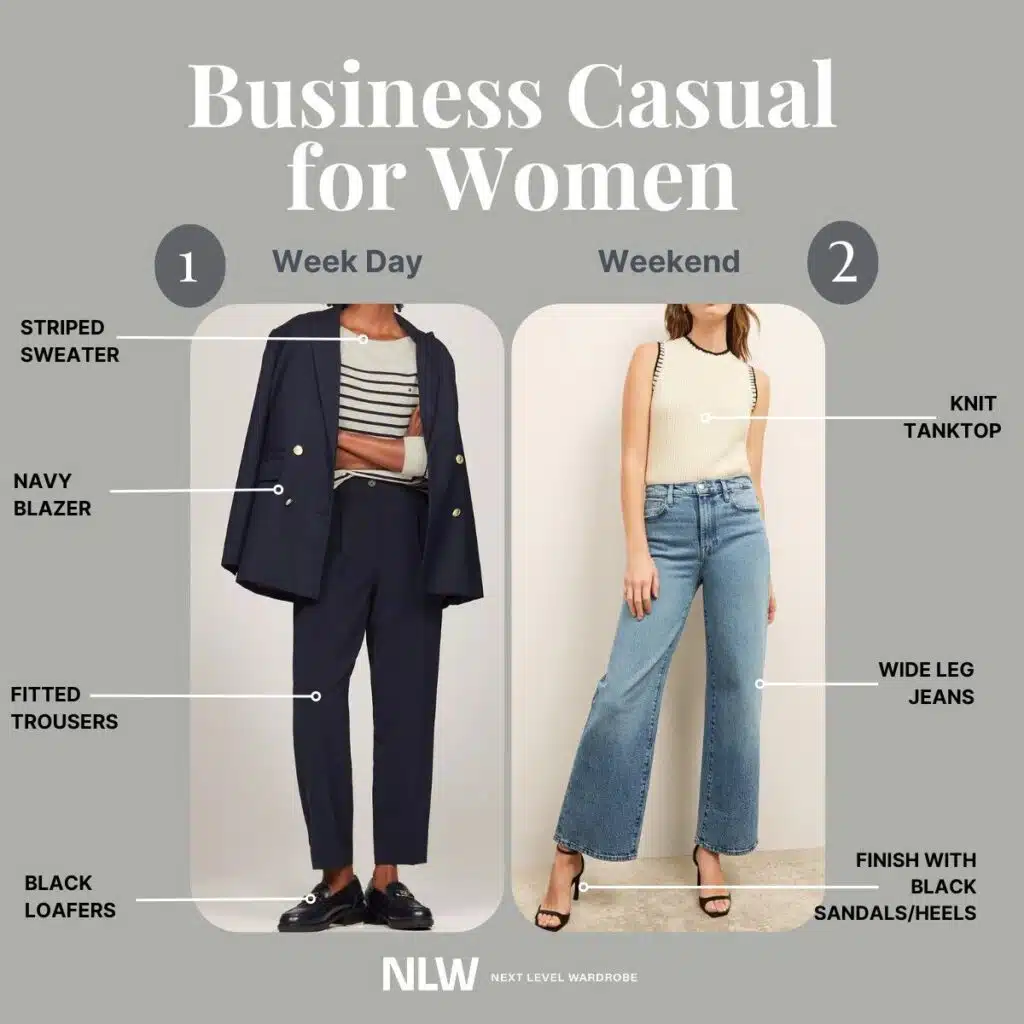
Credit: nextlevelwardrobe.com
How To Ask About Jeans In Your Workplace
If you’re unsure, don’t guess. Here’s how to get clarity:
- Ask your supervisor or HR directly about jeans in business casual.
- Look for clues in what your colleagues wear.
- Read the company handbook or dress code policy.
- Observe what people wear during meetings or client visits.
If jeans are allowed, ask if there are guidelines about color, style, or occasions.
Jeans In Different Industries
Acceptance of jeans varies by industry. Here’s a look at how common jeans are in different fields.
Tech And Creative
Jeans are widely accepted, especially in startups, digital marketing, and design. Employees often wear dark jeans with blazers or button-downs.
Finance And Law
Jeans are usually not part of business casual. These fields prefer dress pants, skirts, or suits.
Education And Healthcare
Some schools and clinics allow jeans, but only in darker shades and with professional tops. Jeans are less common for teachers or administrators than for support staff.
Retail And Hospitality
Jeans may be allowed for managers or office staff, but not for front-line workers. Dress pants or uniforms are more common.
Government And Nonprofit
Policies vary widely. Some agencies allow jeans on Fridays. Others prefer more formal attire.
A non-obvious insight: Remote workers may wear jeans, but video calls or meetings require a more professional look—even if only from the waist up.
Jeans And Cultural Differences
Workplaces in different regions have their own standards for business casual.
- In urban US offices, jeans are often accepted.
- In Europe, jeans may be seen as too casual in some companies.
- In Asia, formal attire is more common, but startups may allow jeans.
If you travel or work with international colleagues, ask about local dress norms.
Statistics And Data: Jeans In The Workplace
Recent workplace surveys show that jeans are becoming more popular. According to a poll by the Society for Human Resource Management (SHRM), about 60% of US companies allow jeans on at least one day of the week.
The number rises in tech and creative industries, where more than 80% of employees can wear jeans regularly. However, only around 20% of finance and law firms allow jeans.
Another non-obvious insight: Many companies use jeans as a way to boost employee satisfaction and comfort. However, most still expect jeans to look neat and professional.

Credit: shopduer.com
Dress Code Policies: Examples From Real Companies
Here are examples of how some companies handle jeans in business casual:
- Google: Jeans are allowed, but must be neat and clean. Employees are encouraged to pair jeans with blazers or smart tops.
- JP Morgan Chase: Jeans are not allowed except on designated casual days.
- Salesforce: Jeans are accepted, but no ripped or distressed styles.
- KPMG: Business casual includes dress pants; jeans only allowed on Fridays.
These policies show the importance of reading your company’s guidelines.
How To Transition From Formal To Business Casual With Jeans
If your company is moving from formal to business casual, here’s how to add jeans without losing professionalism:
- Start with dark, tailored jeans.
- Pair with structured tops like blazers or button-downs.
- Wear classic shoes such as loafers or pumps.
- Keep accessories simple and elegant.
- Follow any color or style rules from your office.
Making the transition slowly helps you keep a polished image.
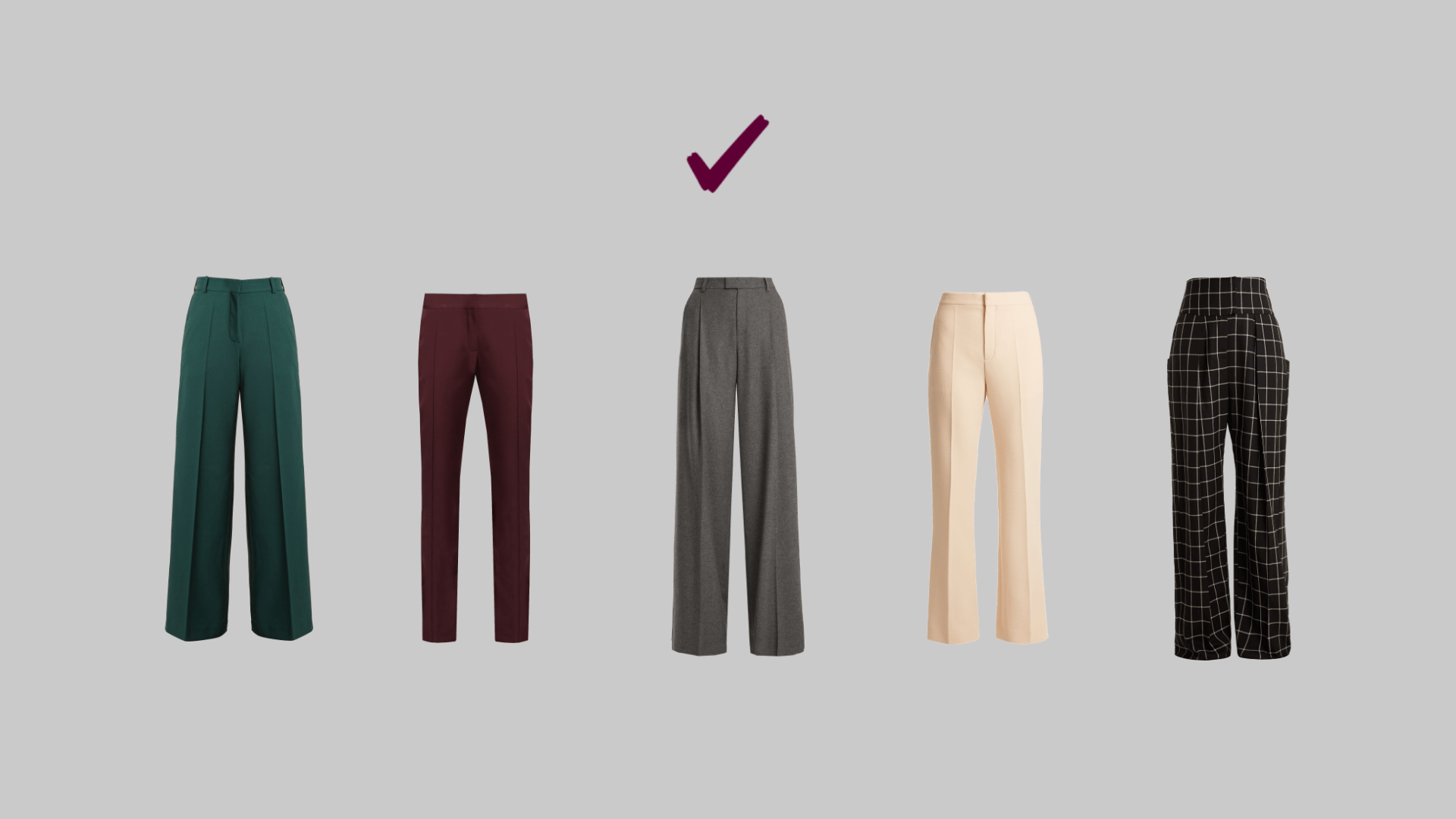
Credit: wonder-wardrobe.com
Building A Business Casual Wardrobe With Jeans
A versatile wardrobe makes getting dressed easier. Here’s how to build a business casual wardrobe with jeans:
- Buy 2–3 pairs of dark, tailored jeans
- Invest in blazers, cardigans, and structured tops
- Choose classic shoes in neutral colors
- Use minimal accessories
Mix and match pieces so you always look professional, even on casual days.
Practical Tips For Business Casual Women
Here are practical tips to help you master business casual with jeans:
- Always check your company’s dress code before wearing jeans.
- Invest in high-quality jeans that fit well and hold their shape.
- Pair jeans with professional tops and shoes.
- Keep your look neat—avoid wrinkles, stains, or faded fabrics.
- Use layering to add polish: Blazers, cardigans, and scarves.
- Try different styles to see what suits your body type.
- Plan ahead for meetings or events—switch to dress pants if needed.
- Observe what managers and leaders wear; follow their lead.
A non-obvious tip: If your jeans are too long, have them hemmed. Proper length helps your outfit look tailored and professional.
Business Casual Jeans: Dos And Don’ts
Here’s a quick list of dos and don’ts:
Dos:
- Wear dark, tailored jeans
- Pair with structured tops
- Choose classic shoes
- Keep accessories simple
- Check company guidelines
Don’ts:
- Wear ripped, faded, or embellished jeans
- Pair with casual tops or sneakers
- Ignore fit and tailoring
- Over-accessorize
- Guess about the dress code
Following these rules helps you look polished and appropriate.
How Jeans Impact Your Professional Image
The way you dress affects how others see you. Jeans can make you look modern and approachable, but only if styled correctly. Wearing polished jeans shows confidence and adaptability. But sloppy jeans can make you seem careless.
Your professional image matters for promotions, client trust, and teamwork. Dress for the job you want, not just the job you have.
The Future Of Business Casual: Are Jeans Here To Stay?
Jeans are likely to stay part of business casual in many industries. As remote work and flexible dress codes grow, jeans will become more common. But the need for professionalism remains.
Employers want employees to feel comfortable, but also to represent the company well. Jeans can fit both needs if worn with care.
A non-obvious insight: As AI and technology change workplaces, dress codes may evolve even more. But the basic rules for business casual will stay: neat, tailored, and appropriate.
Frequently Asked Questions
Can I Wear Jeans For Business Casual In Any Company?
No, not all companies allow jeans as part of business casual. Always check your company’s dress code or ask HR before wearing jeans. Some companies only allow jeans on casual Fridays or for certain departments.
What Color Jeans Are Best For Business Casual?
Dark wash jeans are the best choice for business casual. Deep blue, black, or charcoal shades look more professional. Avoid light wash, faded, or brightly colored jeans.
Are Ripped Jeans Ever Acceptable In Business Casual?
Ripped or distressed jeans are almost never acceptable for business casual. Even in creative industries, they can make you look too casual. Always choose jeans with a clean, neat finish.
How Can I Make Jeans Look More Professional?
Pair jeans with structured tops like blazers or button-down shirts. Choose classic shoes and minimal accessories. Make sure your jeans fit well and are free of wrinkles or stains.
Should I Wear Jeans To A Job Interview?
It’s usually best to avoid jeans for job interviews, especially in traditional industries. Choose dress pants or a skirt instead. If you know the company is very relaxed, you may wear dark, tailored jeans—but always check first.
If you want more guidance on business casual dress codes, you can read the full explanation at Wikipedia.
Final Thoughts
Jeans can be part of business casual for women, but only when chosen and styled carefully. Dark, tailored jeans paired with structured tops and classic shoes help you look polished and professional. Always check your company’s rules, observe what others wear, and focus on fit and quality.
Avoid common mistakes like ripped or faded jeans, and keep accessories simple.
Business casual is about balancing comfort with professionalism. Jeans are a great option if you follow the right guidelines. With the tips and examples in this article, you can build a wardrobe that fits your office and your style. Remember, your outfit shapes your professional image—so dress with confidence and care.
