

Does Business Casual Mean Jeans? Decoding Dress Codes
Does Business Casual Mean Jeans
When you hear business casual, the image that comes to mind can be very different depending on where you work, who you ask, and what country you’re in. For some people, business casual means dressing comfortably but still looking professional. For others, it’s a confusing middle ground where you’re not sure if jeans are allowed or if you should stick to dress pants. The question “Does business casual mean jeans?” is not as simple as it sounds. Let’s explore what business casual really means, why it changes from place to place, and how jeans fit into this dress code.
What Is Business Casual?
Business casual is a style of dress for workplaces that is less formal than traditional business wear but still neat and professional. It’s not just about comfort; it’s about looking polished without being overdressed.
Most companies use business casual to let employees express themselves, while still keeping a professional look. However, the definition of business casual can vary:
- Some offices allow jeans, polo shirts, and sneakers.
- Others expect slacks, button-down shirts, and closed-toe shoes.
The key is to look professional but approachable.
Typical Business Casual Clothing
Here are common items people wear in business casual environments:
- Dress pants or khakis
- Button-down shirts or blouses
- Polo shirts
- Sweaters
- Closed-toe shoes
- Blazers (optional)
- Jeans (sometimes)
While jeans are sometimes included, they’re not always a safe choice. Many companies prefer traditional items like khakis or dress pants because they guarantee a neat appearance. For example, a classic pair of gray dress pants with a pressed shirt almost never looks out of place. Sweaters and blazers add flexibility, especially in colder weather, and allow you to layer for a smarter look.
Some offices even allow casual footwear, but usually only if the shoes are clean and simple. For instance, white sneakers can work in some tech environments, but they would not fit in a law firm. The main idea is that business casual should look clean, coordinated, and tidy.
The Origins Of Business Casual
Business casual started as a way to relax strict office dress codes. People wanted to feel comfortable at work without losing professionalism. This change was influenced by the tech industry, creative fields, and younger generations entering the workforce.
In many places, “casual Fridays” gave employees a break from suits. Eventually, some offices made this relaxed style the norm. However, there is no universal rule, and the dress code depends heavily on company culture and industry.
The move towards business casual was also shaped by changes in society. As work environments became more collaborative, people wanted clothing that allowed movement and comfort. In the 1990s, Silicon Valley companies made business casual popular by showing that relaxed dress codes could support innovation and productivity.
Even today, startups often use business casual to show they’re modern and flexible.
But business casual did not become popular overnight. Some industries, like finance, resisted change for years. They felt traditional business wear showed seriousness and trust. Over time, business casual gained acceptance, especially as younger workers entered the workforce and brought new expectations.
Jeans: The Center Of Debate
Jeans are popular worldwide. They’re comfortable, durable, and come in many styles. But are they considered business casual?
Why Jeans Are Controversial
Jeans have a long history as casual wear. They were originally work pants for miners and laborers. Over time, they became a symbol of comfort and freedom. Because of this, some managers feel jeans are too informal for a professional setting.
Others see dark, well-fitted jeans as stylish and modern. They argue that jeans can look sharp, especially when paired with the right top and shoes.
The debate often centers on:
- Style and fit: Are the jeans neat and tailored, or baggy and distressed?
- Color: Are they dark and professional, or light and casual?
- Condition: Are they free from holes and fading?
One insight many beginners miss is that the smallest details, like stitching or pocket design, can affect whether jeans look professional. For example, jeans with flashy stitching or visible branding often look too casual for work, even if the color and fit are good.
Another hidden factor is the cultural history of jeans. In countries where jeans are seen as rebellious or informal, they are less likely to be accepted, even if they look sharp.
Where Jeans Fit In Business Casual
Whether jeans are allowed in business casual depends on several factors:
Company Policy
Some companies have clear dress codes. Others are more flexible. Always check your company handbook or ask HR if you’re unsure.
Example: Tech Vs. Finance
Tech companies often allow jeans. The focus is on comfort and creativity. Finance and law firms usually stick to more formal wear.
Some companies also have mixed policies. For example, jeans may be allowed for regular office days, but not for client meetings or events. In some cases, jeans are allowed only if paired with a dress shirt or blazer. If you’re unsure, observe what your coworkers wear or ask directly.
Industry Standards
Different industries have different expectations. Here’s how jeans are viewed in several fields:
- Creative industries (marketing, design): Jeans are often accepted.
- Tech companies: Jeans are common.
- Finance, law, consulting: Jeans are usually not allowed.
- Healthcare: Not typical unless in non-patient roles.
Retail and hospitality can be flexible, but it often depends on your role. For example, a store manager may wear neat jeans with a blouse, while sales staff must wear uniforms. In education, teachers sometimes wear jeans on special days, but not every day.
Location
Business casual also changes based on where you live. In some cities, jeans are fine. In others, people dress more formally.
For example, in San Francisco, jeans are common in offices. In New York, business casual often means khakis or dress pants. In smaller towns, traditional dress codes may still be popular. Even the weather can affect dress codes—warmer climates may encourage lighter pants, while colder places allow heavier fabrics like denim.

Credit: www.cottoncashmerecathair.com
Comparing Jeans To Other Business Casual Pants
To understand where jeans fit, let’s compare them to other pants often seen in business casual settings.
| Pant Type | Formality | Comfort | Typical Use |
|---|---|---|---|
| Dress Pants | High | Medium | Traditional offices |
| Khakis/Chinos | Medium | High | Business casual offices |
| Jeans (Dark) | Low-Medium | High | Creative, tech, some casual offices |
| Corduroy | Medium | High | Casual, some business casual offices |
Jeans are usually less formal than khakis or dress pants, but with the right style, they can fit into business casual. For instance, corduroy pants are sometimes seen as more stylish and less common, but their texture can make them look more formal than jeans.
Beginners often don’t realize that chinos offer almost the same comfort as jeans but with a more polished look, making them safer for uncertain dress codes.
Styles Of Jeans: Which Ones Work?
Not all jeans are equal when it comes to business casual. Here are some features that make jeans more acceptable:
Color
- Dark blue or black jeans look more professional.
- Avoid light washes, bright colors, or patterns.
Dark colors hide wear and tear, and they pair well with most business casual tops. Black jeans, in particular, can sometimes be mistaken for dress pants if styled well.
Fit
- Slim or straight fit jeans are preferred.
- Avoid baggy or skinny styles.
A slim or straight fit is comfortable and looks tidy. Baggy jeans often appear sloppy, while skinny jeans can look too trendy or informal for business settings.
Condition
- Jeans should be clean and free from rips.
- No distressing, holes, or heavy fading.
Some people try to wear distressed jeans, thinking they look stylish. For work, distressed jeans almost always send the wrong signal and make you appear less professional.
Extras
- Simple design, no big logos or flashy details.
Jeans with flashy buttons, patches, or embroidery are best left for weekends. Stick to classic styles with minimal extras.
These features help jeans look polished and appropriate for a professional setting. If you have doubts, ask yourself: “Would I wear these jeans to a company meeting?” If not, they may not be right for business casual.

Credit: www.hockerty.uk
How To Style Jeans For Business Casual
If your office allows jeans, you can still look sharp and professional. Here’s how:
- Pair with a button-down shirt: This adds structure and formality.
- Add a blazer: A blazer over jeans immediately boosts your look.
- Wear closed-toe shoes: Loafers, oxfords, or clean sneakers work well.
- Tuck in your shirt: Tucked shirts look neater.
- Use a belt: A simple leather belt adds polish.
Accessories can also help. For example, a classic watch or a simple necklace can make your outfit look more finished. If you want to add color, choose a pocket square or scarf that complements your shirt.
Avoid casual tops like graphic tees or hoodies. Keep your outfit balanced between comfort and professionalism.
Example Outfit
- Dark blue jeans (straight fit)
- Light blue button-down shirt
- Navy blazer
- Brown leather belt
- Brown loafers
This outfit works for most business casual offices that allow jeans. It’s simple but polished, and each piece supports a professional image. If you want to add personality, choose a shirt with a subtle pattern, or wear socks with a fun design.
When Jeans Are Not Business Casual
There are times when jeans are not acceptable, even if the dress code is business casual:
- Important meetings: Especially with clients or senior leaders.
- Job interviews: Unless the company is very casual.
- Formal events: Like company parties or presentations.
- First day at a new job: Dress more formally until you understand the office culture.
If you’re unsure, err on the side of caution. Many beginners forget that first impressions matter. Dressing slightly more formally shows respect for the occasion and the people you meet.
Also, if your office has a special event, such as a company award ceremony or a holiday party, jeans may not fit the dress code—even if they’re allowed on normal days.
Pros And Cons Of Jeans In Business Casual
Let’s look at the benefits and drawbacks.
Pros
- Comfortable: Jeans are easy to wear all day.
- Versatile: Can be styled in many ways.
- Affordable: Most people own jeans.
- Modern: Shows you’re up-to-date.
Jeans also save time—most people already have them, and they match almost everything. For remote workers, jeans often become the go-to choice because they look good and feel comfortable.
Cons
- Risk of being too casual: May look unprofessional in some offices.
- Hard to judge: Not all jeans are appropriate.
- Varies by industry: Not always allowed.
One hidden drawback is that jeans can shrink or fade quickly, making them look less polished over time. If you wear jeans often, check their condition regularly.
Real-world Examples: Jeans In Action
Many companies have adopted jeans as part of their business casual dress code. Here are a few examples:
Tech Companies
Google and Facebook allow jeans. Employees often pair jeans with polos or sweaters. The focus is on comfort and creativity. Even senior managers sometimes wear jeans, showing that casual can still be professional if styled well.
Creative Agencies
Marketing and design firms often let employees wear jeans. They value self-expression and a relaxed environment. In these workplaces, you may see colorful shirts, stylish sneakers, and accessories paired with jeans.
Retail And Hospitality
Managers and office staff in retail chains sometimes wear jeans, but usually with dressier tops and shoes. If customer interaction is involved, jeans must look neat and tidy.
Traditional Offices
Most law and finance offices do not allow jeans, even on casual Fridays. Dress pants or khakis are the standard. In these environments, dressing more formally is seen as a sign of respect and trustworthiness.
Some companies have “jeans days,” where employees can wear jeans once a week. On those days, people often dress up their jeans with blazers or nice shoes to stay professional.
Common Mistakes When Wearing Jeans To Work
Even in offices that allow jeans, there are mistakes to avoid:
- Wearing distressed jeans: Holes and fading look unprofessional.
- Choosing light colors: Light jeans are too casual.
- Ignoring fit: Baggy or tight jeans are not appropriate.
- Skipping grooming: Untucked shirts and dirty shoes ruin the look.
- Forgetting context: Important meetings call for dressier options.
Another mistake is forgetting accessories. For example, wearing jeans with an untidy belt or with sneakers that are dirty lowers your professional image. If you choose jeans, always check your whole outfit, not just the pants.
Global Perspectives: Business Casual And Jeans
Business casual means something different in each country. In the US, jeans are more accepted. In Europe, offices are often more formal. In Asia, traditional dress codes still dominate.
Here’s a quick comparison:
| Region | Jeans in Business Casual? | Notes |
|---|---|---|
| United States | Often allowed | Depends on industry |
| Europe | Sometimes allowed | More formal in some countries |
| Asia | Rarely allowed | Traditional dress codes |
| Australia | Often allowed | Casual culture |
Always check the local norms before choosing jeans for work. In some countries, business casual may include a suit without a tie, which is much more formal than jeans and a shirt.
How Employers Communicate Dress Codes
Companies use several ways to communicate their dress codes:
- Employee handbooks
- Email announcements
- HR meetings
- Posters in break rooms
If you’re not sure, ask your manager or HR. Some companies update their dress codes often, so it’s wise to check regularly.
One practical tip is to look for clues in company materials. Photos on the company website, or pictures of leaders during meetings, can show what is expected. If your office is hiring new people, HR may mention dress code changes in onboarding sessions.
Business Casual And Jeans: Data And Trends
Recent surveys show that more offices are becoming flexible with dress codes. According to a study by the Society for Human Resource Management, about 50% of US offices now allow jeans at least one day per week. Tech and creative fields lead the way, while traditional industries lag behind.
The rise of remote work has also changed what people wear. Many employees dress more casually at home, and this has influenced office dress codes. However, when returning to the office, many companies still expect a professional appearance.
Another trend is “hybrid dressing”—mixing casual and formal items. For example, people pair jeans with dress shirts and formal shoes. This blend allows comfort without losing professionalism.
Alternatives To Jeans
If you’re not sure about wearing jeans, here are other options:
- Khakis: Comfortable and professional.
- Chinos: Similar to khakis, but often slimmer.
- Dress pants: Always safe.
- Corduroys: Casual but stylish.
- Skirts (for women): Knee-length, simple design.
These options fit business casual in almost every office. Beginners often overlook chinos, but they are easy to style and accepted almost everywhere.
Jeans For Men Vs. Women In Business Casual
The rules for jeans are similar for men and women, but there are some differences.
Men
- Prefer straight or slim fit.
- Dark colors are best.
- Pair with dress shirts or polos.
Men can also add layers like sweaters or blazers to increase formality. If wearing jeans, avoid pairing with T-shirts unless the office is very casual.
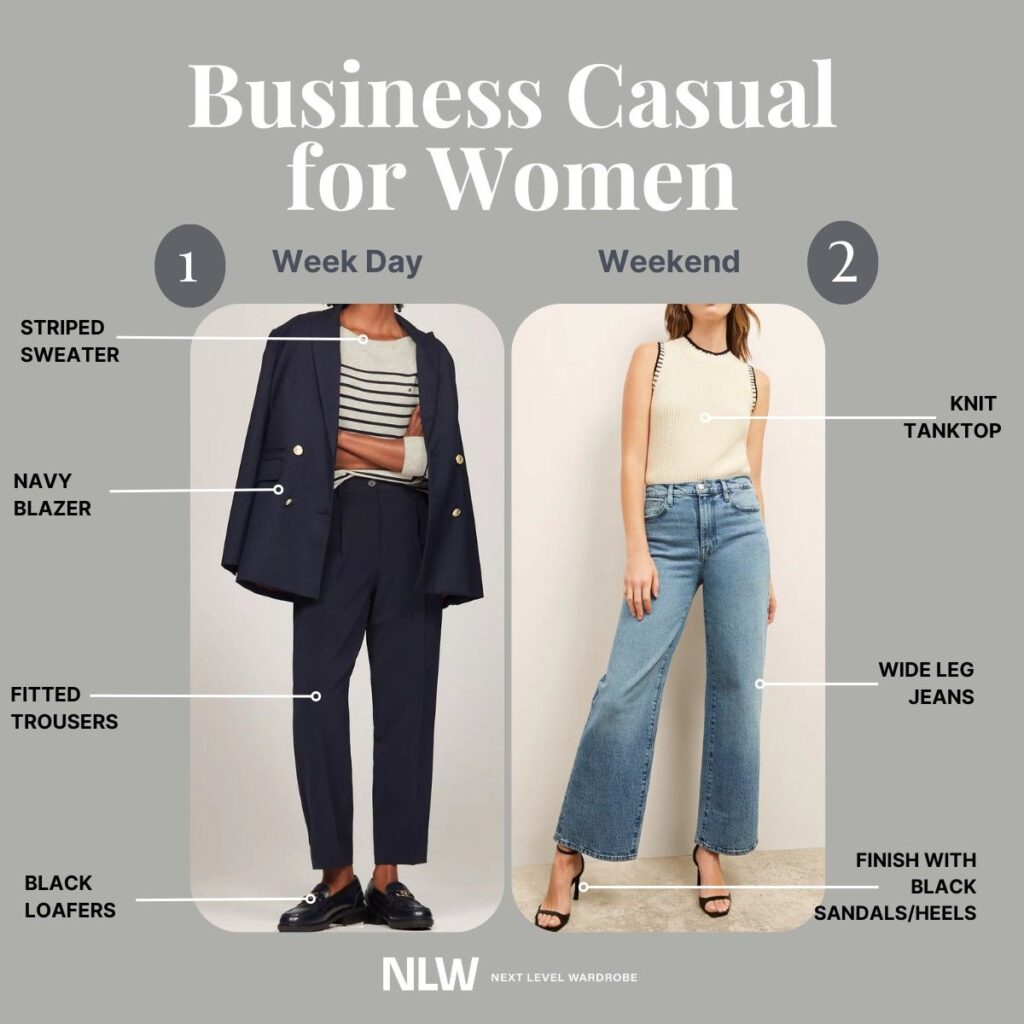
Women
- Can wear straight, bootcut, or slim jeans.
- Dark colors preferred.
- Pair with blouses, blazers, or sweaters.
Women have more flexibility with styles and accessories. For example, a dark pair of bootcut jeans with a tailored blazer and heels can look very professional.
Both should avoid distressed styles, bright colors, or overly tight jeans. A well-fitted pair is always better than trendy but uncomfortable jeans.
Credit: nextlevelwardrobe.com
Non-obvious Insights For Wearing Jeans At Work
Many beginners miss these points:
- Jeans can fade quickly: Dark jeans look sharp, but regular washing makes them lighter. To keep them looking professional, wash inside out and avoid frequent washing.
- The right shoes matter: Shoes can make or break your outfit. Dress shoes or clean sneakers are best with jeans. Avoid sandals or athletic shoes.
- Fit is more important than brand: A well-fitting pair of jeans from any brand looks better than expensive jeans that don’t fit.
Another insight: the way you care for your jeans affects their look. Hanging jeans to air dry keeps the color longer. Also, check the hem and pockets for wear—small details can make jeans look less professional.
How To Ask If Jeans Are Allowed
If you’re unsure, here’s how to ask:
- “Is it okay to wear jeans as part of the business casual dress code?”
- “Are there any specific guidelines about jeans?”
- “Do you prefer dark jeans or a certain style?”
Being direct shows you care about company culture. Most managers appreciate questions about dress code, as it shows you want to fit in.
Business Casual Vs. Smart Casual
Some offices use “smart casual” instead of “business casual.” Smart casual is slightly dressier and rarely includes jeans. Here’s a comparison:
| Dress Code | Jeans Allowed? | Common Outfits |
|---|---|---|
| Business Casual | Sometimes | Button-down shirts, khakis, blazers |
| Smart Casual | Rarely | Dress shirts, dress pants, stylish jackets |
Smart casual is often used for events or client meetings. If you’re invited to a company dinner or a networking event, smart casual is the safer choice.
The Role Of Jeans In Remote Work
Remote work has blurred the lines of business casual. Many people wear jeans or even sweatpants at home. However, video calls still require a professional look. Dark, neat jeans paired with a dress shirt are a safe choice for remote meetings.
One tip: if you have a video call, always check your outfit from the waist up and make sure your jeans are clean and tidy. It’s easy to forget about pants, but accidental camera movements can reveal your full outfit.
The Future Of Business Casual And Jeans
Trends show that dress codes are becoming more relaxed. Younger workers value comfort, and companies want employees to feel good at work. Jeans will likely become even more common in business casual dress codes.
However, professionalism still matters. The right style, fit, and context are important. Companies may update their dress codes, so always stay informed.
For more on dress codes and workplace trends, you can check Society for Human Resource Management.
Frequently Asked Questions
What Type Of Jeans Are Best For Business Casual?
Dark, straight or slim fit jeans are usually best. Avoid light colors, distressed styles, or big logos. Pair them with a dress shirt and closed-toe shoes for a neat look.
Can Women Wear Jeans As Business Casual?
Yes, many offices allow jeans for women if they are dark, tailored, and free from rips. Women can style jeans with blouses, blazers, or sweaters to look professional.
Are Jeans Acceptable For Job Interviews?
Usually not. Most companies expect dress pants or skirts for interviews, even if they allow jeans later. It’s safer to dress formally when meeting potential employers.
How Can I Know If My Office Allows Jeans?
Check your employee handbook or ask HR. Some companies send email updates or post signs about dress codes. When in doubt, ask your manager directly.
What Shoes Should I Wear With Jeans For Business Casual?
Dress shoes, loafers, or clean sneakers are best. Avoid sandals, flip-flops, or athletic shoes. Shoes should match the professional look of your outfit.
Business casual is always changing, and jeans are becoming more accepted. Still, the right style, fit, and context matter. When you understand your company’s culture and dress code, you can confidently choose jeans or other options and look professional every day.
