

Casual vs Business Casual vs Professional: Dress Code Decoded
Casual Vs Business Casual Vs Professional: Understanding Dress Codes for Every Situation
Choosing the right outfit can be confusing. Many people struggle with terms like casual, business casual, and professional. Each style has its own rules and expectations. Wearing the right clothes shows respect for the place and people around you. It can help you feel confident and fit in, whether you’re at work, a party, or a meeting.
This article explains the differences between casual, business casual, and professional dress codes. You’ll learn what each style means, when to wear it, and how to avoid common mistakes. Real examples and simple tips will help you dress well for any occasion.
By the end, you’ll understand how to choose outfits that match your needs and make a strong impression.
What Is Casual Dress?
Casual dress is the most relaxed style. It’s about comfort and self-expression. You can wear casual clothes at home, with friends, or in places with no strict rules. Some workplaces and schools allow casual dress, but not all.
Common Casual Clothing
Casual outfits usually include:
- Jeans or shorts
- T-shirts or polo shirts
- Sweatshirts or hoodies
- Sneakers or sandals
You can mix colors and patterns. There are no strict limits, but some casual places still expect neatness.
Examples Of Casual Dress
Imagine you’re meeting friends for coffee. You might wear blue jeans, a white T-shirt, and comfortable sneakers. Or you could wear shorts and a polo shirt for a picnic.
Some workplaces allow casual dress on Fridays. You might wear dark jeans and a simple shirt, but avoid clothes with holes or offensive images.
Mistakes To Avoid
- Wearing clothes that are too sloppy or dirty
- Showing too much skin (short shorts, crop tops) in public spaces
- Using strong perfumes that can bother others
Casual should feel relaxed but still respectful. If you’re unsure, choose neat and simple clothes.
Non-obvious Insights
- Even in casual settings, people notice details like clean shoes and ironed shirts. These small things make you look more put-together.
- Casual doesn’t mean careless. Sometimes, casual events require a bit of planning—like layering for outdoor weather or choosing shoes you can walk in.
What Is Business Casual?
Business casual is a mix between formal and relaxed. It’s common in offices, meetings, and networking events. This style gives you freedom but still expects a professional look.
Typical Business Casual Clothing
Men often wear:
- Dress pants or chinos
- Collared shirts (button-down or polo)
- Sweaters or blazers (optional)
- Leather shoes or loafers
Women might choose:
- Dress pants or skirts (knee-length or longer)
- Blouses or neat tops
- Cardigans or light jackets
- Closed-toe shoes
Colors are usually neutral: black, navy, gray, beige, or white. Patterns can be simple, like stripes or checks.
Examples Of Business Casual
You have a job interview at a tech company. You wear khaki pants, a light blue button-down shirt, and brown loafers. For a business lunch, you might wear a black skirt, a cream blouse, and simple flats.
Some companies allow jeans on certain days, but they must be clean and not ripped.
Mistakes To Avoid
- Wearing athletic shoes or sandals
- Choosing clothes that are too tight or too loose
- Using flashy accessories or bright colors
Business casual is about balance. It’s professional but not stiff.
Non-obvious Insights
- Business casual often means “dress like your boss, but not more formal than them.” Watch what leaders wear and follow their lead.
- Some companies have different rules for men and women. Always check your company handbook or ask HR if you’re unsure.

Credit: www.boltstaffing.com
What Is Professional Dress?
Professional dress is the most formal style. It’s expected in law offices, banks, government jobs, and high-level meetings. This style shows seriousness and respect.
Standard Professional Clothing
For men:
- Suits (matching jacket and pants)
- Dress shirts (usually white or light colors)
- Ties
- Dress shoes
For women:
- Tailored suits (pants or skirt)
- Blouses
- Closed-toe heels or flats
- Minimal jewelry
Colors are very conservative. Black, navy, gray, or beige are common. Patterns are rare, except for subtle pinstripes.
Examples Of Professional Dress
If you’re meeting a client at a law firm, you wear a dark suit, white shirt, tie, and polished shoes. For a finance job, a woman might wear a navy skirt suit, white blouse, and simple black heels.
Mistakes To Avoid
- Wearing casual fabrics like denim or linen
- Forgetting to iron clothes or polish shoes
- Using strong perfumes or bold makeup
Professional dress means every detail matters. Your outfit should look sharp and clean.
Non-obvious Insights
- Professional dress sometimes includes rules about socks, belts, and even hairstyles. Check your company’s policy if you’re unsure.
- In some cultures, professional dress means covering tattoos or removing piercings. Always respect local traditions.
Comparing Casual, Business Casual, And Professional Dress
It helps to see the main differences in a clear format. Here’s a simple comparison:
| Dress Code | Main Features | Common Occasions | Acceptable Shoes |
|---|---|---|---|
| Casual | Comfort, personal style, relaxed fit | Home, social gatherings, casual Fridays | Sneakers, sandals |
| Business Casual | Neat, professional, flexible | Office, interviews, networking events | Loafers, flats, closed-toe shoes |
| Professional | Formal, tailored, conservative colors | Law firms, finance, board meetings | Dress shoes, heels |
Each dress code fits different occasions and expectations. Knowing these differences helps you plan your outfit.
How Dress Codes Affect Your Career
Your clothing choices can influence how others see you at work. Studies show that dressing well can improve your confidence and chances for promotion. One survey found that over 65% of managers believe appearance affects how they judge job performance.
Why Dress Matters
- People notice details like neatness and fit.
- Dressing well shows respect for your workplace.
- Good clothes can help you feel more confident.
For example, a person who dresses business casual in a casual office may be seen as ambitious. But wearing casual clothes in a professional setting can make you look careless.
Real-world Example
A young manager started wearing blazers and dress pants after his promotion. He noticed that people treated him with more respect. This small change helped him feel more comfortable leading meetings.
Choosing The Right Dress Code For Your Situation
Selecting the correct dress code is important. Here are steps to help you decide:
- Understand the occasion: Is it work, a party, or a formal event?
- Ask about dress rules: If unsure, check invitations or company guidelines.
- Observe others: Look at what people wear in similar settings.
- Prepare your outfit: Choose clothes that fit the dress code.
If you’re attending an interview, business casual is usually safe unless told otherwise. For formal events, professional dress is best.
Data Table: Dress Code Choices By Industry
Some industries have clear preferences for dress codes. This data shows common styles:
| Industry | Preferred Dress Code | Notes |
|---|---|---|
| Technology | Business Casual | Casual allowed at startups, but business casual is safe for interviews |
| Finance | Professional | Formal suits expected for client meetings |
| Education | Business Casual | Teachers often wear neat but comfortable clothes |
| Creative Arts | Casual | Personal style and comfort valued |
| Law | Professional | Strict dress codes, formal suits required |

Credit: purduecco.wordpress.com
Tips For Transitioning Between Dress Codes
Sometimes you need to move from casual to business casual or from business casual to professional. Here are practical ways to make the change smoothly.
Moving From Casual To Business Casual
- Swap jeans for chinos or dress pants.
- Replace T-shirts with button-down shirts or blouses.
- Add a cardigan or blazer if needed.
- Choose closed-toe shoes instead of sneakers.
Moving From Business Casual To Professional
- Wear a matching suit or skirt suit.
- Use neutral colors and avoid bright patterns.
- Add a tie (for men) or minimal jewelry (for women).
- Make sure clothes are tailored and fit well.
Quick Fixes
- Keep a blazer or sweater at your desk for surprise meetings.
- Store a pair of dress shoes at work in case you need to change quickly.
- Use a lint roller and iron for last-minute touch-ups.
Non-obvious Insights
- Accessories can help you shift between styles. For example, removing a tie turns professional into business casual.
- Some workplaces offer “dress-down” days. Prepare for these by having both casual and business casual options ready.
The Role Of Culture And Geography
Dress codes are influenced by culture and location. In some countries, business casual is more formal than in others. For example, in Japan, business casual often includes a suit without a tie. In Europe, professional dress might mean dark suits and polished shoes.
Examples
- In the US, business casual can include khakis and polo shirts.
- In the UK, business casual often means smart trousers and crisp shirts.
- In India, professional dress may include traditional attire like sarees for women.
Always respect local customs. If you travel for work, learn about the dress code in that country.
Non-obvious Insights
- Climate affects dress codes. Hot countries may allow lighter fabrics, even for professional dress.
- Some companies have global offices. Dress codes can change between locations, so check before visiting.
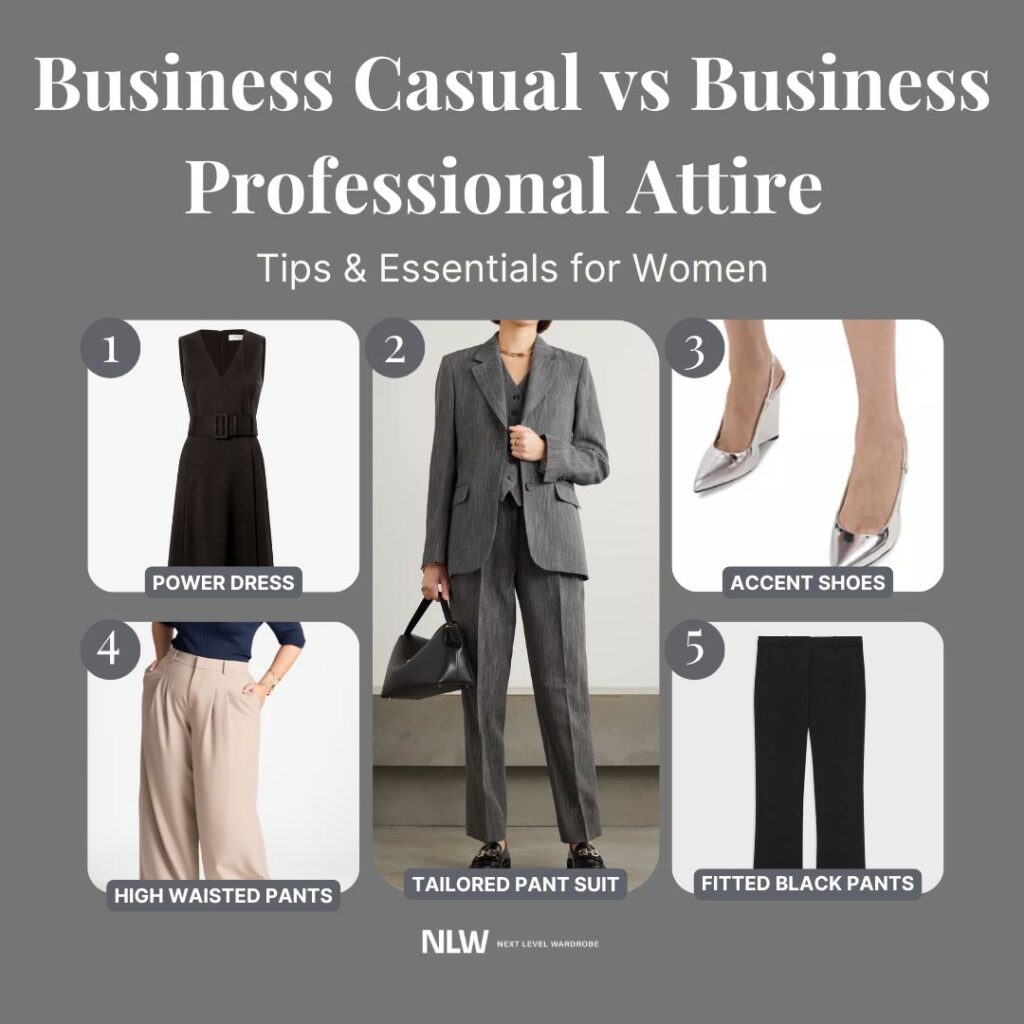
Credit: nextlevelwardrobe.com
Dress Code Policies In Companies
Most companies have written dress codes. These policies help employees understand expectations. Dress codes often change over time, becoming more relaxed in modern workplaces.
Common Elements In Dress Code Policies
- List of acceptable clothing (e.g., pants, skirts, shirts)
- Rules about shoes, jewelry, and hairstyles
- Guidelines for casual Fridays or special events
Some companies allow flexibility, while others are strict. Breaking the dress code can lead to warnings or even job loss.
Real Example
A large tech company changed its dress code from professional to business casual. Employees felt happier and more comfortable. Productivity increased, showing that flexible dress codes can help the workplace.
Fashion Trends And Their Impact On Dress Codes
Fashion changes over time, but basic dress codes remain. New trends can make business casual more colorful or casual dress more stylish.
Recent Trends
- Athleisure: Mixing athletic wear with casual clothes
- Smart casual: Combining business casual with personal style
- Sustainable fabrics: Using eco-friendly materials
Even with trends, workplaces stick to their dress codes. For example, a trendy hoodie may be fine for casual, but not for business casual.
How To Use Trends
- Add trendy items to casual outfits (like colorful sneakers)
- Choose classic pieces for business casual (like a crisp white shirt)
- Stick to timeless styles for professional dress
Dress Codes For Special Occasions
Some events have their own dress codes. Weddings, funerals, and award ceremonies require special attention.
Weddings
Dress depends on the invitation. Casual weddings allow neat dresses or pants. Formal weddings need suits or elegant dresses.
Funerals
Professional dress is safest. Dark colors and simple styles show respect.
Award Ceremonies
Business casual or professional dress is expected. Avoid flashy clothes.
Non-obvious Insights
- Always check invitations for dress code instructions. If unsure, ask the host.
- Bringing a jacket or extra layer helps if the event is more formal than expected.
Dress Codes And Gender
Dress codes sometimes have different rules for men and women. This can cause confusion or frustration.
Common Differences
- Men may need to wear ties, while women do not.
- Women might have more choices for shoes or accessories.
- Some workplaces have rules about skirt length or makeup.
How To Handle Gender Differences
- Follow the basic rules, but express your style within limits.
- If you feel uncomfortable, talk to HR or ask for clarification.
Non-obvious Insights
- Gender-neutral dress codes are becoming more popular. Some companies now allow any style as long as it’s neat and professional.
- Accessories, like watches or bags, can help both men and women personalize their outfits.
How To Build A Flexible Wardrobe
You don’t need a huge closet to dress well. A few key pieces can help you move between casual, business casual, and professional styles.
Essential Items
- Dark jeans (for casual)
- Chinos or dress pants (for business casual)
- Button-down shirts (for both business casual and professional)
- Blazer or suit jacket
- Dress shoes and flats
Mix and match these items to fit different dress codes. For example, a white shirt can be casual with jeans or professional with a suit.
Tips For Saving Money
- Buy quality basics that last longer.
- Choose neutral colors for easy matching.
- Add accessories to change your look.
The Impact Of Dress Codes On Mental Health
Clothing affects how you feel. Wearing the right clothes can make you feel more confident and comfortable. Too strict dress codes may cause stress.
Positive Effects
- Feeling confident in meetings
- Making a good impression
- Enjoying social events
Negative Effects
- Stress from strict rules
- Feeling uncomfortable in stiff clothes
- Worrying about fitting in
If dress codes make you unhappy, try to find ways to express your style within the rules. Some workplaces allow flexibility for comfort or health reasons.
Real-world Statistics About Dress Codes
Dress codes are a big part of modern life. Here are some statistics:
- Over 60% of US companies have a written dress code.
- 53% of workers say dressing well helps their confidence.
- 72% of managers believe dress affects professionalism.
- 45% of employees prefer business casual over formal dress.
These numbers show that dress codes matter in many jobs and social settings.
For more data about dress codes, you can visit SHRM.
Frequently Asked Questions
What Is The Main Difference Between Casual And Business Casual?
Casual is about comfort and personal style. You can wear jeans, T-shirts, and sneakers. Business casual is more professional. It uses dress pants, collared shirts, and closed-toe shoes. Business casual is common in offices.
Can I Wear Jeans In A Business Casual Setting?
Some workplaces allow jeans if they are dark, clean, and not ripped. Always check your company’s dress code. Pair jeans with a smart shirt and neat shoes to look business casual.
What Makes An Outfit “professional”?
A professional outfit is formal and tailored. It usually includes a suit, dress shirt, tie, and dress shoes for men. For women, it means a suit, blouse, and heels or flats. Colors should be neutral and patterns simple.
How Can I Move From Casual To Business Casual Quickly?
Replace casual items with business casual ones. Swap jeans for dress pants, T-shirts for collared shirts, and sneakers for loafers. Adding a blazer or sweater can also help.
Are Dress Codes Different In Other Countries?
Yes, dress codes change by country and culture. Some places are more formal, while others are relaxed. Always learn about local dress rules before visiting or working abroad.
Choosing the right dress code helps you feel confident and respected. Whether you’re dressing casual, business casual, or professional, understanding the rules makes life easier. With these tips and examples, you can create outfits that fit any situation and make a strong impression.
Remember, clothes are not just about fashion—they show who you are and how you value others.
