

Can You Wear Smart Casual to an Interview: Expert Tips
Can You Wear Smart Casual To An Interview
First impressions matter, especially during a job interview. What you wear sends a message before you even speak. Many people wonder if smart casual is acceptable for interviews. Is it too relaxed, or does it strike the right balance? The answer is not always simple. It depends on the company, the role, and even the industry. Choosing the best outfit can feel confusing. This article explores whether smart casual works for interviews, how to style it, and when it fits or fails. You’ll also find real examples, comparisons, and expert advice to help you look confident and professional. Let’s uncover the truth about smart casual for interviews and help you dress for success.
What Is Smart Casual?
Smart casual is a dress style that blends neat, professional pieces with more relaxed clothing. It’s not as formal as business attire, but it is more polished than casual wear. Think of smart casual as a middle ground: you look sharp, but not stiff.
Common smart casual items include:
- Blazers (not always required)
- Button-down shirts or neat blouses
- Chinos or tailored trousers
- Dark jeans (without rips)
- Dress shoes or clean loafers
- Simple accessories
Smart casual avoids sneakers, shorts, graphic tees, and anything overly casual. The goal is to look tidy, comfortable, and ready for work.
Smart Casual Vs. Business Attire
Understanding the difference is important. Business attire is very formal—suits, ties, dress pants, and formal shoes. Smart casual is less strict. To make this clear, see the comparison below:
| Smart Casual | Business Attire |
|---|---|
| Blazer optional | Blazer required |
| Button-down shirt or neat blouse | Button-down shirt and tie or formal blouse |
| Chinos or dark jeans | Dress trousers |
| Dress shoes or loafers | Formal dress shoes |
| Minimal accessories | Conservative accessories |
Smart casual feels less strict, but still respectful. Many modern workplaces accept smart casual, especially in creative or tech fields.
Why Interview Attire Matters
Your clothes create an impression before you even speak. Research shows that employers make judgments about professionalism, confidence, and fit within seconds. In fact, a survey by CareerBuilder found that 49% of employers say they know if a candidate is a good fit based on appearance.
Wearing the right outfit can:
- Boost your confidence
- Increase your chances of success
- Show respect for the company
- Help you feel comfortable
But the wrong outfit can do the opposite. Looking too casual might make you seem unprepared. Dressing too formally for a relaxed workplace can make you appear stiff or out-of-touch. The key is matching your style to the company and role.
When Smart Casual Is Appropriate
Smart casual works in many situations, but not all. It’s important to know when it fits and when it doesn’t.
Industries Where Smart Casual Is Accepted
Some industries welcome smart casual. These include:
- Technology: Startups and tech companies often prefer comfortable, modern looks.
- Creative fields: Advertising, design, media, and art jobs value originality.
- Education: Teaching, tutoring, or administrative roles may accept smart casual.
- Retail (non-luxury): Many retail jobs want approachable, neat outfits.
- Hospitality (casual venues): Restaurants, cafes, or hotels with relaxed atmospheres.
These workplaces care more about skills and attitude than strict dress codes.
Roles That Suit Smart Casual
Smart casual is usually fine for:
- Junior and entry-level positions
- Internships
- Customer service jobs
- Support roles
- Creative and technical roles
For leadership, executive, or client-facing jobs, business attire is often better.
Situations Where Smart Casual May Not Fit
Smart casual is usually not right for:
- Finance and law firms
- Government jobs
- Luxury retail
- Formal corporate offices
- Medical positions
These places expect traditional business attire. If unsure, check the company’s dress code or ask the recruiter.
How To Choose Smart Casual For An Interview
Dressing smart casual is not just about picking any neat outfit. You need to plan carefully. Here’s how to do it well:
Research The Company
Before your interview, learn about the company’s culture. Look at:
- Company website photos
- Social media posts
- Employee profiles on LinkedIn
- Reviews on job sites
If people dress smart casual, you’ll fit in. If everyone wears suits, aim for business attire. If the dress code is unclear, it’s safer to dress slightly more formal.
Ask If Unsure
If you’re not certain, ask the recruiter or HR contact. Say, “Can you advise on the dress code for interviews? ” This shows you care and want to make a good impression.
Pick The Right Pieces
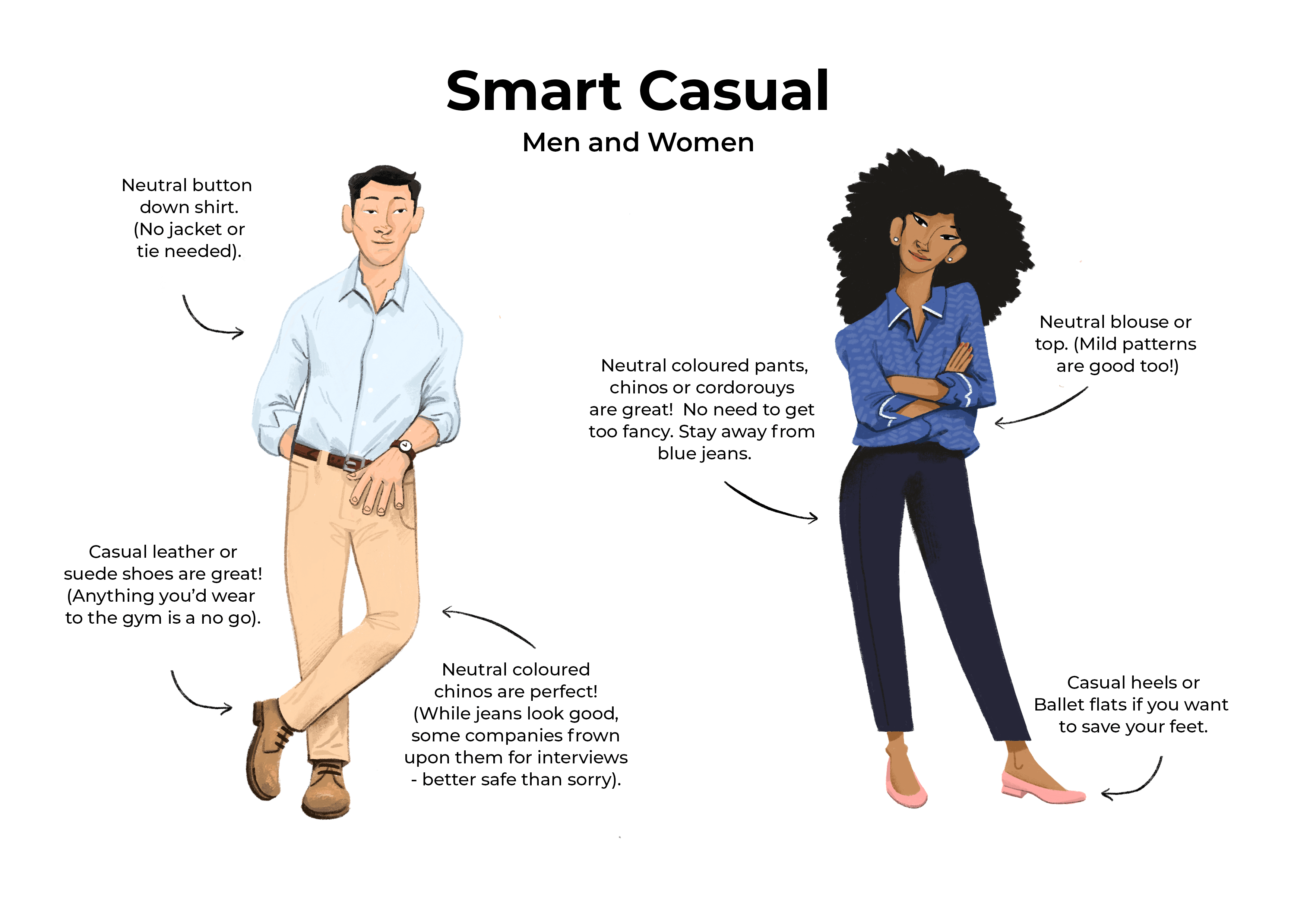
For men:
- Button-down shirt (solid color or subtle pattern)
- Blazer or cardigan (optional but adds polish)
- Chinos or dark jeans
- Dress shoes or loafers
- Simple belt
For women:
- Blouse or neat top
- Blazer or fitted cardigan
- Tailored pants, skirt, or dark jeans
- Low-heeled shoes or flats
- Minimal jewelry
Avoid flashy colors, logos, or anything too casual.
Fit Matters
Clothes should fit well. Baggy or tight clothing looks unprofessional. Tailored pieces make you look polished.
Grooming And Accessories
- Hair should be neat
- Nails clean and trimmed
- Light makeup (if any)
- Simple watch or jewelry
Never let accessories distract from your professionalism.
Credit: cultivatedculture.com
Examples Of Smart Casual Interview Outfits
Seeing real examples helps. Here are smart casual outfits for different roles:
For A Tech Startup
Men: Navy chinos, light blue button-down shirt, gray cardigan, brown loafers.
Women: Black tailored pants, white blouse, navy blazer, black flats.
For A Graphic Design Agency
Men: Dark jeans, olive button-down shirt, black blazer, black dress shoes.
Women: Dark skinny jeans, soft pink blouse, patterned scarf, black loafers.
For A Retail Sales Job
Men: Khaki chinos, white button-down shirt, navy belt, brown loafers.
Women: Gray skirt, pale blue blouse, cream cardigan, beige flats.
Smart Casual Interview Outfit Dos And Don’ts
Making mistakes is easy if you’re new to smart casual. Here are some tips:
Dos
- Choose clean, pressed clothes
- Wear fitted pieces
- Stick to neutral colors
- Add a blazer or cardigan if unsure
- Keep accessories minimal
Don’ts
- Avoid sneakers and sandals
- Don’t wear t-shirts with logos or graphics
- Skip shorts, ripped jeans, or hoodies
- Don’t over-accessorize
- Avoid strong perfumes or colognes
These dos and don’ts help you stay professional and confident.
Smart Casual Vs. Other Interview Dress Codes
To see how smart casual compares to other dress codes, check the table below:
| Dress Code | Key Features | Appropriate For |
|---|---|---|
| Smart Casual | Blazer optional, neat shirt, chinos/dark jeans, dress shoes | Tech, creative, entry-level roles |
| Business Casual | Blazer or sweater, collared shirt, dress pants, closed shoes | Corporate, admin, sales |
| Business Attire | Suit, tie, dress shirt, dress shoes | Finance, law, executive roles |
| Casual | T-shirt, jeans, sneakers | Informal workplaces, some startups |
Smart casual sits between business casual and casual—neat but not stiff.
The Impact Of Smart Casual On Interview Outcomes
Does smart casual affect your chances? Studies show that candidates who dress slightly above the company’s standard are viewed as more competent. But overdressing can sometimes feel intimidating.
A survey by Glassdoor found that 65% of candidates worry about being too formal or too casual. Confidence comes from fitting in with the company culture. Dressing smart casual for the right workplace can help you connect with interviewers.
Non-obvious Insights
- Fit Over Fashion: Many beginners focus on style or color. In reality, fit matters more. Well-fitted clothes look professional, even if they are simple.
- Company’s Client Base: If the company deals with formal clients, smart casual may not work, even if the internal culture is relaxed. Always check the company’s external image.
Smart Casual For Virtual Interviews
Remote interviews are common today. What you wear still matters, even if only your top half is visible.
Tips For Online Interviews
- Wear a smart casual top (blouse, button-down shirt)
- Avoid busy patterns or bright colors (they distract on camera)
- Keep hair and makeup tidy
- Sit in a well-lit space
Don’t wear pajamas or overly casual clothes, even if you’re at home. Dressing smart casual helps you feel ready and professional.
Cultural Differences In Interview Attire
Smart casual is not universal. Some cultures expect formal dress, while others are more relaxed. For example:
- In Japan, interviews usually require business attire.
- In the US, UK, and Australia, tech and creative roles accept smart casual.
- In India, formal wear is often expected in traditional companies.
Always check local norms. If interviewing for a global company, ask about their standards.
How To Upgrade Smart Casual If Needed
Sometimes, you want to look more formal without wearing a full suit. Here’s how to upgrade smart casual:
- Add a blazer
- Wear dress shoes instead of loafers
- Choose a collared shirt over a polo
- Pick tailored trousers over jeans
These simple changes make your outfit more professional.
Common Mistakes Beginners Make
Even the best candidates make errors. Here are three mistakes to avoid:
- Ignoring the company’s culture: Dressing too casually for a formal company is risky.
- Over-accessorizing: Too much jewelry or flashy items distract from your skills.
- Wearing wrinkled or dirty clothes: Cleanliness is more important than style.
Prepare your outfit the night before to avoid stress.
Real-life Examples: Success And Failure Stories
Hearing real stories can help you understand smart casual’s impact.
Success Story
Maria interviewed for a marketing role at a tech company. She wore black tailored pants, a soft blue blouse, and navy flats. The interviewer praised her look, saying it matched the company’s style. Maria got the job.
Failure Story
James applied for a finance position. He wore khaki chinos and a polo shirt. The company expected business attire. The recruiter told him his outfit was too casual. He didn’t get the role.
These examples show the importance of research and matching your look to the job.
Smart Casual For Different Genders And Body Types
Smart casual is flexible for all genders and body types. The key is picking pieces that suit you.
Tips For Men
- Choose shirts with structured collars
- Avoid baggy jeans
- Try loafers or dress shoes
Tips For Women
- Pick blouses with simple details
- Avoid short skirts
- Try tailored pants or knee-length skirts
Tips For Non-binary Or Gender-fluid Candidates
- Select neutral colors
- Mix masculine and feminine pieces
- Focus on fit and neatness
Smart casual is about confidence and comfort, not strict rules.

Credit: dorothyatabong.com
Preparing Your Smart Casual Interview Outfit
Getting ready is more than picking clothes. Here’s a checklist:
- Try your outfit in advance
- Check for stains, wrinkles, or loose threads
- Practice sitting and moving in your clothes
- Lay out accessories
- Check the weather and adjust layers
Preparation reduces stress and helps you focus on the interview.
Smart Casual And Company Dress Codes
Some companies have written dress codes. Others are flexible. If you can, read the employee handbook or ask HR. If you’re still unsure, dress one level above the daily standard. For example, if employees wear jeans and t-shirts, choose chinos and a button-down shirt.
Data On Dress Codes
Research from LinkedIn shows that 47% of US employers now prefer business casual or smart casual for interviews, especially in tech and creative fields.
Smart Casual For Second Interviews
For first interviews, smart casual is often fine if the company allows it. For second or final interviews, dress slightly more formal. This shows you’re serious and respectful.
Upgrade by:
- Adding a blazer
- Wearing dress shoes
- Choosing tailored pants
Second interviews often involve more senior staff. Aim for a polished look.
Deciding Between Smart Casual And Business Attire
Still unsure? Here’s a quick decision guide:
| Factor | Smart Casual | Business Attire |
|---|---|---|
| Company culture | Relaxed, creative | Formal, traditional |
| Role | Entry-level, support, creative | Management, finance, law |
| Dress code info | Unclear or casual | Formal or strict |
| Industry | Tech, design, education | Finance, government, luxury |
If in doubt, err on the side of formality.
Extra Tips For Confidence
Feeling confident matters as much as your outfit. Here’s how to boost your presence:
- Stand tall and smile
- Make eye contact
- Prepare answers in advance
- Focus on your skills, not just your clothes
Smart casual is just one part of your interview success.
Frequently Asked Questions
What If I Don’t Own Smart Casual Clothes?
You don’t need expensive outfits. Simple pieces like a button-down shirt and neat pants are enough. Borrow or buy affordable basics if needed. Thrift shops offer good options.
Should I Wear Smart Casual For Every Interview?
No. It depends on the company and role. Always research or ask. If the company is formal, wear business attire. For creative or tech roles, smart casual is often fine.
Can I Wear Jeans For A Smart Casual Interview?
Yes, but only dark, clean jeans without rips. Pair them with a blazer or neat shirt. Avoid light-wash or baggy jeans.
Is Smart Casual Different For Men And Women?
The basics are similar: neat, fitted pieces, minimal accessories. Women may choose skirts or blouses; men may pick chinos or button-down shirts. Fit and neatness are key.
How Do I Know If My Outfit Is Smart Casual?
Check your pieces: Is your shirt neat and structured? Are your pants tailored? Shoes clean and formal? If yes, you likely have a smart casual look.
Smart casual can help you feel comfortable and professional in many interviews. The secret is matching your outfit to the company, role, and culture. If you’re unsure, ask or dress slightly more formal. Your clothes are just one part of your story—let your skills shine through. For more guidance on interview attire, see Indeed’s interview attire guide.
Dressing well shows respect for yourself and the company. Smart casual is a great choice in many modern workplaces. With careful planning, you’ll walk into your interview feeling confident, comfortable, and ready to succeed.
Credit: www.charlestyrwhitt.com
