

Can Gym Clothes Go in Dryer? Essential Care Tips Explained
Can Gym Clothes Go In Dryer
After a workout, your gym clothes are sweaty, dirty, and need a good wash. You throw them in the washing machine, but when it’s time to dry, you pause and ask: Can gym clothes go in dryer? The answer isn’t simple, and making the wrong choice can ruin your favorite leggings or sports t-shirt. Many people don’t realize that gym clothes need special care. Dryers are convenient, but is convenience always safe for sportswear? This guide helps you understand everything about drying gym clothes, including fabric details, care instructions, real-life examples, and expert tips for keeping your workout gear in top shape.
Why Gym Clothes Are Different From Regular Clothes
Gym clothes are not like everyday cotton shirts or jeans. Most activewear uses materials designed for sweating and movement. These fabrics are stretchy, lightweight, and often synthetic.
Common gym clothing materials include:
- Polyester: Durable, dries fast, and resists shrinking.
- Nylon: Soft, smooth, and strong.
- Spandex/Lycra: Offers stretch and flexibility.
- Mesh: Used for breathability in certain parts.
These materials help wick away sweat and keep you comfortable during exercise. However, they react differently to heat and friction than cotton or wool. Synthetic fibers can melt, lose shape, or get damaged if exposed to high heat in a dryer.
How Dryers Work: Heat, Air, And Fabric Impact
Dryers use heat and movement to remove moisture. There are two main types of dryers:
- Vented dryers: Blow hot air through clothes, pushing moisture out.
- Condenser dryers: Remove moisture by condensing water vapor inside.
Most dryers have settings for temperature (low, medium, high) and time. High heat speeds up drying, but it can be harsh on sensitive fabrics. The tumbling motion can cause friction, which may stretch or break fibers, especially in delicate gym clothes.
Dryer Settings And Their Effects
- High heat: Dries fast, but can shrink, melt, or weaken synthetic fabrics.
- Low heat: Safer for activewear, reduces risk of damage.
- No heat (air dry): Uses only air movement. Best for avoiding any heat damage.
If you use the wrong setting, your gym clothes may lose their shape, elasticity, or even develop holes.
Credit: www.nike.com
What Happens If You Put Gym Clothes In Dryer
Putting gym clothes in the dryer can have several outcomes. Here are the most common effects:
- Loss of elasticity: Spandex and Lycra can break down, making clothes less stretchy.
- Shrinking: Some blends may shrink, especially if they contain cotton.
- Melting and warping: High heat can cause polyester and nylon to melt, stick, or deform.
- Fading colors: Heat and tumbling can fade bright colors and patterns.
- Damage to logos and prints: Heat can crack or peel off printed designs.
- Odor retention: Overheating synthetic fabrics can “lock in” bad smells, making them hard to remove.
Real-life Example
A runner washed her favorite leggings and put them in the dryer on high. After one cycle, the fabric felt rough, the stretch was gone, and the waistband was loose. She learned that even one dryer cycle can ruin expensive gym clothes.
How To Check If Your Gym Clothes Can Go In Dryer
You don’t have to guess. Most gym clothes come with care labels sewn inside. These labels show symbols or words that tell you how to wash and dry the item.
Look for these symbols:
- Square with a circle: Can be tumble dried.
- Square with a circle and dot(s): Number of dots shows heat level (one = low, two = medium, three = high).
- Square with a circle and X: Do not tumble dry.
If your gym clothes say “Do not tumble dry” or show an X, it means the manufacturer tested the fabric and found that dryers will damage it.
Sometimes, labels are missing or faded. In this case, check the brand’s website or search the product online for care instructions.
Gym Clothes Fabric Types And Dryer Compatibility
It’s important to know how different fabrics react to dryer heat. Here’s a comparison of common materials used in gym clothes.
| Fabric | Can Go in Dryer? | Best Setting | Risks |
|---|---|---|---|
| Polyester | Sometimes | Low heat | Melting, shrinking |
| Nylon | Sometimes | Low heat | Melting, loss of shape |
| Spandex/Lycra | No | Air dry | Loss of stretch, breakage |
| Cotton blends | Yes | Low/medium heat | Shrinking, fading |
| Mesh | No | Air dry | Tearing, loss of structure |
Most experts agree: low heat or air dry is safest for all gym clothes.
Manufacturer Guidelines: What Top Brands Recommend
Big activewear brands like Nike, Adidas, Under Armour, and Lululemon have their own care advice:
- Nike: Recommends air drying for most gym clothes, especially those with Dri-FIT technology.
- Adidas: Suggests tumble drying on low heat only if the label allows.
- Under Armour: Advises air drying to keep performance fabrics strong.
- Lululemon: Warns that dryers can ruin the stretch and softness of their leggings.
These brands spend years developing fabrics. Their instructions are based on lab tests and customer feedback. If you own branded gym clothes, always check the label or the brand’s official care guide.
Washing And Drying Gym Clothes: Step-by-step Guide
Many gym clothes get ruined not just in the dryer, but during washing. Here’s how to wash and dry them safely:
Washing Steps
- Turn clothes inside out: Protects prints and reduces wear.
- Use cold water: Hot water damages synthetic fibers.
- Choose gentle detergent: Avoid harsh chemicals or bleach.
- Select gentle cycle: Reduces friction and stretching.
- Avoid fabric softener: It coats fibers and stops sweat-wicking.
Drying Steps
- Remove from washer right away: Prevents smells and mildew.
- Shake out and reshape: Keeps clothes from wrinkling.
- Check care label: Look for dryer symbols.
- If dryer is allowed, use low heat: Never use high heat.
- If not allowed, hang or lay flat to air dry: Use a drying rack or hanger.
These steps will help keep your gym clothes looking new, smelling fresh, and lasting longer.
Air Drying Vs Dryer: Which Is Better For Gym Clothes?
Many people wonder if air drying is always best, or if the dryer is okay sometimes. Let’s compare the two methods.
| Drying Method | Advantages | Disadvantages |
|---|---|---|
| Air Drying | No heat damage, keeps shape, prevents stretching | Takes longer, needs space, may dry stiff |
| Dryer (Low Heat) | Quick, convenient, softens fabric | Risk of shrinking, melting, loss of elasticity |
Most experts recommend air drying gym clothes whenever possible. If you must use a dryer, choose the lowest heat setting and remove clothes before they are fully dry to finish air drying.
Common Mistakes When Drying Gym Clothes
Many beginners make the same mistakes that can ruin their gym clothes. Here are some frequent errors:
- Using high heat: This is the biggest cause of damage.
- Ignoring care labels: Not checking instructions leads to mistakes.
- Overloading the dryer: Clothes don’t tumble properly and get uneven heat.
- Leaving clothes in dryer too long: Increases risk of shrinking and melting.
- Drying with towels or heavy items: These can crush and stretch gym clothes.
Avoid these mistakes to keep your workout gear in good shape.
How To Dry Gym Shoes, Gloves, And Accessories
Gym accessories also need special care. Dryers are usually not safe for these items.
- Gym shoes: Never put sneakers in dryer. Air dry and stuff with newspaper to keep shape.
- Weightlifting gloves: Air dry only, as heat can harden leather or damage padding.
- Headbands, wristbands: Check care label; usually air drying is best.
If accessories have special technology (like moisture-wicking or anti-odor), drying with heat can destroy these benefits.
Tips For Faster Air Drying
Air drying doesn’t have to be slow. Here are ways to speed it up:
- Use a fan: Place clothes near a fan to increase airflow.
- Hang in a sunny spot: Sunlight dries clothes faster, but avoid direct sun for bright colors.
- Lay clothes flat: Prevents stretching, especially for leggings or sports bras.
- Use a drying rack: Allows air to circulate around clothes.
- Squeeze (not wring) water out: Press water out gently to avoid stretching.
With these tricks, your gym clothes can be dry in a few hours.
Do Gym Clothes Smell Worse After Dryer?
Some people notice that gym clothes still smell bad after drying. This happens because heat can “set” sweat odors into synthetic fibers, especially if clothes aren’t washed properly.
Tips to prevent smells:
- Wash clothes quickly after use.
- Use sports-specific detergents designed for removing sweat.
- Avoid fabric softeners, which can trap odors.
- Air dry when possible, as sunlight helps kill bacteria.
If your gym clothes have stubborn odors, try a vinegar rinse or a special odor remover.

Credit: www.amazon.com
Should You Dry Gym Clothes With Other Laundry?
Mixing gym clothes with other laundry can cause problems:
- Lint transfer: Cotton towels leave lint on synthetic fabrics.
- Color bleeding: Bright gym clothes may stain lighter laundry.
- Different drying needs: Gym clothes need gentle care; towels and jeans need more heat.
It’s best to wash and dry gym clothes separately from regular laundry.
Gym Clothes Shrinking: Myth Or Reality?
Many people think synthetic gym clothes can’t shrink. This isn’t true. While polyester and nylon are less likely to shrink than cotton, they can lose shape or become smaller if exposed to high heat.
Shrinkage is more common in:
- Cotton blend gym clothes
- Spandex-heavy items (sports bras, leggings)
- Clothes with elastic waistbands
To avoid shrinking, always use low heat or air dry.
Dryer Sheets And Gym Clothes: Safe Or Not?
Dryer sheets are popular for softening clothes and reducing static. But are they safe for gym clothes?
- Not recommended: Dryer sheets coat fabrics with chemicals that can block sweat-wicking and odor-fighting properties.
- Can cause irritation: Some people get skin irritation from residue left on gym clothes.
- Reduces performance: The main purpose of gym clothes is to manage sweat; dryer sheets can hinder this.
If you want softer gym clothes, use a vinegar rinse in the wash instead.
How Long Does It Take To Dry Gym Clothes?
Drying time depends on the method and fabric:
- Air drying: 2-6 hours, depending on airflow and humidity.
- Dryer (low heat): 20-40 minutes, but remove early for best results.
- Dryer (no heat): 40-60 minutes, may need extra air dry.
For thick items like hoodies or sweatpants, air drying may take longer.
Gym Clothes Lifespan: Dryer Impact
Using the dryer too often can shorten the life of your gym clothes. Signs of wear include:
- Loss of stretch
- Faded colors
- Rough texture
- Loose seams
Most gym clothes last longer when air dried. If you use the dryer, limit frequency and use the lowest heat.
Eco-friendly Drying: Saving Energy And Clothes
Air drying is not only better for gym clothes, it also saves energy and reduces carbon footprint. Dryers use a lot of electricity. By air drying:
- You save money on bills.
- You reduce environmental impact.
- Your gym clothes last longer.
Some gyms offer drying racks in locker rooms, making air drying more convenient.
Gym Clothes With Special Features: Extra Care Needed
Some gym clothes have added technologies:
- Anti-odor: Special coatings that kill bacteria.
- UV protection: Fabrics that block sunlight.
- Water resistance: Helps repel sweat and rain.
Dryer heat can destroy these features. Always check labels and brand instructions.
How To Store Gym Clothes After Drying
Proper storage keeps gym clothes fresh and ready to use. Follow these tips:
- Fold or hang: Prevents wrinkles and stretching.
- Keep in a dry area: Avoid damp closets, which cause mildew.
- Don’t store damp: Always dry fully before storing.
- Use breathable bags: If storing in gym bag, choose mesh or ventilated pockets.
Storing gym clothes well helps keep them odor-free and ready for your next workout.
Gym Clothes For Different Sports: Drying Needs
Sportswear comes in many types:
- Running shirts: Often polyester, can handle low heat but prefer air dry.
- Yoga leggings: High in spandex, must air dry.
- Basketball shorts: Usually nylon or mesh, air dry is best.
- Compression gear: Needs gentle care, never high heat.
Each sport has unique fabric needs. When in doubt, air dry.
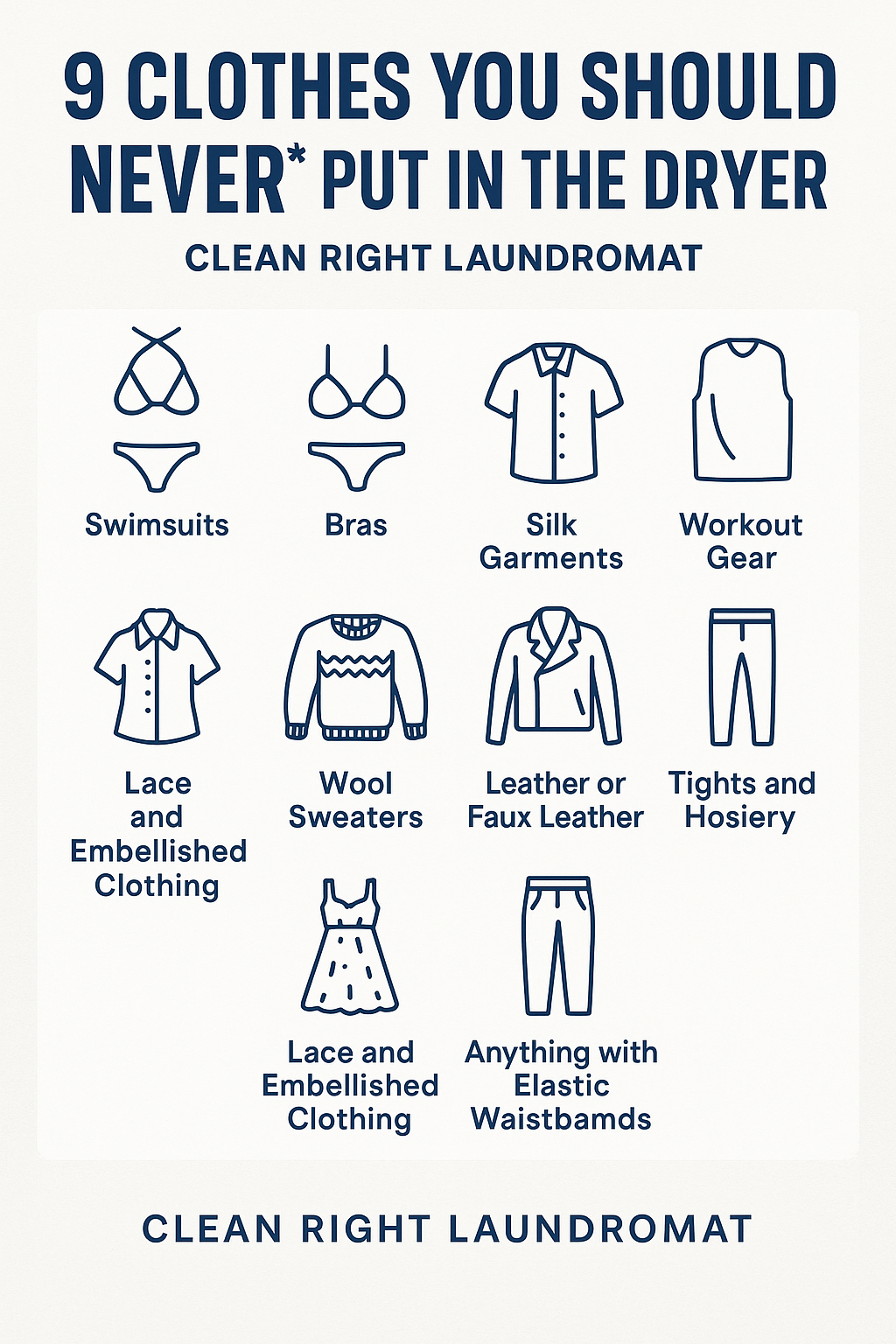
Gym Clothes And Dryer: Data And Surveys
Recent surveys show:
- Over 60% of gym-goers report damage after using dryers.
- 80% of fitness brands recommend air drying for their products.
- Only 20% of people read care labels before drying gym clothes.
These numbers show that most people don’t know the risks, but brands and experts agree: dryers can cause problems.
Credit: www.cleanrightlaundromat.com
Non-obvious Insights For Beginners
- Dryers can “set” stains and odors. If gym clothes aren’t cleaned well, drying makes stains and smells permanent.
- Repeated dryer use causes “pilling.” Small fabric balls form on the surface, making clothes look old.
- Mesh panels are especially fragile. Even low heat can tear mesh parts in shorts or shirts.
Knowing these facts can save you money and keep your gym wardrobe fresh.
Expert Opinions And Research
Sportswear experts say:
- “Dryers are convenient, but most gym clothes last twice as long with air drying.”
- “Synthetic fibers lose up to 30% of their stretch after just five dryer cycles.”
- “Air drying is more hygienic, as sunlight kills bacteria.”
Research backs up these claims. For more in-depth science, see Consumer Reports on fabric care.
Frequently Asked Questions
Can All Gym Clothes Go In The Dryer?
No, not all gym clothes are dryer-safe. Most synthetic fabrics, like spandex and mesh, should be air dried. Always check the care label before using the dryer.
What Dryer Setting Is Best For Gym Clothes?
If the care label allows, use the lowest heat setting. Avoid high heat, which can damage fibers and cause shrinking. Air dry is safest.
Why Do Gym Clothes Lose Their Stretch After Drying?
Dryer heat breaks down elastic fibers like spandex. This causes gym clothes to lose their stretch and fit poorly over time.
How Can I Prevent Odors In Gym Clothes After Drying?
Wash clothes quickly after use, use a sports detergent, and avoid fabric softeners. Air drying in sunlight helps kill bacteria and remove smells.
Is It Safe To Dry Gym Clothes With Towels Or Jeans?
No. Towels and jeans need high heat and longer drying times, which can damage gym clothes. Always dry gym clothes separately, using low heat or air drying.
Final Thoughts
Dryers make laundry fast, but gym clothes need careful handling. Heat, friction, and chemicals can ruin their performance and comfort. Always check labels, choose low heat if needed, and air dry when possible. Small steps now will keep your workout gear looking, feeling, and smelling fresh for longer.
With the right care, your gym clothes can handle every workout—and every wash—without losing their quality.
