

Business Casual Women vs Men: Key Differences and Style Tips
Business Casual Women Vs Men
Business casual is one of the most misunderstood dress codes in the workplace. It can feel confusing, especially when rules seem different for women and men. Many companies use “business casual” to encourage comfort, but also expect a neat and professional look.
So, what does business casual really mean for women and men? How do expectations differ? And what mistakes should you avoid? Let’s break it down clearly.
The concept of business casual started to make work environments less strict. Offices wanted people to feel relaxed, but still maintain a professional image. Today, business casual is everywhere—from big companies to small startups. But the details can vary a lot depending on location, company culture, and even job role.
Women and men both face unique challenges when picking the right business casual outfit. Some rules are strict, while others leave room for personal style. This article compares business casual for women vs men, shares practical tips, and highlights common mistakes.
What Is Business Casual?
Business casual is a balance between formal workwear and casual clothing. It’s not a suit, but it’s not jeans and a t-shirt either. The main idea is to look professional and comfortable at the same time.
For most companies, business casual means:
- No full suits
- Collared shirts or blouses
- Dress pants or skirts
- Closed-toe shoes
- Minimal accessories
But the details can change a lot from company to company. For example, some tech companies allow sneakers, while banks might want leather shoes. The goal is to look tidy, respectful, and ready for work.
Why Is Business Casual So Popular?
Many employers choose business casual because it boosts morale and helps people feel more at ease. When you’re comfortable, you can focus better and work harder. It also lets people express their personality a little more, which can make the office feel friendlier.
However, the flexibility creates confusion. What’s “too casual”? What’s “too formal”? And how does gender play a role in expectations?
Business Casual: Women Vs Men
Business casual is not the same for women and men. Both have general guidelines, but the choices, challenges, and mistakes differ. Here is a detailed comparison.
Main Clothing Items: Side-by-side Comparison
To make it easy, here’s a simple table showing the main business casual pieces for women and men:
| Item | Women | Men |
|---|---|---|
| Tops | Blouses, knit tops, button-down shirts, sweaters | Button-down shirts, polos, sweaters |
| Bottoms | Dress pants, pencil skirts, midi skirts, tailored trousers | Dress pants, chinos, tailored trousers |
| Shoes | Flats, low heels, loafers, boots | Loafers, dress shoes, boots, clean sneakers (sometimes) |
| Outerwear | Cardigans, blazers, structured jackets | Blazers, sport coats, sweaters |
| Accessories | Minimal jewelry, simple belts, scarves | Belts, watches, ties (optional) |
Key Differences
- Range of Choices: Women usually have more options—skirts, dresses, pants, blouses. Men’s business casual is more limited, mostly pants and shirts.
- Color and Pattern: Women can wear brighter colors and more patterns. Men tend to stick with neutral tones.
- Accessories: Women may use jewelry, scarves, or bags. Men usually keep it simple with belts and watches.
- Shoes: Women’s options include heels, flats, boots. Men usually wear loafers or dress shoes.
- Flexibility: Women’s business casual has more room for personal style but also more risk for mistakes.
Common Business Casual Mistakes
It’s easy to make mistakes with business casual. Here are some errors seen often:
Women
- Too Revealing: Low-cut tops or short skirts are not appropriate. Stick to modest cuts.
- Over-accessorizing: Too much jewelry or flashy items can look unprofessional.
- Casual Footwear: Sandals, flip-flops, or athletic sneakers are rarely allowed.
- Bold Patterns: Wild prints can distract and seem less professional.
- Unkempt Clothing: Wrinkled or stained clothes are never acceptable.
Men
- Untucked Shirts: Shirts should be tucked in for a tidy look.
- Athletic Shoes: Running shoes or sneakers are not business casual unless the company allows them.
- Wrinkled Pants: Ironed pants show attention to detail.
- Loud Ties or Socks: Bright colors can distract and look unprofessional.
- Skipping the Belt: Not wearing a belt with dress pants looks unfinished.
Shared Mistakes
- Wearing jeans (unless company allows)
- T-shirts or hoodies
- Overly casual jackets
- Not matching colors or patterns
- Wearing clothing that is too tight or too loose
Business Casual Guidelines: Women
Women’s business casual is flexible but also tricky. Here are the main guidelines:
Tops
- Choose blouses, button-downs, or knit tops.
- Avoid spaghetti straps or deep necklines.
- Solid colors or subtle patterns work best.
Bottoms
- Dress pants or tailored trousers are ideal.
- Skirts should be knee-length or longer.
- Avoid tight or short skirts.
Dresses
- Simple, knee-length dresses are great.
- Avoid party dresses or anything flashy.
Shoes
- Flats, loafers, low heels, boots.
- No open-toe sandals or athletic shoes.
Outerwear
- Blazers or cardigans add polish.
- Avoid oversized jackets or hoodies.
Accessories
- Keep jewelry simple and minimal.
- Scarves or belts can add style, but don’t overdo it.
Hair And Makeup
- Hair should be neat, not messy.
- Makeup can be used, but keep it natural.
Business Casual Guidelines: Men
Men’s business casual is more direct but still requires care.
Shirts
- Button-down shirts or polos are best.
- Stick to neutral or light colors.
- Patterns should be subtle.
Pants
- Dress pants, chinos, or tailored trousers.
- Avoid jeans, shorts, or sweatpants.
Shoes
- Loafers, dress shoes, or boots.
- Sneakers only if allowed.
Outerwear
- Blazers or sweaters are safe choices.
- Avoid hoodies or athletic jackets.
Accessories
- Keep it simple: Belt, watch.
- Ties are optional, not required.
Grooming
- Hair should be tidy.
- Facial hair must be neat, not scruffy.
Gender Bias And Double Standards
Business casual can reveal double standards. Women often face stricter rules—what’s “modest” or “appropriate” is debated more. For example, a skirt may be questioned if it’s even a bit short, while men rarely get comments on their pants. Women also deal with more feedback on makeup, hair, and accessories.
Men’s guidelines are easier, but less flexible. If a man wants to add color or pattern, it’s often discouraged. Many companies expect men to look “classic,” while women are allowed more creativity but also judged more.
Some companies have started to address these biases. They update dress codes to be more fair, but many old attitudes still remain. It’s smart to learn your company’s culture and ask for clear rules if needed.
Business Casual In Different Industries
Business casual means different things in different fields. Here’s another comparison table showing how expectations change:
| Industry | Women | Men |
|---|---|---|
| Finance | Blouses, skirts, pants, closed-toe shoes, blazers | Button-down shirts, dress pants, leather shoes, blazers |
| Tech | Knit tops, pants, clean sneakers, cardigans | Polos, chinos, clean sneakers, sweaters |
| Education | Simple dresses, pants, flats, cardigans | Button-down shirts, chinos, loafers, sweaters |
| Creative | Bold colors, unique accessories, boots | Patterned shirts, relaxed pants, boots |
Insight: In creative industries, both women and men get more freedom. But in finance and law, classic styles are required. Always check your company’s dress code before making big style choices.
Business Casual Around The World
Dress codes change with geography. In the US and Canada, business casual is common. In Europe, some countries prefer more formal styles. In Asia, companies may expect conservative looks, especially for women. For example, in Japan, dark colors and closed-toe shoes are preferred.
In India, women often wear traditional attire as business casual.
If you work for a global company, check local guidelines. Respect for local culture matters as much as company rules.
Practical Tips For Choosing Business Casual
Picking the right business casual outfit takes practice. Here are tips that help both women and men:
- Check the Dress Code: Ask HR for the written policy if you’re unsure.
- Look at Managers: Watch what leaders wear. They set the tone for the office.
- Try a Capsule Wardrobe: Select a few key items that mix and match easily.
- Keep It Simple: Neutral colors and classic styles rarely fail.
- Check Fit and Comfort: Clothing should fit well and feel comfortable all day.
- Keep a Spare Jacket: A blazer can dress up most outfits quickly.
- Avoid Trendy Items: Stick to timeless pieces for work.
- Test Your Outfit: If you hesitate, it’s probably not right for work.
- Maintain Clothing: Clean, iron, and repair your work clothes regularly.
- Get Feedback: Ask coworkers or friends if your outfit works.
Non-obvious insight: Many beginners don’t realize that “business casual” can change for special events. For example, client meetings or presentations often require a step up—like a blazer or dressier shoes—even if your usual dress code is relaxed.
How Business Casual Affects Perception
Your clothing shapes how others see you at work. Studies show that well-dressed employees are seen as more trustworthy and confident. A neat business casual outfit can help you get noticed for promotions or special projects.
But there is a hidden risk. If your outfit is too casual, you may be seen as less serious. If it’s too formal, you may look out of touch with the office culture. Finding the right balance is key.
Data On Dress Code Impact
Research from the Society for Human Resource Management found:
- 67% of managers say dress code affects workplace attitude.
- 54% believe business casual increases employee satisfaction.
- 41% think employees are more productive when comfortable.
But many also say unclear rules cause stress and mistakes. Clarity helps everyone dress right.
Business Casual Trends
Business casual is always changing. Here are some current trends:
- Athleisure: Some offices allow sporty styles, but keep it neat.
- Sustainable Fashion: Eco-friendly fabrics and brands are popular.
- Gender Neutral Styles: Unisex clothing is gaining ground.
- Smart Casual: A step up from business casual, mixing formal and casual pieces.
Women and men both see new fabrics, styles, and colors. But remember, trends can fade. Stick to basics if you’re unsure.
Business Casual For Remote Work
Remote work has changed business casual. Many people dress more casually at home, but video calls still require a professional look.
Tips for remote business casual:
- Wear a neat top for video calls.
- Avoid pajamas or overly casual clothing.
- Keep hair and face tidy.
- Have a blazer or cardigan nearby for important meetings.
This helps you stay focused and ready for work, even from home.
Business Casual: Budget-friendly Choices
You don’t need to spend a lot for business casual. Many beginners think only expensive brands are allowed, but that’s not true. Here are ways to build a business casual wardrobe on a budget:
- Shop Sales and Clearance: Many stores offer deals on basics.
- Buy Secondhand: Thrift stores and online platforms have quality pieces.
- Choose Mix-and-Match Items: Solid colors and simple shapes work with many outfits.
- Avoid Fast Fashion: Cheap trendy items don’t last.
- Invest in Key Pieces: Spend more on shoes or a good blazer. These last longer.
Non-obvious insight: It’s smart to start with fewer pieces. You can add more as you learn your company’s style. Don’t buy everything at once.
Business Casual: Real-world Examples
Seeing real examples helps. Here are sample outfits for women and men:
Women
- Navy trousers, white blouse, gray cardigan, black flats
- Knee-length pencil skirt, light blue button-down, beige blazer, low heels
- Simple dress, brown belt, tan loafers
Men
- Gray chinos, white button-down, navy sweater, black loafers
- Khaki pants, pale blue polo, brown belt, brown dress shoes
- Black dress pants, light gray shirt, charcoal blazer
These outfits fit most business casual offices. Adjust colors and accessories based on your company.
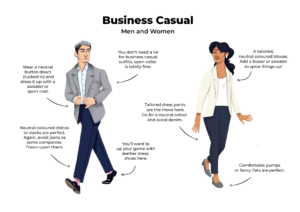
Credit: cultivatedculture.com
Business Casual: Quick Comparison Table
For easy reference, here’s a summary table comparing women and men’s business casual essentials:
| Essentials | Women | Men |
|---|---|---|
| Top | Blouse, knit top, button-down | Button-down, polo, sweater |
| Bottom | Pants, skirt, dress | Pants, chinos |
| Shoes | Flats, heels, loafers | Loafers, dress shoes |
| Outerwear | Blazer, cardigan | Blazer, sweater |
| Accessories | Jewelry, scarf, belt | Belt, watch |
How To Handle Ambiguous Dress Codes
Sometimes, companies don’t explain business casual well. If you’re unsure, try these steps:
- Ask HR for examples.
- Watch what others wear.
- Dress slightly more formal for your first week.
- Avoid risky choices—no jeans, shorts, or sandals until you see others wearing them.
- Remember: It’s better to be a little overdressed than underdressed.
Adapting Business Casual For Different Body Types
People worry about fit and comfort. Here are tips for adapting business casual to your body type:
- Choose cuts that flatter your shape.
- Avoid clothes that are too tight or loose.
- Try different brands—sizes vary.
- Get items tailored if needed.
- For women, high-waisted pants or skirts can lengthen the look.
- For men, structured blazers add shape.
Comfort matters as much as style. Never sacrifice fit for fashion.
Business Casual And Company Branding
Some companies use business casual to show their brand. For example, startups may encourage bright colors and sneakers to look modern. Banks prefer classic styles to show trust. If your company has a brand style, try to match it.
This helps you fit in and makes a good impression.

Credit: styleforsuccess.com
Business Casual: Summary And Final Thoughts
Business casual is a flexible but tricky dress code. Women and men face different choices and challenges. Women have more options, but also more room for mistakes. Men’s business casual is simpler, but less creative. Both need to stay neat, professional, and comfortable.
Key points:
- Always check your company’s rules.
- Choose simple, classic pieces.
- Avoid common mistakes.
- Keep clothing clean and well-fitted.
- Adapt your style for special events.
Business casual is not only about clothes—it’s about respect for your workplace and your colleagues. The right outfit helps you feel confident and ready for success. For more examples and guidance, see Business News Daily.
Frequently Asked Questions
What Is The Main Difference Between Business Casual For Women And Men?
The main difference is in range of options. Women can wear skirts, dresses, pants, blouses, and have more choices for shoes and accessories. Men mostly wear pants and shirts, with fewer choices. Women’s business casual is more flexible, but also has stricter rules about modesty and style.
Can I Wear Jeans In A Business Casual Office?
Usually, jeans are not allowed in business casual. However, some companies and industries permit dark, neat jeans. Always check your company’s dress code before wearing jeans.
Are Sneakers Considered Business Casual?
Sneakers are rarely business casual. Some tech or creative companies allow clean, simple sneakers, but most offices expect dress shoes or loafers. If you’re unsure, avoid sneakers.
How Can I Build A Business Casual Wardrobe On A Budget?
Shop sales, buy secondhand, and choose mix-and-match items. Focus on basics like pants, shirts, and blazers. Invest in key pieces like shoes and a good jacket. Don’t buy everything at once—start small and add as you learn your office style.
Is Business Casual Different In Other Countries?
Yes, business casual changes based on culture and location. In some countries, business casual is more formal; in others, it’s relaxed. Always check local and company rules. Respecting local style is part of being professional.
Business casual is a smart way to balance professionalism and comfort. When you know the rules and avoid mistakes, you can dress confidently—whether you’re a woman or a man.

Credit: www.dreamstime.com
