

Business Casual Can You Wear Sandals? Style Tips and Rules
Business Casual: Can You Wear Sandals?
======================================
The world of business casual is full of questions. One of the most common is about footwear: Can you wear sandals with business casual clothes? Many people want comfort, especially in warm climates or during summer. Sandals are easy to wear, but are they appropriate for a professional setting? This guide will help you understand when sandals are acceptable, what types you can consider, and how to avoid mistakes that can hurt your image at work.
We’ll explore how company culture, style, and your job role affect your choices. You’ll learn how to pick sandals that look professional, and when to leave them at home. We’ll also compare sandals to other business casual shoes, share examples, and answer the most frequent questions.
If you’ve ever wondered about sandals in the office, you’ll find clear answers here.
What Does Business Casual Really Mean?
Business casual is a dress code used by many workplaces. It’s less formal than traditional business attire, but still professional. The aim is to balance comfort with a polished look. You can mix classic pieces like dress pants or skirts with less formal items, such as knit tops or sweaters.
Business casual often includes:
- Collared shirts
- Blouses
- Dress pants or chinos
- Knee-length skirts or dresses
- Closed-toe shoes
But the rules for shoes are not always clear. Some companies allow sandals, while others don’t.
Why Footwear Matters
Shoes play a big role in your overall appearance. Wearing the wrong shoes can make you look unprofessional, even if the rest of your outfit fits the business casual style. Sandals can signal relaxation and informality. If you choose the right pair, they can work in business casual settings.
If not, they can send the wrong message.
Footwear is often one of the first details people notice when they meet you. Shoes that are too casual or worn out can distract from your skills and professionalism. Even if your company is relaxed, the wrong sandals can make it seem like you’re not serious about your job.
This is important if you’re aiming for a promotion or want to be taken seriously at work. In contrast, well-chosen shoes can help you feel more confident and comfortable throughout the day.
Another thing many people miss is how much shoes affect your comfort and health. Shoes that don’t fit well or lack support can cause foot pain, which distracts you from your work. So, picking the right shoes, including the right sandals, is about more than just style.
It’s about feeling good and making a good impression at the same time.
Can Sandals Be Business Casual?
The short answer: Sometimes. The long answer depends on your company, your role, and the sandals themselves.
Company Culture And Dress Codes
Every workplace is different. Some offices are relaxed, others are strict. Before wearing sandals, check your company's dress code. Many companies have written guidelines. If sandals are not mentioned, look at what other people wear.
If you work in creative industries (marketing, design, tech), sandals may be more acceptable. In finance, law, or executive roles, sandals are usually not allowed. Always observe what managers and colleagues wear.
Sometimes, even in the same company, rules can be different for different teams. For example, the marketing department may dress more casually than the accounting team. If you’re new, ask a trusted coworker or your supervisor for advice. This helps you avoid awkward situations and blend in more easily.
Geographic And Climate Factors
In warmer regions, sandals are more common. If your office is in a hot climate, business casual may include sandals as a way to stay comfortable. But don’t assume: check local norms and company policy.
For example, offices in southern Europe, Australia, or tropical countries may be more flexible with sandals, especially during summer. However, in places with unpredictable weather, like northern Europe or Canada, sandals might be rare in any professional setting. Seasonal changes can also affect what’s acceptable—some companies allow sandals only in summer months.
Your Role And Level
Higher positions often require more formal dress. Entry-level jobs may have more flexibility. If you meet clients or represent your company, stick to closed-toe shoes. Sandals may be fine for internal meetings or casual days.
People in leadership roles are often expected to set an example. Even if others wear sandals, managers and team leads might be expected to dress more formally. If you’re moving into a new role, dressing slightly more formally than required can help you stand out in a positive way.
Types Of Sandals: Which Are Acceptable?
Not all sandals are the same. Some look professional, others do not. Here’s how to tell the difference.
Professional Sandals
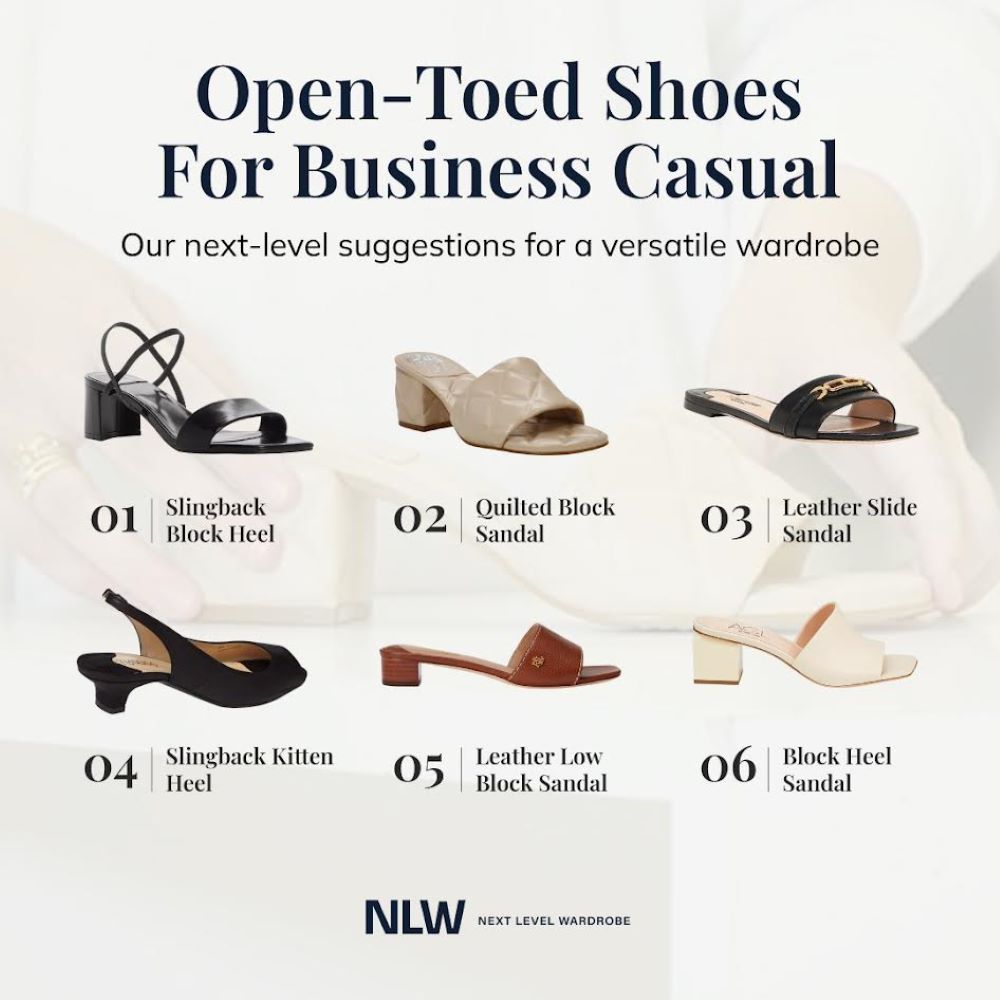
Professional sandals are simple, structured, and cover most of the foot. They avoid flashy colors or decorations. Here are examples:
- Dressy leather sandals
- Heeled sandals with straps and covered toes
- Peep-toe sandals (showing only a small part of the toes)
- Minimalist sandals in neutral colors
These types can work with business casual outfits.
A good example is a pair of black leather sandals with a small block heel and a single strap over the toes. These look polished, especially when paired with dress pants or a midi skirt. Another option is a sandal with a closed toe and an ankle strap, which gives more coverage and structure.
Sandals To Avoid
Some sandals are never business casual. Avoid these:
- Flip-flops
- Sport sandals
- Slides
- Sandals with bright colors or heavy decoration
- Sandals with thick soles or informal shapes
If the sandals look like something you’d wear at the beach, do not wear them in the office.
Also, avoid sandals with logos, rhinestones, or large buckles. Even if the shape is formal, too much decoration can make them look casual. Worn-out or damaged sandals are also not acceptable, no matter the style.
Key Features For Business Casual Sandals
To be safe, look for:
- Closed or mostly-covered toes
- Quality materials (leather, suede, faux leather)
- Simple design
- Low to medium heels
- Neutral colors (black, brown, navy, beige)
You might notice that some brands make sandals specifically for office wear, with padded soles and supportive straps. These are a smart investment if you plan to wear sandals often at work.
Below is a comparison of sandal types and their business casual suitability:
| Type of Sandal | Material | Coverage | Business Casual Suitability |
|---|---|---|---|
| Dressy Leather Sandal | Leather | Partial/Closed Toe | High |
| Flip-Flop | Rubber/Plastic | Open Toe | None |
| Peep-Toe Sandal | Leather/Suede | Partial Toe | Moderate |
| Sport Sandal | Fabric/Rubber | Open Toe | None |
| Heeled Sandal | Leather/Synthetic | Straps/Covered Heel | Moderate to High |
How To Style Sandals For Business Casual
Wearing sandals in a business casual setting requires careful styling. You want to look neat and professional.
Pairing With Outfits
Sandals should match your outfit’s tone. Here are tips:
- Wear neutral sandals with classic pieces like dress pants, pencil skirts, or tailored dresses.
- Avoid sandals with casual jeans or shorts, even if your office allows jeans.
- If you wear sandals with a dress, choose a dress that is knee-length or longer.
Try matching your sandals to your belt or bag for a more coordinated look. For example, nude sandals with a beige belt and a light-colored dress create a unified and refined outfit. If your outfit is patterned or colorful, keep the sandals simple to balance the overall look.
A common mistake is to wear sandals with very casual clothing like T-shirts and shorts. Even if your office is relaxed, sandals work best with outfits that have some structure, such as a blouse with tailored pants or a business dress.
Keep Your Feet Groomed
Open sandals show your feet. Make sure your toenails are clean and neat. Avoid flashy nail polish colors. This detail matters, as untidy feet can make even expensive sandals look unprofessional.
If you struggle with dry skin or cracked heels, use a moisturizer or foot file regularly. Subtle, pale nail polish is usually best. If you’re unsure, go with clear polish or a light nude shade. People often underestimate how much attention feet can attract in sandals, so don’t skip this step.
Accessories And Sandals
Don’t over-accessorize when wearing sandals. Keep jewelry simple. Too many accessories can make your look messy, especially when sandals are already a relaxed choice.
A good rule is to choose one or two small pieces, like stud earrings or a thin bracelet. Avoid anklets or toe rings at work, as these can make the outfit appear too casual for most offices.
Sandals Vs Other Business Casual Shoes
Sandals aren’t your only option. Here’s how they compare with other business casual shoes:
| Shoe Type | Comfort Level | Professional Appearance | Climate Suitability | Business Casual Acceptance |
|---|---|---|---|---|
| Sandals | High (in warm weather) | Moderate | Best for summer | Depends on style |
| Loafers | High | High | Year-round | High |
| Ballet Flats | Moderate | High | Year-round | High |
| Oxfords | Moderate | Very High | All seasons | High |
| Heeled Mules | High | Moderate | Spring/Summer | Moderate |
Why Choose Sandals?
Sandals are comfortable and keep your feet cool. If your office allows them, they can be a good choice for hot weather. But if you want a safer option, loafers or ballet flats are always reliable for business casual.
Sandals can also help if you have foot issues or need more breathability. For example, people who stand all day or have sensitive skin may find sandals more comfortable than closed shoes. However, always check that the comfort doesn’t come at the cost of looking too casual.
Two Insights Beginners Miss
- Sandals need regular cleaning. Because they expose your feet, dirt and wear show quickly. Clean them often to keep your look polished.
- Heel height matters. Too high or too low can make sandals look informal or uncomfortable. Aim for a heel between one and two inches for best results.
A third insight: the fit of sandals changes during the day, especially in warm weather. Your feet may swell slightly, so buying sandals with adjustable straps or a slightly roomier fit can keep you comfortable all day.
Common Mistakes With Sandals In Business Casual
Many people make mistakes when trying to wear sandals for business casual. Here are some to avoid:
- Ignoring the dress code: Always check company policy first.
- Wearing casual sandals: Flip-flops, slides, and sports sandals are never acceptable.
- Poor foot hygiene: Untidy feet and nails ruin your look.
- Bright colors or decorations: Keep it simple and neutral.
- Wearing sandals with informal outfits: Don’t pair sandals with shorts or casual jeans.
It’s easy to overlook how much sandals can stand out. For example, if everyone else is in closed-toe shoes and you show up in sandals, you might attract unwanted attention. Another common mistake is wearing old sandals with worn soles or frayed edges.
Replace sandals that show obvious signs of wear.
Credit: nextlevelwardrobe.com
Real-life Examples: Sandals In Business Casual
Let’s look at some real situations.
Example 1: Creative Agency
Maria works at a design agency in Los Angeles. Her office allows open-toe sandals. She wears a pair of black leather heeled sandals with a knee-length dress. Her sandals are simple, without decorations. She keeps her toenails neat and chooses neutral polish.
Maria’s look is business casual and fits her office culture.
Sometimes, Maria also pairs her sandals with tailored pants and a sleeveless blouse for hotter days. She avoids sandals on days when she has client meetings.
Example 2: Bank Office
Eric works at a bank. The dress code is strict. He wears closed-toe leather loafers every day. He once wore a pair of brown leather sandals on a casual Friday, but was told they were not allowed. Now he only wears sandals outside work.
Eric learned that even small differences in footwear can matter in conservative industries. His colleagues wear loafers or oxfords, even on casual days, showing that sandals are not welcome in his workplace.
Example 3: Tech Startup
Jasmine works at a tech startup with a relaxed dress code. She sometimes wears minimalist sandals with tailored pants and a blouse. Her sandals are tan leather, with a small heel. She checks her company’s handbook, which says sandals are fine as long as they are not flip-flops.
Jasmine also keeps a pair of flats in her drawer for unexpected meetings. If she’s giving a presentation, she switches to closed-toe shoes to appear more formal.
Tips For Choosing The Right Sandals
Selecting the right sandals is more than picking a style. Consider these points:
- Fit: Sandals should fit well. Loose sandals look sloppy and are unsafe.
- Material: Leather is best. Avoid rubber or plastic.
- Coverage: More coverage looks more professional.
- Heel Height: Low to medium heels are safest.
- Color: Stick with black, brown, navy, or beige.
If you walk or commute a lot, look for sandals with cushioned soles and arch support. A sandal that feels comfortable at home may not feel the same after a long day at the office. Also, consider sandals with adjustable straps for a better fit.
A quick comparison of business casual sandal features:
| Feature | Professional Sandal | Casual Sandal |
|---|---|---|
| Material | Leather/Suede | Rubber/Fabric |
| Toe Coverage | Closed/Partial | Open |
| Heel Height | 1–2 inches | Flat or high |
| Color | Neutral | Bright |
| Decoration | Minimal | Heavy |
Sandals For Men: Business Casual Rules
Sandals for men in business casual are tricky. Most offices do not allow them. If allowed, men should follow these rules:
- Choose sandals with straps and structure (no flip-flops).
- Keep colors neutral.
- Wear with tailored pants (never shorts or jeans).
- Ensure feet are clean and groomed.
Men’s sandals are less common in business settings. If unsure, stick to loafers or dress shoes.
If your workplace allows sandals, a simple brown or black leather sandal with a secure strap is the safest choice. Avoid sandals with Velcro, thick soles, or sport-inspired designs. Even in relaxed offices, men should avoid showing too much of the foot or wearing sandals that look too casual.
Sandals For Women: More Options, More Rules
Women have more choices, but must still follow guidelines:
- Avoid sandals with large decorations or bright colors.
- Choose sandals that cover most of the toes.
- Pair with skirts or dresses of appropriate length.
- Keep feet clean and nails neat.
Women’s sandals can be stylish and comfortable if chosen carefully.
Some offices allow open-toe sandals, but others require closed-toe or peep-toe styles. If in doubt, look for styles with a small heel and minimal straps. Avoid sandals that make noise when you walk, as this can be distracting in quiet offices.

Credit: nilds.gov.ng
When To Avoid Sandals Completely
There are times when sandals should not be worn, even if your office allows them:
- Important meetings or presentations
- Interviews
- Client visits
- Formal events
Always choose closed-toe shoes for these situations. Sandals are for regular workdays or casual Fridays only.
If you have a day with mixed activities, like a presentation and then desk work, keep a pair of closed-toe shoes at your desk. Switching shoes is an easy way to adjust your look without extra effort.
Workplace Policies: How To Check
If you’re not sure about sandals, here’s how to check:
- Read the handbook: Look for dress code guidelines.
- Ask HR: Human resources can clarify rules.
- Observe others: Watch what managers and colleagues wear.
- Ask your manager: If still unsure, ask directly.
Some companies update their dress codes often. Stay informed to avoid mistakes.
It’s also helpful to check if your company has a summer dress policy or “casual Friday” rules. Sometimes, what’s allowed changes depending on the season or special events. Don’t be afraid to ask for clarification—most managers appreciate that you care about your professional image.
The Impact Of Sandals On Professional Image
Wearing sandals can affect how others see you. Here are some insights:
- Sandals make you look relaxed, but not always professional.
- If your sandals are stylish and clean, you can look modern and approachable.
- If your sandals are casual or messy, you look careless.
Think about your role. If you need to impress clients or managers, closed-toe shoes are safer.
An extra insight: people often remember visual details, especially footwear. If you want to stand out for the right reasons, keep your sandals polished and well-maintained. This small effort can help others see you as someone who pays attention to detail.
How To Transition From Sandals To Other Shoes
If you wear sandals in summer, you may need to switch to other shoes as weather changes. Here’s how:
- Keep a pair of loafers or flats at work.
- Choose closed-toe shoes for important days.
- Clean and store sandals properly when not in use.
This helps you stay professional all year.
Before storing sandals, clean them and keep them in a dust bag or box. This keeps them looking good for the next season. If your office’s dress code changes with the season, be ready to adapt your footwear.

Credit: www.reddit.com
Fashion Trends: Are Sandals Becoming More Accepted?
Some offices are becoming more relaxed. Fashion trends show that minimalist sandals are gaining popularity in business casual settings. But changes are slow in conservative industries. Watch for updates in your company’s policy.
A study from the Society for Human Resource Management shows that 35% of offices surveyed allow sandals on casual days. But only 12% allow them every day. This shows sandals are still limited in formal workplaces.
Minimalist sandals with small heels and simple designs are increasingly seen in magazines and style guides for business casual looks. However, trends do not replace company policy. Always check the latest rules before following fashion trends at work.
Sustainability And Sandals
Many people now care about the environment. If you want sustainable sandals, look for brands that use recycled materials or eco-friendly leather. Avoid fast fashion sandals made from plastic. Quality sandals last longer and reduce waste.
Some brands use plant-based or recycled materials for footbeds and straps. When shopping, read labels and brand information. Sustainable sandals may cost more at first but often last longer and feel better. Choosing a classic, neutral style also means you can wear them for many seasons, reducing the need for frequent replacements.
Practical Tips For Buying Business Casual Sandals
When shopping for sandals, keep these tips in mind:
- Try them on with work clothes to check the look.
- Walk in them to test comfort and stability.
- Check reviews for durability.
- Buy from reputable brands.
- Look for sales at the end of summer.
If you want more tips on business casual dressing, the Society for Human Resource Management shares helpful resources.
Another tip: If you’re shopping online, check the return policy before buying. Sizing can vary, and you want the option to exchange if the fit isn’t perfect. Consider buying two sizes and returning the one that doesn’t fit.
Frequently Asked Questions
Can I Wear Sandals For A Job Interview?
Sandals are not recommended for interviews. Even if the office allows them, interviews require a more formal look. Always wear closed-toe shoes to show respect and professionalism.
What Kind Of Sandals Are Best For Business Casual?
Choose dressy leather sandals with partial or closed toes. Avoid flip-flops, sport sandals, or anything too casual. Neutral colors and simple designs are best.
Are Sandals Ever Allowed In Business Casual For Men?
Rarely. Most workplaces do not allow sandals for men. If allowed, choose structured sandals in neutral colors. Avoid flip-flops or slides.
How Do I Know If My Sandals Are Appropriate?
Check your company dress code, observe what others wear, and ask HR or your manager. Look for sandals that are clean, simple, and made from quality materials.
What Should I Do If I’m Unsure About Sandals?
When in doubt, choose closed-toe shoes. It’s better to be safe than risk looking unprofessional. You can always ask your manager for advice.
Business casual can be flexible, but sandals require careful choices. If you follow these guidelines, you’ll look professional and feel comfortable. Always check your company’s policy, choose the right style, and remember that your image matters. The right sandals can work—but only when chosen and worn wisely.
