

Best Way to Wash Smelly Gym Clothes: Odor-Free Results Fast
Washing gym clothes sounds simple, but anyone who has battled that lingering, stubborn odor knows it’s not so easy. Exercise clothing is designed to trap sweat and wick away moisture, but that same technology also holds onto bacteria and odor much longer than regular fabrics.
If you’ve ever pulled your favorite workout shirt from the drawer and noticed a faint (or strong) smell, you’re not alone. The good news is, you don’t need to throw out your gym gear or keep buying new sets. With the right approach, you can get your activewear smelling fresh again—and keep it that way.
Many people wash their gym clothes in the same way as their everyday laundry, but this usually doesn’t work well. Sweat, bacteria, and body oils get locked in synthetic fibers, creating a perfect environment for smells. Standard washing methods often leave these odors behind.
Instead, you need to use special techniques that break down odor and prevent it from coming back. This article explains the best way to wash smelly gym clothes, why normal washing fails, and how small changes can make a big difference.
Why Gym Clothes Smell Worse Than Regular Laundry
Before you can fix the problem, it helps to understand what makes gym clothes so smelly. Most gym clothes are made from synthetic fabrics like polyester, nylon, or spandex. These materials are great for wicking sweat away from your skin but are not good at releasing odor.
When you sweat, your body releases moisture and oils that get trapped in the fabric. Bacteria then feed on these oils and sweat, causing that strong, sour smell. Because synthetic fibers are tightly woven, it’s hard for water and detergent to reach and remove the bacteria.
Over time, these odors build up, making your gym clothes smell bad even after washing.
Another challenge is that fabric softeners and regular detergents can actually make things worse. Softeners coat the fabric, trapping more odor-causing bacteria. Many standard detergents are not designed for synthetic materials, so they leave behind residue.
Preparing Gym Clothes For Washing
Getting the best results starts before you even put your gym clothes in the washing machine. Here’s how you should prepare your activewear:
1. Don’t Let Sweat Sit
If you throw sweaty clothes into your gym bag or laundry basket and leave them for days, bacteria will multiply and odors will worsen. Try to wash gym clothes as soon as possible. If immediate washing isn’t possible, hang items to dry instead of leaving them in a pile.
2. Turn Clothes Inside Out
Most odor, sweat, and bacteria build up on the inside of your clothes. Turning them inside out lets detergent and water reach the dirtiest parts. This simple step can improve cleaning and odor removal.
3. Pre-rinse Or Soak
Give extra-smelly items a quick rinse under cold water before washing to remove excess sweat and body oils. For clothes with strong odors, soak them in a mixture of cold water and a cup of white vinegar for 30 minutes before washing.
Vinegar helps break down bacteria and odors.
4. Sort Gym Clothes Separately
Wash activewear separately from your regular laundry. This prevents sweat and bacteria from spreading to other clothes and lets you use the right washing cycle and detergent.
5. Empty Pockets And Remove Pads
Check for keys, cards, or tissues in pockets. Remove any pads from sports bras or shorts, as these may need to be washed by hand or separately.
Credit: organized31.com
Choosing The Right Detergent And Additives
Detergent makes a big difference. Most standard detergents are not designed to clean synthetic fabrics fully. Here’s what works best:
Use A Sports-specific Detergent
Sports detergents are specially formulated to break down body oils and bacteria in synthetic fabrics. They are usually free from fabric softeners, brighteners, and heavy scents, which can trap odors. Look for products labeled as “sports,” “activewear,” or “odor-fighting. ”
Avoid Fabric Softeners
Fabric softeners coat synthetic fibers and actually lock in odor, making clothes feel greasy and smell worse over time. Never use softeners on gym clothes.
Try Odor Eliminators
If you want an extra boost, add a cup of white vinegar or baking soda to the wash. Vinegar is acidic and breaks down bacteria and buildup. Baking soda neutralizes odors. Add vinegar to the fabric softener compartment or baking soda directly into the drum.
Liquid Vs. Powder Detergents
Liquid detergents dissolve better in cold water, which is ideal for synthetic fabrics. Powders can leave residue on gym clothes, so stick with liquids when possible.
Here’s a quick comparison of common additives for gym clothes:
| Additive | Purpose | How to Use | Drawbacks |
|---|---|---|---|
| White Vinegar | Odor removal, bacteria | Add 1 cup to rinse cycle | Strong smell (disappears after drying) |
| Baking Soda | Neutralizes odors | 1/2 cup in drum | Less effective in hard water |
| Sports Detergent | Breaks down sweat & oils | As directed on bottle | Can be more expensive |
| Oxygen Bleach | Stain & odor removal | Check label for dosage | Not for all fabrics |
Best Washing Machine Settings For Gym Clothes
Washing settings matter more than you might think. Here’s how to set up your washer for best results:
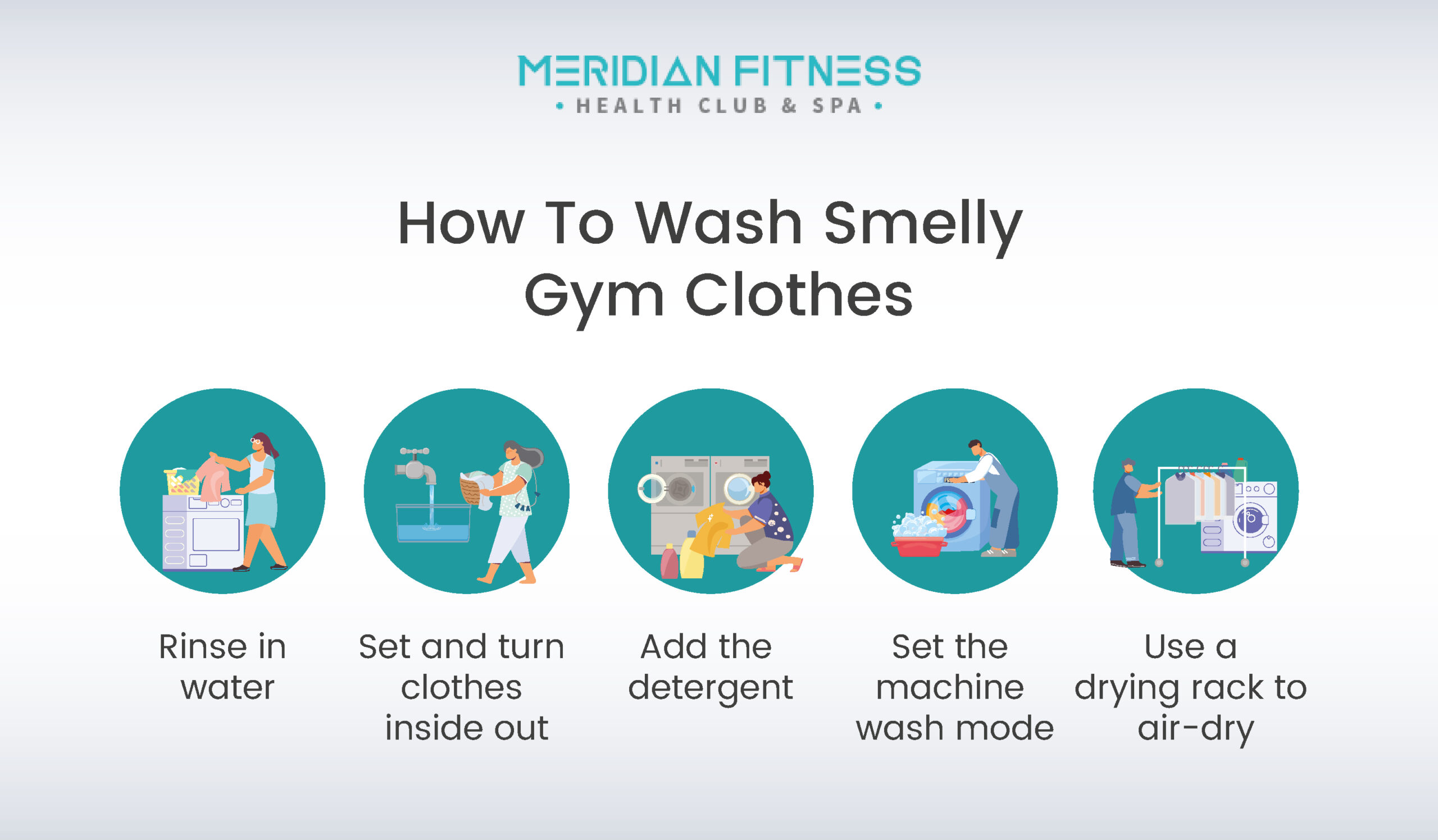
1. Use Cold Water
Hot water can break down elastic fibers and cause shrinkage. Cold water is gentler and still effective at removing sweat and bacteria from synthetic fabrics.
2. Select A Gentle Or Activewear Cycle
Many machines now have an “activewear” or “sportswear” cycle. If yours doesn’t, use the gentle cycle. These settings reduce friction and protect the structure of stretchy fabrics.
3. Extra Rinse Option
Odor and bacteria can remain if detergent is not rinsed out completely. Using an extra rinse cycle helps remove all residue, leaving clothes fresher.
4. Don’t Overload The Machine
Stuffing too many clothes into one wash means less water and detergent can reach each item. Wash gym clothes in smaller loads for best cleaning.
5. Use The Right Spin Speed
A medium or low spin is best. High speeds can stretch or damage the material over time.
Credit: www.meridian-fitness.co.uk
How To Dry Gym Clothes For Long-lasting Freshness
Drying gym clothes the wrong way can undo all your washing efforts. Here’s what works:
Air Dry Whenever Possible
The safest way to dry gym clothes is to hang them up in a well-ventilated area. Air drying prevents shrinking, fading, and breakdown of elastic fibers. Hang clothes inside out and space them apart for good airflow.
If Using A Dryer
If you must use a dryer, set it to low heat or tumble dry. High heat damages synthetic fabrics, weakens elasticity, and can “bake in” odors. Remove clothes as soon as they’re dry to prevent musty smells.
Avoid Drying In Direct Sun
Sunlight can fade colors and break down fabric. Dry indoors or in shaded outdoor areas.
Don’t Leave Wet Clothes In The Machine
Wet laundry left in the washer quickly develops mildew and odor. Remove gym clothes as soon as the cycle ends.
Advanced Tips For Stubborn Odors
Sometimes, even after washing, gym clothes still smell. If this happens, try these advanced tricks:
Use An Enzyme Cleaner
Enzyme-based cleaners break down protein and oil stains—perfect for sweat and body oils. Add according to the product instructions before washing.
Double Wash Method
For very smelly clothes, wash them twice. First, use vinegar or baking soda with no detergent. Then, wash again with sports detergent. This two-step process removes buildup and penetrates fibers better.
Sun And Air Therapy
Sunlight naturally kills bacteria. After washing and drying, lay clothes outside in the sun for a few hours. Just don’t overdo it, as too much sun can fade the fabric.
Deep Soak For Odor Build-up
Fill a tub with warm water and mix in a sports detergent or a cup of vinegar. Let clothes soak for 1-2 hours, then wash as usual. This helps dissolve old sweat and bacteria trapped deep in the fibers.
Common Mistakes That Make Gym Clothes Smell Worse
Many people accidentally make things worse. Here are some common mistakes to avoid:
1. Using Too Much Detergent
Extra detergent doesn’t mean extra clean. In fact, too much detergent leaves residue, which traps odors and can make clothes feel sticky.
2. Using Fabric Softener
Softener makes clothes feel smooth but clogs the fibers. This traps bacteria and creates a breeding ground for odor.
3. Overdrying In High Heat
High heat damages elastic and causes clothes to lose shape. It can also “set” odors, making them harder to remove later.
4. Leaving Clothes In Gym Bags
A sweaty gym bag is a perfect place for bacteria to grow. Always remove clothes as soon as possible and let them air out.
5. Not Cleaning The Washing Machine
If your washer smells bad, your clothes will too. Run a cleaning cycle with vinegar or a machine cleaner every few weeks.
How Often Should You Wash Gym Clothes?
Some items need to be washed after every use, while others can last a bit longer.
- Shirts, sports bras, underwear, and socks: Wash after every workout to remove sweat and bacteria.
- Shorts, leggings, and tanks: Usually need washing after each use, but if you did only light exercise, you might get a second wear.
- Jackets or outer layers: Wash every few uses unless they get very sweaty.
If you’re unsure, it’s better to wash more often. Re-wearing unwashed gym clothes increases odor and can cause skin irritation.
Special Care For Different Types Of Gym Fabrics
Not all activewear is the same. Here’s how to handle the most common types:
Polyester And Nylon
These are the most common gym fabrics. They trap sweat but can hold odor. Wash in cold water, avoid softeners, and air dry.
Spandex (lycra/elastane)
Spandex is stretchy but sensitive. Wash in cold water on gentle and never use high heat for drying.
Cotton Blends
Cotton is more forgiving but takes longer to dry. Wash as usual but avoid leaving it damp for long periods.
Wool Or Bamboo
Some performance clothes are made from merino wool or bamboo. These materials are naturally odor-resistant but need gentle care. Use wool-safe detergent and avoid harsh spin cycles.
Here’s a quick comparison of the main gym fabrics and how to care for them:
| Fabric | Odor Resistance | Washing Temp | Drying Method |
|---|---|---|---|
| Polyester/Nylon | Low | Cold | Air dry |
| Spandex/Elastane | Low | Cold | Low heat/air dry |
| Cotton Blend | Medium | Warm | Low heat/air dry |
| Merino Wool/Bamboo | High | Cold | Air dry |
How To Store Gym Clothes To Prevent Odor
Freshly washed clothes can still smell bad if stored incorrectly. Here’s how to keep them fresh:
- Completely Dry Before Storing
Never fold or store clothes that are even slightly damp. This leads to mildew and odor.
- Choose Breathable Storage
Use open shelves or drawers, not airtight plastic bins. This lets air circulate and keeps clothes dry.
- Use Odor Absorbers
Place a small pouch of baking soda or activated charcoal in your drawer to absorb moisture and smells.
- Don’t Mix With Dirty Items
Keep clean clothes away from used gym gear or shoes.
The Hidden Impact Of Water Quality On Washing Results
Water quality can affect how well your gym clothes get clean. Hard water, which is full of minerals like calcium, makes detergent less effective. This leads to more residue and odor.
If you live in an area with hard water, use a water softener or add a bit more sports detergent. Some people find that vinegar helps by breaking down minerals. Clean your washing machine more often, as hard water leaves buildup inside.
Natural Ways To Keep Gym Clothes Fresh Longer
You don’t always need chemicals to keep your activewear odor-free. Here are some natural strategies:
- Fresh Air
Let clothes air out after every workout. Even 10-15 minutes outside can help.
- Essential Oils
Add a few drops of tea tree or lavender oil to your wash. Both have antibacterial properties and leave a light scent.
- Lemon Juice
A half-cup of lemon juice in the wash can help break down oils and brighten whites.
- Freeze Clothes
If you can’t wash right away, put very smelly clothes in a plastic bag and freeze overnight. Freezing kills odor-causing bacteria. (It sounds odd, but it works!)
When To Replace Old Gym Clothes
Even with perfect washing, gym clothes don’t last forever. Here are signs it’s time to replace them:
- Odor Doesn’t Go Away
If clothes still smell after several deep cleans, the fibers may be permanently damaged.
- Loss of Stretch
If leggings or bras don’t fit like they used to, the elastic is worn out.
- Visible Damage
Holes, pilling, or thinning fabric means it’s time to say goodbye.
Real-world Example: Fixing A Smelly Shirt
Imagine you have a favorite gym shirt that smells bad even after washing. Here’s what you can do:
- Turn the shirt inside out.
- Soak in a mix of cold water and 1 cup vinegar for 30 minutes.
- Wash with a sports detergent in cold water on a gentle cycle.
- Add baking soda to the drum for extra odor removal.
- Use an extra rinse.
- Air dry in a well-ventilated space.
- If the smell remains, repeat the process, or try the double wash method.
After two or three deep cleans, most odors will disappear unless the shirt is too old or damaged.
Credit: www.tuffwraps.com
The Science Behind Odor Removal
Odor in gym clothes is mainly caused by bacteria breaking down sweat and body oils. Synthetic fabrics hold onto these molecules tightly. Removing odor means breaking up these oils, killing bacteria, and washing away residue.
Special detergents contain enzymes and surfactants designed to work with synthetic fibers. Vinegar and baking soda change the pH of your wash, making it harder for bacteria to survive. Air drying and sunlight provide a final line of defense by discouraging new bacteria growth.
For more on the science of laundry and odor, you can visit this Wikipedia page on laundry.
Frequently Asked Questions
Why Do My Gym Clothes Still Smell After Washing?
Most likely, sweat, oils, and bacteria are trapped in synthetic fibers. Regular detergent and washing may not be strong enough to remove them completely. Using sports detergent, vinegar, baking soda, and the right washing settings can solve this problem.
Can I Use Bleach On Gym Clothes?
Bleach is usually too harsh for synthetic fabrics and can damage elastic fibers. Instead, use oxygen bleach or enzyme-based cleaners if you need stronger odor removal. Always check the care label before using any bleach.
Is It Safe To Wash All Gym Clothes Together?
You can wash similar fabrics and colors together. Avoid mixing heavy, rough items (like towels) with delicate gym wear, as this can cause pilling and damage. Wash very sweaty or stained items separately for best results.
How Can I Make My Washing Machine Smell Better?
Run a cleaning cycle every few weeks. Use white vinegar or a washing machine cleaner to remove buildup. Leave the door open after each use to let the machine dry out and prevent mold.
What Should I Do If I Forget My Gym Clothes In The Washer Overnight?
Wash them again using a cup of white vinegar or baking soda. This helps remove any musty or sour smell that developed while they sat damp.
Washing smelly gym clothes doesn’t need to be a struggle. With the right techniques, products, and habits, your workout gear can smell fresh and last longer. Remember to act quickly, use the right detergent, skip the softener, and dry clothes properly.
These small changes make a big difference, so you can focus on your workout—not on your laundry.
