

Words of Affirmation: Transform Your Life with Positive Self-Talk
Words Of Affirmation
Feeling understood and valued is a deep human need. For many, words of affirmation are the most powerful way to feel loved, supported, and connected. This concept, made popular through the study of love languages, goes far beyond simple compliments. It’s about the meaningful words we use to build trust, encourage growth, and deepen relationships. But what makes these words so impactful? How can you use them with authenticity and purpose? This guide unlocks everything you need to know about words of affirmation, from their psychological effect to practical ways you can use them at home, at work, and in everyday life.
What Are Words Of Affirmation?
Words of affirmation are positive statements that express love, appreciation, encouragement, or support. These can be spoken or written, and they focus on highlighting the strengths, efforts, or qualities of another person. Unlike material gifts or grand gestures, words of affirmation often cost nothing but can make a lasting emotional impact.
Some examples include:
- “I’m proud of you.”
- “You mean so much to me.”
- “I appreciate the way you handled that situation.”
- “Your ideas always inspire me.”
- “Thank you for being so thoughtful.”
These words do not have to be elaborate. What matters is that they are sincere and specific.
The Psychology Behind Words Of Affirmation
Human brains are wired for connection. When we receive positive, affirming words, our brains release dopamine and oxytocin, chemicals that create feelings of happiness and trust. This response is why affirmation can reduce stress and improve emotional well-being.
Research shows that positive feedback helps people perform better, build resilience, and maintain healthy relationships. For those who value words of affirmation as their primary love language, a lack of verbal appreciation can feel like neglect, even if other forms of care are present.
Non-obvious insight: People sometimes assume that only romantic partners need words of affirmation. In reality, everyone—from colleagues to family members—benefits from them.
Different Types Of Words Of Affirmation
Words of affirmation come in several forms, depending on the relationship and situation. Recognizing these types helps you tailor your words for the biggest impact.
Compliments
These are direct statements of admiration or approval. For example, “You look great today,” or “Your work was excellent. ”
Appreciation
Appreciation focuses on thanking someone for their actions or qualities, such as, “Thank you for helping me,” or “I value your honesty. ”
Encouragement
Encouragement is about supporting someone’s effort or potential. For instance, “I know you can handle this,” or “You always find a way through tough times. ”
Empathy And Validation
These words show understanding and acceptance. For example, “It’s okay to feel this way,” or “Your feelings matter to me. ”
Recognition Of Growth
Acknowledge how someone has improved: “I’ve noticed how much you’ve grown,” or “You’re handling things better every day.”
Why Words Of Affirmation Matter
Using words of affirmation isn’t just about making others feel good. There are deeper reasons they matter in our lives.
- Strengthening Bonds: Regular affirmations build trust and intimacy in relationships, whether with a partner, friend, or coworker.
- Boosting Self-Esteem: Positive words can counter self-doubt, especially for those struggling with confidence.
- Reducing Conflict: When people feel valued, they are less likely to become defensive or aggressive.
- Encouraging Growth: Affirmation motivates people to take risks and keep improving.
- Improving Mental Health: Feeling appreciated lowers stress and helps prevent anxiety or depression.
Common Mistakes When Using Words Of Affirmation
It’s easy to think that any positive word will do, but there are traps to avoid if you want your affirmation to work.
- Being Generic: Statements like “Good job” can feel empty if not connected to a specific action or quality.
- Lack of Sincerity: People can sense when words are forced or said out of obligation.
- Over-Complimenting: Too much can make your words lose value or sound insincere.
- Ignoring Other Love Languages: Some people may value actions or time more than words. Balance your approach.
- Timing Issues: Affirmation works best when it’s timely. Waiting too long can reduce its effect.
Non-obvious insight: Some people interpret certain words differently due to culture or past experiences. What feels encouraging to one may not resonate with another. Always know your audience.
How To Give Effective Words Of Affirmation
Giving powerful affirmations is a skill anyone can learn. Here’s how to do it well.
Be Specific
Instead of “You’re great,” try “I appreciate how you explained that complex idea so clearly. ” Specificity shows you notice real effort or qualities.
Use The Right Medium
Some people value spoken words; others prefer written notes, texts, or emails. Pay attention to what your recipient responds to best.
Be Timely
Don’t wait for a special occasion. Offer affirmation as soon as you notice something worth praising.
Balance Praise And Encouragement
Mix recognition of past achievements with encouragement for future efforts.
Match The Person’s Needs
Some want public praise; others prefer privacy. For example, a team member might like being thanked in a meeting, while a friend may appreciate a quiet text.
Examples Of Words Of Affirmation For Different Situations
Here are practical examples for various life scenarios.
Romantic Relationships
- “I love the way you support me.”
- “You make my life better every day.”
- “Thank you for listening to me.”
Family
- “I’m proud to be your parent.”
- “You bring so much joy to our family.”
- “I admire your kindness.”
Friends
- “Your friendship means the world to me.”
- “I appreciate how you always have my back.”
- “You inspire me to be a better person.”
Workplace
- “Your attention to detail makes a big difference.”
- “I value your creative ideas.”
- “Thank you for your hard work on this project.”
Children
- “I’m so proud of how hard you studied.”
- “You’re very brave for trying something new.”
- “You make our family so happy.”
Words Of Affirmation For Self-growth
Affirming yourself is just as important as affirming others. Positive self-talk builds resilience and self-esteem.
- “I am capable and strong.”
- “I handle challenges with grace.”
- “I am worthy of love and respect.”
- “I learn from my mistakes.”
Words Of Affirmation In Different Cultures
Affirmations are universal, but the way they are expressed can differ. In some cultures, open praise is common. In others, indirect or subtle words are more acceptable.
For example, in many Western cultures, direct statements like “I’m proud of you” are welcomed. In some Asian cultures, affirmation may come through actions or less direct words. Understanding these differences can prevent misunderstanding.
Words Of Affirmation Versus Other Love Languages
Words of affirmation are one of the five love languages, alongside acts of service, receiving gifts, quality time, and physical touch. Each person has a unique preference.
Here’s a simple comparison:
| Love Language | Main Expression | Example |
|---|---|---|
| Words of Affirmation | Verbal/Written Praise | “I appreciate you” |
| Acts of Service | Helping/Doing Tasks | Making coffee for someone |
| Receiving Gifts | Tangible Items | Giving a thoughtful present |
| Quality Time | Shared Moments | Going for a walk together |
| Physical Touch | Contact | A hug or pat on the back |
Using Words Of Affirmation In The Workplace
A positive work culture depends on recognition and appreciation. When employees feel valued, they’re more engaged and productive.
Ways to use words of affirmation at work:
- Thanking colleagues for their effort
- Recognizing achievements in meetings
- Sending a quick email to show appreciation
- Giving specific feedback on strengths
Data insight: Surveys show that employees who receive regular affirmation are up to 30% more productive and far less likely to leave their jobs.
Tip: Always connect your words to real actions. Instead of “Great job,” say, “Your quick thinking solved the client’s problem.”
Words Of Affirmation In Parenting
Children who hear positive words from parents or caregivers develop stronger self-esteem and emotional intelligence. Praise should focus on effort and growth, not just results.
For example:
- “You worked really hard on your homework.”
- “I like the way you shared with your friend.”
- “You’re getting better at solving problems.”
Practical tip: Avoid comparing your child to others. Focus on their unique strengths.
The Role Of Consistency
Affirmation is not a one-time action. Consistency builds trust and a lasting sense of worth. Sporadic praise can be confusing, but regular, sincere affirmation helps relationships flourish.
Non-obvious insight: Consistent affirmation doesn’t mean repeating the same phrase. Find new ways to recognize growth and effort.
When Words Of Affirmation Don’t Work
There are cases when words of affirmation may fall flat. For example:
- The recipient does not value words as much as actions.
- Past betrayals or insincerity have damaged trust.
- The words are not connected to real behavior.
In these cases, combine affirmation with other forms of support. Actions and quality time can reinforce your message.
Words Of Affirmation And Technology
With texting, email, and social media, it’s easier than ever to send affirming words. However, digital communication can sometimes lose warmth or sincerity.
Best practices:
- Personalize your message. Use the person’s name.
- Avoid generic emojis or short phrases.
- Add details that show you truly notice their efforts.
For example, instead of “Good job!” in a text, write, “Hey, I saw your presentation went well. You really kept everyone engaged!”
Words Of Affirmation For Difficult Times
Affirmation is especially important during challenges. When someone is struggling, genuine words can provide comfort and hope.
For example:
- “I believe in you, even when things are hard.”
- “You’ve overcome tough times before.”
- “I’m here for you, no matter what.”
These words don’t fix problems, but they remind others that they are not alone.
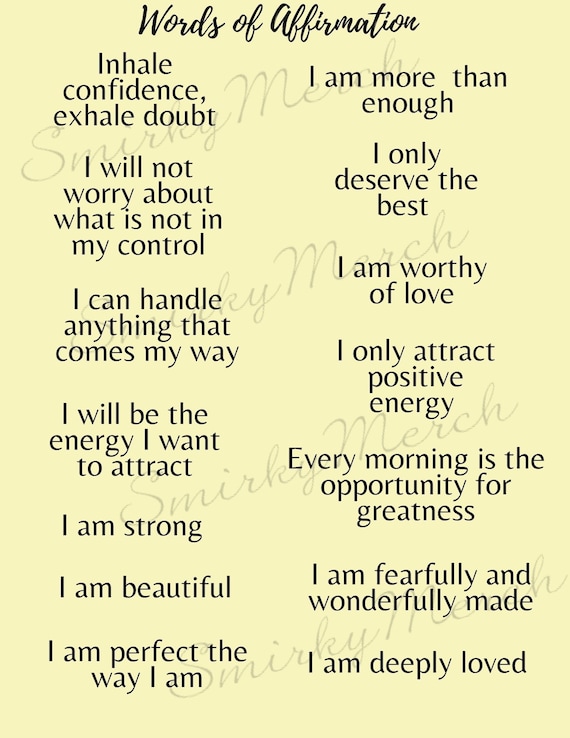
Credit: www.etsy.com
Practical Ways To Make Words Of Affirmation A Habit
Building a habit takes effort. Here’s how you can integrate affirming words into daily life:
- Set Reminders: Put a note on your phone to give affirmation each day.
- Start Small: One or two sentences are enough to begin.
- Observe More: Pay attention to what others do well.
- Write Notes: Leave a sticky note on a desk or send a quick message.
- Reflect on Impact: Notice how people respond to your words.
Tip: If you find it awkward at first, practice writing your thoughts before saying them aloud.
Examples Of Words Of Affirmation By Relationship
Affirmation works best when it fits the relationship. Here’s a side-by-side look at how you might phrase your words:
| Relationship | Example Statement |
|---|---|
| Romantic Partner | “You make every day brighter for me.” |
| Friend | “I admire your honesty and loyalty.” |
| Colleague | “Your solutions always help the team succeed.” |
| Child | “I’m amazed by your creativity.” |
| Parent | “Thank you for always supporting me.” |

Credit: dandyworldwide.com
Words Of Affirmation In Conflict Resolution
During disagreements, affirmation can lower tension and open the door for honest conversation.
- “I respect your perspective.”
- “I value our relationship more than this argument.”
- “I appreciate your willingness to talk about this.”
Notice that these statements don’t ignore the problem, but they focus on respect and understanding.
Measuring The Impact Of Words Of Affirmation
How do you know if your words are making a difference? Look for these signs:
- The other person smiles or relaxes when you speak.
- They become more open or willing to communicate.
- You see improvement in mood or performance.
- Relationships feel closer and more trusting.
Data example: Studies found that students who received daily affirmation from teachers were 50% more likely to participate and less likely to give up on difficult tasks.
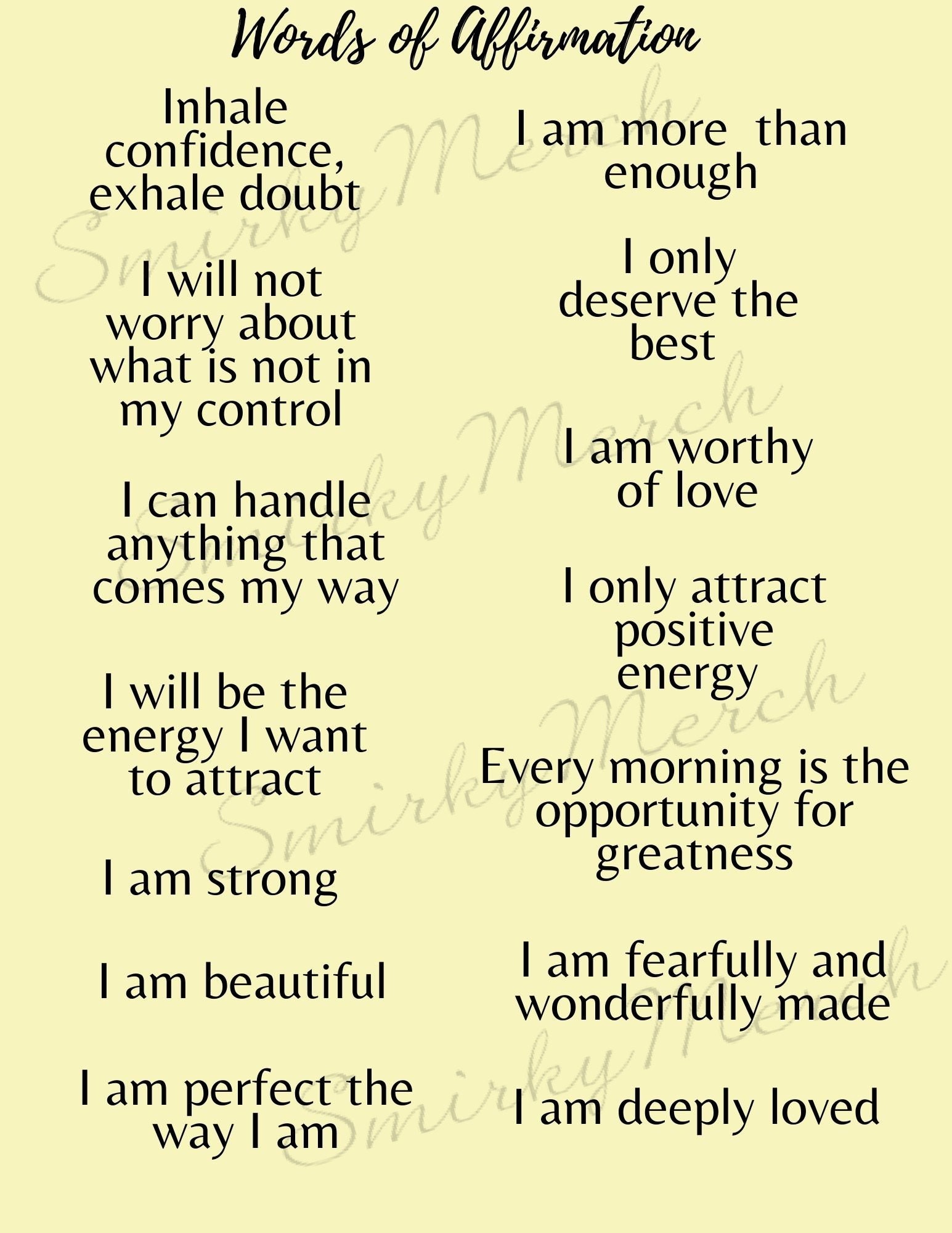
Credit: www.etsy.com
Combining Words Of Affirmation With Other Practices
Affirmation works even better when combined with:
- Active listening: Show you care by listening carefully before giving feedback.
- Acts of service: Back up your words with supportive actions.
- Quality time: Spend time together to reinforce your positive words.
Challenges In Giving And Receiving Words Of Affirmation
Not everyone finds it easy to give or receive affirming words. Some challenges include:
- Fear of sounding awkward or fake.
- Worrying the words won’t be appreciated.
- Difficulty accepting praise due to low self-esteem.
Practical solution: Start with small, genuine statements. With time, it becomes easier and more natural.
Words Of Affirmation For Yourself
Self-affirmation is a powerful tool for personal growth. Here are ways to practice:
- Write down three positive things about yourself each day.
- Repeat affirming phrases in the mirror.
- Replace negative self-talk with supportive words.
Example: Instead of “I always mess up,” say, “I’m learning and improving every day.”
Words Of Affirmation For Mental Health
Positive affirmation can help manage stress, anxiety, and negative thinking. Mental health professionals often encourage this practice as part of therapy.
Tip: Use affirmations that are realistic and meaningful to you. Overly grand statements may feel false and be less effective.
Words Of Affirmation In Long-distance Relationships
When you can’t be together physically, words become even more important. Use texts, emails, or letters to stay emotionally close.
- “I miss you and can’t wait to see you.”
- “Thinking of you always brightens my day.”
- “I appreciate your patience and love, even when we’re apart.”
The Science Behind Affirmation
Research shows that affirmation activates the brain’s reward centers, strengthening motivation and emotional bonds. It’s not just about feeling good—affirmation changes how we think and act.
For a deeper dive into the science of affirmation, the Positive Psychology field offers valuable insights.
Adapting Words Of Affirmation For Different Personalities
Everyone receives affirmation differently. Some prefer public praise, others like private words. Some want frequent reminders, others only need them during tough times.
Practical tip: Ask the people around you how they like to be appreciated. Adjust your approach for maximum impact.
Overcoming Barriers To Using Words Of Affirmation
If you struggle to express affirmation, try these steps:
- Write down your thoughts before sharing them.
- Focus on small, observable actions or qualities.
- Practice with a trusted friend or family member.
- Remind yourself that everyone needs encouragement, including you.
Future Trends: Words Of Affirmation In A Digital World
As technology grows, digital affirmation is becoming more common. Messaging apps, social media, and even workplace platforms now include features for giving quick praise.
But remember, digital words still need to be authentic. Personalization and genuine care matter more than ever.
Frequently Asked Questions
What Are Some Simple Words Of Affirmation I Can Use Daily?
You can say things like “Thank you for being you,” “I appreciate your help,” or “You did a great job today. ” Choose words that feel honest and fit the person you’re talking to.
How Can I Tell If Someone Values Words Of Affirmation?
People who value words of affirmation often light up when praised, remember kind words, or ask for feedback. They may also give compliments themselves.
Can Words Of Affirmation Help In Fixing Broken Relationships?
Yes, sincere affirmation can rebuild trust and open communication. However, it works best when combined with actions and consistent behavior.
Is There A Wrong Way To Use Words Of Affirmation?
Yes. Insincere, exaggerated, or generic compliments can backfire. Affirmation should always be genuine and connected to real actions or qualities.
How Can I Practice Words Of Affirmation With Myself?
Start by writing positive statements about your strengths or efforts. Repeat them daily, especially during tough times. Over time, self-affirmation boosts confidence and resilience.
Using words of affirmation is a simple but powerful way to transform relationships, boost self-worth, and create a more positive environment. With practice and sincerity, your words can truly make a difference—one affirmation at a time.
