

Why Is Words of Affirmation Important for Healthy Relationships?
Why Is Words Of Affirmation Important
People everywhere want to feel valued. In daily life, we all hope to hear encouragement, appreciation, or a kind word. These simple messages, called words of affirmation, have a deeper impact than most realize. They can change relationships, boost confidence, and even improve mental health. But why are words of affirmation important? Understanding this can transform the way we connect with friends, family, partners, and coworkers.
Many people underestimate the power of positive words. We often focus on actions, thinking they speak louder. While actions matter, spoken or written words can touch the heart in unique ways. They support, motivate, and heal. If you want to build stronger bonds, help others grow, or simply feel happier, learning about words of affirmation is a great place to start.
What Are Words Of Affirmation?
Words of affirmation are positive, supportive, and encouraging statements. They express love, respect, appreciation, or encouragement. These words can be simple, like "You did a great job," or more detailed, such as "I admire your dedication and hard work."
Some common examples include:
- "I’m proud of you."
- "You mean a lot to me."
- "Thank you for being there."
- "You handled that situation very well."
- "I believe in you."
Words of affirmation can be spoken, written in a note, sent as a text, or even said to yourself. They are a core part of positive communication and emotional support.
The Psychology Behind Words Of Affirmation
Many psychologists study how positive words affect the mind. Research shows that affirmation changes how people feel about themselves and others. When people receive positive words, their brains release chemicals like dopamine and oxytocin. These chemicals make us feel happy, safe, and loved.
Studies also show that children who hear encouraging words from parents or teachers feel more confident and perform better in school. Adults also benefit, feeling less stressed and more connected in relationships. The science is clear: words of affirmation create emotional safety, boost self-worth, and strengthen social bonds.
Words Of Affirmation As A Love Language
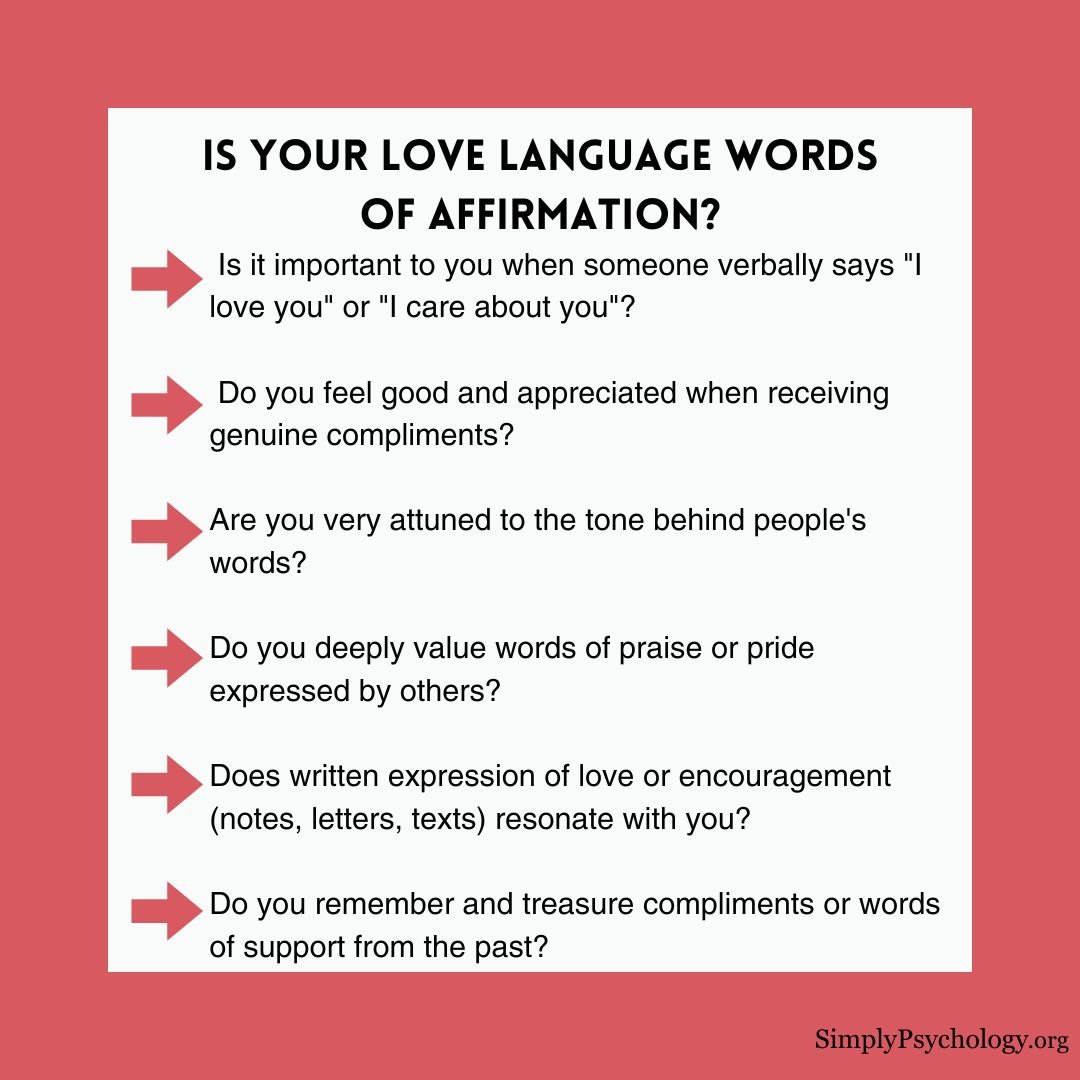
The idea of love languages explains that people give and receive love in different ways. Words of affirmation are one of the five main love languages. For people who value this language, hearing kind words is the most important way to feel loved.
If someone’s main love language is words of affirmation, they need to hear positive feedback and support. Without it, they may feel ignored, unloved, or unappreciated, even if others show love in different ways. For these people, small comments like "I appreciate you" or "You are special to me" make a big difference.
Benefits Of Words Of Affirmation
Words of affirmation offer many benefits for both the giver and the receiver. Here are some key advantages:
1. Boosting Self-esteem
When people hear positive things about themselves, their self-confidence grows. Simple statements like "You can do it" help fight negative thoughts and self-doubt. Over time, regular affirmation shapes a more positive self-image.
2. Strengthening Relationships
Words of affirmation make relationships stronger. Couples who share kind words feel more connected and less likely to argue. Friends who support each other with uplifting words build trust and loyalty.
3. Reducing Stress And Anxiety
Positive words help reduce stress. When someone is feeling low or anxious, a caring word can bring comfort. Affirmations remind us that we’re not alone and that others believe in us.
4. Encouraging Positive Behavior
People who receive affirmations are more likely to repeat good actions. For example, a child praised for helping others will want to continue being helpful. Encouragement works better than criticism in shaping behavior.
5. Fostering Growth Mindset
Affirmations help people believe they can learn and improve. This is called a growth mindset. When someone says, "You worked hard and improved," it inspires more effort and learning.
6. Building Emotional Resilience
Hearing affirming words prepares people to face challenges. They become more resilient, bouncing back from setbacks more easily because they know others believe in them.
Words Of Affirmation In Different Relationships
Words of affirmation are valuable in many types of relationships. Let’s explore how they work in each setting:
Romantic Relationships
Partners who use words of affirmation often feel more loved and secure. Compliments, expressions of gratitude, or saying "I love you" can keep romance alive. Sometimes, couples stop expressing these things, thinking their partner already knows. But regular affirmation is key for ongoing connection.
Family Relationships
Within families, affirming words strengthen bonds between parents, children, and siblings. Children who hear supportive words from parents are more confident and perform better in life. Siblings who encourage each other develop closer ties.
Friendships
Friends who exchange positive words build strong, lasting connections. Simple messages like "I appreciate your friendship" or "You always make me laugh" show that you value the relationship.
Workplace Relationships
Words of affirmation are also powerful at work. Employees who feel appreciated by their managers are more engaged and productive. Coworkers who support each other create a positive atmosphere and work better as a team.
Real-life Examples Of Words Of Affirmation
To understand the impact, let’s look at real-life situations:
- A manager tells an employee, "Your creativity on this project was outstanding." The employee feels valued and motivated.
- A parent says to a child, "I’m proud of how you handled that tough situation." The child feels seen and confident.
- A friend texts, "I’m grateful for your support." The friendship deepens.
Even small affirmations can change someone’s day or even their life.
Why People Struggle To Use Words Of Affirmation
Not everyone finds it easy to share affirming words. Some reasons include:
- They grew up in families where positive words were rare.
- They feel shy or awkward giving compliments.
- They worry about sounding insincere.
- They assume actions are enough.
Understanding these barriers is the first step to overcoming them. With practice, anyone can become better at giving affirmations.
How To Give Words Of Affirmation Effectively
Not all positive words have the same effect. Here’s how to make your affirmations meaningful:
Be Specific
Instead of saying just "Good job," say "You did a great job organizing the meeting today. " Specific comments feel more genuine.
Be Sincere
People can tell if you’re being fake. Only say what you truly mean. Authenticity builds trust.
Timing Matters
Share affirming words when the moment is right. Immediate feedback, especially after a positive action, is most powerful.
Use The Right Medium
Some people prefer spoken words, while others like notes or texts. Pay attention to what works best for the person.
Balance Praise And Encouragement
Affirmations are not only about praise. Encouragement during tough times is just as important. For example, "I know this is hard, but I believe you can handle it. "
Pitfalls To Avoid With Words Of Affirmation
There are some mistakes people make when using affirmations:
- Overusing generic praise: Repeating the same words ("You’re great") too often can feel empty.
- Insincere compliments: If you don’t mean it, don’t say it.
- Ignoring the recipient’s needs: Some people value actions more, so balance words with other supportive gestures.
- Using affirmations as manipulation: Never give praise just to get something in return.
Being mindful of these pitfalls keeps your affirmations meaningful.
Words Of Affirmation Vs. Other Love Languages
It’s helpful to compare words of affirmation with other love languages. Here’s a summary using a table:
| Love Language | Key Focus | Example | Best for |
|---|---|---|---|
| Words of Affirmation | Verbal or written appreciation | "I’m grateful for you." | People who need encouragement |
| Acts of Service | Helpful actions | Doing chores for someone | People who value support |
| Receiving Gifts | Tangible items | Giving a thoughtful present | People who love surprises |
| Quality Time | Focused attention | Spending time together | People who value presence |
| Physical Touch | Hugs, holding hands | Comforting touch | People who need closeness |
Each love language is important. But for some, words of affirmation matter most. Understanding this can help avoid misunderstandings and meet each other’s needs better.
Words Of Affirmation Across Cultures
Different cultures express affirmation in unique ways. In some places, direct compliments are normal. In others, people show appreciation more subtly.
For example, in many Western countries, open praise is common. People say, "Great job!" Or "I admire your work. " In some Asian cultures, compliments are more reserved or indirect, focusing on group achievements rather than individuals.
This cultural difference means it’s important to understand the background of the person you’re affirming. Adapting your words to fit their comfort level shows respect and builds trust.
The Science: Data And Statistics
Words of affirmation are not just a feel-good idea. Data backs their power. Some notable findings:
- According to a study published in the Journal of Personality and Social Psychology, people who receive daily affirmations experience higher self-esteem and lower stress.
- In workplaces, Gallup found that employees who feel recognized are twice as likely to be engaged.
- Children who get regular positive feedback from parents or teachers are 30% more likely to excel academically and socially.
Here’s a summary of some key data:
| Setting | Effect of Affirmation | Statistical Result |
|---|---|---|
| Workplace | Higher engagement | 2x more likely |
| Classroom | Better academic results | +30% improvement |
| Personal Life | Lower stress, better relationships | Consistently reported |
These numbers show that affirmation is not just nice—it’s effective.
Words Of Affirmation For Self-growth
Affirming words are not only for others. Self-affirmation—speaking kindly to yourself—also brings many benefits. People who practice self-affirmation feel more confident and less anxious. They are better at handling challenges and setbacks.
Some ways to use self-affirmation:
- Start your day with a positive statement: "I am capable of handling today’s challenges."
- Celebrate small wins: "I did my best, and that’s enough."
- Counter negative thoughts: When you think, "I can’t do this," reply with, "I am learning and growing."
Over time, self-affirmation can change your mindset and build lasting inner strength.
Words Of Affirmation For Children And Teens
Young people especially need positive words. Their self-image is still forming. When parents, teachers, or mentors use affirmations, children feel secure and confident.
Some effective affirmations for children:
- "I’m proud of your effort."
- "You are kind and thoughtful."
- "It’s okay to make mistakes. You’re learning."
For teens, who often face self-doubt:
- "Your ideas matter."
- "I trust your judgment."
- "You’re growing into a strong person."
Affirmations help children and teens handle peer pressure, try new things, and recover from setbacks.
Words Of Affirmation For Mental Health
Words of affirmation can support good mental health. People with anxiety or depression may struggle with negative self-talk. Hearing positive words from others, or saying them to yourself, can help break this cycle.
Therapists often encourage clients to use affirmations as part of recovery. For example, repeating, "I am worthy of love and respect," can slowly shift negative thinking patterns.
It’s important to remember that affirmations are not a quick fix. They work best as part of a supportive environment and, when needed, professional help.
Words Of Affirmation In The Digital Age
Today, much communication happens online. Texts, emails, and social media are all places to share affirmation. A quick message like "You did awesome!" Or a comment on a friend’s post can make a real difference.
However, digital affirmations should be genuine, not just automatic responses. Emojis, GIFs, or memes can add fun but don’t replace real words. Taking the time to write a thoughtful message stands out even more in a busy digital world.

Credit: mindliftapp.app
How To Make Words Of Affirmation A Habit
If you want to use affirming words more often, try these practical tips:
- Set daily reminders: Put a note on your phone or desk to remind you to share a kind word.
- Keep a gratitude journal: Write down something positive about someone each day and share it with them.
- Start conversations positively: Begin interactions with a compliment or encouragement.
- Practice active listening: Notice when others do something well and tell them right away.
- Model affirmation: If you’re a parent, teacher, or leader, show others how to use affirming words.
Making affirmation a habit takes practice, but it becomes easier over time.
Two Insights Beginners Often Miss
- Affirmations are not just praise for success. Many people think affirmation is only for achievements. But supporting someone during failures or challenges is just as important. For example, "I admire your effort, even if things didn’t work out this time," builds resilience.
- The impact lasts longer than you think. A single thoughtful affirmation can stick with someone for years. People often remember kind words in difficult times. This long-term effect is why choosing your words carefully matters so much.

Credit: www.simplypsychology.org
Practical Challenges And How To Overcome Them
Sometimes, giving or receiving words of affirmation can feel uncomfortable. Here’s how to manage:
- If you feel awkward: Start with small, simple statements. Over time, it will feel more natural.
- If you fear rejection: Remember, most people appreciate kind words, even if they don’t show it right away.
- If you doubt your impact: Trust that your words matter. Even if you don’t see a big reaction, your message may be helping more than you know.
It’s normal to feel unsure at first. But with practice, affirmation becomes a natural part of communication.
Combining Words Of Affirmation With Other Actions
While words are powerful, they are most effective when combined with actions. For example, saying "I appreciate you" while helping with a task, or "I believe in you" while supporting someone through a challenge, has extra impact.
Here’s a comparison of effects:
| Approach | Short-Term Effect | Long-Term Effect |
|---|---|---|
| Words Only | Immediate encouragement | Builds self-esteem |
| Actions Only | Visible support | Builds trust |
| Words + Actions | Strong encouragement | Deep, lasting bonds |
Combining both creates the most powerful and lasting impact.
Credit: www.simplypsychology.org
When Words Of Affirmation Are Not Enough
While affirmation is important, it is not a solution for every problem. In serious situations, like abuse or ongoing conflict, positive words alone cannot fix the issues. Action, boundaries, and sometimes professional help are needed.
Also, some people may not respond to words as strongly as others. It’s important to respect their needs and find other ways to show care.
Key Takeaways
- Words of affirmation are powerful tools for building confidence, supporting growth, and strengthening relationships.
- They work best when they are specific, sincere, and timed well.
- Affirmation is valuable in every relationship: Romantic, family, friends, and work.
- Cultural background and personal preferences matter in how affirmation is given and received.
- Combining affirming words with actions creates lasting impact.
- Making affirmation a habit can change lives—both yours and others’.
Learning to use words of affirmation well is one of the best ways to create a more positive, supportive world around you.
If you want to learn more about the science of positive communication, you may find this resource helpful: Positive Psychology.
Frequently Asked Questions
What Are Words Of Affirmation?
Words of affirmation are positive, supportive statements that express appreciation, encouragement, or love. They can be spoken or written and are used to make someone feel valued.
How Do Words Of Affirmation Improve Relationships?
They help people feel recognized and cared for. When partners, friends, or coworkers hear affirming words, trust and connection grow stronger.
Can Words Of Affirmation Help Mental Health?
Yes. Affirming words can reduce stress and negative thinking, support emotional healing, and boost confidence. They are often used in therapy and self-care.
Are Words Of Affirmation Always Verbal?
No. They can be written in notes, texts, or messages. Even a quick text can make a big difference if it is sincere and meaningful.
What If I Feel Awkward Giving Affirmations?
It’s normal to feel unsure at first. Start with simple, genuine comments. With practice, sharing affirming words will become easier and feel more natural.
