

Why Does Affirmation Mean More Than Just Positive Thinking?
Why Does Affirmation Mean
Sometimes, a simple word can change how we see ourselves and the world around us. Affirmation is one of those words. Many people hear about using affirmations for self-growth, motivation, or even healing, but what does affirmation really mean? Why do so many experts, therapists, and successful people talk about it? For some, affirmation sounds like just “positive thinking,” but it is much more than that.
Understanding affirmation can help anyone improve their life, relationships, and even mental health. It is not just about repeating nice words; it is about changing your mindset, beliefs, and actions. In this article, you will discover the full meaning of affirmation, how it works, why it matters, and how you can use it in your daily routine.
We will also look at real-life examples, scientific insights, and answer common questions.
What Does Affirmation Mean?
The word affirmation comes from the Latin “affirmare,” which means “to make steady, strengthen.” In simple terms, an affirmation is a statement that you say or think to confirm something is true, especially about yourself or your life. It is a way to reinforce a belief or idea, usually in a positive direction.
When someone says, “I am confident,” as an affirmation, they are not just making a wish. They are telling their mind to accept confidence as a real part of their identity. Affirmations can be spoken, written, or simply thought in the mind.
The goal is to change negative or limiting beliefs into supportive ones.
The Two Main Types Of Affirmation
There are two main ways people use affirmation:
- Self-affirmation: Statements about yourself to build self-esteem, confidence, or positive beliefs.
- Interpersonal affirmation: Positive statements you give to others, such as encouragement or praise.
Both types can have a powerful effect. Self-affirmation helps you grow inside, while interpersonal affirmation helps you build strong, positive relationships.
The Science Behind Affirmations
Affirmations are not just feel-good phrases. There is real science behind how they work in the brain and body. When you repeat positive statements, you activate certain neural pathways. Over time, these pathways become stronger, making new beliefs and behaviors more natural.
How Affirmations Affect The Brain
Studies using brain scans have shown that repeating self-affirmations can increase activity in parts of the brain related to self-processing and reward. This means affirmations can help you see yourself in a better light and feel motivated to act differently.
For example, when people use positive affirmations before a stressful event, such as a test or public speaking, their stress levels are often lower. They perform better and feel more confident.
The Power Of Repetition
Our brains learn through repetition. Just like practicing a new skill, repeating affirmations helps your brain accept new beliefs. Over time, old negative thoughts get weaker, and new positive ideas become stronger.
This process is called neuroplasticity. It means your brain can change and adapt, even as an adult. Affirmations are one tool to guide that change.
Why Affirmations Matter In Everyday Life
Affirmations are more than just words. They shape how you think, feel, and act every day. Here are some key reasons why affirmations matter:
- Build self-confidence: Regular affirmations help you trust yourself more.
- Reduce negative self-talk: They replace “I can’t” with “I can” or “I will try.”
- Encourage positive actions: When you believe you can succeed, you are more likely to take action.
- Support mental health: Affirmations can lower anxiety and improve mood.
- Strengthen relationships: Giving affirmations to others builds trust and goodwill.
Many people do not realize that the words they use—even silently—can shape their entire life. If your self-talk is negative, it is hard to feel happy or motivated. But if you use positive affirmations, you train your mind for success and well-being.
How To Create Effective Affirmations
Not all affirmations work the same way. Some are much more powerful than others. To make affirmations work for you, follow these simple rules:
1. Make It Personal
Use “I” statements, such as “I am” or “I can. ” This makes the affirmation about you, not someone else.
2. Keep It Positive
Focus on what you want, not what you want to avoid. For example, say “I am healthy” instead of “I am not sick. ”
3. Use The Present Tense
Speak as if your affirmation is already true. “I am confident” is better than “I will be confident. ”
4. Be Specific
Vague affirmations are less effective. Instead of “I am successful,” try “I am successful in my work and connect well with others. ”
5. Make It Believable
If an affirmation feels too unrealistic, your mind may reject it. Start with statements you can accept. For example, instead of “I am perfect,” say “I am improving every day. ”
6. Keep It Short And Simple
Easier statements are easier to remember and repeat. Clear, direct words are better than long, complex sentences.
Example Of A Strong Affirmation
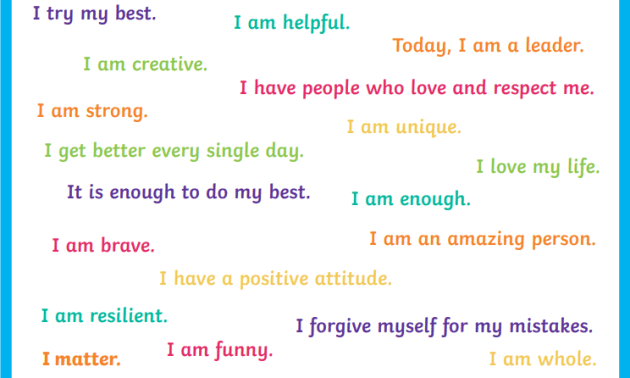
- “I am learning and growing every day.”
- “I am calm and focused in stressful situations.”
- “I respect myself and others.”

Credit: 7esl.com
Common Myths And Misunderstandings About Affirmations
Many people have heard of affirmations but do not fully understand them. Here are some common myths:
1. “affirmations Are Just Wishful Thinking.”
Affirmations are not magic spells. They work when you also take action and use them regularly.
- “You must believe the affirmation 100% for it to work.”
Even if you do not fully believe it at first, repeating an affirmation helps your mind adjust over time.
3. “affirmations Work Instantly.”
Like exercise, results come with practice. It takes time to see real changes.
4. “only Certain People Benefit From Affirmations.”
Anyone can use affirmations, no matter their background, age, or situation.
Understanding these points can help you avoid frustration and use affirmations in a realistic, helpful way.
Real-world Examples Of Affirmation Use
Affirmations are used by people from all walks of life. Here are some examples of how they make a difference:
Athletes
Many top athletes use affirmations before a big game or event. They might repeat, “I am strong and ready,” or “I perform my best under pressure. ” This helps them stay focused and confident.
Students
Before exams or presentations, students use affirmations like, “I remember what I study” or “I speak clearly and confidently. ” This reduces fear and improves results.
Professionals
People at work use affirmations to handle stress or build leadership. For example, “I handle challenges calmly” or “I communicate with respect. ”
People In Recovery
Affirmations can help those overcoming addiction or mental health struggles. Statements like, “I am in control of my choices,” offer daily support.
Parents And Children
Parents teach children to use affirmations such as, “I am kind” or “I try my best. ” This builds self-esteem from a young age.
How Affirmations Compare With Other Self-help Methods
Some people wonder how affirmations are different from other self-help tools. Below is a helpful comparison:
| Method | Main Focus | How It Works | Best For |
|---|---|---|---|
| Affirmation | Changing beliefs | Repeat positive statements | Improving mindset and confidence |
| Meditation | Calming the mind | Focus on breathing or awareness | Reducing stress and anxiety |
| Visualization | Imagining goals | Picture success in your mind | Setting and reaching goals |
| Journaling | Self-reflection | Write about thoughts and feelings | Understanding emotions |
Affirmations can be used alone or with other methods, such as meditation or journaling, for even better results.
Practical Steps To Start Using Affirmations
Getting started with affirmations is simple, but consistency is the key. Here’s how you can add affirmations to your daily life:
Step 1: Identify Negative Beliefs
Think about where you struggle most—confidence, health, relationships, or work. Notice any negative self-talk you often repeat.
Step 2: Write Positive Alternatives
For each negative thought, write a positive affirmation. For example, if you often think, “I always make mistakes,” your affirmation could be, “I learn from my experiences. ”
Step 3: Repeat Daily
Say your affirmations every morning and night. You can say them out loud, write them in a notebook, or even record yourself and listen.
Step 4: Use Visual Reminders
Place sticky notes with your affirmations on your mirror, desk, or phone background. Seeing them often helps you remember.
Step 5: Combine With Action
Affirmations work best when you also take steps toward your goals. If your affirmation is, “I am healthy,” make choices that support good health.
The Role Of Affirmations In Mental Health
Mental health experts often recommend affirmations as part of therapy or self-care routines. They can help with:
- Reducing anxiety: Repeating calming statements lowers stress.
- Boosting mood: Positive words can lift your spirits.
- Fighting depression: Affirmations challenge hopeless thoughts.
- Improving resilience: They help you bounce back from setbacks.
A study published in the journal *Social Cognitive and Affective Neuroscience* found that self-affirmation can reduce the brain’s response to threats, making people feel safer and more secure.
However, affirmations are not a replacement for medical treatment. They work best as a support tool along with professional help when needed.
How To Measure Progress With Affirmations
Many people wonder how to know if affirmations are working. Here are some ways to measure your progress:
- Track Your Mood: Write down how you feel before and after using affirmations for a few weeks.
- Notice Your Thoughts: Are negative thoughts less frequent? Do you think more positively?
- Observe Your Actions: Are you making better choices or feeling more motivated?
- Ask Others: Sometimes, friends or family notice changes before you do.
It is important to be patient. Change happens slowly but steadily.
Common Mistakes When Using Affirmations
Even though affirmations are simple, people often make mistakes that lower their effectiveness:
- Using negative words: For example, “I am not anxious” keeps the focus on anxiety.
- Making them too long: Complicated statements are hard to remember and repeat.
- Expecting instant results: Real change takes practice.
- Choosing affirmations you do not believe at all: Start with statements that feel possible.
- Only saying, not acting: Affirmations work best when paired with real-life action.
Knowing these pitfalls helps you get the most out of your affirmation practice.
The Deeper Meaning Of Affirmation In Philosophy And Culture
Affirmation is more than a self-help tool. It has roots in philosophy, religion, and culture. Many traditions see affirmation as a way to connect with your true self or purpose.
For example, in some Eastern philosophies, repeating mantras is a way to affirm inner peace and connection with the universe. In Western thought, philosophers have discussed the power of self-assertion and positive identity.
Affirmation is also seen in ceremonies, rituals, and even national pledges. These are all ways to state what a group or person stands for, believes in, or wants to become.
The Impact Of Affirmation On Relationships
Affirmations are not just for individuals. They can transform relationships too. When you affirm someone else, you build trust, respect, and closeness.
Examples Of Interpersonal Affirmations
- “I appreciate your help.”
- “You are a good friend.”
- “I trust your judgment.”
Giving and receiving affirmations makes people feel valued and supported. It can heal conflicts, build teams, and improve family bonds.
Affirmations In The Workplace
More companies are teaching employees about the power of affirmation. When managers use affirmations, teams are more motivated and engaged. Employees who feel appreciated perform better and stay longer.
A survey by Gallup found that employees who receive regular recognition are more productive and less likely to leave their jobs. Simple affirmations like “You did great work today” can make a big difference.
Comparison: Affirming Vs. Criticizing At Work
| Approach | Effect on Motivation | Effect on Performance | Team Spirit |
|---|---|---|---|
| Affirmation | Boosts motivation | Improves performance | Strengthens teamwork |
| Criticism | Lowers motivation | Reduces performance | Weakens teamwork |
This shows why affirmation is so valuable in professional settings.
Using Affirmations With Children
Teaching children to use affirmations can have lifelong benefits. Kids who learn positive self-talk grow up more confident and resilient. Parents and teachers can model affirmations by saying things like, “You are creative,” or encouraging kids to create their own.
Affirmations help children handle stress, bullying, or challenges at school. They learn to focus on their strengths rather than their weaknesses.
Cultural Differences In Affirmation
Different cultures use affirmation in unique ways. In some cultures, public praise is common and expected. In others, it is more private or subtle. Understanding these differences helps you use affirmation respectfully.
For example, in the United States, direct compliments are normal. In Japan, people may use more indirect forms of praise to avoid embarrassment. Still, the core idea is the same: affirming others builds connection and trust.

Credit: www.aamc.org
Non-obvious Insights About Affirmations
Most people know the basics, but here are two insights many beginners miss:
1. Affirmations can uncover hidden beliefs.
When you struggle to repeat a certain affirmation, it often shows a hidden negative belief. This is a chance to explore and heal deeper issues.
2. The feeling behind the words matters.
Saying affirmations with emotion, not just words, makes them much more powerful. Try to feel the truth of your statement as you say it.
When Affirmations Don’t Work—and What To Do
Sometimes, people say affirmations but do not see results. Here are some reasons:
- The affirmation is not believable at all. Solution: Make it smaller and more realistic.
- You only say the words but do not feel them. Solution: Add emotion, or visualize the result.
- You use them without any action. Solution: Take real steps toward your goal.
- You expect change too fast. Solution: Be patient and track small improvements.
If you try these tips and still struggle, consider working with a coach or therapist. They can help you create affirmations that fit your needs.
Inspiring Stories: How Affirmations Changed Lives
Many people have shared how affirmations made a real difference. For example, a woman recovering from illness repeated, “My body heals every day. ” She said it helped her stay hopeful and motivated during hard times.
A student who felt shy started saying, “I am confident speaking in class. ” Over months, he spoke up more and even joined the debate team.
In business, a manager used daily team affirmations like, “We solve problems together. ” The team’s mood and productivity improved.
These stories show that affirmation is not just theory—it can change real lives.
Tips For Advanced Affirmation Practice
Once you are comfortable with basic affirmations, try these advanced tips:
- Combine with visualization: Picture your affirmation as true.
- Use music or rhythm: Sing or chant your affirmations.
- Practice with a partner: Affirm each other for greater impact.
- Create a routine: Set a regular time and place.
- Adjust as you grow: Update your affirmations as your goals change.
Exploring these ideas can keep your practice fresh and effective.
Resources For Further Learning
To learn more about affirmations, consider reading books on positive psychology, joining online support groups, or following expert blogs. For a deeper scientific view, you can check sources like Wikipedia’s Self-Affirmation page.
Frequently Asked Questions
Credit: www.twinkl.es
What Is The Difference Between Affirmation And Positive Thinking?
Affirmation is a specific statement you repeat to change beliefs or habits. Positive thinking is a general attitude of looking for the good in situations. Affirmations help focus your mind and create new mental patterns, while positive thinking is about overall outlook.
Can Anyone Use Affirmations, Or Are They Only For Certain People?
Anyone can use affirmations, no matter their age, background, or situation. They are helpful for students, professionals, parents, and even children.
How Long Does It Take To See Results From Affirmations?
It depends on the person and the affirmation. Some people notice changes in a few days; for others, it can take weeks or months. Consistency and belief are key factors.
Are There Any Risks With Using Affirmations?
Affirmations are safe for most people. But if you have serious mental health issues, do not use them as a replacement for professional help. If an affirmation makes you feel worse, adjust it or seek support.
Should I Say My Affirmations Out Loud Or In My Mind?
Both ways can work. Saying them out loud can be more powerful because you hear your own voice. But thinking them silently or writing them down is also effective. Choose what feels best for you.
---
Affirmations are simple yet powerful tools for shaping your thoughts, feelings, and actions. By understanding what affirmation means, how it works, and how to use it, you can unlock new levels of confidence, happiness, and success. Whether you are starting out or deepening your practice, let the power of affirmation guide you toward a better life.
