

Why are Affirmations Good for Kids: Boosting Confidence Fast
Why Are Affirmations Good For Kids
Children are like sponges—they absorb not only information, but also emotions, beliefs, and attitudes from their surroundings. What we say to kids, and what they say to themselves, shapes their view of the world and their place in it. In a world filled with challenges, comparison, and pressure, it is more important than ever to build a strong foundation of self-worth and confidence in our children. Affirmations—simple, positive statements—offer a practical and accessible way to nurture emotional health, encourage resilience, and guide kids toward a positive mindset. But why exactly are affirmations so powerful for kids, and how can they be used effectively in daily life?
Let’s explore the science, benefits, and practical strategies behind affirmations for children. This article will dive deep into how these small words can make a big difference, provide examples, address common concerns, and offer guidance for parents, teachers, and caregivers who want to help kids grow strong—inside and out.
What Are Affirmations And How Do They Work?
Affirmations are positive statements that people repeat to themselves, often to challenge negative thoughts or encourage a desired mindset. For children, affirmations can sound like, “I am smart,” “I am a good friend,” or “I can try new things.” The goal is not to ignore real problems, but to help kids focus on their abilities and strengths.
The Brain And Self-talk
When a child repeats positive affirmations, the brain begins to form new connections. This process is called neuroplasticity—the brain’s ability to change and grow based on experiences and repeated thoughts. Over time, positive self-talk can become a habit, helping children see themselves in a brighter light.
Real-life Example
Imagine a child who says, “I am not good at math. ” This belief can lead to worry, avoidance, and even failure. If the same child starts repeating, “I can learn new things,” the focus shifts from fear to growth.
The new statement doesn’t promise instant success, but it does help the child feel more hopeful and ready to try.
The Benefits Of Affirmations For Kids
The impact of affirmations goes beyond just feeling good. They have real, measurable effects on children’s emotional, social, and academic lives. Here are some of the main benefits:
- Boosts Self-Esteem: Kids who use affirmations often feel better about themselves. They start to believe in their own worth and abilities.
- Reduces Anxiety and Stress: Positive self-talk helps children manage worries. Instead of focusing on fears, they remind themselves of their strengths.
- Improves Academic Performance: When kids believe they can succeed, they are more likely to try, persist, and learn from mistakes.
- Encourages Resilience: Affirmations teach children to face challenges with a “can-do” attitude. They recover faster from setbacks.
- Supports Social Skills: By building confidence, affirmations make it easier for kids to make friends, share, and speak up.
- Promotes Emotional Regulation: Kids learn to handle big emotions by calming themselves with positive words.
- Shapes a Growth Mindset: Affirmations help children see abilities as flexible, not fixed. This mindset leads to curiosity and lifelong learning.
Data That Supports Affirmations
Research shows that children who use positive self-talk are less likely to develop symptoms of anxiety and depression. In a study involving over 300 elementary students, those who practiced affirmations for two months showed a 15% increase in self-confidence and a 10% improvement in classroom participation compared to those who did not use affirmations.

Credit: www.thepathway2success.com
Why Kids Need Positive Self-talk
Children face unique pressures today. School expectations, social media, and even family life can create self-doubt or fear of failure. Negative thoughts can become habits, especially if children hear criticism more often than praise.
Early Years Are Critical
The early years are a time when beliefs about self-worth are formed. If children learn to speak kindly to themselves, they are more likely to become confident, caring adults.
Example: The Power Of “yet”
A child who says, “I can’t read,” may feel stuck. Adding “yet” turns it into, “I can’t read yet. ” This tiny change helps kids see that learning is a journey, not a race.
Types Of Affirmations For Kids
There is no one-size-fits-all approach to affirmations. Different types of statements can support various needs and situations.
Self-esteem Affirmations
- “I am important.”
- “I am loved just the way I am.”
- “I believe in myself.”
Calming Affirmations
- “I am safe.”
- “I can handle my feelings.”
- “I can take deep breaths to feel calm.”
Social Affirmations
- “I am a good friend.”
- “I listen and care about others.”
- “I can ask for help when I need it.”
Growth Mindset Affirmations
- “I can learn from mistakes.”
- “Every day is a new chance.”
- “I never give up.”
Academic Affirmations
- “I am a problem solver.”
- “I can do hard things.”
- “I am curious and like to learn.”
When And How To Use Affirmations With Kids
Timing and consistency matter when it comes to affirmations. Here are some ideas for making them a natural part of daily life:
- Morning Routine: Start the day with one or two affirmations. This sets a positive tone.
- Before Challenges: Use affirmations before tests, sports, or social events to boost confidence.
- During Difficult Moments: Remind kids to use calming affirmations when they feel upset or worried.
- Bedtime Reflection: End the day by repeating affirmations about gratitude or achievements.
- Written Reminders: Place affirmation cards on mirrors, lunchboxes, or desks.
- Group Practice: In classrooms or families, say affirmations together to build a sense of community.
Making Affirmations Fun
Kids are more likely to use affirmations if they are engaging. Try these ideas:
- Sing or chant affirmations to a favorite tune.
- Create colorful posters or drawings with positive words.
- Use hand movements or clapping to make affirmations active.
Comparing Affirmations With Other Positive Practices
It’s helpful to see how affirmations fit alongside other well-being strategies for kids. The table below compares affirmations with mindfulness, rewards, and discipline:
| Practice | Main Focus | How It Helps | Best For |
|---|---|---|---|
| Affirmations | Positive self-talk | Builds confidence, changes mindset | Daily encouragement, handling worries |
| Mindfulness | Awareness of present | Reduces stress, improves focus | Calming down, managing emotions |
| Rewards | External motivation | Encourages specific behavior | Building habits, short-term goals |
| Discipline | Correcting behavior | Sets boundaries, teaches responsibility | Rules, safety, respect |
Affirmations work best when they are part of a toolkit—used alongside other practices to support all parts of a child’s development.
How To Create Effective Affirmations For Kids
Not all affirmations are equally helpful. For children, the best affirmations are simple, believable, and focused on effort or qualities rather than perfection.
Steps For Creating Affirmations
- Start with “I am” or “I can.” This helps kids see the statement as personal.
- Keep it positive. Avoid words like “not” or “can’t.” For example, say “I am brave” instead of “I am not scared.”
- Make it short and clear. Kids remember short phrases better.
- Focus on effort. Instead of “I am always the best,” try “I try my best.”
- Match the child’s needs. Use words that are meaningful to your child’s situation.
Practical Example
If a child is nervous about meeting new people, an effective affirmation could be, “I am friendly and can talk to new friends. ” This is positive, simple, and encourages action.
Common Mistakes To Avoid With Affirmations
Affirmations can be powerful, but there are some pitfalls to watch out for.
Ignoring Feelings
Telling a sad child to “just be happy” can feel dismissive. Affirmations should support, not ignore, real emotions. For example, “It’s okay to feel sad. I can handle my feelings,” is more helpful.
Unrealistic Statements
Saying “I am perfect” may not feel true. Kids need affirmations they can believe. Focus on growth and effort, not impossible standards.
Lack Of Consistency
Repeating affirmations only once or twice is not enough. Like any habit, they work best with regular practice.
Over-reliance
Affirmations are not a magic solution. They work best when combined with support, problem-solving, and healthy relationships.
The Role Of Parents And Teachers
Adults play a key role in teaching kids how to use affirmations. Your words and actions set the example.
Modeling Positive Self-talk
Children learn by watching. When you say, “I can handle this,” or “I am learning, too,” kids notice. Sharing your own affirmations shows that self-kindness is for everyone.
Encouragement, Not Pressure
Support kids in choosing affirmations that feel right for them. Avoid forcing statements they are not ready to believe.
Safe Spaces For Practice
Create routines where affirmations are shared in a safe, non-judgmental space—like at breakfast, during circle time, or before bedtime.
Real-life Stories: How Affirmations Change Kids’ Lives
Sometimes, numbers and research are not enough. Stories bring the power of affirmations to life.
Case 1: Overcoming School Fears
A shy third-grader, nervous about reading aloud, started using the affirmation, “I am brave and can try new things. ” With gentle reminders from her teacher and family, she practiced daily. After several weeks, she raised her hand in class—something she had never done before.
Case 2: Building Confidence After Failure
A young soccer player felt discouraged after missing a goal. His coach introduced the affirmation, “I learn from my mistakes. ” Instead of quitting, he kept practicing, eventually scoring in a later game.
Case 3: Calming Big Emotions
A child with frequent meltdowns learned to say, “I can calm my body. ” Paired with deep breathing, this affirmation helped him pause and manage his feelings more calmly.
These stories highlight how small words, repeated with care, can lead to meaningful change over time.
Measuring The Impact Of Affirmations
It can be hard to know if affirmations are working. Here are some ways parents and teachers can track progress:
- Behavior Changes: Notice if the child tries new things, handles frustration better, or speaks more kindly about themselves.
- Mood Shifts: Look for less anxiety, fewer meltdowns, or a more positive outlook.
- Academic Engagement: See if the child participates more in class or tackles homework with less stress.
- Feedback from Others: Listen to comments from teachers, friends, or family about changes in the child’s confidence or attitude.
Sample Tracking Table
| Area | Before Affirmations | After 2 Months of Affirmations |
|---|---|---|
| Self-Esteem | Low confidence, negative self-talk | Improved self-image, positive statements |
| Handling Stress | Frequent meltdowns, avoidance | Better coping, tries new strategies |
| Participation | Rarely volunteers in class | Participates more, asks questions |
| Friendships | Struggles to make friends | Initiates conversations, shares with peers |
Tracking small changes over time helps keep motivation high and shows the value of daily practice.
Making Affirmations Inclusive And Culturally Sensitive
Affirmations should reflect each child’s background, language, and beliefs. What works for one family or classroom may not feel right for another.
Honor Family Values
Choose words that fit your cultural values and beliefs. For example, in some cultures, humility is a core value. Instead of “I am the best,” try “I am grateful for what I can do. ”
Use Home Languages
Affirmations are powerful in any language. Encourage children to use the language they are most comfortable with at home.
Adapt For Different Abilities
For children with special needs, affirmations may need to be even simpler or use pictures and gestures. The key is to make every child feel included and understood.
The Science Behind Affirmations For Kids
Why do affirmations work? Researchers believe that repeating positive statements changes the way the brain processes information.
Self-affirmation Theory
This theory suggests that when people focus on values and strengths, they are less likely to feel threatened by challenges. For kids, this means they can handle setbacks or criticism without losing confidence.
Evidence From Mri Studies
Brain imaging shows that when children repeat positive affirmations, the areas of the brain linked to self-worth and motivation become more active. This can lead to better mood, increased motivation, and improved learning.
Long-term Benefits
Research suggests that children who practice affirmations regularly are more likely to develop resilience, healthy relationships, and a positive outlook on life.
For more on the science behind affirmations, see this Psychology Today article.
Practical Strategies For Parents And Teachers
It’s not always easy to start something new, but a few simple strategies can make affirmations a natural part of any child’s day.
- Model Affirmations Yourself: Let kids see you using positive self-talk.
- Choose a “Word of the Week”: Focus on one affirmation for several days, repeating it in different ways.
- Use Visuals: Create posters or cards with affirmations. Place them where kids will see them often.
- Connect Affirmations to Actions: After saying an affirmation, encourage the child to act on it. For example, after “I am helpful,” look for a way to help someone.
- Celebrate Effort: Notice and praise when children use affirmations or show positive changes.
- Make It Interactive: Let kids create their own affirmations. Ownership makes them more meaningful.
Example Routine
- Start the day: “I am ready for today.”
- Before a test: “I can do my best.”
- After a hard moment: “I can try again.”
With regular practice, affirmations become second nature.
Addressing Skepticism: Do Affirmations Really Work?
Some adults worry that affirmations might not be effective or could make kids overconfident. It’s important to use affirmations wisely.
Evidence Over Empty Praise
Affirmations are not the same as false praise. The best affirmations focus on effort and progress, not perfection or being “the best. ”
Encouraging Realistic Thinking
When used well, affirmations help kids face reality with hope, not fantasy. A child who says, “I can learn from mistakes,” is ready to grow, not to avoid effort.
Mixing Affirmations With Action
Affirmations alone are not enough. Combine them with real experiences—like practice, problem-solving, and support from adults.
How Schools Can Use Affirmations
Schools are a powerful place for building positive self-talk. Teachers and staff can make affirmations part of the classroom culture.
Classroom Activities
- Start each day with a group affirmation.
- Create a “Wall of Positivity” where students add their favorite affirmations.
- Use affirmations before tests or presentations.
School-wide Initiatives
- Share affirmations in morning announcements.
- Offer affirmation cards as part of counseling or support programs.
- Involve families by sending home affirmation ideas.
Comparing School Approaches
Let’s look at how different schools might use affirmations:
| Approach | How It’s Used | Potential Impact |
|---|---|---|
| Daily Announcements | Share one affirmation each morning | Creates a positive school climate |
| Classroom Circles | Students share affirmations in a group | Builds trust and unity |
| Individual Practice | Students choose and write personal affirmations | Encourages self-awareness |
| Counseling Programs | Affirmations as part of emotional support | Helps at-risk students build resilience |
When affirmations are woven into daily life, their impact grows.

Credit: www.almazandco.com
When Affirmations Are Not Enough
While affirmations are a great tool, some children need more support—especially if they are struggling with serious anxiety, depression, or trauma.
Signs A Child Needs More Help
- Ongoing sadness or worry that doesn’t improve
- Withdrawing from friends or activities
- Changes in sleep or eating habits
- Frequent headaches or stomachaches
If these signs are present, affirmations should be used alongside professional support, such as counseling or therapy.
Tips For Success: Getting The Most Out Of Affirmations
- Personalize Statements: The more specific the affirmation, the more it will resonate.
- Be Patient: Change takes time. Celebrate small wins.
- Stay Consistent: Practice daily, even for just a few seconds.
- Encourage Reflection: Ask kids how they feel after using affirmations.
- Adjust as Needed: If an affirmation doesn’t seem to help, try a new one.
- Include Everyone: Make affirmations part of the family or classroom culture.
- Use Visuals and Actions: Pair words with movement, art, or music.
- Link to Real-Life Moments: Use affirmations in context—for example, before a big test or after a disagreement.
By following these tips, you help affirmations become a powerful lifelong habit.
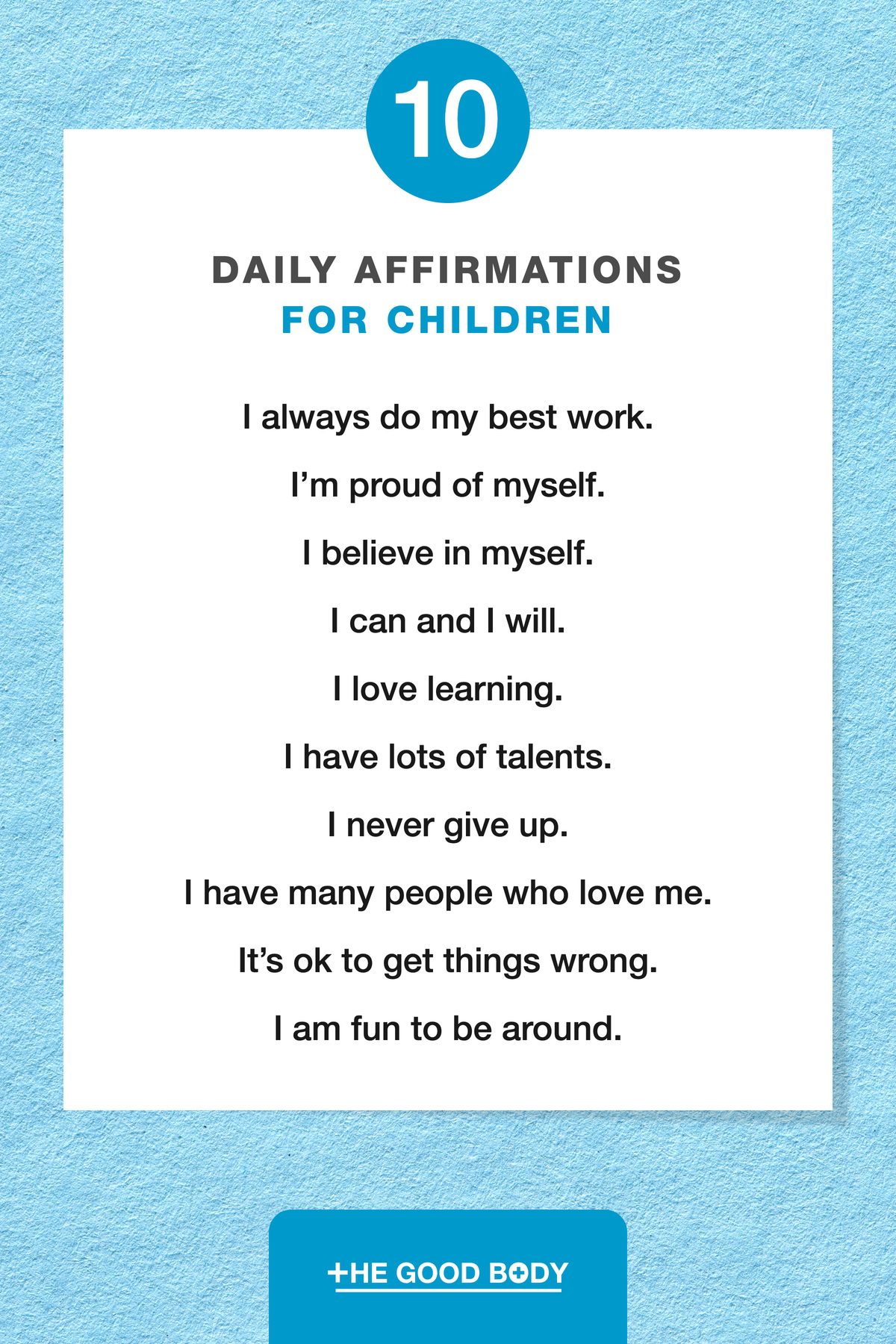
Credit: www.thegoodbody.com
Frequently Asked Questions
What Age Should Kids Start Using Affirmations?
Kids can start using affirmations as soon as they begin to talk and understand simple sentences. Even preschoolers can learn to say, “I am kind,” or “I can try. ” The key is to keep statements short, positive, and age-appropriate.
Can Affirmations Replace Therapy Or Counseling?
No, affirmations are a helpful tool, but they do not replace professional help when a child is facing serious emotional or mental health challenges. If a child’s struggles are ongoing or severe, seek support from a counselor or mental health professional.
How Often Should Kids Use Affirmations?
Daily practice is best. Short sessions—such as during morning routines, before challenges, or at bedtime—are more effective than rare, long sessions. Regular repetition helps affirmations become a natural part of self-talk.
What If A Child Doesn’t Believe The Affirmation?
If an affirmation feels untrue, try adjusting the wording. For example, instead of “I am always brave,” use “I can try to be brave. ” Focus on effort and growth, not perfection. Letting kids choose or create their own affirmations can also help.
Can Affirmations Be Used In Group Settings Like Classrooms?
Yes, affirmations are powerful in group settings. They build a sense of community, encourage positive behavior, and help all children feel included. Teachers can lead group affirmations, display positive statements, or encourage students to share their own.
Affirmations are more than just words—they are seeds that can grow into strong, confident, and resilient children. By making positive self-talk a daily habit, parents, teachers, and caregivers can help kids face life’s challenges with hope and courage. Start small, be patient, and watch the transformation unfold.
