

What is the Difference Between Affirmation and Manifestation Explained
What Is The Difference Between Affirmation And Manifestation
Many people today are searching for ways to improve their lives, reach their goals, and feel happier. Two popular methods people talk about are affirmation and manifestation. These words are often used together, but they are not the same. Understanding the difference between these two ideas can help you use them more effectively. If you’ve ever wondered why repeating positive statements sometimes works, or why visualizing your dreams sometimes feels empty, you are not alone. Let’s explore what makes affirmation and manifestation unique, how each works, and how you can use them in your daily life.
What Is Affirmation?
An affirmation is a positive statement that you say to yourself, usually to change negative thoughts or beliefs. The main goal is to build a more positive mindset and develop confidence. People use affirmations to fight self-doubt, motivate themselves, or create a new habit of positive thinking.
For example, saying “I am confident in my abilities” every morning is an affirmation. The idea is that, with repetition, these statements can change the way you think about yourself. Affirmations are usually short, present-tense sentences that focus on what you want to believe or feel.
How Affirmations Work
Affirmations are based on the idea that your thoughts influence your actions and emotions. When you repeat a positive statement often, your brain starts to accept it as true. This process is called “self-suggestion. ” Over time, affirmations can help replace negative self-talk with positive beliefs.
For example:
- “I am worthy of love and respect.”
- “I am strong and capable.”
- “I handle challenges with calm and focus.”
Affirmations are most powerful when you use them regularly, believe in them, and match them with your actions.
Practical Examples Of Affirmations
People use affirmations in many areas of life, such as:
- Career: “I am successful in my work.”
- Health: “I make healthy choices every day.”
- Relationships: “I attract positive and loving people.”
- Personal Growth: “I am always learning and growing.”
Common Myths About Affirmations
Some people believe that affirmations are just “wishful thinking. ” However, research shows that positive self-talk can reduce stress and improve performance. The key is to use affirmations that feel realistic and meaningful to you. Repeating something you don’t believe can make you feel worse, not better.
When Affirmations Work Best
Affirmations help most when:
- You use them daily, not just once.
- You choose statements that match your real values.
- You combine them with action toward your goals.
Many beginners forget that affirmations are not magic words. They support change, but real growth also needs effort and practice.
What Is Manifestation?
Manifestation is the process of turning your thoughts, desires, or dreams into reality. It is based on the belief that focusing your mind and energy on a goal can attract it into your life. Many people connect manifestation with the “Law of Attraction,” which says that like attracts like: positive thinking brings positive outcomes.
For example, if you want to start a new business, you might visualize your success, feel grateful as if it’s already true, and act as if your goal is on its way.
How Manifestation Works
Manifestation is more than just thinking about what you want. It combines:
- Clear intention: Knowing exactly what you want.
- Visualization: Imagining your goal as if it is already real.
- Emotion: Feeling the joy, excitement, or gratitude of having your desire.
- Action: Taking steps toward your dream, even small ones.
The idea is that your focus and energy help create opportunities and inspire action, moving you closer to your goal.
Practical Examples Of Manifestation
Some ways people use manifestation:
- Visualizing their dream job every morning.
- Writing down goals and reading them daily.
- Making a vision board with images of what they want.
- Practicing gratitude for things they have and want to receive.
Common Misunderstandings About Manifestation
A common mistake is thinking manifestation means wishing for something without doing any work. In reality, manifestation supports action. You must still plan, learn, and adjust your efforts. Focusing only on wishes without action leads to disappointment.
Another misunderstanding is that manifestation is “supernatural. ” But many successful people use visualization, goal-setting, and positive thinking—tools that are proven to boost motivation and achievement.
When Manifestation Works Best
Manifestation is most effective when:
- Your goals are specific, not vague.
- You believe your goals are possible.
- You act on ideas and opportunities that appear.
Sometimes, beginners expect instant results and give up too soon. Manifestation works over time, with steady focus and effort.
Core Differences Between Affirmation And Manifestation
Both affirmation and manifestation are about creating a better life, but they are not the same. Understanding the differences helps you use each tool wisely.
| Aspect | Affirmation | Manifestation |
|---|---|---|
| Definition | Positive self-statement | Turning desire into reality |
| Main Purpose | Change thoughts and beliefs | Achieve specific goals or outcomes |
| Focus | Inner mindset | Outer results and experiences |
| Key Method | Repetition of statements | Visualization, intention, and action |
| Role of Action | Supports action, but not always required | Action is essential for success |
Summary Of Main Differences
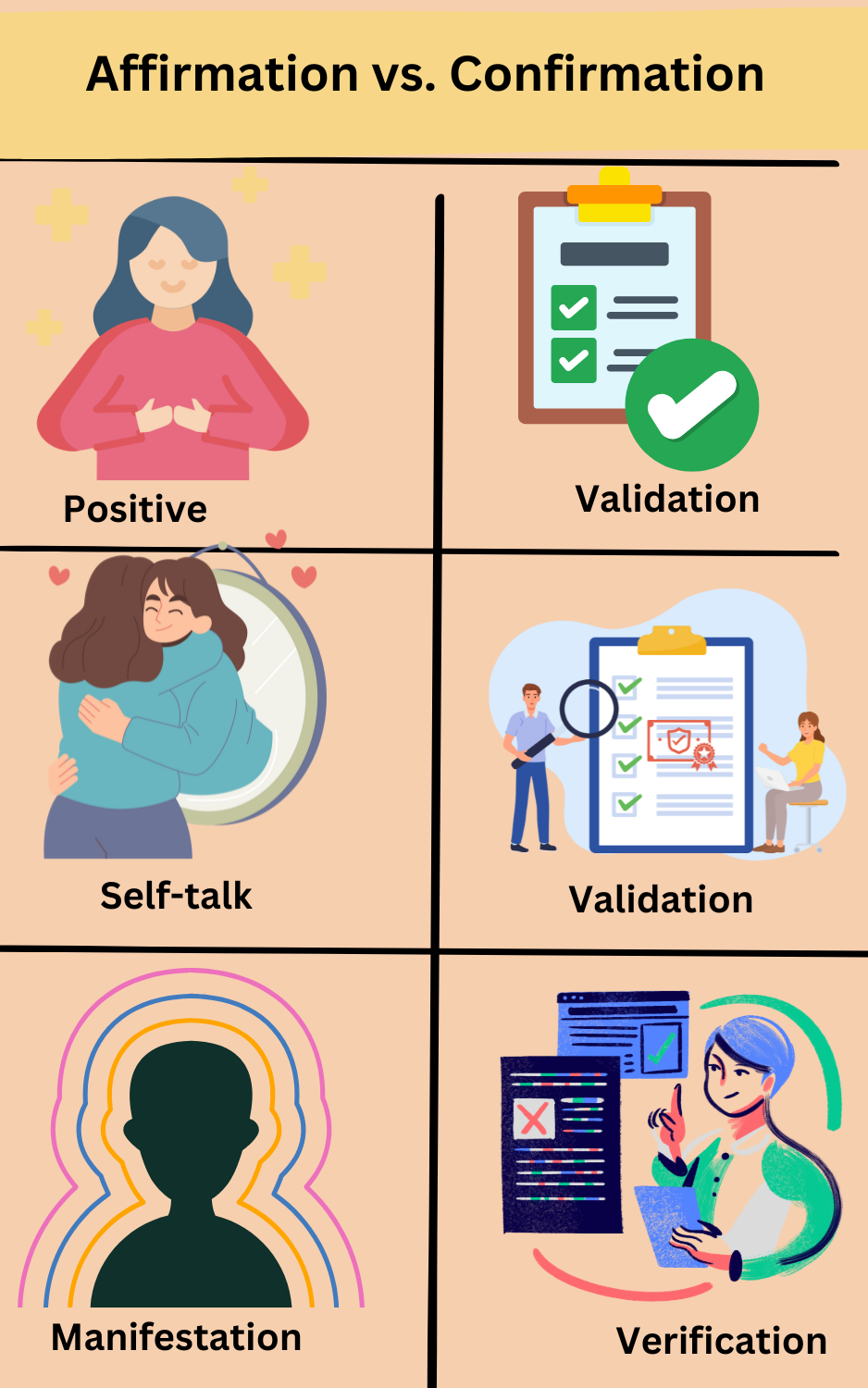
- Affirmation is about changing how you think about yourself.
- Manifestation is about creating real-life results through focus and action.
- Affirmations are usually short statements; manifestation is a longer process.
- Affirmations focus on beliefs; manifestation focuses on goals.
How To Use Affirmations Effectively
If you want to use affirmations, follow these tips:
- Choose positive, present-tense statements. For example, “I am confident” is better than “I will be confident.”
- Make them personal and specific. Generic statements feel empty. Use words that fit your life.
- Repeat them daily. Say them in the morning, before bed, or during stressful moments.
- Feel the emotion. Don’t just say the words; feel what they mean.
- Write them down. Keeping a journal can make them more real.
A common beginner mistake is using affirmations that feel too far from reality. If you don’t believe your statement, adjust it. For example, change “I am always successful” to “I am learning to succeed every day. ” Make it believable for you.
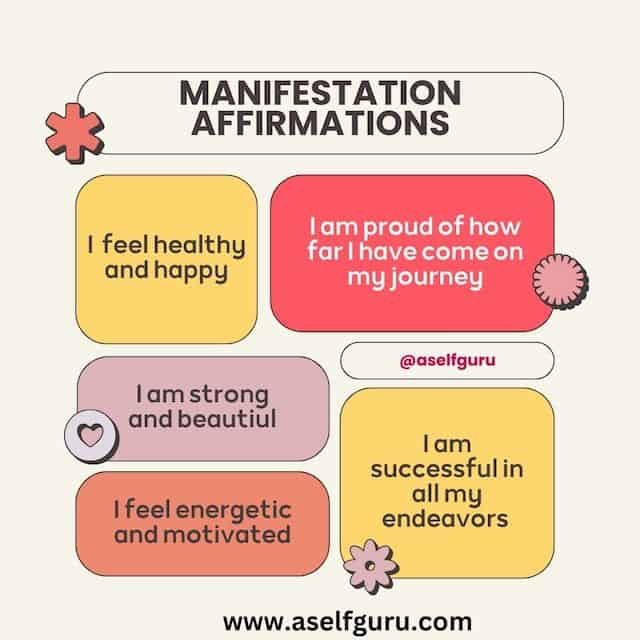
Example Routine For Daily Affirmations
- Wake up and say your chosen affirmation out loud.
- Write it in your journal three times.
- Repeat it quietly during your commute or while brushing your teeth.
- Review your affirmation before you sleep.
Credit: aselfguru.com
How To Practice Manifestation In Real Life
Using manifestation is more than just wishing for things. Here’s how you can put it into practice:
- Set a clear goal. Know exactly what you want (for example, a new job, better health, or a loving relationship).
- Visualize your goal. Spend a few minutes each day seeing yourself reaching your goal. Make it as real as possible in your mind.
- Feel the emotion. Imagine the happiness, pride, or gratitude you’d feel if your goal was already true.
- Take action. Do something, even small, each day to move toward your goal.
- Notice opportunities. Stay open to signs, ideas, or people who can help.
- Practice gratitude. Thank yourself and the universe for what you already have and what is coming.
Example Manifestation Exercise
- Sit quietly and close your eyes.
- Picture your goal in detail.
- Feel the excitement as if it has already happened.
- Ask yourself, “What is one small step I can take today?” Then do it.
The Science Behind Affirmation And Manifestation
There is real science supporting both affirmation and parts of manifestation. Understanding this can help you use these tools with more confidence.
Scientific Studies On Affirmations
Research in psychology shows that self-affirmation can:
- Reduce stress.
- Increase problem-solving ability.
- Build self-esteem.
For example, students who wrote positive statements about themselves before a test performed better than those who did not. Affirmations help by reminding you of your strengths, especially during challenges.
Scientific View On Manifestation
Manifestation is closely linked to visualization and goal-setting. Studies show that when athletes visualize their success, their performance improves. Visualization activates the same parts of the brain as real action, making your goals feel more possible.
However, manifestation is not “magic. ” Without action, visualization alone does not bring results. The power of manifestation comes from the combination of focus, positive emotion, and consistent effort.
Important Insight: The Role Of Belief
One thing beginners often miss is the importance of belief. If you repeat affirmations or practice manifestation without believing in the possibility, your mind will resist. Start with statements and goals that feel possible, then build up over time.
Common Mistakes And How To Avoid Them
Many people try affirmation and manifestation but quit when they don’t see results. Here’s why:
1. Expecting Instant Success
Change takes time. Whether you’re changing your mindset or reaching a big goal, patience is necessary. Don’t give up after a few days.
2. Choosing Unrealistic Statements
Saying “I am a millionaire” when you are struggling financially can make you feel worse. Start with realistic, believable statements and goals.
3. Ignoring Action
Affirmations and manifestation work best with action. Use positive statements to motivate steps forward, not to replace effort.
4. Forgetting Consistency
Using affirmations or visualization once is not enough. Make it a habit, like brushing your teeth.
5. Not Tracking Progress
Keep a journal of your affirmations, goals, and actions. Celebrate small wins. This builds motivation.
Combining Affirmation And Manifestation For Best Results
You do not have to choose one method over the other. In fact, using both together can be powerful.
For example:
- Use affirmations to build belief in yourself (“I am capable and worthy of success”).
- Use manifestation to focus on a clear goal and visualize the steps to reach it.
This combination helps you stay positive inside while taking real steps outside.
| Step | Affirmation | Manifestation | Combined Action |
|---|---|---|---|
| 1 | “I am confident.” | Visualize giving a great presentation. | Prepare and practice your speech. |
| 2 | “I attract good opportunities.” | Picture meeting helpful people. | Attend events and talk to new people. |
| 3 | “I am improving every day.” | See yourself learning new skills. | Take a course or read daily. |
Real-life Stories: Affirmation Vs. Manifestation
Hearing real stories can make these ideas more clear.
Affirmation In Action
Maria, a nurse, struggled with anxiety at work. She started each day with the affirmation, “I am calm and focused. ” At first, it felt strange. But after a few weeks, she noticed she was less nervous during busy times.
Her coworkers even commented on her new calmness. Maria says affirmations helped her change her self-talk, which changed her behavior.
Manifestation In Action
Alex wanted to move to a new city for a better job. He wrote his goal on a card and visualized living in his new home every night. More importantly, he updated his resume, applied for jobs, and prepared for interviews.
Within six months, he found a job and moved. Alex believes the combination of focus, positive emotion, and steady action made his dream real.
Key Takeaway
Both Maria and Alex show that success comes from changing how you think and what you do. Affirmations help you believe; manifestation helps you act.
Choosing The Right Tool For You
How do you know which method to use? Here are some guidelines:
- If you struggle with negative thoughts or low self-esteem, start with affirmations. Build a strong, positive mindset.
- If you have a clear goal or dream, try manifestation. Use your focus and energy to create real results.
- For most people, a mix of both works best.
Remember, neither method is “better” than the other. They are tools to support your growth.
Affirmation And Manifestation In Different Cultures
It’s easy to think these ideas are new, but versions of affirmation and manifestation exist in many cultures.
- In Buddhism, people use mantras (positive phrases) for focus and growth.
- In Christianity, prayers often include affirming statements of faith.
- In sports, athletes use visualization to “see” their success before big events.
This shows that the human mind has always used positive focus as a way to achieve more.
When To Seek Extra Support
While affirmation and manifestation are helpful, they are not a replacement for professional help. If you struggle with deep sadness, anxiety, or trauma, consider talking to a counselor or therapist. These tools support mental health but do not replace medical advice.

Credit: www.thecitysidewalks.com
Measuring Your Progress
Setting goals is important, but so is measuring your progress. Here’s a simple way to track your journey:
| Week | Affirmation Used | Manifestation Goal | Actions Taken | Results/Feelings |
|---|---|---|---|---|
| 1 | I am calm under pressure | Get a new client | Contacted 3 companies | Felt more confident |
| 2 | I am focused and productive | Finish a big project | Worked daily on tasks | Project 50% done |
| 3 | I attract good opportunities | Expand network | Joined an online group | Met two new contacts |
Regularly checking your progress helps keep you motivated and shows what is working.
Non-obvious Insights Most Beginners Miss
- The Power of “Why”: Understanding *why* you want something makes affirmations and manifestation much stronger. If your goal is not meaningful, you will lose interest quickly.
- The Importance of Language: Small words matter. “I am becoming healthier” can feel more true than “I am perfectly healthy.” Choose language that feels honest to you.
- Surroundings Matter: Being around positive people and images can support your practice. Consider changing your environment to match your goals.
- Letting Go: Sometimes you must release old beliefs or past failures before new ideas can take root. Reflection and forgiveness are part of the process.
- Celebrate Small Wins: Waiting for big results can be discouraging. Notice and celebrate small changes in your thinking and actions.
Credit: click2pro.com
Frequently Asked Questions
What Is The Main Difference Between Affirmation And Manifestation?
Affirmation is about changing your thoughts with positive statements. Manifestation is about making your dreams real through focus, emotion, and action. Affirmation shapes your mindset; manifestation brings real-life results.
Can I Use Both Affirmation And Manifestation Together?
Yes, using both together is often most effective. Affirmations build belief and confidence. Manifestation helps you focus on and achieve specific goals. Combining them supports both your inner world and your outer actions.
How Long Does It Take To See Results From Affirmation Or Manifestation?
Results vary for each person. Some people notice changes in a few weeks; others may take months. The key is consistency and belief. Track your progress and stay patient.
What If I Don’t Believe My Affirmation Or Manifestation Will Work?
Start with small, believable statements and goals. For example, say “I am learning to feel more confident” instead of “I am always confident. ” Build belief step by step, and adjust your goals as you grow.
Where Can I Learn More About The Science Behind These Practices?
You can read more about the psychological research on positive thinking and goal setting at the Positive Psychology page on Wikipedia.
Both affirmation and manifestation are powerful tools for personal growth. When used wisely and with action, they can help you build a better life—inside and out. Remember, the most important part is to start, stay consistent, and believe in your own ability to change.
