

What is the Difference Between Affirmation and Gratitude Explained
What Is The Difference Between Affirmation And Gratitude
Understanding how our thoughts shape our lives is a journey many people start when they want to feel better, achieve goals, or simply find more joy each day. In this journey, two powerful ideas often come up: affirmation and gratitude. At first glance, they seem similar, but they serve different purposes in our minds and hearts. Knowing the difference can help you use them wisely and get the most out of each one.
Many people begin practicing affirmations or gratitude because they hear it can make them happier or more successful. But after a few tries, it’s easy to get confused. Are they the same thing? Should you pick one or both? If you want to live a more positive life, understanding the real difference between affirmation and gratitude is the first step.
This article will guide you through their meanings, benefits, methods, and how they work together. You will also learn practical tips and common mistakes to avoid, so you can use affirmation and gratitude with confidence.
What Is Affirmation?
Affirmation means using positive statements about yourself, your abilities, or your future. These statements are usually short, clear, and focused on what you want to be true. People use affirmations to build self-belief, change negative thinking, or encourage motivation.
For example, someone might say, “I am confident in my work,” or “I attract good opportunities. ” The main idea is that repeating these statements helps your mind accept them as possible, or even true, and this can change your feelings and actions.
Affirmations are not just wishful thinking. They are based on the idea that your brain can be trained to think differently. Research shows that self-affirmation can reduce stress and help people handle challenges better. But for affirmations to work, they need to be believable and repeated regularly.
Key points about affirmation:
- Focuses on the future or present positive qualities you want
- Uses statements starting with “I am,” “I can,” or “I will”
- Aims to change beliefs and habits
- Used for building confidence, motivation, or changing negative thoughts
What Is Gratitude?
Gratitude is the act of appreciating what you already have. It means noticing the good things in your life, big or small, and feeling thankful for them. Practicing gratitude is not just about saying “thank you”—it’s about recognizing the value in things, people, or experiences, even during tough times.
For example, you might feel gratitude for a friend’s support, a delicious meal, or even a sunny day. Many people keep a gratitude journal, writing down three things they are grateful for each day. This simple habit can make you more aware of positive moments and reduce focus on problems.
Studies show that practicing gratitude can improve mood, sleep, and relationships. It helps people feel more satisfied with their lives and less stressed. Gratitude is about what is real right now, not about wishing for something different.
Key points about gratitude:
- Focuses on the present and what you already have
- Involves noticing and appreciating positive things, big or small
- Builds happiness, resilience, and connection with others
- Encourages contentment and less comparison with others
Affirmation Vs. Gratitude: The Core Difference
Both affirmation and gratitude are about positive thinking, but they work in different ways. Understanding the core difference can help you choose the right practice for your goals.
Purpose
Affirmation is about creating or building a new belief or quality in yourself. It’s future-focused or about changing how you see yourself. You use affirmations to reach a goal or change a habit.
Gratitude is about appreciating what you have now. It’s present-focused, helping you notice the good that already exists in your life.
Direction Of Focus
Affirmation looks at what you want to be, do, or have. It’s about growth, change, or improvement.
Gratitude looks at what you already are, do, or have. It’s about acceptance and appreciation.
How They Feel
Affirmation often brings feelings of hope, motivation, and energy for change.
Gratitude brings feelings of peace, contentment, and joy in the moment.
Practical Example
If you want to be more confident at work:
- An affirmation: “I am confident and skilled in my job.”
- Gratitude: “I am grateful for the support my coworkers give me.”
Both are positive, but one is about becoming, the other about noticing.
How Affirmation Works
Affirmation uses the power of self-talk and repetition. When you say positive statements often, your brain starts to accept them. This is called neuroplasticity, where your brain builds new pathways based on repeated thoughts.
For example, if you tell yourself “I am a good speaker” every day, you may start to feel less nervous before presentations. Over time, your actions can change to match your new belief.
Affirmation is most effective when:
- Statements are specific and believable
- You repeat them daily, out loud or in writing
- You connect emotionally with the words
But affirmation is not magic. If your statement feels completely untrue, your mind may reject it. The best affirmations stretch your belief a little, but not so much that they feel fake.
Common beginner mistake: Choosing affirmations that feel impossible. For example, saying “I am a millionaire” when you are struggling financially can cause doubt instead of confidence. Start with “I am building better money habits” for more believable progress.
How Gratitude Works
Gratitude works by shifting your focus from what’s missing to what’s present. This small change can have a big effect on your mood and stress levels. When you practice gratitude, your brain releases chemicals like dopamine and serotonin, which are linked to happiness.
Simple acts, like writing three things you are grateful for each day, can train your mind to look for positives. Over time, you notice more good things automatically, even during hard days.
Gratitude can be practiced in many ways:
- Keeping a gratitude journal
- Saying thank you to people
- Taking a moment to pause and appreciate something
Non-obvious insight: Gratitude is not just for big events. It’s even more powerful when you notice small things, like a good cup of coffee or a kind word from a friend.
Another insight: Practicing gratitude with others (like sharing what you are thankful for at dinner) can deepen relationships and create a more positive atmosphere.
Comparing Affirmation And Gratitude
Here is a simple comparison to help you see the main differences:
| Aspect | Affirmation | Gratitude |
|---|---|---|
| Focus | Future or desired state | Present and existing state |
| Main Goal | Change thinking, build new habits | Increase appreciation, satisfaction |
| Typical Practice | Repeating positive statements | Listing things you’re thankful for |
| Emotional Effect | Motivation, hope | Calm, joy, peace |
| Common Mistake | Choosing unrealistic statements | Taking things for granted |
When To Use Affirmation
Affirmation is best when you want to:
- Change a habit (like becoming more organized)
- Build confidence (before an interview or speech)
- Overcome negative thinking (like “I’m not good enough”)
- Reach a new goal (such as learning a new skill)
It’s a tool for growth. Use it when you feel stuck or want to develop a new quality.
Practical tip: Write your affirmation on a sticky note and place it where you see it daily. This keeps your goal in mind and helps you repeat it often.
When To Use Gratitude
Gratitude is best when you want to:
- Feel happier with your current life
- Reduce stress or anxiety
- Improve relationships (by appreciating others)
- Sleep better (by ending your day with positive thoughts)
It’s a tool for contentment and peace. Use it when you feel frustrated, jealous, or overwhelmed.
Practical tip: Set a daily alarm to pause and think of one thing you are grateful for at that moment. This can break negative thought patterns and shift your mood quickly.

Credit: solopreneurmovement.com
How Affirmation And Gratitude Work Together
You don’t have to choose one over the other. In fact, using both can create a strong foundation for a positive mindset.
For example, you might start your day with an affirmation (“I am ready for new challenges”), and end with gratitude (“I am grateful for a helpful conversation today”). This combination helps you stay hopeful for the future and satisfied with the present.
Non-obvious insight: When you struggle to believe your affirmation, look for a gratitude statement that supports it. For example, if you are trying to affirm “I am a good leader,” but doubt yourself, try “I am grateful for the times I have helped others.” This builds evidence for your affirmation and makes it feel more real.
Scientific Evidence: What The Research Says
Many studies support the benefits of both affirmation and gratitude.
A study by Carnegie Mellon University found that self-affirmation helps people handle stress better and improves problem-solving. Another research, published in the journal “Emotion,” showed that people who keep a gratitude journal report better sleep and more happiness.
Both practices change brain activity. Affirmation activates parts of the brain linked to self-related processing and reward. Gratitude lights up areas connected to moral and social thinking.
However, not all studies show the same results for everyone. Some people respond better to gratitude practices, while others find affirmations more powerful. The key is to try both and see what fits your personality and needs.
If you want to read more, visit this University of California, Berkeley resource for practical challenges and science on gratitude.
Examples Of Affirmation Statements
Here are some common and effective affirmations:
- I am worthy of respect and kindness.
- I am capable of learning new things.
- I handle challenges with strength and patience.
- I attract positive people and experiences.
- I believe in my ability to succeed.
- I am becoming more confident every day.
- I forgive myself and move forward.
- I am in control of my choices.
- I am grateful for my progress.
- I welcome new opportunities.
Notice that some affirmations can include gratitude, like “I am grateful for my progress. ” This overlap shows how the two practices can connect.
Examples Of Gratitude Practices
Try these ways to practice gratitude:
- Gratitude journal: Write three things you are thankful for every day.
- Thank you note: Send a message to someone who made a difference.
- Pause and notice: Stop for a minute to appreciate something around you—a flower, a smile, a good meal.
- Evening reflection: Before sleep, think of one good thing that happened.
- Share with others: At dinner, say one thing you are grateful for.
- Gratitude walk: Take a walk and notice things you appreciate in your surroundings.
- Visual reminders: Place photos or items that remind you of good memories where you can see them.
Common Myths And Misunderstandings
Myth 1: Affirmation And Gratitude Are The Same.
They are not. Affirmation is about creating positive beliefs for the future, while gratitude is about appreciating what you have now.
Myth 2: Affirmations Work Instantly.
Affirmations need time and repetition. If you don’t believe your statement right away, that’s normal. Keep going, but make sure your statement feels possible.
Myth 3: Gratitude Means Ignoring Problems.
Being grateful doesn’t mean you pretend everything is perfect. It means you notice what’s good, even when life is hard.
Myth 4: You Must Write Things Down For Them To Work.
Writing helps, but you can also practice affirmation and gratitude by saying them out loud, thinking about them, or sharing with others.
Myth 5: Positive Thinking Alone Solves Everything.
Affirmation and gratitude are tools, not magic fixes. Real change also needs action, support, and sometimes professional help.
Mistakes To Avoid
- For affirmation: Choosing statements that feel too far from your reality.
- For gratitude: Only being thankful for big things and missing the small daily joys.
- Both: Practicing only once and expecting big changes. Consistency is key.
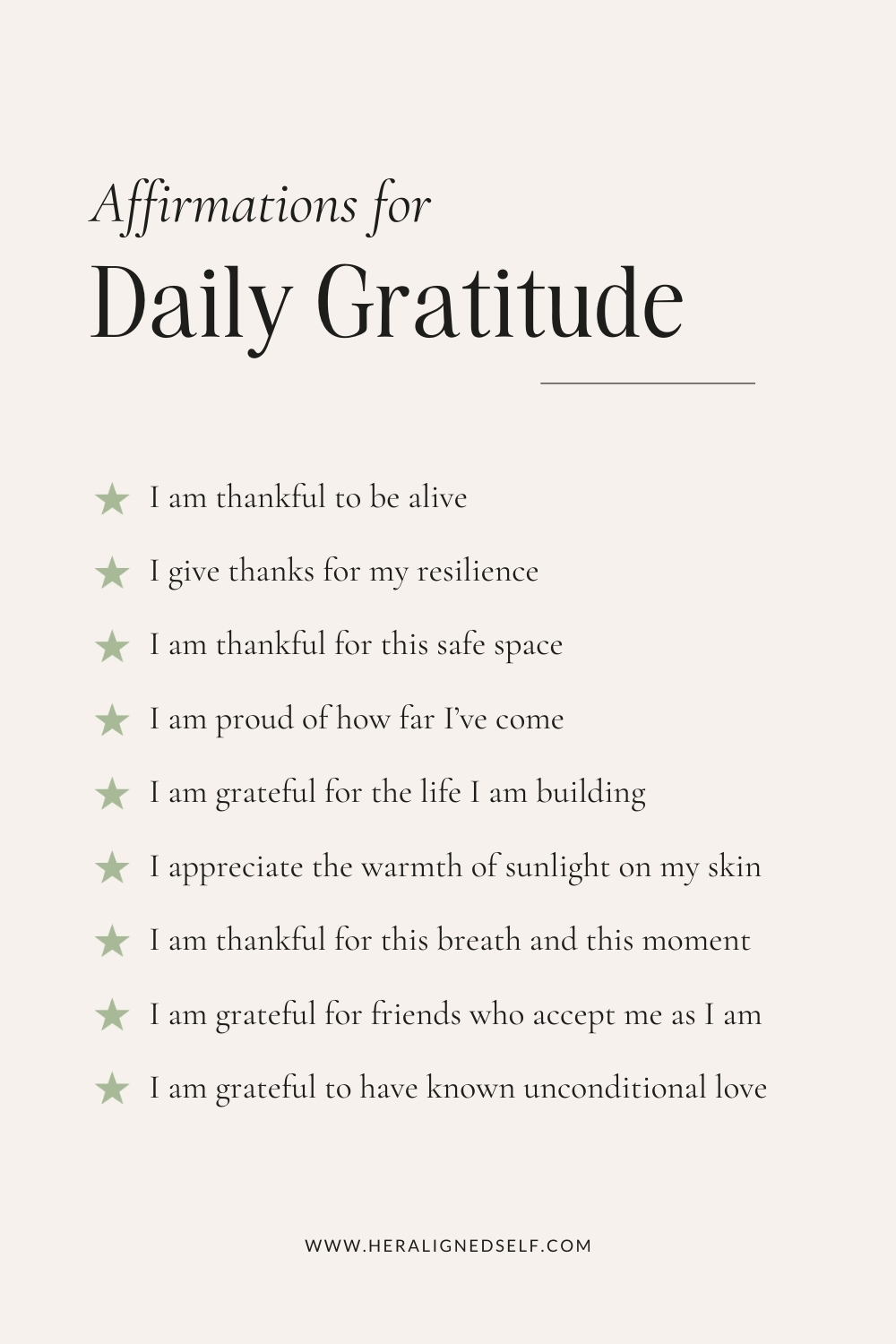
Credit: heralignedself.com
Table: Examples – Affirmation Vs. Gratitude Statements
Here are examples to highlight the difference:
| Situation | Affirmation | Gratitude |
|---|---|---|
| Job interview | I am prepared and confident. | I am grateful for this opportunity. |
| Relationship challenge | I am patient and open to understanding. | I am thankful for my partner’s support. |
| Health goal | I am committed to healthy choices. | I appreciate my body and its abilities. |
| Facing stress | I can handle this challenge calmly. | I am grateful for my coping skills. |
| Learning something new | I am capable of mastering new skills. | I am thankful for the chance to learn. |
Benefits Of Affirmation
Affirmation can help in several ways:
- Boosts self-confidence: Regular positive statements can change how you see yourself.
- Reduces negative self-talk: Helps you catch and replace negative thoughts.
- Improves motivation: Keeps your goals and strengths in your mind.
- Supports mental health: Can reduce feelings of stress and anxiety.
Data point: Studies suggest that people who use affirmations before stressful tasks perform better and feel less anxious.
Benefits Of Gratitude
Gratitude brings many rewards:
- Increases happiness: Grateful people report higher satisfaction with life.
- Improves relationships: Saying thanks or appreciating others strengthens bonds.
- Promotes better sleep: Ending your day with gratitude helps your mind relax.
- Reduces negative emotions: Less envy, anger, and regret.
Data point: Research shows that gratitude practices can lead to a 10% increase in happiness and a 23% decrease in stress levels.
Which Practice Is Best For You?
There is no single answer. Both affirmation and gratitude offer unique benefits. Try both for a week:
- In the morning, say or write one affirmation.
- In the evening, note one thing you are grateful for.
After a week, notice any changes in your mood, actions, or thoughts. Adjust your routine based on what feels most helpful.
Non-obvious insight: Some people find gratitude easier when they feel down, while affirmation works better when they are ready to push for change. Listen to your feelings and use the practice that fits your needs in the moment.
Combining Affirmation And Gratitude: A Simple Routine
Here’s a practical routine you can try:
- Start your day: Choose an affirmation related to a goal or quality you want to build.
- Throughout the day: Pause to notice small things you appreciate.
- End your day: Write down or reflect on one thing you are grateful for.
- Once a week: Review your affirmations and gratitude notes. Notice patterns or changes in your thinking.
This routine is simple but powerful. It combines hope for the future with joy in the present.
Table: How Affirmation And Gratitude Affect Your Brain
Explore the impact of these practices:
| Practice | Brain Area Activated | Main Effect |
|---|---|---|
| Affirmation | Prefrontal cortex | Self-control, planning, positive self-image |
| Gratitude | Anterior cingulate cortex | Empathy, social connection, happiness |
Final Thoughts
Affirmation and gratitude are simple but powerful tools for building a better mindset and a happier life. Affirmation helps you grow and reach new goals, while gratitude helps you find joy in the present. Their true power comes when you use both together—one for hope, one for peace.
Remember, small daily actions make a big difference. Start with what feels easiest, stay consistent, and adjust as you learn what works for you. In time, you’ll see how these practices can change not just your thoughts, but your whole life.
Frequently Asked Questions
What Is The Main Difference Between Affirmation And Gratitude?
The main difference is that affirmation focuses on building or creating a new belief or quality for the future, while gratitude centers on appreciating what you already have in the present.
Can I Use Affirmation And Gratitude At The Same Time?
Yes. Using both together can be even more powerful. Affirmation helps you work toward your goals, while gratitude helps you enjoy your current life.
How Long Does It Take To See Results From Affirmation Or Gratitude Practices?
Most people notice small changes in mood or thinking within a few weeks of regular practice. Consistency is more important than speed.
What If I Don’t Feel Grateful Or Positive When I Practice?
It’s normal not to feel a big change at first. Start small and focus on simple things. Over time, your feelings often catch up with your actions.
Are There Any Risks Or Downsides To These Practices?
Both affirmation and gratitude are safe for most people. However, if you struggle with deep sadness or negative thoughts that don’t improve, it’s important to seek support from a mental health professional.
By understanding the difference between affirmation and gratitude, you can choose the right practice for your needs, feel more positive each day, and enjoy a richer, more satisfying life.

Credit: littleyellowstarteaches.com
