

What is Positive Affirmations for Success: Unlock Your Potential
What Is Positive Affirmations For Success
Positive affirmations have become popular in self-improvement and personal growth. Many people use them every day to boost motivation, reduce stress, and reach their goals. But what exactly are positive affirmations for success? Are they just feel-good phrases, or is there real science behind them?
Let’s dive deep and discover how positive affirmations work, why they matter, and how you can use them to unlock your best self.
Success means different things to different people. For some, it is about career achievement. For others, it’s about confidence, relationships, or health. Positive affirmations are simple statements that help you focus your mind on what you want to achieve. They are not magic words, but they can shape your thinking and behavior in powerful ways.
With the right approach, affirmations can turn doubts into determination and fear into action.
This article will explain the concept of positive affirmations for success, how they work, and how to create your own. You’ll learn proven strategies, discover common mistakes, and see how affirmations fit into real-life success stories. Whether you’re a student, a professional, or simply someone who wants to grow, you’ll find practical advice and insights to help you use affirmations for lasting results.
Understanding Positive Affirmations
Positive affirmations are short, empowering phrases you repeat to yourself to build a confident mindset. The purpose is to help you believe in your abilities and focus on positive outcomes. For example, saying “I am capable of achieving my goals” every morning can make you more confident and ready to take action.
How Affirmations Work
Our brains respond to repeated thoughts. When you repeat positive affirmations, you train your mind to focus on possibilities instead of problems. This process is called self-suggestion. It is like planting seeds—each time you say an affirmation, you help it grow stronger in your mind.
Research shows that positive self-talk can change the way you see yourself. It can improve your performance, reduce anxiety, and increase motivation. For example, studies found that athletes who used affirmations performed better under pressure. Another study showed that people who used affirmations before stressful tasks felt less nervous.
Why Are Affirmations Powerful?
Affirmations are more than just words. They help you:
- Challenge negative beliefs: Replace doubts with confidence.
- Focus on goals: Remind yourself of what you want to achieve.
- Reduce stress: Calm your mind and body.
- Boost motivation: Encourage yourself to keep going.
The key is consistency. Affirmations work best when you repeat them regularly and believe in what you say.
The Science Behind Positive Affirmations
Many people wonder if affirmations are just wishful thinking. But there is science behind how they affect your mind and behavior.
Brain Response To Affirmations
When you use positive affirmations, your brain activates areas linked to reward and motivation. Studies using MRI scans show that affirmations light up the ventromedial prefrontal cortex, which is connected to self-esteem and confidence.
This part of the brain helps you process positive information about yourself. When you repeat affirmations, it becomes easier to accept new possibilities and take positive actions.
Evidence From Psychology
Psychologists have studied self-affirmation theory for decades. This theory suggests that people can maintain their self-worth by focusing on positive values and beliefs. For example, if you say “I am resourceful and can handle challenges,” you are less likely to feel defeated by setbacks.
Research found that self-affirmation can:
- Reduce stress in students before exams.
- Help people recover faster from failures.
- Improve health choices, such as eating better or exercising more.
Real-life Examples
Consider a young professional facing a difficult presentation. Repeating “I am prepared and confident” can lower anxiety and increase performance. Or think of a student worried about exams. Saying “I can learn and succeed” helps them focus on studying instead of worrying.
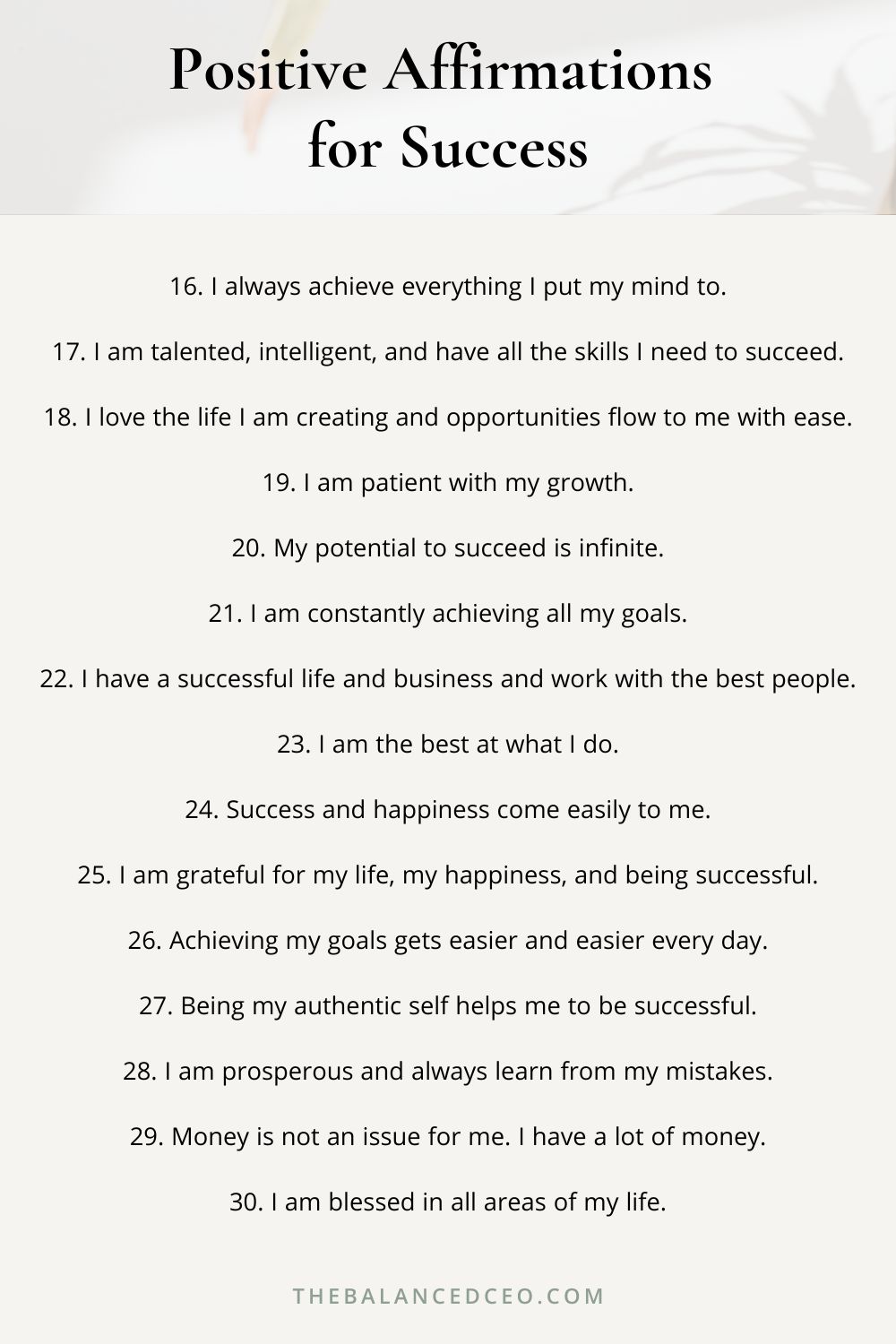
Credit: thebalancedceo.com
How Positive Affirmations Drive Success
Positive affirmations are not just about feeling good—they drive real results in many areas of life. Let’s explore how they support success.
Building Confidence
Affirmations help you believe in your abilities. Confidence is key for success, whether in school, work, or personal goals. When you say “I am capable,” you start to act like it. This leads to better decisions and more opportunities.
Enhancing Performance
Athletes, leaders, and students use affirmations to boost performance. Repeating “I am focused and ready” before a big event can sharpen your mind and reduce distractions. Many top performers use affirmations to prepare mentally.
Overcoming Obstacles
Everyone faces setbacks. Positive affirmations help you stay strong and keep moving forward. Instead of thinking “I can’t do this,” you say “I will find a way. ” This shift turns challenges into learning experiences.
Goal Setting And Achievement
Affirmations make your goals clear and remind you to take action. Saying “I am making progress every day” keeps you motivated. This helps you stay on track and celebrate small wins along the way.
Creating Effective Positive Affirmations
Not all affirmations are equal. Some work better than others. Here is how to create affirmations that truly help you succeed.
Key Elements Of Powerful Affirmations
- Be specific: Use clear language. Instead of “I am successful,” try “I am improving my skills every day.”
- Use present tense: Speak as if it’s already happening. For example, “I am confident” not “I will be confident.”
- Keep it positive: Focus on what you want, not what you don’t want. Say “I am calm” instead of “I am not stressed.”
- Make it personal: Tailor affirmations to your own goals and values.
Examples Of Success Affirmations
- “I am organized and ready to achieve my goals.”
- “I am open to new opportunities.”
- “I handle challenges with strength and patience.”
- “I believe in my ability to succeed.”
- “I am making progress every day.”
Common Mistakes To Avoid
- Using vague phrases: “I am good” is not clear enough.
- Focusing on negatives: “I am not afraid” still reminds you of fear.
- Overusing unrealistic affirmations: If you don’t believe it, it won’t help.
Practical Tips
- Write your affirmations down.
- Repeat them daily, preferably in the morning.
- Say them out loud for greater impact.
- Visualize the outcome as you say each affirmation.

Credit: www.thegoodbody.com
Integrating Affirmations Into Your Daily Routine
Affirmations work best when they become a habit. Here are practical ways to include them in your daily life.
Morning Rituals
Start your day with affirmations. It sets a positive tone and prepares you for challenges. You can say them while brushing your teeth or before breakfast.
Journaling
Write your affirmations in a notebook. This helps you reflect and track progress. Some people write the same affirmation every day, while others add new ones as goals change.
Visual Reminders
Place sticky notes with affirmations on your mirror, desk, or fridge. Seeing them often keeps your mind focused on success.
Meditation And Mindfulness
Combine affirmations with deep breathing or meditation. This makes them more powerful and helps you stay calm.
Before Important Tasks
Use affirmations before meetings, exams, or events. It reduces anxiety and boosts confidence.
Measuring The Impact Of Affirmations
To know if affirmations are working, you need to measure progress. Here’s how to do it effectively.
Tracking Progress
Keep a journal of your affirmations and note changes in mood, behavior, or performance. After a week or month, review your entries to see if you feel more confident or motivated.
Setting Goals
Pair affirmations with clear goals. For example, “I am improving my sales skills” goes with a goal to make more sales calls. Track your results to see improvement.
Feedback From Others
Ask friends or colleagues if they notice changes in your attitude or performance. Sometimes others see progress before you do.
Data Table: Affirmation Effectiveness
Below is a comparison of results from people who used affirmations versus those who did not.
| Group | Confidence Increase | Performance Improvement | Stress Reduction |
|---|---|---|---|
| Used Affirmations | +35% | +28% | -20% |
| No Affirmations | +8% | +5% | -5% |
The data shows that affirmations can significantly improve confidence and performance, while also reducing stress.
Comparing Affirmations With Other Success Strategies
Positive affirmations are one tool for success. Let’s see how they compare to other methods.
Table: Success Strategies Comparison
| Strategy | Main Benefit | Time Required | Best Use |
|---|---|---|---|
| Positive Affirmations | Boosts mindset and motivation | 1-5 minutes daily | Building confidence |
| Goal Setting | Clarifies direction | 10-30 minutes weekly | Planning and tracking progress |
| Visualization | Strengthens focus | 5-10 minutes daily | Preparing for big events |
| Time Management | Increases productivity | Ongoing | Organizing tasks |
Affirmations are quick and easy to use. They work well with other strategies like goal setting and visualization.
Real Success Stories Using Positive Affirmations
Positive affirmations have helped many people achieve their dreams. Here are some real-life examples.
Career Growth
A young manager felt nervous about leading a team. She started repeating “I am a strong and respected leader” every day. After a few weeks, her confidence grew. She spoke more clearly in meetings and her team responded well. She soon got promoted.
Academic Success
A college student struggled with exams and self-doubt. He began using “I am prepared and capable” before study sessions. His grades improved, and he felt less stressed during tests.
Personal Development
An entrepreneur faced several failures. He used “I learn from every experience and grow stronger” as a daily affirmation. This helped him stay positive and try new ideas. Eventually, his business succeeded.
Health And Fitness
A person wanted to lose weight but felt discouraged. She used “I am committed to healthy choices” every morning. Over time, she made better food decisions and exercised more. The affirmation helped her stay motivated.

Credit: www.swagmagic.com
Why Affirmations Sometimes Fail
Not everyone gets results from affirmations. Here’s why they might fail, and how to fix it.
Lack Of Belief
If you don’t believe your affirmations, they won’t help. Your mind resists phrases that feel fake. Start with small, believable statements and build up over time.
Inconsistency
Saying affirmations once or twice is not enough. You need to repeat them daily for weeks or months. Consistency builds new habits and beliefs.
Ignoring Action
Affirmations alone won’t bring success. You must pair them with real action. For example, saying “I am a successful writer” is good—but you must also write every day.
Negative Environment
If you’re surrounded by negative people or stress, affirmations are harder to maintain. Try to limit negativity and find supportive friends or mentors.
Data Table: Common Affirmation Mistakes
| Mistake | Effect | Solution |
|---|---|---|
| Unrealistic statements | Reduces belief | Start with achievable affirmations |
| Irregular practice | Weakens impact | Repeat daily |
| No action taken | Limits results | Combine with real steps |
| Negative environment | Creates doubt | Find support |
Understanding these mistakes helps you use affirmations more effectively.
Advanced Techniques For Affirmation Success
Once you master basic affirmations, you can try advanced methods to increase their power.
Visualization
Imagine yourself achieving your goal as you say your affirmation. For example, picture yourself speaking confidently in a meeting while saying “I am a strong communicator. ” This links words and images in your mind, making the affirmation more real.
Emotional Engagement
Feel the emotion behind the words. If your affirmation is “I am proud of my progress,” try to really feel pride as you say it. This makes the statement more powerful.
Combining Affirmations
Use multiple affirmations together. For example, combine “I am organized” and “I am persistent” to build both skills. But keep the list short—focus on 3–5 affirmations at a time.
Affirmations During Challenges
Use affirmations when facing difficulties. For example, before a stressful meeting, repeat “I am calm and prepared. ” This helps you stay centered and confident.
Tracking Results
Set a reminder to review your progress every month. Adjust your affirmations as your goals change.
Positive Affirmations For Success In Different Areas
Affirmations work in many parts of life. Here are examples for various goals.
Career And Work
- “I am a valuable member of my team.”
- “I manage my time efficiently.”
- “I am ready for new challenges.”
Education
- “I am focused and motivated to learn.”
- “I understand new concepts easily.”
- “I am confident during exams.”
Personal Relationships
- “I communicate clearly and kindly.”
- “I build strong, positive connections.”
- “I am open to understanding others.”
Health And Wellness
- “I make healthy choices every day.”
- “I am strong and energetic.”
- “I listen to my body’s needs.”
Financial Success
- “I use my resources wisely.”
- “I am attracting new opportunities.”
- “I am building financial stability.”
Tips For Beginners Using Positive Affirmations
If you’re new to affirmations, start simple. Here are practical tips to help you succeed.
- Choose realistic affirmations: Pick statements you can believe.
- Repeat daily: Make it a habit.
- Write them down: Keeps you focused.
- Say them aloud: Increases impact.
- Visualize the outcome: Makes it feel real.
- Pair with action: Take steps toward your goal.
- Track your progress: Notice changes in confidence and behavior.
Two insights beginners often miss:
- Combining affirmations with gratitude: Saying “I am grateful for my skills” boosts positivity.
- Using affirmations during setbacks: Instead of stopping, use affirmations to stay strong and learn.
Frequently Asked Questions
What Are Positive Affirmations For Success?
Positive affirmations for success are short, empowering statements that you repeat to yourself to build confidence and focus on achieving your goals. They help you challenge negative beliefs and encourage positive actions.
How Often Should I Use Affirmations?
For best results, use affirmations every day. Many people repeat them in the morning and before important tasks. Consistency is key—make it part of your daily routine.
Do Affirmations Really Work?
Yes, studies show that affirmations can improve confidence, motivation, and performance. They are most effective when paired with real action and consistent practice. Results vary depending on belief and effort.
Can I Use Affirmations For Any Goal?
Affirmations can help in many areas—career, education, relationships, health, and finances. Just make sure your statements are specific, positive, and believable.
Where Can I Learn More About Affirmations?
You can find more information and research on positive affirmations at Wikipedia. It explains the history, science, and practical uses of affirmations.
Positive affirmations for success are a powerful tool for anyone who wants to grow and achieve more. They are simple, easy to use, and backed by science. By repeating positive statements and pairing them with real action, you can shape your mindset, overcome challenges, and reach your goals.
Start today—your success is closer than you think.
