

What Does an Affirmation Mean? Unlocking the Power of Positive Words
What Does An Affirmation Mean
Every day, people look for ways to feel better about themselves or tackle challenges with more confidence. One simple tool many use is the affirmation. You may have seen them in books, heard them in meditations, or noticed them on social media. But what does an affirmation mean? Is it just positive thinking, or is there something deeper behind this popular practice?
Understanding affirmations can help you use them in your own life. They are more than just repeating nice words. When used correctly, affirmations can shape the way you see yourself, improve your mood, and even change your habits. This article explores what affirmations are, how they work, where they come from, and how you can use them for real results.
We will also look at scientific studies, common mistakes, and tips for making affirmations work, even if you are new to this idea.
The Meaning Of Affirmation
At its core, an affirmation is a simple statement you say or write, usually about yourself, in a positive way. The goal is to encourage your mind to focus on your strengths, values, or goals. Some people call them “positive affirmations” because they are meant to build you up, not bring you down.
Affirmations can be spoken aloud, written down, or repeated silently. For example, saying “I am confident” or “I can handle challenges” are common forms. The main idea is to use positive language that helps you believe in your abilities.
But affirmations are more than just wishful thinking. When used with intention and repetition, they can change the way you think, feel, and act. They help replace negative self-talk—like “I can’t do this” or “I’m not good enough”—with words that support your growth and well-being.
The Origins And History Of Affirmations
Affirmations may seem like a modern trend, but the idea is actually very old. Cultures around the world have used positive statements, chants, or prayers for thousands of years to inspire hope, confidence, or healing.
Ancient Roots
- In ancient Egypt, people used incantations to protect themselves or ask for good fortune.
- In Hindu and Buddhist traditions, mantras are repeated to focus the mind and invite positive change.
- Early Christian practices often included scripture recitation to build faith and resilience.
These historical examples show that repeating positive words has long been seen as a way to shape beliefs and actions.
Modern Development
In the last century, psychologists and self-help authors began to study and popularize affirmations. The rise of the self-help movement made affirmations part of daily routines for millions. Books, seminars, and now social media have made affirmations widely available and easy to use.
Today, you can find affirmations for almost any purpose, from confidence and health to success and relationships.
How Affirmations Work
It’s easy to wonder if saying nice things to yourself really does anything. But science shows that affirmations can make a real difference. Here’s how they work:
The Power Of Repetition
Your brain is always learning from what you tell it. When you repeat a message often, your mind starts to accept it as true. This is called neuroplasticity—the brain’s ability to change and adapt. By practicing affirmations, you help your brain build new, positive thought patterns.
Replacing Negative Self-talk
Everyone has an inner voice. Sometimes it’s helpful, but often it’s negative or self-critical. Affirmations give you a way to challenge and replace these negative thoughts. For example, instead of thinking “I always fail,” you can use “I learn and grow from every experience.
”
Supporting Positive Habits
Affirmations can also help you build better habits. When you repeat statements like “I make healthy choices” or “I am focused at work,” you remind yourself to act in line with your goals.
Boosting Mood And Motivation
Research has found that affirmations can reduce stress, improve confidence, and even help you perform better in difficult situations. They do not solve every problem, but they can lift your mood and motivate you to take action.
Example: The “self-affirmation Theory”
A key idea from psychology is the self-affirmation theory. This theory suggests that people want to see themselves as good, capable, and moral. When that view is threatened (like after making a mistake), affirmations can protect self-worth and help you cope better.
Types Of Affirmations
There are many kinds of affirmations, each with a different focus. Here are some common types:
- Self-Esteem Affirmations: “I am worthy of love and respect.”
- Health Affirmations: “I take care of my body every day.”
- Success Affirmations: “I am capable of reaching my goals.”
- Relationship Affirmations: “I attract positive and loving people.”
- Healing Affirmations: “Every day, I grow stronger and healthier.”
- Stress-Reduction Affirmations: “I am calm and at peace.”
You can create your own, or use ones shared by others. The key is to make them personal and meaningful to you.
How To Write And Use Effective Affirmations
Not all affirmations are equally helpful. The way you write and use them matters. Here’s how to get the most from this practice:
1. Use Present Tense
Say your affirmation as if it is already true. For example, “I am confident” instead of “I will be confident. ” This helps your mind believe the statement now.
2. Keep It Positive
Focus on what you want, not what you don’t want. Instead of “I am not afraid,” try “I am brave. ”
3. Make It Personal
Use “I” statements. Affirmations should be about you and your journey.
4. Be Specific
General statements are less powerful. Make your affirmation clear and detailed. For example, “I manage my time well and finish my work on schedule. ”
5. Repeat Regularly
Consistency is key. Say your affirmation every day, several times if possible—morning, night, or whenever you need a boost.
6. Feel The Words
Don’t just repeat the words. Try to feel the emotion behind them. Visualize the statement as true in your life.
7. Write Them Down
Writing affirmations in a journal or on sticky notes can make them more real and memorable.
8. Place Reminders
Put affirmations where you’ll see them—on your mirror, phone, or computer.
9. Combine With Action
Affirmations work best when you also take steps toward your goals. Saying “I am healthy” is more powerful if you also eat well and exercise.
10. Adjust As Needed
If an affirmation doesn’t feel right, change it. Make sure it matches your values and goals.
Common Mistakes And How To Avoid Them
Many beginners struggle with affirmations. Here are some pitfalls to watch out for, and how to avoid them:
- Making Unrealistic Statements: If your affirmation feels too far from your current reality, it may not help. For example, “I am a millionaire” can feel fake if you’re struggling financially. Start with believable steps, like “I am learning to manage my money well.”
- Using Negative Words: Avoid “not,” “don’t,” or “never.” The mind tends to skip these and focus on the action. For example, “I am not stressed” may reinforce stress. Use “I am calm” instead.
- Being Inconsistent: Repeating an affirmation once or twice is not enough. Practice daily to build a new habit.
- Ignoring Emotions: If you don’t feel the words, your mind may reject them. Try to connect emotionally to your affirmations, or adjust them until they feel right.
- Skipping Action: Affirmations alone cannot change your life. Use them as a tool to support real action.
Scientific Evidence: Do Affirmations Really Work?
Some people doubt that affirmations have any real effect. However, several studies show that affirmations can change how people think and behave.
Research Findings
A study published in the journal Social Cognitive and Affective Neuroscience found that self-affirmation activates the brain’s reward centers. This suggests that affirmations can make you feel good and more open to positive changes.
Another study in the journal Psychological Science showed that students who used affirmations before exams had lower stress and better grades, especially if they felt nervous about the subject.
A review of multiple studies found that affirmations can help people:
- Reduce stress
- Improve self-control
- Cope with setbacks
- Build resilience
However, affirmations are most effective when they are realistic and combined with action.
When Affirmations Might Not Work
Affirmations are not magic. If you repeat something you do not believe at all, your mind may reject it. For example, saying “I am completely happy” when you are deeply sad may not help. In such cases, it’s better to use gentler affirmations, like “I am learning to care for myself.
”
Examples Of Powerful Affirmations
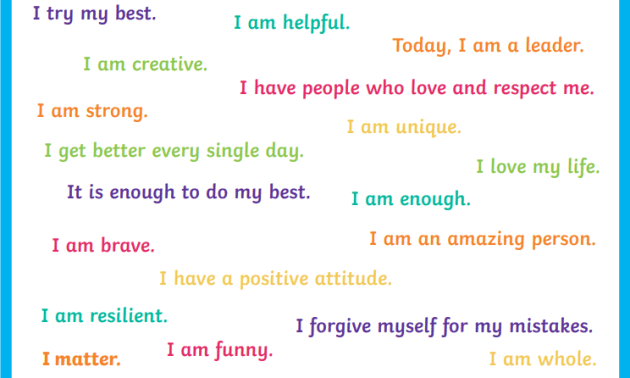
Here are some sample affirmations you can try or adapt:
- “I trust myself to make good choices.”
- “I am enough, just as I am.”
- “I am open to new opportunities.”
- “I forgive myself and learn from my mistakes.”
- “I am grateful for the good things in my life.”
- “I have the power to change my story.”
You can also create your own based on your personal goals.
The Difference Between Affirmations And Other Positive Practices
It’s easy to confuse affirmations with similar ideas, like mantras, goals, or positive thinking. Here’s a quick comparison:
| Practice | Main Purpose | How It's Used |
|---|---|---|
| Affirmation | Build confidence and change beliefs | Repeat positive statements to yourself |
| Mantra | Focus the mind, often in meditation | Repeat a sound or phrase, often without specific meaning |
| Goal | Achieve a specific result | Set a clear target and make a plan to reach it |
| Positive Thinking | Maintain an optimistic attitude | Look for the good in every situation |
Affirmations are unique because they focus on changing your self-talk and beliefs, not just your actions or thoughts.
Examples From Real Life
Many famous people and successful individuals use affirmations as part of their daily routine. For example:
- Athletes often say affirmations to boost performance. “I am strong and ready” is common before competitions.
- Business leaders use affirmations to stay focused and confident under pressure.
- Therapists sometimes suggest affirmations to clients who struggle with anxiety or low self-esteem.
A non-obvious insight is that even people who seem confident on the outside often use affirmations to maintain that confidence. They do not rely on affirmations alone, but use them as one tool among many.
The Science Of Words: Why Language Matters
Words are powerful. They shape how you see yourself and how others see you. Psychologists call this the “language of self-talk.” Changing your words can help change your life.
Brain Studies On Self-talk
Brain scans have shown that repeating positive statements activates areas related to reward and motivation. This can help you feel more hopeful and take action. For example, people who use positive self-talk recover faster from setbacks.
The Subconscious Effect
Affirmations work partly by reaching your subconscious mind. Over time, your beliefs and actions start to match the words you repeat. This is why consistency is so important.
Comparison: Affirmations Vs. Negative Self-talk
It’s easy to fall into negative self-talk, but this can hold you back. Here’s a look at the difference:
| Negative Self-Talk | Affirmation | Likely Result |
|---|---|---|
| “I can’t do this.” | “I am learning and improving.” | Increased effort and resilience |
| “I always fail.” | “I succeed by trying my best.” | More motivation to try again |
| “Nobody likes me.” | “I am worthy of good relationships.” | Better social confidence |
Replacing negative self-talk with affirmations can lead to better outcomes, especially over time.
How To Make Affirmations A Daily Habit
Building a habit takes time, but here are some simple ways to make affirmations part of your daily life:
- Morning Routine: Start your day by saying an affirmation in front of the mirror.
- Affirmation Journal: Write down three affirmations every night before bed.
- Reminders: Set a daily reminder on your phone to repeat an affirmation.
- Visual Cues: Place sticky notes with affirmations where you’ll see them (fridge, desk, car).
- Combine with Meditation: Use affirmations during quiet time or meditation for deeper impact.
- Affirmation Buddy: Share affirmations with a friend and support each other.
Consistency is more important than perfection. Even a few minutes each day can bring results.
Non-obvious Insights About Affirmations
Most people think affirmations are only about feeling good. But there are deeper benefits:
- Building Self-Compassion: Affirmations can help you forgive yourself and accept your imperfections.
- Reducing Impostor Syndrome: Repeating “I deserve my success” can help you feel more confident at work or school.
- Supporting Mental Health: Affirmations are sometimes used in therapy to manage anxiety, depression, and low self-worth.
- Shaping Identity: Over time, the statements you repeat can help define who you are and what you believe.
One surprising insight is that affirmations are most powerful when they match your values. For example, if you value honesty, an affirmation like “I am true to myself” is more effective than “I am rich and famous,” even if the second sounds more impressive.

Credit: 7esl.com
Cultural Differences In Affirmations
Different cultures have unique ways of using affirmations and positive statements.
- In some cultures, group affirmations or community chants are common, helping people feel connected.
- Others focus on humility, so affirmations are more private or gentle.
- Some languages have special words for self-encouragement that don’t exist in English.
Understanding your cultural background can help you create affirmations that feel comfortable and authentic.
Myths And Misconceptions About Affirmations
There are many myths about affirmations. Here’s the truth behind some common misconceptions:
- Myth: Affirmations are just lying to yourself.
- Fact: Affirmations focus on what you want to grow, not on denying reality. They help you move toward your best self.
- Myth: Affirmations work instantly.
- Fact: It takes time and repetition for affirmations to change your thinking.
- Myth: Only positive people use affirmations.
- Fact: Anyone can use affirmations, even if you are struggling with doubts or negative thoughts.
- Myth: Affirmations can replace medical treatment.
- Fact: Affirmations are a helpful tool, but not a substitute for professional help when needed.
- Myth: They must be long or complex.
- Fact: Simple, short affirmations are often the most powerful.
Measuring The Impact Of Affirmations
It’s helpful to track how affirmations affect you. Here are ways to measure their impact:
- Mood Tracker: Rate your mood each day before and after saying affirmations.
- Journaling: Write about your experiences, thoughts, and any changes you notice.
- Goal Progress: Track your goals to see if affirmations help you stay focused and motivated.
- Feedback from Others: Sometimes friends or family notice changes in your confidence or attitude before you do.
If you do not see results right away, do not give up. It can take weeks or even months to notice big changes.
Real-world Data: How Many People Use Affirmations?
Surveys and polls show that affirmations are popular worldwide. According to a recent report from the National Institutes of Health, about 40% of adults in some countries use self-help tools like affirmations at least once a week. Many find them helpful for managing stress, improving focus, or building self-confidence.
In workplaces, more companies are encouraging employees to use affirmations as part of mental health and wellness programs. Schools and sports teams also use affirmations to help students and athletes perform their best.
Credit: www.twinkl.es
Practical Tips For Getting Started
If you are new to affirmations, try these steps:
- Pick One Area: Choose one thing you want to improve (confidence, health, focus, etc. ).
- Write Three Affirmations: Make them positive, present tense, and personal.
- Say Them Daily: Repeat them out loud or silently every day.
- Notice Your Feelings: Pay attention to how the words make you feel.
- Adjust as Needed: Change your affirmations until they feel right.
- Stay Patient: Give yourself time to see results.
You do not need to believe your affirmation 100% at first. It’s normal to feel doubtful. With practice, your confidence will grow.
Beyond The Basics: Advanced Affirmation Techniques
Once you are comfortable with basic affirmations, you can try more advanced methods:
- Visualization: Imagine yourself living your affirmation. If you say, “I am calm under pressure,” picture yourself staying calm in a stressful situation.
- Affirmation Meditation: Spend five minutes focusing on your affirmation while breathing deeply.
- Audio Recordings: Record yourself saying affirmations and play them back while you relax or commute.
- Affirmation Cards: Create cards with your favorite affirmations and shuffle through them each day for inspiration.
Some people even use technology, like affirmation apps or smart speakers, to get reminders and support.

Credit: r1learning.com
Combining Affirmations With Other Self-help Tools
Affirmations are just one part of a healthy mindset. They work well with other tools, such as:
- Gratitude Journals: Writing what you are thankful for can boost the power of your affirmations.
- Goal-Setting: Use affirmations to support your action plans.
- Mindfulness Practices: Mindfulness helps you notice your thoughts and replace negative self-talk.
- Therapy or Coaching: Professionals can help you create affirmations that fit your needs.
For more on how positive psychology supports mental health, check out this resource from the Positive Psychology website.
Frequently Asked Questions
What Is The Difference Between An Affirmation And A Mantra?
An affirmation is a positive statement about yourself, like “I am confident.” A mantra is often a word or sound used in meditation to focus the mind, such as “Om.” Affirmations are about building self-belief, while mantras are for concentration and calming the mind.
How Long Does It Take For Affirmations To Work?
It depends on the person and the situation. Some people notice changes in a few days, while for others, it may take weeks or months. The key is to be consistent and patient.
Can Affirmations Help With Anxiety Or Depression?
Affirmations can support mental health by reducing negative self-talk and building self-esteem. However, they are not a replacement for professional help if you have serious anxiety or depression.
Should I Say My Affirmations Out Loud Or Silently?
Both ways can work. Saying them out loud can make them feel more real, but repeating them silently is also effective. Do what feels comfortable for you.
What If I Don’t Believe My Affirmation At First?
It is normal to feel doubtful in the beginning. Start with affirmations that feel believable and build up over time. As you repeat them, your belief and confidence will grow.
Affirmations are a simple, powerful tool you can use anywhere and anytime. By understanding what an affirmation means and practicing them with intention, you can shape your thoughts, build confidence, and move closer to your goals.
