

What are the Benefits of Self Affirmation: Unlock Your Potential
Self-affirmation is a practice that often sounds simple but holds remarkable power. Saying positive things to yourself, writing affirming statements, or even quietly repeating your strengths in your mind—these are all forms of self-affirmation. For many, self-affirmation is more than just positive thinking.
It is a tool that helps people build confidence, reduce stress, and improve their lives in many ways.
You may wonder if repeating good things about yourself really makes a difference. The answer is yes, and science supports it. Self-affirmation can reshape how you see yourself, influence your emotions, and even affect your body’s response to challenges. But the benefits go much further than what most people realize.
Let’s explore the wide-ranging benefits of self-affirmation, learn how it works, see what research says, and discover why it’s not just for those with low self-esteem. Along the way, you’ll find examples, practical tips, and insights that can help you make the most of self-affirmation in your own life.
Understanding Self-affirmation
Before looking at the benefits, it’s important to understand what self-affirmation really means. Self-affirmation is the act of recognizing and stating your values, strengths, or positive qualities. It’s not about ignoring problems or pretending to be perfect. Instead, it is about reminding yourself of your worth and abilities, especially when you face stress or criticism.
Some common forms of self-affirmation include:
- Writing down things you like about yourself
- Speaking positive statements out loud
- Repeating a helpful phrase in your mind
- Listing your achievements or personal values
Self-affirmation can be used by anyone, in any situation. It’s not limited to one culture, age group, or personality type. In fact, even people who seem confident on the outside can benefit from self-affirmation on the inside.
How Self-affirmation Works In The Brain
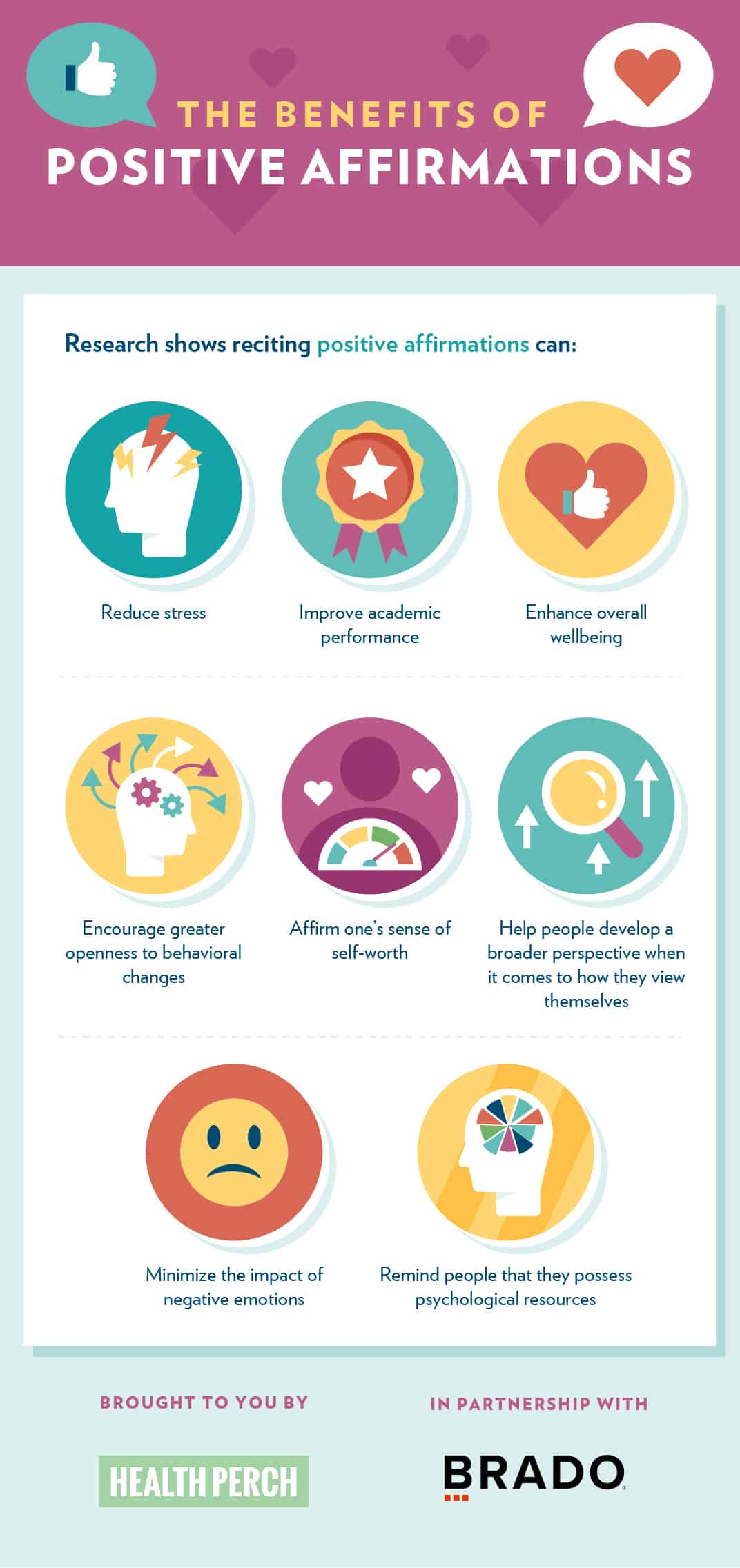
Self-affirmation is more than a feel-good exercise. Scientific studies show that it can change how your brain reacts to stress, feedback, and challenges. When you affirm your values or strengths, your brain activity shifts. Areas linked to self-reflection and reward become more active, while stress centers become less reactive.
Research using brain scans has found:
- Self-affirmation increases activity in the ventromedial prefrontal cortex, an area linked to self-worth and positive feelings.
- It can lower the body’s stress response, measured by lower cortisol levels.
- People who practice self-affirmation handle negative feedback with less defensiveness.
This means that self-affirmation can actually help you stay calm and open-minded when facing criticism or setbacks.
Credit: ecogreenlove.com
Emotional Benefits Of Self-affirmation
1. Boosts Self-esteem
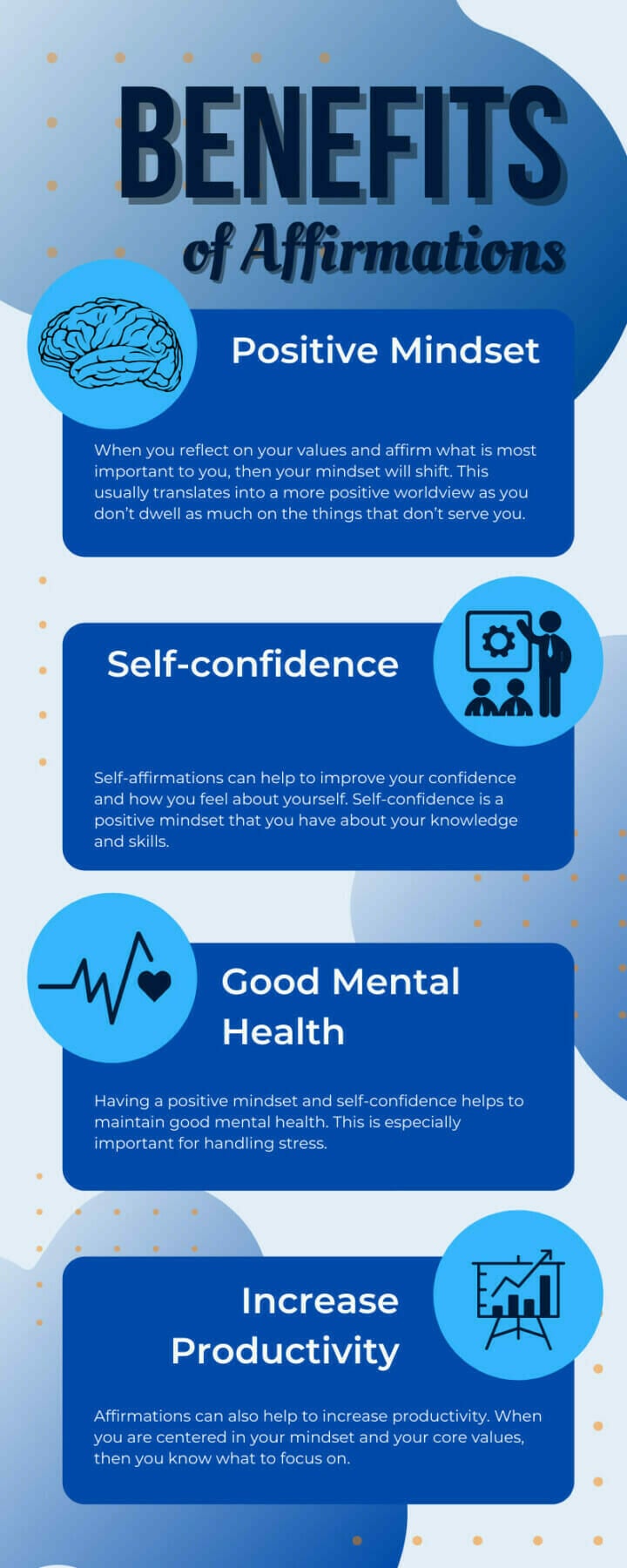
One of the most well-known benefits is a boost in self-esteem. When you regularly remind yourself of your strengths, you start to believe in them. This feeling of self-worth isn’t just temporary; over time, it becomes part of your identity.
Higher self-esteem brings several advantages:
- Greater confidence in social situations
- Improved motivation to pursue goals
- Better resilience against negative comments
For example, someone who uses self-affirmation before a job interview may feel less nervous and more prepared to show their best side.
2. Reduces Stress And Anxiety
Stress and anxiety are common challenges in modern life. Self-affirmation offers a simple way to manage these feelings. By focusing on your values or strengths, you shift your mind away from fear and toward a sense of control.
Studies show that people who use self-affirmation:
- Report lower stress levels during exams or public speaking
- Experience less anxiety in high-pressure situations
- Recover more quickly from stressful events
This happens because self-affirmation reminds you of what matters to you, even when things feel overwhelming.
3. Helps Regulate Emotions
Emotional control, or emotional regulation, is a skill that helps you respond to situations calmly instead of reacting with anger, fear, or sadness. Self-affirmation strengthens this skill by giving you a steady base of self-worth.
When you feel secure about who you are, it’s easier to:
- Stay calm during arguments
- Avoid overreacting to criticism
- See problems as challenges, not threats
This benefit is especially important for people who deal with frequent emotional ups and downs.
Cognitive Benefits Of Self-affirmation
4. Increases Openness To Feedback
Many people find it hard to accept feedback, especially if it is negative. Self-affirmation helps you see feedback as useful information, not a personal attack.
After practicing self-affirmation, people are more likely to:
- Listen to advice without feeling defensive
- Reflect on areas for improvement
- Use feedback to grow, rather than ignore it
This is valuable for both personal growth and professional development.
5. Improves Problem-solving
Self-affirmation doesn’t just make you feel good; it makes you think better. When you feel secure in yourself, your mind is more flexible and creative.
People who use self-affirmation:
- Solve problems faster under pressure
- Come up with more creative solutions
- Feel less blocked by stress or fear of failure
For example, students who affirm their values before a test tend to perform better, even if they are nervous.
6. Supports Learning And Memory
Positive self-talk can also benefit your ability to learn and remember. When you are less stressed, your brain can focus and absorb information more easily.
Some research suggests:
- Self-affirmation improves working memory during stress
- It helps students remember more facts during exams
- It can protect against the mental effects of stereotype threat
This means self-affirmation is not only for emotional health but also for academic and work performance.

Credit: sparkinterestwithsara.com
Physical And Health Benefits
7. Lowers Physical Stress Responses
Self-affirmation affects not only the mind but also the body. When you affirm your strengths, your body’s physical reaction to stress can decrease.
Examples include:
- Lower blood pressure during stressful events
- Decreased heart rate under pressure
- Reduced levels of the stress hormone cortisol
This effect has been measured in laboratory studies where people perform stressful tasks after practicing self-affirmation.
8. Supports Healthy Habits
Self-affirmation can help you stick to good habits, such as exercising, eating well, or taking medication. When you feel good about yourself, you are more likely to care for your body.
Key findings:
- People who affirm their values are more likely to follow health advice
- It can increase motivation to make positive lifestyle changes
- Self-affirmation may reduce unhealthy coping habits, like smoking or overeating
For example, someone who affirms their value of health before starting a diet is more likely to stick with their plan.
9. Helps Manage Chronic Illness
Chronic health problems can cause stress, sadness, or hopelessness. Self-affirmation gives patients a mental tool to handle these feelings.
Benefits for people with chronic illness include:
- Improved mood and energy levels
- Better ability to follow treatment plans
- Less fear about their illness
Doctors sometimes use self-affirmation techniques to support patients with long-term conditions.
Social And Relationship Benefits
10. Improves Communication
Good communication depends on confidence and openness. Self-affirmation helps you express yourself clearly and listen to others with less fear of being judged.
This leads to:
- More honest conversations with friends, family, or coworkers
- Greater ability to share your feelings and needs
- Better conflict resolution skills
Even in difficult discussions, self-affirmation can help you stay calm and respectful.
11. Strengthens Relationships
Feeling secure in yourself is the foundation of strong relationships. When you practice self-affirmation, you are less likely to become jealous, defensive, or overly dependent.
Benefits for relationships:
- More trust and cooperation
- Fewer arguments caused by insecurity
- Greater ability to support others
People who use self-affirmation often report happier and more stable relationships.
12. Reduces Social Anxiety
Many people feel nervous in social situations. Self-affirmation can calm these fears by reminding you of your strengths and values.
After practicing self-affirmation, people often:
- Feel less shy at parties or meetings
- Worry less about what others think
- Are more willing to speak up or make new friends
This is especially helpful for those who fear being judged or rejected.
Credit: professionalleadershipinstitute.com
Self-affirmation And Resilience
13. Builds Inner Strength
Resilience means bouncing back from setbacks. Self-affirmation gives you a strong sense of self-worth, making it easier to recover after failure or disappointment.
Key points:
- You remember your abilities even after mistakes
- Failures feel less permanent or personal
- You are more willing to try again
For example, athletes often use self-affirmation to recover from losses and prepare for their next challenge.
14. Protects Against Stereotype Threat
Stereotype threat happens when people worry about being judged based on a negative stereotype about their group (such as gender, age, or background). This worry can hurt performance, but self-affirmation helps.
Research shows:
- Self-affirmation reduces the negative effects of stereotypes on test scores
- It helps people focus on their abilities, not the stereotypes
This benefit is important in schools, workplaces, and society as a whole.
15. Encourages Growth Mindset
A growth mindset means believing you can improve with effort. Self-affirmation supports this belief by focusing on your strengths and potential.
As a result:
- You see challenges as chances to learn
- You are more open to trying new things
- Failure feels like a step toward success, not the end
This approach is linked to higher achievement and well-being.
Self-affirmation In The Workplace
16. Enhances Job Performance
Self-affirmation can improve how you perform at work. When you feel good about yourself, you are more motivated, focused, and productive.
Benefits include:
- More willingness to take on new tasks
- Better teamwork and cooperation
- Higher satisfaction with your job
Employers sometimes teach self-affirmation as part of workplace wellness programs.
17. Reduces Burnout
Burnout is a state of emotional exhaustion caused by too much stress at work. Self-affirmation can protect against burnout by helping you manage stress and remember your value.
How it helps:
- Reminds you to take breaks and care for yourself
- Reduces negative self-talk during tough times
- Increases your ability to cope with work pressures
People who use self-affirmation are less likely to feel overwhelmed or hopeless.
18. Supports Leadership Skills
Good leaders need confidence, empathy, and the ability to handle criticism. Self-affirmation builds these qualities.
For leaders, self-affirmation leads to:
- Clearer decision-making
- Better listening and support for team members
- More confidence in guiding others
Leaders who practice self-affirmation often inspire greater trust from their teams.
Myths And Misunderstandings About Self-affirmation
Even though self-affirmation is simple, it’s not always well understood. Here are some common myths:
- It’s just positive thinking. Self-affirmation is deeper than repeating happy thoughts. It’s about connecting with your real values and strengths.
- It’s only for people with low self-esteem. Everyone can benefit, even those who already feel confident.
- It ignores problems. Self-affirmation does not mean ignoring real issues. It helps you face them with more strength.
- It’s selfish or arrogant. Affirming your strengths is healthy, not prideful. It allows you to help others better.
Understanding these points can help you use self-affirmation correctly and avoid common mistakes.
Practical Tips For Effective Self-affirmation
Practicing self-affirmation is easy, but doing it well makes a big difference. Here are some practical tips:
- Be specific. Affirm clear strengths or values (“I am a caring friend,” not just “I am great”).
- Write it down. Keeping a self-affirmation journal increases the effect.
- Speak it out loud. Hearing your own voice can make the words feel more real.
- Use personal values. Affirm what matters most to you, such as honesty, creativity, or kindness.
- Repeat regularly. Practice self-affirmation daily, not just when you feel down.
- Stay honest. Affirmations must be believable to you. Don’t pretend to be perfect.
- Visualize success. Imagine situations where you use your strengths successfully.
Example Self-affirmations
- “I am capable of handling challenges.”
- “My kindness makes a difference.”
- “I am proud of my hard work.”
- “I am learning and growing every day.”
The most powerful affirmations are personal and meaningful to you.
Self-affirmation Vs. Positive Thinking
It’s easy to confuse self-affirmation with positive thinking, but there are important differences. The table below compares the two:
| Aspect | Self-Affirmation | Positive Thinking |
|---|---|---|
| Focus | Personal values and strengths | General optimism and hope |
| Purpose | Build inner security and resilience | Encourage a positive outlook |
| Best Use | Facing stress, criticism, or challenge | Everyday mood improvement |
| Depth | Often involves reflection and writing | Often uses simple phrases |
Self-affirmation is more focused and personal, while positive thinking is broader and sometimes less connected to real strengths.
When Self-affirmation May Not Work
While self-affirmation helps many people, it’s not a magic solution for every problem. Here are situations where it may not help:
- If affirmations feel fake, they can increase negative feelings.
- People with very low self-worth may need support from a counselor first.
- Repeating affirmations about things you don’t believe can create stress.
A practical approach is to start with affirmations that feel true and build up as your confidence grows.
Scientific Evidence And Real-life Examples
Many studies have tested the power of self-affirmation. Some key findings:
- Students who used self-affirmation had better grades and less stress during exams.
- Patients with chronic illnesses who practiced self-affirmation followed treatment plans more closely.
- Employees who affirmed their strengths handled workplace criticism better and showed less burnout.
One non-obvious insight: even a single session of self-affirmation can have a measurable effect on stress and performance. Another: self-affirmation often works best when you are facing a challenge, not just when you feel good.
For more details, you can explore research summarized on Wikipedia.
Simple Self-affirmation Exercises
If you want to try self-affirmation, here are two easy exercises:
Values Affirmation
- List your top five values (e.g., family, learning, creativity).
- Choose one value.
- Write a short paragraph about why this value is important to you and how you live it.
Strengths Reminder
- Think of a recent challenge you faced.
- List three strengths you used to handle it.
- Write or say out loud how these strengths helped you.
Practicing these exercises a few times a week can make a big difference over time.
Common Mistakes And How To Avoid Them
Beginners often make these mistakes:
- Being too vague: General statements like “I am good” are less effective than “I am a supportive friend.”
- Forgetting regular practice: Self-affirmation works best when it becomes a habit.
- Ignoring real problems: Use self-affirmation to support action, not replace it.
To avoid these, focus on specific, meaningful, and honest affirmations, and combine them with real efforts to grow.
Self-affirmation In Different Cultures
Self-affirmation is used around the world, but cultural differences affect how people practice it.
- In some cultures, group values (like family or community) are most important to affirm.
- In others, personal achievements or independence are key.
The most effective self-affirmation reflects what matters most in your culture and your life.
Here’s a comparison of self-affirmation focus across different cultures:
| Culture Type | Common Affirmation Focus | Example Statement |
|---|---|---|
| Individualist | Personal strengths, achievements | "I am a creative problem-solver." |
| Collectivist | Family, community, group harmony | "I am a loyal family member." |
| Mixed | Both individual and group values | "I am a hard worker who helps my team." |
Adapting self-affirmation to your background makes it more effective and meaningful.
Long-term Impact Of Self-affirmation
Regular self-affirmation practice can lead to long-term changes in your life:
- Higher self-esteem becomes more stable
- Stress is easier to manage, even in new situations
- Relationships become deeper and more supportive
- Health habits and self-care improve
- You become more open to learning, feedback, and growth
It’s not an overnight change, but small daily affirmations add up to big results over time.
Frequently Asked Questions
What Is The Difference Between Self-affirmation And Self-praise?
Self-affirmation is about recognizing your true values and strengths, often in specific situations. Self-praise is usually about giving yourself compliments, sometimes without a deeper meaning. Self-affirmation focuses on what matters most to you and helps you grow, while self-praise can sometimes be shallow or less effective.
How Often Should I Practice Self-affirmation?
You can practice self-affirmation every day, but even a few times a week can help. The key is consistency. Some people write affirmations each morning, while others repeat them before challenging events. Find a routine that fits your life.
Can Self-affirmation Help With Mental Health Problems?
Self-affirmation can support good mental health by reducing stress, anxiety, and negative thinking. However, it is not a replacement for professional help if you have serious mental health concerns. It works best as part of a healthy routine that may include therapy, exercise, or social support.
Is It Possible To Overdo Self-affirmation?
While self-affirmation is usually safe, repeating affirmations that you do not believe can cause stress or frustration. It’s important to keep your statements honest and realistic. If you feel worse, try more believable or smaller affirmations.
Can Children And Teenagers Benefit From Self-affirmation?
Yes, self-affirmation helps people of all ages. For children and teens, it can build confidence, reduce school stress, and protect against negative peer pressure. Parents and teachers can encourage kids to write or say positive things about themselves, especially before tests or social events.
Self-affirmation is a simple but powerful practice that benefits the mind, body, and relationships. With regular use, it can help you build confidence, handle stress, and create lasting positive change in your life. Whether you are facing a challenge or simply want to feel better about yourself, self-affirmation is a tool you can use every day.
