

What are the Benefits of Affirmation: Unlock Positive Change
What Are The Benefits Of Affirmation
Daily life is full of challenges. People often face self-doubt, negative thoughts, and stress. In these moments, the right words can make a big difference. This is where affirmations come in. Affirmations are positive statements you say to yourself to encourage belief in your own abilities and value. Many people use them to help with motivation, confidence, and even mental health. But what exactly are the benefits of affirmation? Why do so many experts, athletes, and even therapists suggest using them?
This article will take you deep into the world of affirmations. You’ll discover not just the surface-level advantages, but also how affirmations actually work in your brain and daily life. You’ll learn practical ways to use them, see real examples, and find out how you can use affirmations for everything from career growth to improved relationships.
By the end, you’ll know if affirmations are right for you and how to get the most from them.
Understanding Affirmations
Before exploring the benefits, it’s important to understand what affirmations really are. An affirmation is a clear, positive statement that describes a goal, quality, or belief you want to develop. For example, saying “I am confident in my abilities” is an affirmation.
The idea is to repeat these statements regularly to train your mind to focus on the positive.
Many people think affirmations are just wishful thinking. But in fact, research shows that repeating positive statements can help shape your brain’s pathways. This process is called self-affirmation theory. When you repeat positive ideas, your brain starts to see them as possible, which can change your attitude and even your actions.
How Affirmations Work In The Brain
Affirmations are not magic. They do not instantly change your life, but they do affect how your brain works. When you repeat an affirmation, your brain activates certain neural pathways. Over time, these pathways become stronger. This is called neuroplasticity. Your brain is always changing, and affirmations help it change in a positive way.
For example, if you say “I am calm and in control” during a stressful day, your brain starts to connect the feeling of calmness with your daily experience. If you repeat this often, your stress response may become weaker over time.
This is one reason why many therapists and coaches recommend using affirmations to help manage anxiety, stress, and negative thoughts.
Studies using MRI scans show that positive self-affirmation can activate the reward centers of the brain. This means that, over time, you may start to feel happier and more motivated just from repeating positive statements. This effect is stronger when the affirmations are believable and fit your personal goals.
Emotional Benefits Of Affirmation
One of the biggest advantages of using affirmations is the positive effect they have on your emotions. Here are some ways affirmations help improve emotional health:
1. Reduces Negative Self-talk
Most people have an inner voice that sometimes focuses on mistakes or weaknesses. Affirmations help you shift this voice towards encouragement and support. For example, instead of thinking “I always fail,” you can train your mind to focus on “I am learning and improving every day.
”
2. Boosts Self-esteem
When you repeat positive statements about yourself, you begin to believe them. Over time, this can build self-worth and make you feel more confident.
3. Helps With Anxiety And Stress
Affirmations can calm your mind during stressful moments. By focusing on positive truths, you can reduce the power of anxious thoughts.
4. Improves Mood
Simple affirmations like “I am grateful for today” can brighten your day and help you notice the good things, even when life feels difficult.
5. Encourages Hope
When facing tough times, affirmations remind you that things can improve. This sense of hope can make it easier to keep trying, even when life is hard.
6. Supports Emotional Healing
If you’ve been through emotional pain or trauma, affirmations can help you rebuild trust in yourself and heal old wounds.
Cognitive Benefits Of Affirmation
Affirmations do not just affect feelings. They also improve thinking and decision-making. Here’s how:
1. Strengthens Focus
Repeating affirmations keeps your mind focused on what you want, not what you fear. For instance, if you aim to finish a project, saying “I am focused and productive” helps direct your mental energy to that goal.
2. Encourages Positive Thinking
Affirmations help your brain practice seeing the positive side of situations. This can make you more optimistic and open to new ideas.
3. Improves Problem-solving
When you believe in your abilities, you are more likely to try new solutions instead of giving up. Affirmations like “I can handle challenges” help you see problems as opportunities.
4. Builds Mental Resilience
Regular use of affirmations strengthens your ability to bounce back after setbacks. You become more determined and less likely to be discouraged by failure.
5. Supports Goal Setting
Affirmations clarify your goals and remind you of your priorities. This helps you make choices that match your true desires.
Physical Benefits Of Affirmation
You might be surprised to learn that affirmations can also affect your physical health. The mind and body are closely connected. Here’s how affirmations can make a difference:
1. Reduces Stress Hormones
When you are less stressed, your body produces fewer stress hormones like cortisol. Affirmations help you stay calm, which is good for your heart, immune system, and overall health.
2. Improves Sleep Quality
People who use affirmations before bed often sleep better. Calming statements like “I am relaxed and ready for rest” can help quiet the mind.
3. Boosts Immune System
Positive thinking has been linked to a stronger immune system. When you feel good emotionally, your body can fight illness better.
4. Encourages Healthy Habits
Affirmations can motivate you to make better choices, such as exercising, eating well, or quitting unhealthy habits. For example, “I care for my body with healthy foods” can remind you to choose nutritious meals.
5. Speeds Up Healing
Some studies show that patients who use positive affirmations recover faster after surgery or illness. Believing in your body’s ability to heal can support your recovery.
Social And Relationship Benefits
Affirmations are not just for individuals. They can improve your relationships with others, too.
1. Builds Confidence In Social Situations
If you feel shy or nervous in groups, affirmations like “I am comfortable meeting new people” can help you relax and connect better.
2. Improves Communication
Repeating statements such as “I listen with empathy” or “I express myself clearly” can lead to healthier conversations and less misunderstanding.
3. Promotes Compassion
Affirmations help you see the best in others. Statements like “I see good in those around me” encourage kindness and reduce conflict.
4. Strengthens Boundaries
If you struggle to say “no,” try affirmations like “I respect my limits. ” This helps you protect your energy and avoid burnout.
5. Deepens Trust
Positive affirmations about trust and honesty can help repair or strengthen relationships after conflict.
6. Encourages Forgiveness
Affirmations can help you let go of grudges. For example, “I choose to forgive and move forward” supports emotional healing.
Career And Academic Benefits
Affirmations are powerful tools for success at work or school. Here’s how they can help:
1. Boosts Motivation
Repeating “I am driven and energetic” can help you start your day with purpose and enthusiasm.
2. Enhances Performance
Many athletes and professionals use affirmations to prepare for big events. Statements like “I perform at my best” can improve focus and reduce nerves.
3. Supports Learning
If you’re studying, affirmations like “I understand new information easily” can build confidence and reduce anxiety about exams.
4. Encourages Persistence
When facing setbacks, affirmations remind you to keep going. “I learn from mistakes and keep improving” is helpful for any challenge.
5. Attracts Opportunities
Believing in your value can help you notice and act on new opportunities. Affirmations like “I am open to new possibilities” prepare your mind for growth.
6. Improves Leadership
Leaders often use affirmations to develop skills like patience, empathy, and decision-making.
Spiritual And Personal Growth Benefits
For many, affirmations are part of a spiritual or self-improvement journey. Here’s how they support growth:
1. Increases Mindfulness
Affirmations encourage you to be present and aware of your thoughts and actions.
2. Supports Meditation
Many people use affirmations as mantras during meditation. This deepens focus and relaxation.
3. Encourages Gratitude
Regularly saying “I am thankful for my life” helps you notice and appreciate your blessings.
4. Promotes Self-discovery
Writing or saying affirmations makes you think about what you truly want and value.
5. Builds Inner Peace
Affirmations like “I am at peace with myself” can reduce inner conflict and help you accept yourself as you are.
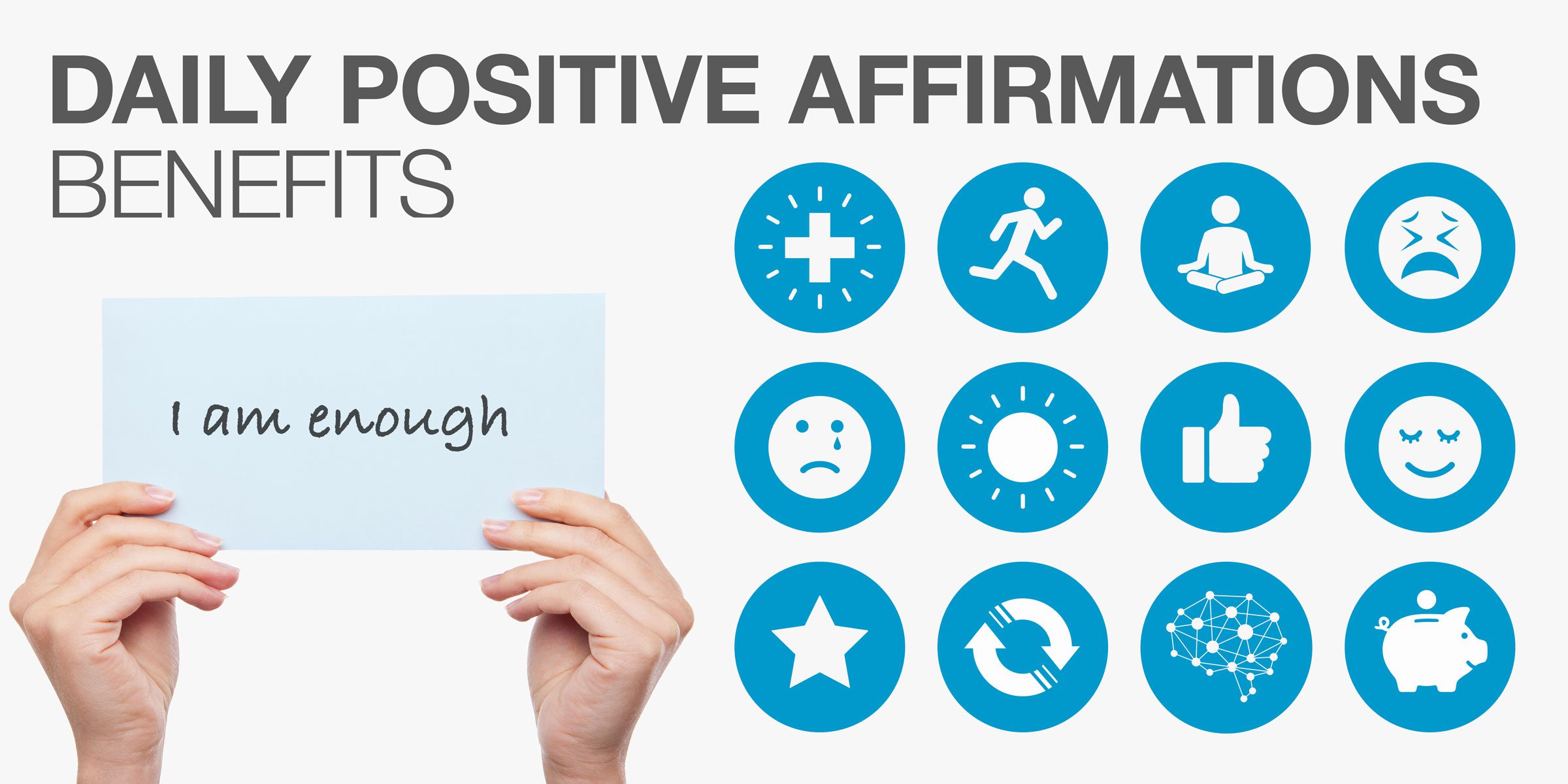
Credit: www.thegoodbody.com
Common Myths And Misunderstandings
Despite their popularity, some people doubt the power of affirmations. Here are a few common myths:
- Myth 1: Affirmations are just wishful thinking
In truth, affirmations work best when combined with action. They are a tool to guide your mindset, not a magic solution.
- Myth 2: You must believe affirmations from the start
Even if you don’t fully believe your affirmation at first, repetition can help your brain accept new ideas over time.
- Myth 3: Affirmations are only for positive people
Anyone can use affirmations, even if you struggle with negative thoughts. In fact, they can be most helpful when you feel low.
- Myth 4: Affirmations must be repeated all day
Quality is more important than quantity. A few focused minutes each day can be enough.
Examples Of Effective Affirmations
Not all affirmations are created equal. The best ones are specific, positive, and present tense. Here are some examples for different areas of life:
- Confidence: “I trust myself to make good decisions.”
- Stress: “I am calm, relaxed, and in control.”
- Success: “I am attracting opportunities for growth.”
- Health: “I nourish my body with care.”
- Relationships: “I communicate with kindness and honesty.”
- Learning: “I enjoy learning new things every day.”
Try writing your own affirmations that match your personal goals and values. This makes them more meaningful and powerful.
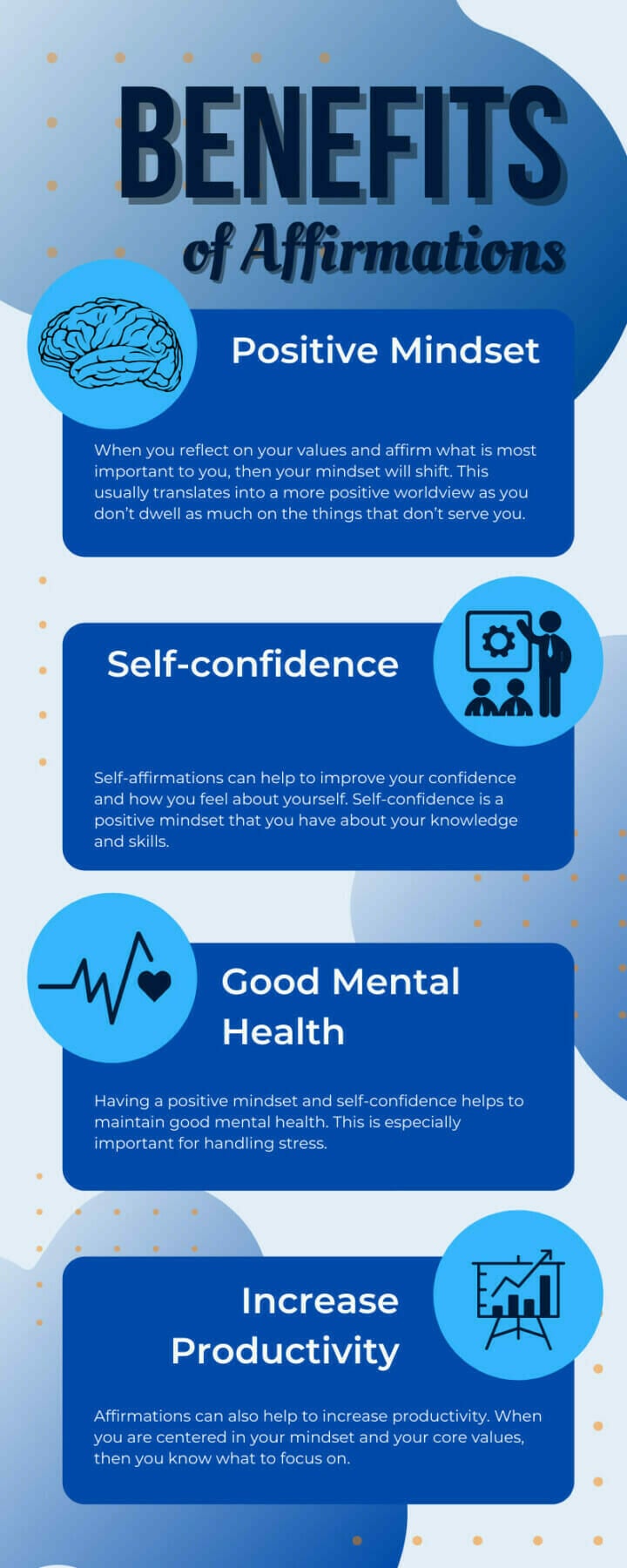
Credit: professionalleadershipinstitute.com
How To Use Affirmations Effectively
Simply repeating words is not enough. For the best results, follow these tips:
1. Be Consistent
Say your affirmations every day, ideally at the same time—like first thing in the morning or before sleep.
2. Speak With Emotion
Feel the words as you say them. The more you believe in what you’re saying, the stronger the effect.
3. Use Present Tense
Affirmations are most powerful when stated as if they’re already true: “I am confident,” not “I will be confident.”
4. Make Them Personal
Choose affirmations that fit your life and goals. Personal statements work better than generic ones.
5. Combine With Visualization
Picture yourself living out your affirmation. This helps your brain connect words with real experiences.
6. Write Them Down
Journaling or posting affirmations where you’ll see them often can reinforce their power.
7. Adjust As Needed
If an affirmation no longer feels right, change it. Your needs and goals may evolve.
Scientific Evidence Supporting Affirmations
Research in psychology and neuroscience backs up the benefits of affirmations. For example, studies show that self-affirmation can:
- Reduce stress and improve problem-solving
A study found that people who practiced self-affirmation performed better on stressful tasks.
- Increase activity in brain areas linked to self-worth and reward
MRI scans reveal that affirmations activate the brain’s ventromedial prefrontal cortex, which is related to positive self-processing.
- Support healthy behavior change
Affirmations have helped people quit smoking, lose weight, and stick to exercise plans.
- Improve academic performance
Students who used affirmations before tests showed less anxiety and higher grades.
For more details on the science behind affirmations, you can visit Wikipedia’s page on affirmations.
Real-life Success Stories
Many people have transformed their lives with affirmations. Here are a few examples:
- Athletes use affirmations to build confidence before big games. A swimmer might say “I am strong and fast in the water” before a race.
- Business leaders often repeat statements like “I am a successful leader” to help guide their company.
- Students use affirmations to overcome fear of exams, such as “I remember information easily and calmly.”
- People recovering from illness use affirmations to support healing, repeating “My body is healthy and strong.”
These stories are not just rare cases. With practice, anyone can experience positive changes.
Common Mistakes With Affirmations
Even though affirmations are simple, people often make mistakes that reduce their power:
1. Being Too Vague
Saying “I want to be happy” is less helpful than “I am finding joy in my daily life. ”
2. Using Negative Words
Affirmations should avoid negatives like “don’t” or “won’t. ” For example, say “I am healthy,” not “I don’t want to be sick. ”
3. Lack Of Consistency
Results take time. Skipping days or giving up too soon means you won’t see the full benefits.
4. Choosing Unbelievable Statements
If your affirmation feels impossible, your mind may reject it. Start with statements you can accept and build up over time.
5. Not Connecting Emotionally
Just saying words without feeling won’t create change. Try to connect with the meaning each time you repeat an affirmation.
Comparing Affirmations With Other Self-help Tools
People often wonder how affirmations stack up against other methods like meditation, journaling, or therapy. Here’s a comparison to help you understand:
| Method | Main Benefit | Time Needed | Best For |
|---|---|---|---|
| Affirmations | Positive mindset, motivation | 2-10 minutes daily | Self-belief, quick focus |
| Meditation | Calm, reduces stress | 10-30 minutes daily | Anxiety, relaxation |
| Journaling | Self-reflection, clarity | 10-20 minutes daily | Problem-solving, understanding feelings |
| Therapy | Professional support | Weekly sessions | Deep issues, mental health |
Affirmations are easy to add to any routine and can be used alongside other tools for even better results.
Table: Popular Affirmation Themes And Their Focus
To help you choose affirmations for your needs, here’s a quick look at popular themes:
| Theme | Example Affirmation | Focus Area |
|---|---|---|
| Self-Confidence | I am worthy and capable | Personal growth |
| Stress Relief | I am calm and relaxed | Mental health |
| Success | I attract positive results | Career, goals |
| Health | I care for my body | Physical well-being |
| Relationships | I am loving and kind | Social life |
Table: Affirmation Practice Vs. No Affirmation
Here’s a simple comparison of common life outcomes with and without using affirmations:
| Area | With Affirmations | Without Affirmations |
|---|---|---|
| Self-Esteem | Often higher | Unchanged or lower |
| Stress Levels | Often lower | Can stay high |
| Motivation | Regular boost | Inconsistent |
| Goal Achievement | More focus | Can lack clarity |
Two Non-obvious Insights About Affirmations
Many beginners miss these important points:
1. Affirmations Work Best When They Challenge, But Don’t Overwhelm:
If you choose an affirmation that is slightly beyond your current belief, it pushes you to grow without feeling fake. For example, instead of “I am a millionaire,” try “I am building wealth every day. ”
2. Link Affirmations To Actions:
Affirmations are most powerful when you back them up with small steps. For example, if your affirmation is “I am healthy,” take a short walk or drink water after you say it. This connects words to real changes.
Who Should Use Affirmations?
Affirmations are for everyone. You do not need to be spiritual, positive, or even confident to start. They are especially helpful if you want to:
- Overcome negative thinking
- Build self-confidence
- Achieve goals
- Manage stress or anxiety
- Heal from past hurts
- Develop new habits
If you are not sure where to start, try writing a few simple affirmations and saying them each day for a week. Notice how your thoughts and feelings begin to shift.
How To Start Your Own Affirmation Practice
Here is a simple plan:
- Decide what area of life you want to improve.
- Write 2-3 positive, present-tense statements that support this goal.
- Say them out loud each day, with feeling.
- Post them where you will see them—on your mirror, fridge, or phone.
- Notice changes in your thoughts, feelings, and actions.
If you miss a day, don’t worry. Just start again. Consistency is key, not perfection.
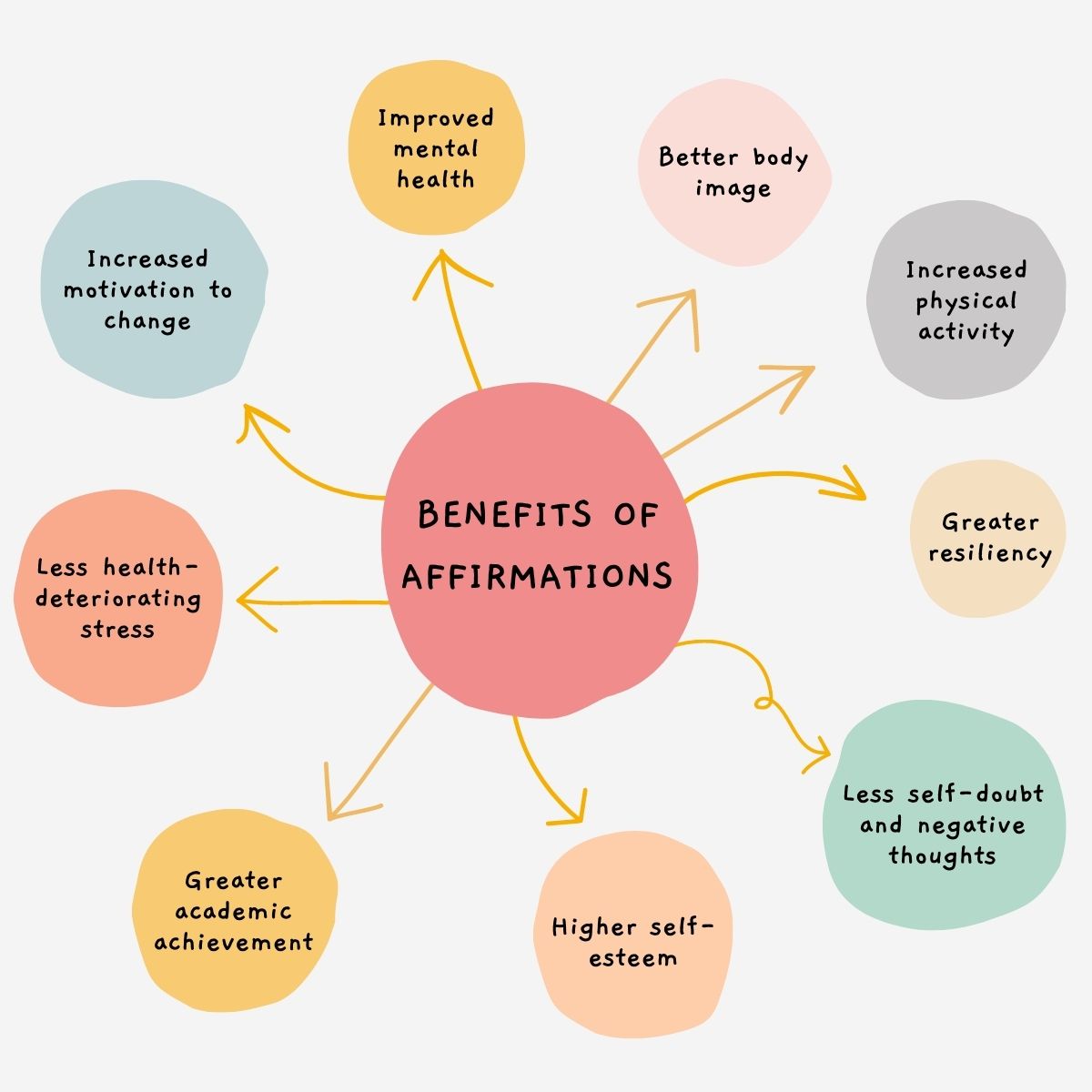
Credit: biteoutoflifenutrition.com
Frequently Asked Questions
What Are The Best Times To Use Affirmations?
The best times are often in the morning, to start your day with positivity, and at night, to end your day calmly. However, you can use affirmations whenever you feel stress or need motivation—during breaks, before meetings, or any quiet moment.
Can Affirmations Replace Therapy Or Medication?
No. Affirmations are a helpful tool, but they do not replace professional help for serious mental health issues. They work best as part of a larger self-care routine, alongside therapy, medication, or other treatments as needed.
How Long Does It Take To See Results From Affirmations?
Everyone is different. Some people notice changes in a few days, while for others it may take weeks or months. The key is regular, consistent practice, and connecting emotionally with your statements.
Do Affirmations Have To Be Said Out Loud?
Saying them out loud is powerful, but you can also write them, think them, or use them as phone reminders. The most important thing is focus and repetition.
What If I Don’t Believe My Affirmation At First?
It’s normal to feel strange or doubtful at first. Start with statements that are believable, and slowly build up to bigger goals. Over time, your brain will accept new ideas, especially if you back them up with small actions.
Affirmations are simple, but their effects are deep and lasting. Whether you want more confidence, less stress, or a fresh outlook, adding affirmations to your daily life can be a powerful step towards a better you.
