

What are the 7 Affirmations You Need for Daily Success
What Are The 7 Affirmations
Most people want to change their lives for the better. Sometimes, we feel stuck or negative thoughts block our progress. One powerful way to shift your mindset is through affirmations. These are positive statements you repeat to yourself. They help you believe in your abilities, change your attitude, and reach your goals. But what are the 7 affirmations people talk about? Why do they matter? And how can you use them to improve your life?
This guide goes deep into the meaning and use of the 7 affirmations. You will learn what each one means, why it works, and how to use it in daily life. You will also find practical tips, examples, and answers to common questions.
Whether you are new to affirmations or want to make them more powerful, this article will give you everything you need to know.
Understanding Affirmations
Before looking at the 7 affirmations, it is important to understand what affirmations really are. An affirmation is a positive sentence that you say to yourself. The idea is simple: by repeating positive thoughts, you train your mind to believe them. Over time, this can help you change your habits, thoughts, and even the results you see in your life.
Science supports the power of positive self-talk. Studies show that people who use affirmations have lower stress levels, better performance, and more motivation. One key reason is that our brains often believe what we tell them—good or bad. By choosing your words carefully, you can guide your mind in a better direction.
Yet, not every affirmation works the same for everyone. The most effective affirmations are simple, clear, and feel personal to you. The 7 affirmations covered in this article are popular because they touch on core areas of life that most people want to improve.
The 7 Affirmations: What They Are And Why They Matter
Let’s explore each of the 7 affirmations. For each one, you will find:
- The main idea behind the affirmation
- Why it is important
- How to use it
- Practical examples
- Common mistakes and how to avoid them
1. I Am Enough
The first affirmation, I am enough, is one of the most powerful. Many people struggle with feelings of not being good enough. This negative belief can start early in life and affect relationships, work, and even health.
By repeating “I am enough,” you remind yourself that you are valuable just as you are. You do not have to prove anything to anyone. This does not mean you stop trying to improve. Instead, you accept yourself now, while working toward your goals.
Why It Matters
When you believe you are enough, you can:
- Handle setbacks without losing confidence
- Set healthy boundaries
- Feel less stress about pleasing others
Research shows that self-acceptance is linked to higher happiness and better mental health.
How To Use It
Say “I am enough” every morning before you start your day. You can also write it on a note and put it where you will see it. For example, on your bathroom mirror or your phone screen.
Example
Imagine you made a mistake at work. Instead of thinking “I always mess up,” you pause, breathe, and say, “I am enough. ” This helps you stay calm and fix the mistake, instead of feeling shame.
Common Mistakes
Some people say this affirmation but do not believe it. If this happens, try adding “I am learning to believe I am enough. ” Over time, your mind will adjust.
2. I Am Strong
The second affirmation, I am strong, is about inner strength. It does not only mean physical strength. It means you can handle tough situations, recover from problems, and keep moving forward.
Why It Matters
Life brings challenges to everyone. When you feel weak or powerless, you are more likely to give up. By reminding yourself that you are strong, you build resilience—the ability to bounce back.
People who use this affirmation often:
- Take action instead of avoiding problems
- Try new things even if they are afraid
- Support others in tough times
How To Use It
Use this affirmation when facing a hard day or a big challenge. Say it out loud, “I am strong,” or write it in your journal. Some people use it during exercise, while others use it before a big meeting.
Example
If you are nervous about giving a presentation, repeat “I am strong” before you start. This will calm your nerves and help you focus.
Common Mistakes
Avoid using this only when you feel good. It is most helpful when you feel uncertain or afraid.
3. I Am Loved
Everyone wants to feel loved and accepted. Sometimes, we forget that love is not just about what we get from others—it is also about how we treat ourselves.
The affirmation “I am loved” helps you remember that you are worthy of love, from yourself and others.
Why It Matters
Feeling loved is important for mental and emotional health. Studies show that people who feel loved have:
- Lower anxiety and depression
- Better relationships
- Stronger self-esteem
How To Use It
Say “I am loved” when you feel lonely or insecure. You can also use it as a reminder to treat yourself kindly.
Example
After a disagreement with a friend, you might feel alone. Instead of blaming yourself, pause and say, “I am loved. ” This simple act can stop negative thoughts.
Common Mistakes
Some people expect love only from others. Remember, self-love is the foundation. You can love yourself even if others do not show it.
4. I Am Capable
The fourth affirmation, I am capable, focuses on your abilities. Sometimes, we doubt ourselves or think we cannot do something. This affirmation reminds you that you have what it takes.
Why It Matters
Believing in your abilities increases your chances of success. People who feel capable are:
- More likely to try new things
- Better at solving problems
- Less likely to give up
This is supported by research on self-efficacy, which means believing you can succeed.
How To Use It
Whenever you face a new task or a challenge, repeat “I am capable. ” You can say it in your mind or out loud.
Example
You want to learn a new skill, like coding or speaking in public. At first, it feels hard. Remind yourself, “I am capable,” and take small steps forward.
Common Mistakes
Avoid comparing yourself to others. This affirmation is about your own growth, not being better than someone else.
5. I Am Grateful
Gratitude is a powerful tool for happiness. The affirmation I am grateful helps you focus on what you have, not what you lack.
Why It Matters
People who practice gratitude are:
- More optimistic
- Less stressed
- Healthier and sleep better
Gratitude shifts your mind from problems to possibilities. It helps you notice the good in life, even during hard times.
How To Use It
Each day, think of three things you are grateful for and say, “I am grateful. ” You can write them down or say them before you go to sleep.
Example
After a busy day, you feel tired. Instead of complaining, you think, “I am grateful for my family, my job, and my health. ”
Common Mistakes
Do not use gratitude to avoid real feelings. It is okay to feel sad or angry. Gratitude works best when you are honest about your emotions.
6. I Am Worthy
The affirmation I am worthy is about believing you deserve good things—love, success, respect, and happiness.
Why It Matters
Many people struggle with self-worth. They feel they must earn love or success. This belief can hold you back from reaching your full potential.
When you believe you are worthy, you:
- Set higher goals
- Accept kindness from others
- Take better care of yourself
How To Use It
Say “I am worthy” when you feel doubt or guilt. Use it before asking for help or pursuing a goal.
Example
You want a promotion at work but feel unsure. Remind yourself, “I am worthy of success,” and apply with confidence.
Common Mistakes
Some people fear that feeling worthy is selfish. In truth, self-worth helps you give more to others.
7. I Am Growing
The final affirmation, I am growing, is about progress. Life is a journey, and everyone is always learning.
Why It Matters
Growth is key to happiness and success. When you focus on growth, you:
- Learn from mistakes
- Try new things without fear
- Enjoy the process, not just the result
People with a growth mindset are more creative, resilient, and satisfied.
How To Use It
Use this affirmation when you face setbacks. Instead of feeling like a failure, say, “I am growing. ” This helps you see challenges as learning opportunities.
Example
You fail an exam or lose a job. Instead of giving up, you say, “I am growing,” and ask, “What can I learn from this? ”
Common Mistakes
Some people want to be perfect. Remember, growth means making mistakes and learning from them.
Using The 7 Affirmations In Daily Life
Knowing the 7 affirmations is just the start. The real power comes from using them every day. Here is how you can make affirmations work for you:
- Choose one or two affirmations to focus on each week.
- Say them out loud every morning and evening.
- Write them down in a journal or on sticky notes.
- Visualize what your life would look like if you believed these affirmations.
- Use them during stress—repeat your affirmation when facing a problem or fear.
Remember, affirmations are not magic. They work best when you also take action toward your goals.
Sample Daily Affirmation Routine
Here is an example of how you can use all 7 affirmations in a day:
- Morning: Say “I am enough,” “I am strong,” and “I am grateful.”
- Afternoon: Repeat “I am capable” and “I am growing” before a new task.
- Evening: Reflect on “I am loved” and “I am worthy” before sleep.
You can also create your own routine based on your needs.
Comparing The 7 Affirmations
Each affirmation has a unique focus. Some people wonder which one is most important. The answer depends on your current situation.
Here is a comparison of the main benefits of each affirmation:
| Affirmation | Main Benefit | When to Use |
|---|---|---|
| I am enough | Builds self-acceptance | When feeling not good enough |
| I am strong | Boosts resilience | During challenges |
| I am loved | Improves self-love | When feeling lonely |
| I am capable | Increases confidence | Before new tasks |
| I am grateful | Increases happiness | Daily reflection |
| I am worthy | Raises self-worth | When doubting yourself |
| I am growing | Encourages learning | After mistakes |
This shows that each affirmation serves a different purpose. You can use them all, or focus on the ones you need most.
Data: The Impact Of Affirmations
You might wonder: do affirmations really work? Research provides some answers.
| Study | Result | Population |
|---|---|---|
| Self-Affirmation and Stress | Lower stress levels in daily life | College students |
| Affirmations and Performance | Higher test scores after using affirmations | High school students |
| Affirmations and Health | Better self-care and faster recovery | Medical patients |
These studies show that affirmations are more than “feel good” phrases. They can change how you think and act. For a deeper look at the science, you can visit Wikipedia: Self-affirmation.
Common Mistakes When Using Affirmations
Even though affirmations are simple, some common mistakes can make them less effective:
- Saying them without feeling. If you just repeat words without emotion, your mind may not accept them.
- Choosing affirmations you do not believe. Pick statements that feel possible, even if they are a stretch.
- Expecting instant results. Affirmations take time. Change happens with daily practice.
- Ignoring action. Affirmations work best when you also take real steps toward your goals.
- Forcing positivity. It is okay to feel negative emotions. Affirmations are not about denying reality, but about guiding your focus.
One insight many people miss: affirmations work best when linked to real experiences. For example, after handling a tough situation, say “I am strong” to reinforce that feeling.
Another tip: combine affirmations with visualization. Imagine yourself living the truth of your affirmation. This makes it more powerful.

Credit: www.amazon.ca
How To Create Your Own Affirmations
While the 7 affirmations in this article are popular, you can also make your own. Here’s how:
- Use the present tense. Say “I am,” not “I will be.”
- Keep it positive. Focus on what you want, not what you don’t.
- Make it specific. Tailor it to your life. For example, “I am a confident speaker.”
- Keep it short. One sentence is enough.
- Make it believable. Choose something you can accept, even if it feels new.
Personalized affirmations can be even more effective, especially if you link them to your values and dreams.
Examples Of Affirmations In Real Life
Hearing how affirmations help real people can give you confidence to try them. Here are some examples:
- Maria was nervous about returning to work after having a baby. She used “I am capable” every morning. Over time, she felt more confident and took on new projects.
- James struggled with self-worth after a breakup. He started saying “I am enough” and “I am loved” each night. He noticed he felt less lonely and was kinder to himself.
- Ayesha wanted to improve her health but often gave up. She used “I am strong” and “I am growing” during workouts. She stuck to her routine and felt more motivated.
You do not need to be perfect or use affirmations all day. Even a few minutes can make a difference.
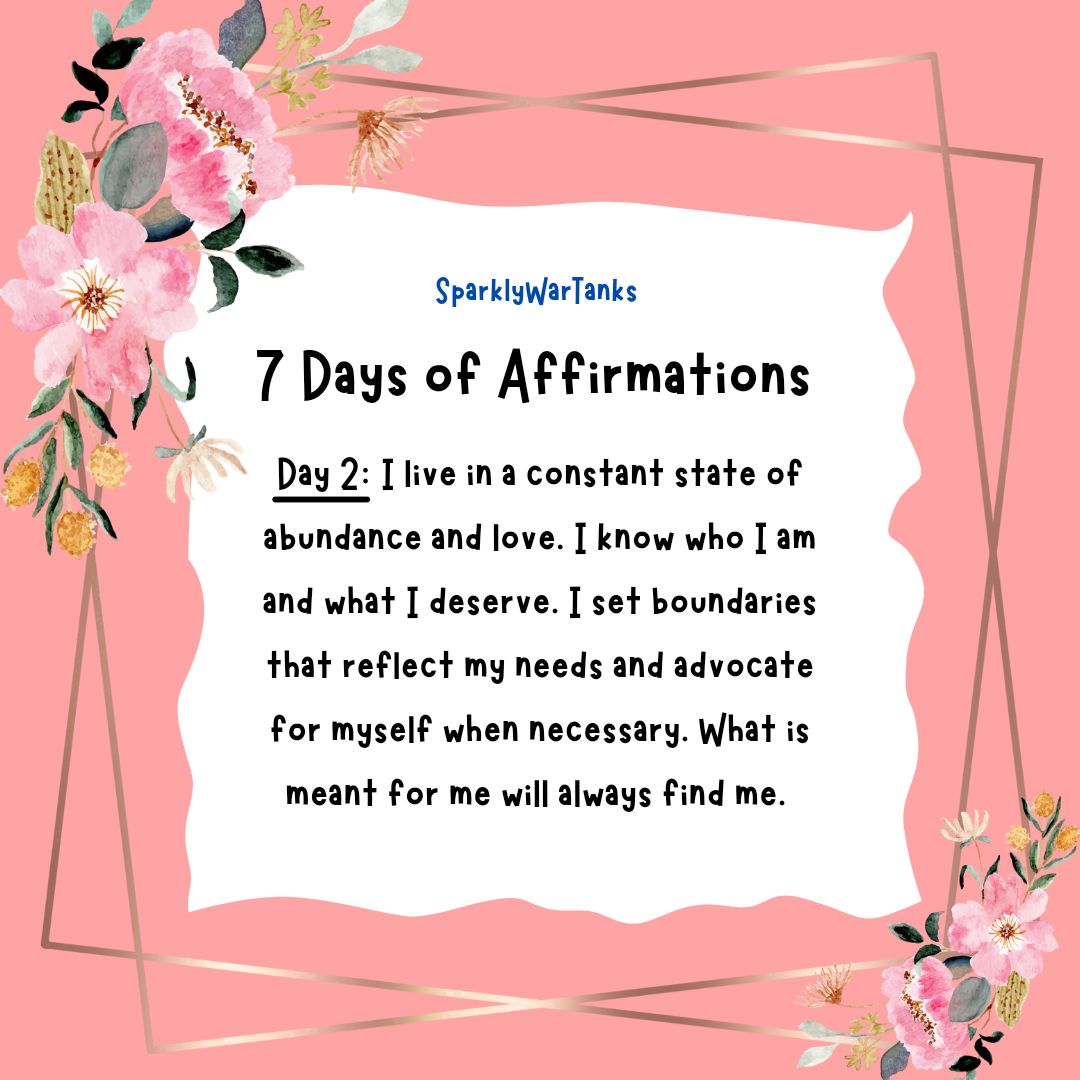
Credit: sparklywartanks.com
When Affirmations Do Not Work
While affirmations help many people, they are not a cure-all. In some cases, they may not work, especially if:
- You have deep negative beliefs or trauma
- You repeat affirmations you do not believe at all
- You use affirmations as a substitute for therapy or real action
If you struggle with mental health issues, affirmations can be a small part of healing, but not the only tool. Sometimes, talking to a counselor or therapist is necessary. Affirmations are best used as a support, not a replacement for other help.
Advanced Tips For Affirmation Success
Once you are comfortable with affirmations, you can make them even more effective:
- Say them with emotion. The more you feel the words, the more they stick.
- Combine with movement. Try saying affirmations while walking or exercising.
- Share with others. Affirmations can be more powerful in a group or with a friend.
- Track your progress. Write down changes you notice over time.
Another advanced tip: Use affirmations to break negative cycles. For example, if you always think “I am not good enough,” replace that thought with your chosen affirmation as soon as it appears.

Credit: sparklywartanks.com
The Deeper Power Of The 7 Affirmations
At first, affirmations might feel awkward or even silly. But over time, they can change your inner world. The 7 affirmations—I am enough, I am strong, I am loved, I am capable, I am grateful, I am worthy, I am growing—touch the core of what it means to be human.
They help you accept yourself, face challenges, connect with others, and keep moving forward. Used daily, they can unlock confidence, happiness, and success.
The key is consistency. Even if you do not see changes right away, keep going. Small shifts in your thinking can lead to big changes in your life.
Frequently Asked Questions
What Are Affirmations?
Affirmations are positive statements you repeat to yourself. They help change negative thoughts, build confidence, and support your goals. Over time, they can shift your mindset and improve your life.
How Often Should I Repeat The 7 Affirmations?
For best results, repeat your chosen affirmations at least twice a day—morning and night. You can also use them during stressful moments or when you need a confidence boost.
Can I Use All 7 Affirmations At Once?
Yes, you can use all 7 affirmations each day, or focus on the ones that feel most important. Some people start with one and add more over time.
What If I Do Not Believe My Affirmation?
If you struggle to believe an affirmation, try adding words like “I am learning to…” or “I am open to believing…” This makes it easier for your mind to accept the new idea.
Are Affirmations A Replacement For Therapy?
No, affirmations are a helpful tool for self-growth, but they are not a replacement for therapy, medication, or professional support. If you have deep emotional issues, talk to a mental health professional for help.
With practice and patience, the 7 affirmations can become a guiding light in your journey toward a happier, more confident life.
