

The Best Affirmations for Women: Empower Your Mind Daily
The Best Affirmations For Women
Every day, women carry many roles and face unique challenges. From careers and family to personal growth and health, the weight of expectations—external and internal—can sometimes feel overwhelming. In these moments, the words you tell yourself matter more than you might think. Affirmations are short, positive statements you repeat to yourself to challenge negative thoughts and build self-belief. They are more than just feel-good quotes; when used correctly, affirmations can shape your mindset, help you overcome self-doubt, and boost your confidence.
This article explores the best affirmations for women, how to use them for real results, and why they work. You’ll discover practical tips, examples for every aspect of life, and expert insights to help you make affirmations a powerful tool in your daily routine.
Why Affirmations Matter For Women
Many women face unique social pressures. Research shows that women are more likely to struggle with low self-esteem and imposter syndrome, especially in leadership roles or male-dominated fields. According to the American Psychological Association, women report higher stress levels than men in areas related to family, work, and self-image. Affirmations offer a way to counteract negative self-talk and reinforce a healthy, empowered mindset.
Positive self-talk doesn’t just feel good—it rewires your brain. Studies on neuroplasticity demonstrate that repeated positive statements can strengthen neural pathways related to confidence and resilience. In short, what you say to yourself shapes how you feel and act.
How Affirmations Work
Affirmations work by interrupting patterns of negative thinking and replacing them with empowering beliefs. When you repeat an affirmation, you signal to your brain that this new belief is important. Over time, with repetition and sincerity, your subconscious mind starts to accept these statements as truth.
The process is simple but powerful:
- You identify a negative belief or area where you want to grow.
- You create a positive, present-tense statement that reflects your desired reality.
- You repeat it daily, out loud or silently, ideally while looking in the mirror or writing it down.
It’s important to understand that affirmations are not magic. They work best when paired with real action and self-reflection. If you tell yourself, “I am confident,” but never take steps to build confidence or confront fears, the affirmation loses power.
The key is to use affirmations as a tool, not a shortcut.
Essential Qualities Of Effective Affirmations
Not all affirmations are created equal. To maximize their impact, focus on these essential qualities:
- Present tense: Use “I am” or “I have,” not “I will” or “I want.”
- Positive language: Focus on what you want, not what you’re trying to avoid.
- Personal: The affirmation should resonate with you and feel true to your life.
- Believability: Choose statements that feel possible. If “I am unstoppable” feels fake, try “I am growing stronger every day.”
- Specific: General statements are less effective than targeted ones.
A practical tip: Start with affirmations that stretch you, but don’t feel out of reach. With time, you can build up to more ambitious ones.
The Best Affirmations For Women
Below you’ll find powerful affirmations for different areas of life. Each group addresses common challenges and goals that many women experience. Feel free to adapt them for your unique situation.
Confidence And Self-worth
- I am enough, just as I am.
- My voice matters and deserves to be heard.
- I am worthy of respect and kindness.
- I believe in my abilities and talents.
- I am proud of who I am becoming.
- I trust myself to make good choices.
- My value is not based on others’ opinions.
- I celebrate my unique strengths.
- I am deserving of love and happiness.
- I am comfortable in my own skin.
Many women struggle with self-doubt and comparison. Regularly repeating these affirmations helps counteract negative self-talk and build unshakeable self-worth.
Career And Ambition
- I am capable of achieving my goals.
- I am a valuable member of my team.
- I embrace challenges as opportunities to grow.
- I have the skills to succeed in my career.
- My work has value and impact.
- I am confident in my leadership abilities.
- I am open to new opportunities.
- I handle setbacks with grace and resilience.
- I trust my instincts at work.
- I am always learning and improving.
A common mistake is using only generic affirmations. For career growth, it’s more effective to tailor statements to your specific field or ambitions, such as “I am an innovative engineer” or “I lead my classroom with passion. ”
Relationships And Boundaries
- I deserve healthy, supportive relationships.
- I communicate my needs clearly and confidently.
- I respect my boundaries and honor my feelings.
- I attract people who appreciate and respect me.
- I am worthy of deep, genuine connection.
- I release relationships that no longer serve me.
- I forgive myself and others, letting go of resentment.
- I am patient and compassionate in my relationships.
- I balance giving with receiving.
- I trust myself to choose healthy relationships.
Setting boundaries is an area where many women struggle, especially in family or work settings. Using affirmations like “I respect my boundaries” can make it easier to say no without guilt.
Body Image And Self-care
- My body is strong and capable.
- I honor my body’s needs and feelings.
- I am grateful for all my body does for me.
- I treat myself with kindness and care.
- I choose nourishment and movement that make me feel good.
- I accept my body as it is today.
- I am more than my appearance.
- I am allowed to rest and recharge.
- I listen to my body’s wisdom.
- I celebrate what makes me unique.
Many women internalize negative messages about their appearance. Consistent self-care affirmations can help break this cycle and promote a healthier, kinder relationship with your body.
Stress, Anxiety, And Emotional Balance
- I am calm and centered, even in stressful times.
- I trust that I can handle whatever comes my way.
- I release what I cannot control.
- I am allowed to feel my emotions without judgment.
- I choose peace over worry.
- I breathe in calm, I breathe out tension.
- I am resilient and adaptable.
- I let go of perfection and embrace progress.
- I create moments of stillness for myself.
- I am safe and supported.
Affirmations for stress and anxiety are most effective when paired with breathing exercises or mindfulness practices. Try repeating them while taking slow, deep breaths.
Personal Growth And Resilience
- I am always growing and evolving.
- I learn from challenges and setbacks.
- I am open to new experiences and ideas.
- I trust the journey of my life.
- I am brave enough to try new things.
- I embrace change with curiosity, not fear.
- I celebrate my progress, no matter how small.
- I am gentle with myself during difficult times.
- I am the author of my own story.
- I am proud of how far I have come.
Resilience affirmations build inner strength, especially during times of transition or adversity. Remember, growth is rarely linear—affirmations help you stay focused on progress, not perfection.
Motherhood And Family
- I am a loving and capable mother.
- I trust my instincts to guide my children.
- I am patient with myself and my family.
- I am allowed to ask for help.
- I balance caring for my family with caring for myself.
- I am teaching my children by example.
- I am doing my best, and that is enough.
- I forgive myself for mistakes and keep moving forward.
- I celebrate the small moments of joy.
- I am building a loving, supportive home.
Motherhood often brings guilt and self-doubt. Affirmations such as “I am doing my best, and that is enough” can be powerful reminders to give yourself grace.
How To Use Affirmations For Real Results
Affirmations are most effective when used regularly and intentionally. Here are practical ways to make them part of your routine:
- Morning routine: Start your day by saying a few affirmations in the mirror.
- Journaling: Write your chosen affirmations daily. Writing by hand can make them feel more real.
- Phone reminders: Set your favorite affirmations as phone notifications throughout the day.
- Sticky notes: Place notes on your bathroom mirror, computer, or fridge.
- Pair with breathing: Repeat affirmations while taking deep, calming breaths.
- Before challenges: Use affirmations before important meetings, exams, or stressful events.
A key insight many beginners miss: It’s better to focus on a few meaningful affirmations than to repeat a long list mechanically. Quality and emotion matter more than quantity.
Tracking Progress
To see if affirmations are working, track your feelings and behavior over time. Many women notice subtle shifts in mood, confidence, and resilience after a few weeks. Consider keeping a simple journal to note changes, or use a mood-tracking app.
Here’s a comparison of different ways to track your affirmation journey:
| Method | Effort Level | Best For |
|---|---|---|
| Paper Journal | Low to Medium | Reflective thinkers |
| Phone App | Low | Tech-savvy users |
| Voice Memos | Low | Auditory learners |
| Accountability Partner | Medium | Those who need support |
Affirmations Vs. Other Positive Practices
Some people confuse affirmations with other positive psychology tools like gratitude journaling or visualization. While all these practices are helpful, they serve different purposes.
- Affirmations: Focus on shaping beliefs and self-image.
- Gratitude journaling: Focuses on appreciating what you already have.
- Visualization: Involves mentally rehearsing future success.
Here’s a quick look at how these practices compare:
| Practice | Main Purpose | Best Time to Use |
|---|---|---|
| Affirmations | Build self-belief and confidence | Anytime, especially mornings |
| Gratitude Journaling | Foster appreciation | Evenings or after positive events |
| Visualization | Prepare for goals and challenges | Before big events |
Combining these tools can create a powerful mindset routine. For example, start your day with affirmations, use gratitude journaling at night, and visualize before important tasks.
Scientific Evidence And Real-life Stories
Research supports the value of positive self-talk. A study published in the journal “Social Cognitive and Affective Neuroscience” found that affirmations activate reward centers in the brain, making people more open to behavior change. Another study from Carnegie Mellon University showed that participants who used self-affirmations experienced less stress and performed better on problem-solving tasks.
Real-life stories also highlight the power of affirmations. For instance, many female athletes use positive statements before competitions to boost confidence. Oprah Winfrey, a famous advocate for self-growth, has shared how daily affirmations helped her overcome self-doubt and achieve success.
However, one insight often missed: affirmations are most effective when they align with your values and daily actions. Simply repeating “I am wealthy” without financial planning or effort rarely leads to change. Instead, try “I am learning to manage my finances with confidence” to match belief with behavior.
Common Mistakes And How To Avoid Them
Many beginners make mistakes that limit the effectiveness of affirmations. Here are the most common pitfalls:
- Being too vague: General statements like “I am happy” lack power. Be specific, e.g., “I find joy in my daily routines.”
- Not believing the affirmation: If it feels fake, your brain resists. Start with statements that feel possible, then build up.
- Using only negative phrasing: Avoid “I am not stressed.” Instead, use “I am calm and at peace.”
- Repeating without emotion: Mechanical repetition doesn’t work. Feel the words as you say them.
- Giving up too soon: Change takes time. Stick with your affirmations for at least 21 days to notice a shift.
A non-obvious tip: Pair your affirmation with a small action. For example, after repeating “I am strong,” do a quick stretch or walk. This helps your brain link words with real-world experience.
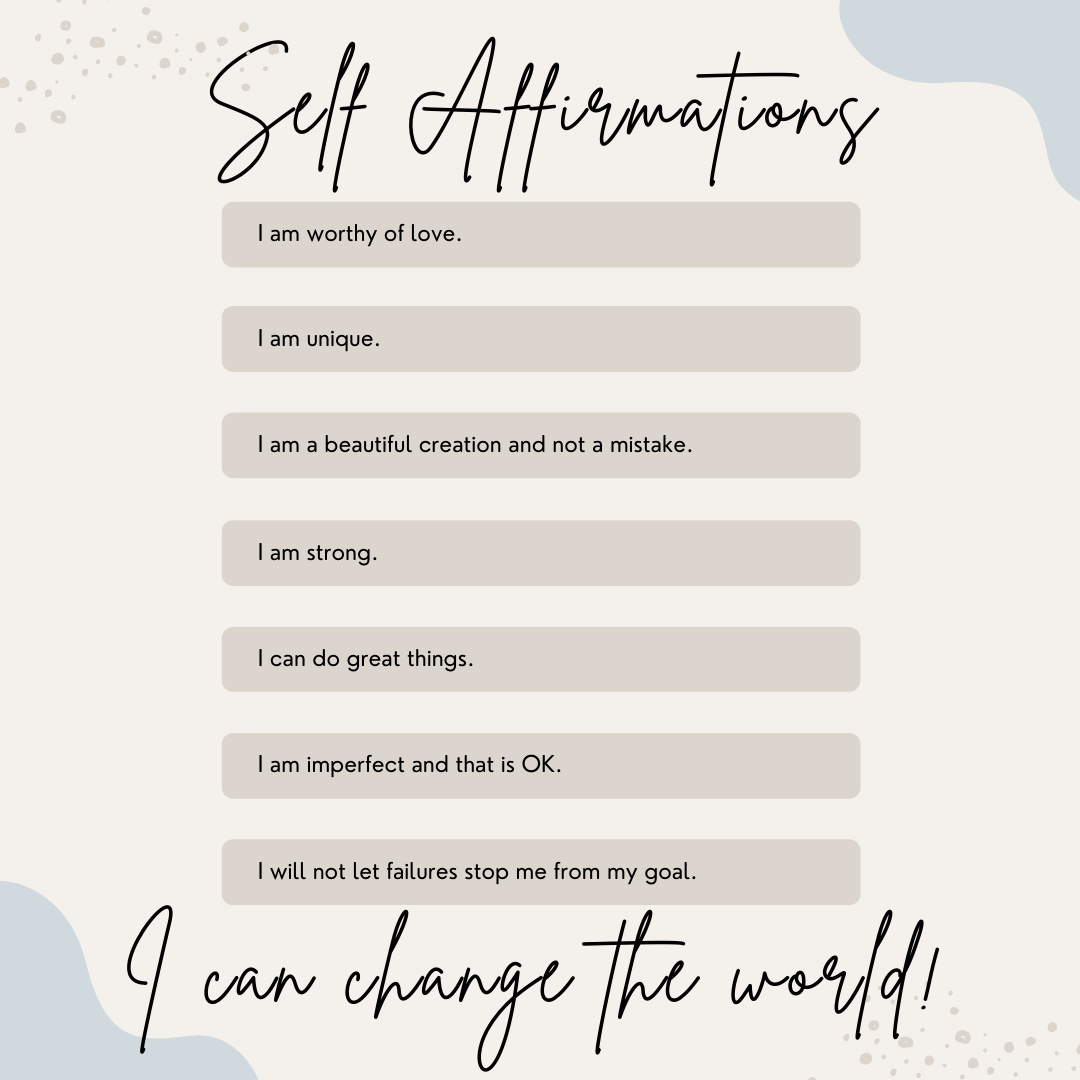
Credit: thatssoyummy.com
Creating Your Own Affirmations
While using popular affirmations is helpful, creating your own can be even more powerful. Here’s a simple process:
- Identify an area for growth: What do you want to change or believe about yourself?
- Write a positive, present-tense statement: Focus on what you want, not what you fear.
- Make it personal and specific: Use language that feels natural to you.
- Test for believability: Does it feel possible, even if a stretch?
- Repeat and refine: Adjust your affirmation as you grow.
Example: If you struggle with public speaking, try “I share my ideas with clarity and confidence” instead of “I am never nervous.”
Using Affirmations With Children And Teens
Affirmations aren’t just for adults. Teaching children and teens to use positive self-talk can build lifelong resilience and confidence. For young girls, affirmations can counteract negative messages from media and peers.
Tips for introducing affirmations to kids:
- Keep statements short and simple.
- Use playful language or songs.
- Practice together as a family.
- Model the behavior—let them see you using affirmations.
Some empowering affirmations for young girls:
- I am brave and strong.
- I am smart and creative.
- I am kind to myself and others.
Encouraging children to use affirmations early helps them develop a healthy self-image before negative patterns take hold.
Integrating Affirmations Into Your Daily Life
Making affirmations a habit requires consistency and creativity. Here are some unique ways to weave them into your day:
- Meditation: Start or end a meditation session with your favorite affirmation.
- Exercise: Repeat affirmations during a walk, yoga, or workout.
- Art: Create visual reminders—paint, draw, or use photos with your affirmations.
- Music: Set affirmations to music or find songs with empowering lyrics.
- Community: Join a group or online forum for support and accountability.
A practical insight: You don’t need hours each day. Even five focused minutes can make a difference over time.
Affirmations And Technology
Digital tools can make affirmations easier and more engaging. There are many apps designed to send daily reminders, track your progress, and suggest new affirmations. Some women even record their voice saying affirmations and listen during commutes.
Here’s a simple comparison of popular affirmation app features:
| App Feature | Benefit | Common Example |
|---|---|---|
| Scheduled Reminders | Keeps you consistent | Morning notifications |
| Custom Affirmations | Makes it personal | Write your own statements |
| Audio Playback | Ideal for auditory learners | Listen to your voice |
| Progress Tracking | See your growth | Streak counters |
If you prefer pen and paper, that’s fine too. The key is to choose a method you enjoy and will stick with.
Cultural And Social Impact Of Affirmations
Affirmations aren’t just personal—they can have a broad social impact. Movements like #MeToo and campaigns for women’s empowerment often use collective affirmations to build solidarity and drive change. Phrases like “I am not alone” or “My story matters” unite women and encourage shared strength.
Culturally, affirmations can be adapted to respect different backgrounds and beliefs. In some communities, spiritual or faith-based affirmations are powerful, while others may prefer secular language. The most important factor is authenticity—choose affirmations that align with your culture and values.
One insight often missed: Affirmations can challenge and rewrite harmful cultural narratives. For example, in cultures where women are expected to be self-sacrificing, affirmations like “My needs are important” can be quietly revolutionary.

Credit: notesbythalia.com
Recommended Resources For Further Growth
If you want to explore affirmations and self-development further, consider these resources:
- Books: “You Can Heal Your Life” by Louise Hay, “The Gifts of Imperfection” by Brené Brown
- Online courses: Mindfulness and self-compassion programs
- Podcasts: Interviews with female leaders and mental health experts
- Community groups: Women’s circles, book clubs, or support groups
For more on the science behind affirmations and positive psychology, visit the Positive Psychology site, which offers research-backed articles and resources.
Frequently Asked Questions
How Many Affirmations Should I Use Each Day?
Most experts recommend starting with 3–5 affirmations. Choose statements that feel most relevant to your current needs. Quality is more important than quantity. As you get comfortable, you can add more or rotate them as your goals change.
How Long Does It Take To See Results From Affirmations?
Results vary, but many people notice small shifts in mood and self-talk within 2–3 weeks of consistent use. For deeper changes, stick with your affirmations for at least a month. The key is regular practice and genuine belief in the statements.
Can I Use Affirmations If I Don’t Fully Believe Them Yet?
Yes, but it’s important to choose affirmations that feel possible, even if they are a stretch. If a statement feels too unrealistic, adjust it to something more believable. For example, change “I am always confident” to “I am learning to feel more confident each day.
”
Are Affirmations A Substitute For Therapy Or Medical Treatment?
Affirmations are a helpful tool but not a substitute for professional help. If you are struggling with serious anxiety, depression, or trauma, seek guidance from a qualified therapist or counselor. Affirmations can be a supportive practice alongside therapy.
Do Affirmations Work For Everyone?
Most people benefit from affirmations, but results depend on consistency, belief, and how well the statements match your needs. If you find affirmations aren’t helping, try adjusting your statements, combining them with other practices, or consulting with a coach or therapist for guidance.
Affirmations are a simple but powerful way to shape your mindset, build resilience, and support your growth as a woman. By choosing statements that resonate and using them with intention, you can unlock new levels of confidence, peace, and self-love.
Remember, the words you say to yourself have power—use them wisely, and let them guide you to your fullest potential.
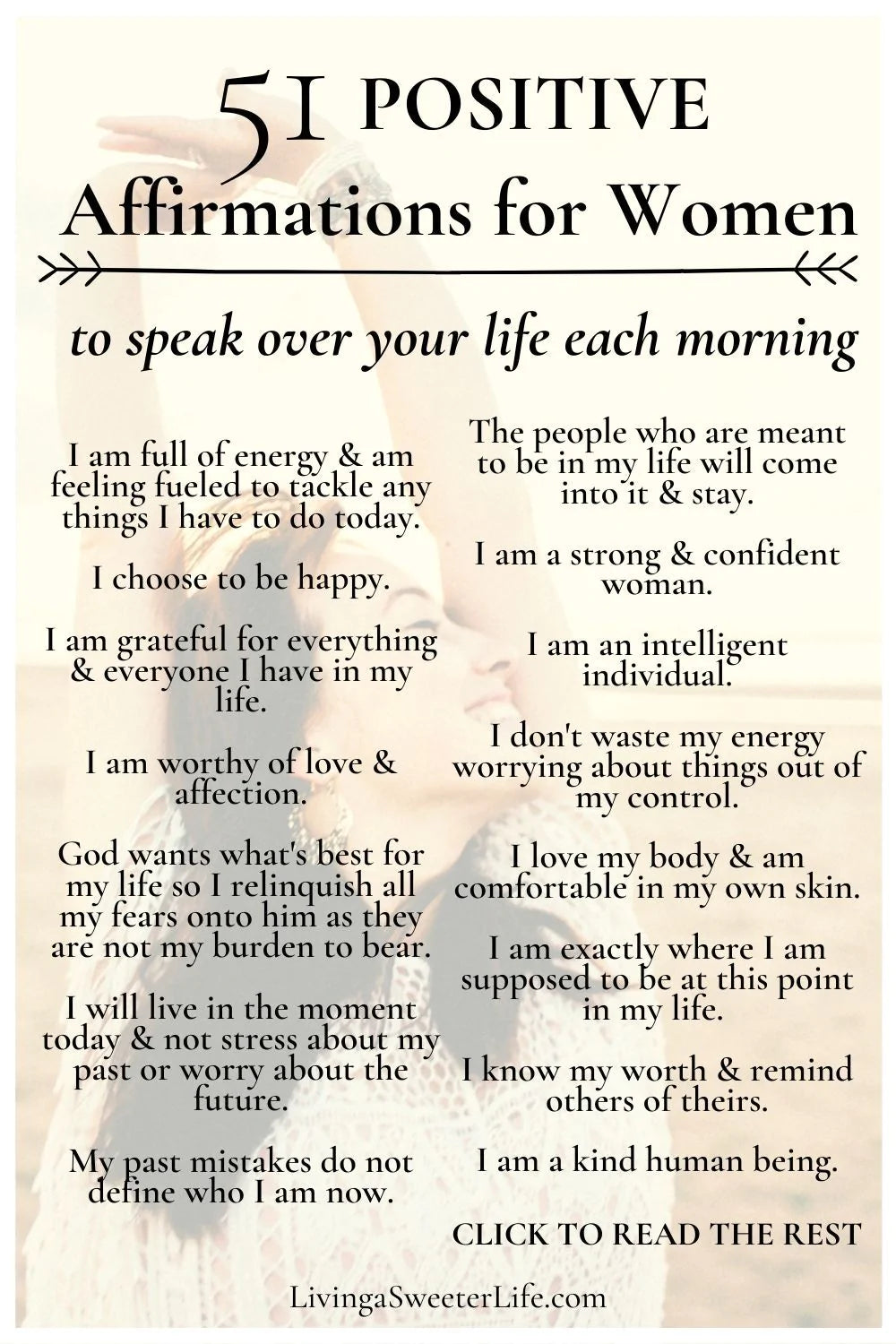
Credit: livingasweeterlife.com
