

Self Loving Affirmations: Transform Your Mindset Daily
Self Loving Affirmations: A Practical Guide To Transforming Your Self-worth
Self-love is one of the most powerful forces you can give yourself. It is not about ego or being selfish. It is about accepting who you are, being kind to yourself, and understanding your value. But for many people, self-love is not easy. Negative thoughts, past experiences, and daily stress can make you feel unworthy. This is where self loving affirmations come in. These are positive statements you repeat to yourself to change the way you think and feel about yourself.
In this guide, you will learn how self loving affirmations work, why they matter, and how to use them for real change. You will discover practical tips, see real examples, and find answers to questions people often have. By the end, you will know how to make affirmations a useful part of your life, not just empty words.
What Are Self Loving Affirmations?
Self loving affirmations are positive statements you say to yourself, often out loud or in your mind, to support and encourage self-acceptance. They help change negative thoughts into positive ones. For example, instead of thinking “I am not good enough,” you might say, “I am worthy of love and respect.”
These affirmations are more than just words. They are small, powerful tools that can help you build confidence, stop self-criticism, and see yourself in a better light. Many people use them as part of their daily routine, especially during difficult times.
How Affirmations Work In The Mind
Your mind believes what you repeat most often. If you tell yourself you are not good enough, your brain starts to believe it. But if you say positive things, like “I am strong” or “I deserve happiness,” your mind slowly accepts these as true.
This process is called neuroplasticity. It means your brain can change and create new thought patterns. Affirmations use this power by creating positive, supportive beliefs about yourself.
The Real Impact Of Affirmations
Some people think affirmations are just wishful thinking. But research shows they can actually change the way you feel and act. A study by Carnegie Mellon University found that people who practiced self-affirmation had less stress and better problem-solving skills.
When you repeat positive statements, you activate parts of the brain that help you control emotions and boost self-worth.
One non-obvious insight is that affirmations work best when they focus on your values and strengths. For example, saying “I am creative” helps you remember something you already know about yourself, making the affirmation feel true and powerful.
Why Self Loving Affirmations Matter
Many people struggle with negative self-talk. This inner voice can be harsh and critical, often repeating old beliefs from childhood or past failures. These thoughts can lower your confidence and stop you from trying new things.
Self loving affirmations help you break this cycle. They are especially important if:
- You often doubt yourself
- You feel unworthy or not good enough
- You compare yourself to others
- You find it hard to forgive yourself for mistakes
Replacing negative thoughts with positive ones can make a big difference. Over time, you start to see yourself with more compassion and less judgment.
Common Misunderstandings
Some people believe affirmations are only for “positive thinkers” or that they do not work for real problems. The truth is, affirmations are not magic words. They do not fix everything overnight. But when used regularly and with intention, they can help you change your mindset and open the door to self-love.
Another insight is that affirmations are most effective when they are specific and believable. Saying “I am perfect” may not feel true, but “I am learning to accept myself as I am” is easier to believe and more helpful.
The Science Behind Self Loving Affirmations
Affirmations are not just a trend. There is real science behind how they affect your mind and body.
How The Brain Responds
When you repeat affirmations, your brain releases chemicals that help you feel calm and positive. This reduces stress and helps you focus. Brain scans show that affirmations activate the brain’s reward centers, making you feel good about yourself.
Stress Reduction And Emotional Health
Research shows that people who use affirmations have lower levels of stress hormones, like cortisol. This means affirmations are not just about feeling better—they actually help your body handle stress. Affirmations can also reduce symptoms of anxiety and depression by helping you focus on what is good in your life.
The Power Of Repetition
Repeating affirmations is important. Your brain learns through repetition. The more you say something, the stronger the belief becomes. This is why many people say affirmations every morning or before bed.
Data: Effects Of Affirmations On Well-being
Here is a comparison of stress and mood levels for people who practice affirmations versus those who do not.
| Group | Average Stress Level (1-10) | Positive Mood Rating (1-10) |
|---|---|---|
| Uses Affirmations | 4 | 8 |
| Does Not Use Affirmations | 7 | 5 |
As you can see, those who use affirmations report less stress and a better mood.
How To Create Effective Self Loving Affirmations
Not all affirmations are the same. The best ones are simple, positive, and focused on what you want to believe or feel.
Step 1: Identify Negative Beliefs
Start by listening to your inner voice. What do you often say to yourself that is negative? For example, “I always fail,” or “No one likes me. ” Write these down.
Step 2: Turn Negatives Into Positives
Change each negative belief into a positive statement. For example:
- Negative: “I am not smart enough.”
- Positive: “I am capable and willing to learn.”
Step 3: Keep It Realistic
Make sure your affirmation is believable. If it feels too far from the truth, you may not accept it. Start with statements like “I am learning to love myself” or “I am open to self-acceptance. ”
Step 4: Use Present Tense
Say affirmations as if they are true right now. Use “I am” or “I have. ” For example, “I am worthy of love. ”
Step 5: Repeat And Practice
Say your affirmations every day. You can write them, say them out loud, or think them quietly. The key is repetition.
Example Of Creating An Affirmation
Let’s take a real-world example:
- Negative thought: “I mess up everything.”
- Affirmation: “I am doing my best, and that is enough.”
This turns a self-critical thought into a gentle, supportive one.
25 Powerful Self Loving Affirmations
Here are 25 affirmations you can use or modify to fit your needs:
- I am worthy of love and respect.
- I accept myself as I am.
- I forgive myself for past mistakes.
- I am enough.
- I am growing and learning every day.
- My feelings are valid.
- I choose to care for myself.
- I deserve happiness.
- I trust myself to make good choices.
- I am proud of who I am.
- I honor my needs and boundaries.
- I believe in my own value.
- I am patient with myself.
- I am stronger than I think.
- I am gentle with myself during hard times.
- I am more than my fears.
- I am open to new possibilities.
- I am grateful for my unique qualities.
- I let go of self-judgment.
- I celebrate my small wins.
- I am becoming my best self.
- I am safe and secure.
- I trust the journey of my life.
- I am loved, even when I make mistakes.
- I am free to be myself.
These affirmations cover different areas, from self-acceptance to courage. Choose the ones that feel right for you.
How To Practice Self Loving Affirmations Daily
Making affirmations part of your daily routine helps them work better. Here are some practical tips to get started.
Morning Routine
Start your day with affirmations. Stand in front of a mirror, look into your eyes, and say your chosen statements. This helps you begin the day with a positive mindset.
Writing Affirmations
Write your affirmations in a journal every morning or night. This helps you focus and remember your positive intentions.
Using Technology
Set reminders on your phone to repeat affirmations during the day. There are also apps that send you positive messages. This keeps self-love in your mind, even when you are busy.
Speak Them Out Loud
Speaking affirmations out loud makes them stronger. Hearing your own voice can make the words feel more real.
During Stressful Moments
Use affirmations when you feel stressed or upset. Take a few deep breaths and repeat a calming statement, like “I am safe and loved. ”
Example Daily Plan
Here’s a sample plan for using affirmations:
| Time | Action | Example Affirmation |
|---|---|---|
| Morning | Say in mirror | I am worthy of love and respect. |
| Lunch break | Read from phone reminder | I am enough. |
| Evening | Write in journal | I am proud of who I am. |
This routine keeps affirmations active in your mind all day.

Credit: www.amazon.com
Common Mistakes With Self Loving Affirmations
Many people try affirmations but give up when they do not see quick results. Here are some common mistakes and how to avoid them.
Using Generic Affirmations
Saying “I am amazing” can feel empty if you do not believe it. Make your affirmations personal and believable.
Not Practicing Regularly
Affirmations need practice. Missing days or only saying them once in a while will not create real change.
Ignoring Negative Feelings
Affirmations are not about ignoring problems. It is normal to feel sad or angry sometimes. Use affirmations to support yourself, not to hide your feelings.
Trying To Force Positive Thinking
If you are having a hard time, start with gentle affirmations, like “I am open to feeling better,” instead of forcing yourself to feel happy.
Not Adjusting Over Time
As you grow, your needs change. Update your affirmations to match your current goals and challenges.
Combining Affirmations With Other Self-love Practices
Affirmations are powerful, but they work even better with other self-care activities. Here are some ways to boost their effect.
Meditation
Meditation helps you focus and calm your mind. Try repeating affirmations while meditating. Sit quietly, breathe deeply, and say your affirmation with each breath.
Journaling
Write about your feelings and experiences with affirmations. Notice what changes in your thoughts and actions. This helps you see your progress and stay motivated.
Physical Self-care
Take care of your body with sleep, healthy food, and exercise. When you feel good physically, affirmations have a stronger effect.
Support From Others
Talk about your affirmations with a friend or therapist. Sharing your journey can help you stay committed and get new ideas.
Creative Activities
Express yourself with art, music, or dance. Use affirmations as inspiration for your creative work. This makes self-love more fun and personal.
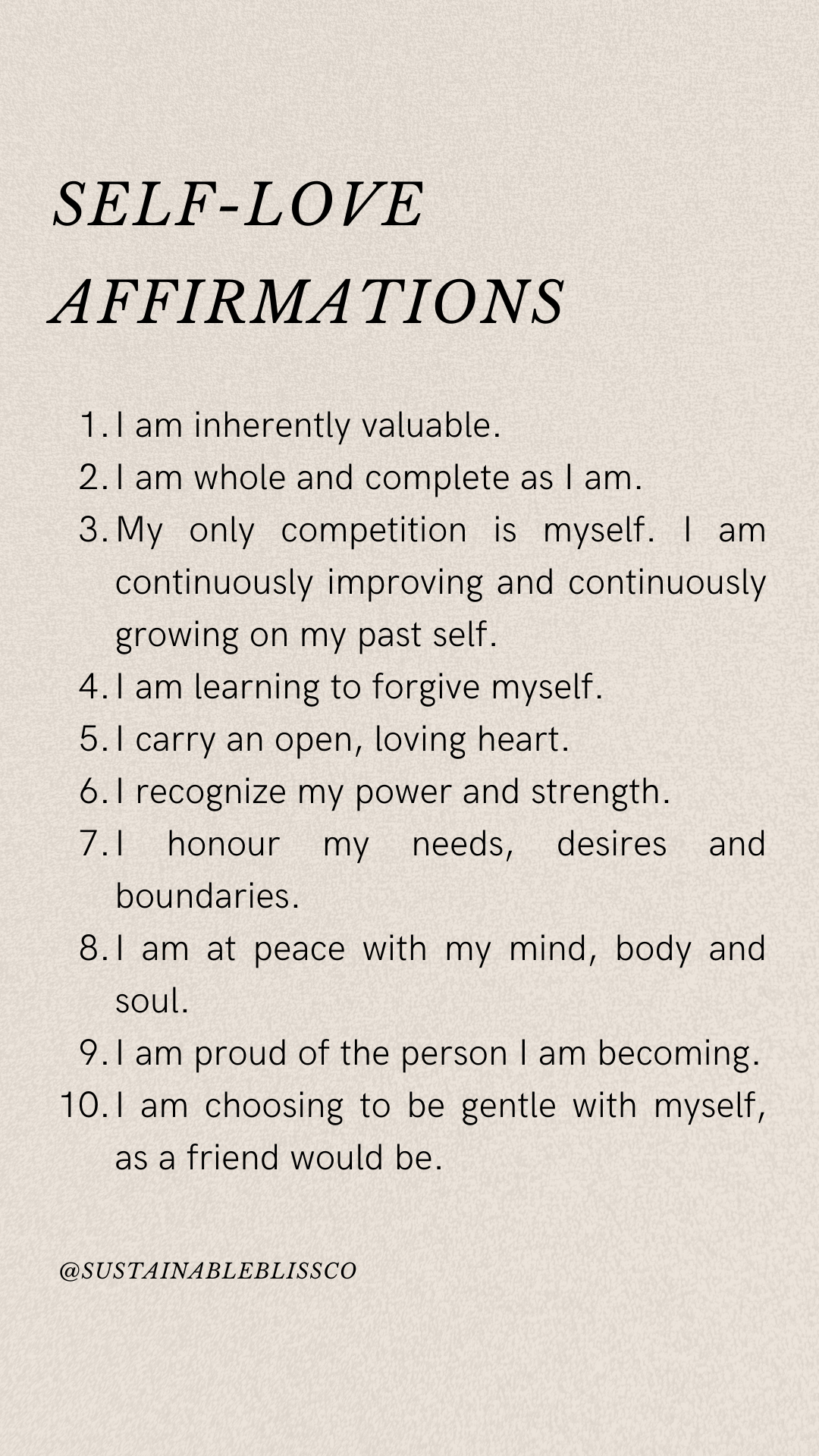
Credit: www.sustainableblissco.com
How To Measure Progress With Self Loving Affirmations
It is easy to wonder if affirmations are really working. Here are some ways to see your progress.
Track Your Mood
Keep a simple mood diary. Rate your mood each day from 1 (low) to 10 (high). Write down any changes you notice in your thoughts or actions.
Notice Changes In Self-talk
Pay attention to your inner voice. Are you kinder to yourself? Do you handle problems with more confidence? These are signs your affirmations are working.
Look For New Behaviors
Do you set better boundaries? Are you more patient with mistakes? Positive changes in your actions show that your mindset is shifting.
Ask For Feedback
Sometimes others notice your growth before you do. Ask a trusted friend if they see changes in how you handle stress or talk about yourself.
Data: Tracking Affirmation Progress
Here is a sample tracking table you can use:
| Week | Mood Score (1-10) | Self-Talk Quality | New Positive Actions |
|---|---|---|---|
| 1 | 4 | Mostly negative | None |
| 2 | 5 | Some positive thoughts | Set a small boundary |
| 3 | 7 | More supportive self-talk | Celebrated a win |
This helps you see growth, even if it feels slow.
Self Loving Affirmations For Different Life Situations
Affirmations are not one-size-fits-all. Here are examples for different challenges:
After A Mistake
- “I forgive myself and choose to learn.”
- “I am still worthy, even when I make mistakes.”
During Stressful Times
- “I am strong enough to handle this.”
- “This feeling will pass, and I will be okay.”
When Feeling Unworthy
- “My value does not depend on others’ opinions.”
- “I am enough, just as I am.”
For Building Confidence
- “I trust myself to make good decisions.”
- “I am proud of my growth.”
For Self-care
- “Caring for myself is important.”
- “I deserve time to rest and recharge.”
Using the right affirmation for your situation makes it more effective.

Credit: mblwrites.com
Real-life Stories: How Affirmations Changed Lives
Hearing about others’ experiences can help you believe in the power of affirmations. Here are two real examples (names changed):
Maya’s Story
Maya struggled with self-doubt for years. She often thought, “I am not good enough. ” She started using the affirmation, “I am learning to accept myself. ” At first, it felt strange. But after a few weeks, she noticed she was kinder to herself after mistakes.
She stopped comparing herself to others. Maya says affirmations helped her see her strengths and feel happier.
James’s Experience
James faced a big setback at work. He blamed himself and felt worthless. A friend suggested trying affirmations. James chose, “I am more than my failures. ” He repeated it every morning. Slowly, his confidence returned. He started taking small risks again and found new motivation.
Now, affirmations are a key part of his routine.
These stories show that affirmations are not about pretending life is perfect. They are about giving yourself support, even during tough times.
When Affirmations Alone Are Not Enough
While affirmations are helpful, sometimes you may need more support. If you feel deep sadness, anxiety, or have trouble coping with daily life, talking to a mental health professional is important. Affirmations are a tool, not a cure-all.
Some signs you may need extra help:
- Persistent sadness or hopelessness
- Difficulty functioning at work or home
- Thoughts of self-harm
Professional help can work together with affirmations for better results. If you want to learn more, you can visit Psychology Today for reliable information about self-esteem and mental health.
Frequently Asked Questions
What If I Do Not Believe My Affirmations?
It is normal to feel awkward or doubtful at first. Start with affirmations that are close to your current beliefs, like “I am open to learning self-love. ” As you practice, your belief will grow. Remember, change takes time.
How Many Affirmations Should I Use Each Day?
There is no strict rule. Most people find that 3-5 affirmations work well. Too many can be hard to remember. Focus on a few that matter most to you and repeat them daily.
Can Affirmations Help With Anxiety Or Depression?
Affirmations can support your mental health, but they are not a replacement for medical treatment or therapy. They work best as part of a larger self-care plan. If you have serious symptoms, talk to a mental health professional.
Should I Use The Same Affirmation Forever?
No, you should update your affirmations as you grow and change. When you reach a goal or feel more confident, create new affirmations for your next challenge.
Do I Have To Say Affirmations Out Loud?
Saying them out loud is powerful, but you can also write them or think them quietly. The key is to repeat them often and believe in their message.
Building self-love is a journey, not a race. Self loving affirmations are simple tools, but their impact grows with patience and practice. Start small, be kind to yourself, and notice the positive changes each day. The more you support yourself, the more you will see your true value.
