

Positive Affirmations for Women With Anxiety: Empower Your Mind
Positive Affirmations For Women With Anxiety
Anxiety can be a heavy burden, often making daily life feel harder than it should. Many women experience this challenge, sometimes quietly, sometimes openly. Words can be powerful tools for healing and self-care. Positive affirmations are simple statements you repeat to yourself, designed to guide your thoughts away from worry and toward calm and confidence. For women with anxiety, affirmations are not just trendy phrases—they can become a daily anchor, helping shift the mind from self-doubt to self-support.
But how do you use affirmations in a way that actually makes a difference? This article will help you understand what affirmations are, why they work, and how to use them effectively. You will find practical examples, real strategies, and helpful insights that go beyond basic advice.
Whether your anxiety is mild or intense, you will discover ways to make these positive statements part of your routine, and learn how to build your own affirmations that suit your needs. Let’s start exploring how the right words can help you take back control and find peace.
Understanding Anxiety In Women
Anxiety is not just feeling nervous or stressed. It is a real condition that affects millions of women. It can show up as constant worry, racing thoughts, difficulty sleeping, or even physical symptoms like headaches and stomach pain. Women often face unique triggers, such as balancing work and family, body image pressures, or emotional roles in relationships.
Why Women Experience Anxiety Differently
Research shows that women are more likely to experience anxiety than men. Hormonal changes, social expectations, and life events like pregnancy or menopause can increase anxiety. Some women feel pressure to be perfect or to care for others before themselves.
This can make anxiety stronger and harder to manage.
Key Facts About Anxiety In Women
- Over 30% of women will face an anxiety disorder at some point.
- Anxiety is often linked to depression and other emotional challenges.
- Women may hide their anxiety, fearing judgment or weakness.
- Many women use coping strategies like talking to friends or practicing mindfulness, but not everyone finds relief.
Understanding these facts helps explain why positive affirmations can be especially useful for women. They offer a simple, private, and powerful way to support mental health.
What Are Positive Affirmations?
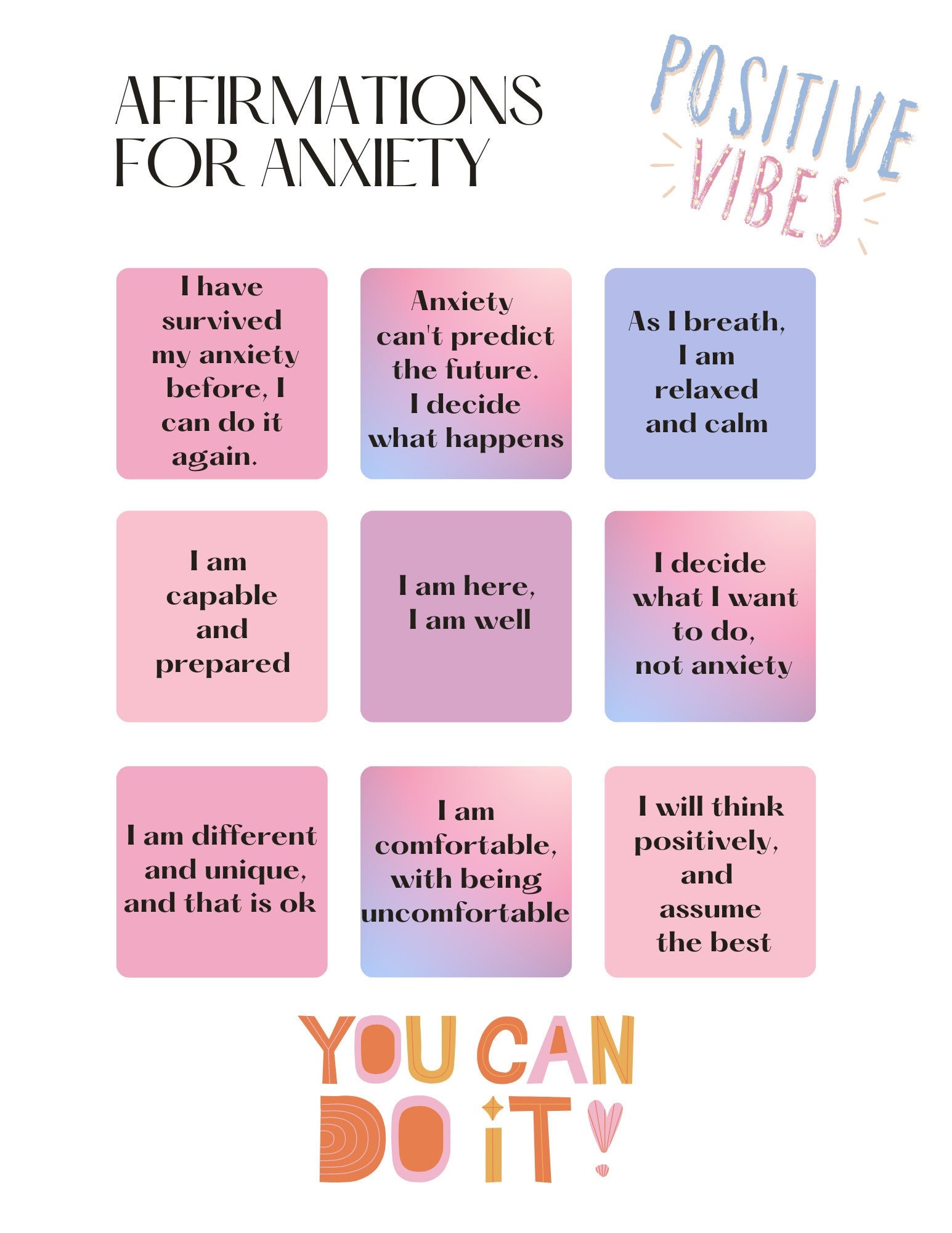
Positive affirmations are short, encouraging statements you repeat to yourself. The goal is to change negative thoughts into positive ones. For example, “I am strong and capable,” or “I can handle whatever comes my way.” These statements help train your mind to focus on strengths rather than fears.
How Affirmations Work
Affirmations are based on the idea that your thoughts shape your feelings and actions. When you repeat positive statements, your brain starts to believe them. This is called neuroplasticity—the brain’s ability to change and grow. Over time, affirmations can help you build new thought patterns, making anxiety less powerful.
The Science Behind Affirmations
Studies suggest that affirmations can reduce stress, boost self-esteem, and improve mental health. Researchers found that people who use affirmations regularly feel more confident and less overwhelmed. For women with anxiety, affirmations offer a gentle way to challenge negative self-talk and create a sense of control.
Credit: www.etsy.com
Benefits Of Positive Affirmations For Women With Anxiety
Affirmations are not magic, but they are practical tools. Here are some ways they help:
- Reduce Negative Thinking: Repeating positive statements interrupts anxious thoughts and helps you focus on what you can control.
- Increase Confidence: Affirmations remind you of your strengths and abilities, which is important during stressful times.
- Promote Calmness: Some affirmations are designed to relax the mind and body, helping you feel more at ease.
- Improve Self-Compassion: Women often judge themselves harshly. Affirmations encourage kindness toward yourself.
- Support Daily Routine: Using affirmations regularly can become a healthy habit, offering structure and support.
Real-life Example
Imagine Sarah, a woman who feels anxious about public speaking. She starts using the affirmation, “I speak clearly and confidently. ” Over time, she notices her anxiety decreases before presentations. The affirmation does not erase her fear completely, but it helps her feel more prepared and less self-critical.
Best Positive Affirmations For Women With Anxiety
Not all affirmations are created equal. The most effective ones are personal, specific, and believable. Here are some examples tailored for women experiencing anxiety:
- I am safe and supported.
- I trust myself to handle challenges.
- My feelings are valid and important.
- I choose to focus on the present moment.
- I am strong, even when I feel anxious.
- I deserve kindness and understanding.
- I breathe deeply and let go of worry.
- I accept myself as I am.
- I am proud of my progress.
- I am resilient and resourceful.
How To Make Affirmations More Powerful
- Personalize your affirmations. Add your name or address your specific situation.
- Use present tense, like “I am” or “I have.”
- Keep statements short and easy to remember.
- Make them believable. If “I am fearless” feels too strong, try “I am learning to be brave.”
- Repeat them regularly, especially during anxious moments.
How To Use Affirmations Effectively
Repeating affirmations is simple, but making them work takes practice. Here are ways to build them into your routine:
Morning Routine
Start your day with positive statements. Stand in front of the mirror and say your affirmations out loud. This helps set the tone for the day and builds confidence.
During Stressful Moments
When anxiety strikes, pause and repeat your affirmation slowly. Focus on your breathing as you say the words. This helps calm your mind and body.
Writing And Journaling
Write your affirmations in a journal each day. Seeing the words on paper makes them feel more real. You can also write about how the affirmation helped during a tough moment.
Using Technology
Set reminders on your phone to repeat your affirmation. Some apps let you schedule positive messages throughout the day.
Creating A Visual Reminder
Write your affirmation on sticky notes and place them where you see them often—on your desk, bathroom mirror, or refrigerator. Visual cues keep your affirmations top of mind.
Building Your Own Affirmations
Generic affirmations can work, but personal ones are often better. Here’s a step-by-step guide to create your own:
- Identify Your Main Anxiety Trigger: Is it social situations, health, or work? Knowing your trigger helps you target your affirmation.
- Choose Positive Words: Use encouraging language like “safe,” “strong,” “calm,” “capable.”
- Keep It Simple: Make your statement short and easy to remember.
- Use Present Tense: Avoid future tense. Say “I am calm,” not “I will be calm.”
- Make It Believable: If your anxiety is severe, start with gentle affirmations like “I am learning to relax.”
- Repeat and Adjust: Try your affirmation for a week. If it feels forced, change the wording.
Practical Example
If your anxiety is about work performance, you might create:
- “I am skilled and valued at my job.”
- “I handle challenges with grace and strength.”
If your anxiety is about social situations, try:
- “I am comfortable meeting new people.”
- “I express myself with confidence.”
Common Mistakes And How To Avoid Them
Many women start using affirmations but do not see results. Here are common mistakes and solutions:
Mistake 1: Using Unbelievable Statements
Affirmations must feel real. Saying “I am fearless” when you feel very anxious can make things worse. Start with softer statements like “I am learning to face my fears. ”
Mistake 2: Forgetting To Repeat
Consistency is key. Affirmations only work if you use them regularly. Set reminders or build them into your routine.
Mistake 3: Ignoring Emotions
If you ignore your feelings and only use affirmations, you may feel disconnected. Pair affirmations with self-care, such as meditation or talking to a friend.
Mistake 4: Choosing Generic Affirmations
Personalize your statements. Generic affirmations can feel empty. Use words and situations that matter to you.
Mistake 5: Expecting Instant Results
Affirmations are not instant cures. They help over time. Be patient and notice small changes in your thoughts and feelings.
Comparing Affirmations To Other Anxiety Tools
Affirmations are one tool among many. Sometimes, combining methods works best. Here is a comparison of common anxiety tools:
| Method | How It Helps | Ease of Use | Best For |
|---|---|---|---|
| Positive Affirmations | Change negative thoughts to positive | Easy, quick | Daily self-support |
| Meditation | Relax mind and body | Moderate, needs practice | Stress relief |
| Cognitive Behavioral Therapy (CBT) | Change thinking patterns | Professional guidance needed | Severe anxiety |
| Exercise | Reduce stress hormones | Easy to moderate | Physical and mental wellness |
| Medication | Balance brain chemicals | Needs prescription | Chronic anxiety |
Affirmations work best when combined with other healthy habits. For mild anxiety, affirmations alone can be helpful. For more severe anxiety, professional support is often needed.
Real Stories: Women Using Affirmations For Anxiety
Hearing real experiences can help you feel less alone. Here are examples from women who use affirmations to manage anxiety:
Maria’s Story
Maria struggled with anxiety about her health. She created the affirmation, “I trust my body to heal and stay strong. ” She repeated it every morning and night. Over several weeks, she felt less fearful during doctor visits and started to focus more on self-care.
Jasmine’s Story
Jasmine felt anxious about her appearance. She used, “I am beautiful inside and out,” as her daily affirmation. She wrote it in her journal and read it before leaving the house. This practice helped her feel more confident in social settings and reduced her self-judgment.
Anna’s Story
Anna had anxiety about her role as a mother. She chose, “I am doing my best and that is enough. ” She placed the affirmation on her fridge and repeated it during stressful moments. It became a source of comfort and helped her enjoy motherhood more.
These stories show that affirmations can be tailored to different types of anxiety. The key is finding a statement that feels right for you.
Practical Tips For Making Affirmations Work
Affirmations are simple, but some extra tips can make them more effective:
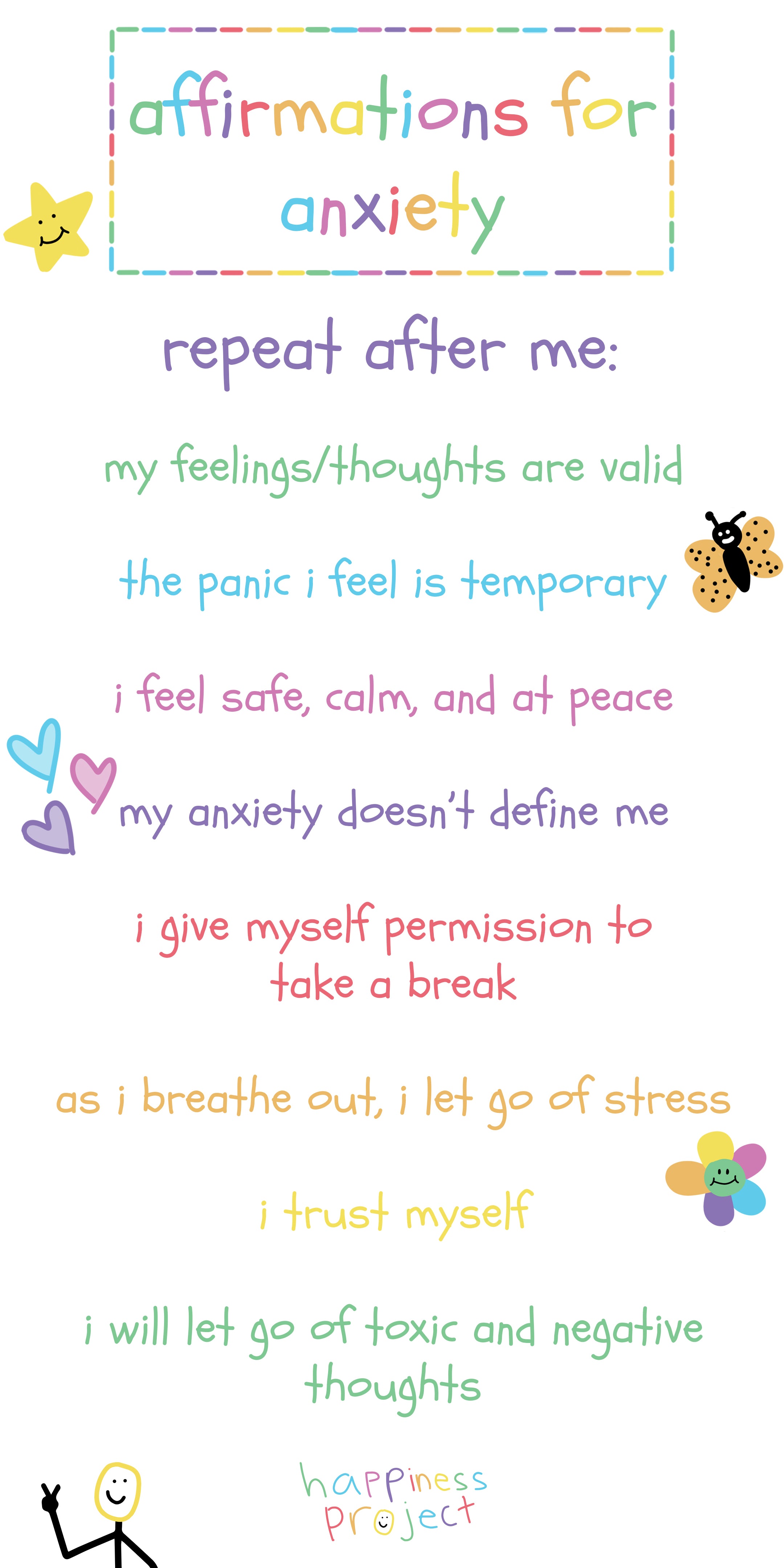
- Pair with Deep Breathing: Slow, deep breaths while repeating affirmations calm your body and mind.
- Use Visuals: Add images or colors to your written affirmations for extra impact.
- Practice Self-Compassion: Speak to yourself as you would to a friend.
- Try Group Affirmations: Share affirmations with a friend or support group. Speaking together can boost confidence.
- Track Your Progress: Keep a journal of your thoughts and feelings. Notice changes over time.
Two Non-obvious Insights
- Many women find that combining affirmations with movement, like walking or yoga, makes the statements feel more real. The physical activity helps anchor the words in the body, not just the mind.
- Sometimes, affirmations work better when you whisper them quietly rather than saying them loudly. Whispering feels more intimate and can help you connect with your inner self.
Credit: happinessproject.com
How To Overcome Resistance To Affirmations
Some women feel awkward or doubtful when using affirmations. This is normal. Here are ways to move past resistance:
Be Honest With Yourself
If an affirmation feels strange, admit it. You do not have to force yourself. Try softer statements like “I am open to feeling better. ”
Start Small
Begin with one affirmation. Repeat it once a day. As it feels more comfortable, add more.
Use Affirmations In Private
You do not need to share your affirmations with others. Use them in private moments, like before bed or during a shower.
Allow Time
Give yourself permission to take time. Affirmations are not about perfection—they are about progress.
Affirmations For Specific Types Of Anxiety
Women experience anxiety in different ways. Here are examples of affirmations for common types:
Social Anxiety
- “I am comfortable sharing my thoughts.”
- “I connect easily with others.”
Health Anxiety
- “I trust my body to stay healthy.”
- “I focus on what I can control.”
Work Anxiety
- “I am capable and prepared.”
- “I am valued at work.”
Parenting Anxiety
- “I am a loving and patient mother.”
- “I give myself grace.”
Relationship Anxiety
- “I am worthy of love and respect.”
- “I communicate openly and honestly.”
General Anxiety
- “I choose calmness.”
- “I am safe in this moment.”
Each type of anxiety may need a different approach. Adjust the affirmations to fit your unique situation.
Table: Choosing The Right Affirmation For Your Anxiety
Here’s a quick reference to help you pick the best affirmation for your situation:
| Anxiety Type | Suggested Affirmation | When to Use |
|---|---|---|
| Social | I am comfortable sharing my thoughts | Before social events |
| Health | I trust my body to stay healthy | During health worries |
| Work | I am capable and prepared | Before important meetings |
| Parenting | I give myself grace | During parenting stress |
| Relationship | I am worthy of love and respect | After arguments or doubts |
| General | I choose calmness | Any time anxiety appears |
How To Measure Progress With Affirmations
It is important to notice how affirmations are affecting you. Here are ways to track progress:
- Journal Your Feelings: Write about your mood before and after using affirmations.
- Rate Your Anxiety: Use a scale from 1-10 to rate your anxiety level daily.
- Notice Changes: Look for moments when you react more calmly or feel more confident.
- Celebrate Small Wins: Every step forward matters. Celebrate improvements, even if they are tiny.
Non-obvious Insight
Some women miss subtle signs that affirmations are working, such as sleeping better or feeling less tense during daily tasks. Pay attention to these small changes—they show real progress.
Affirmations And Support Systems
Affirmations are helpful, but having support makes them stronger. You can use affirmations with:
- Therapists: Share your affirmations in therapy sessions.
- Support Groups: Join groups for women with anxiety. Share your favorite affirmations.
- Friends and Family: Ask loved ones to remind you of your affirmations.
For more information about mental health support, visit National Institute of Mental Health.
Table: Affirmations Vs. Other Support Strategies
See how affirmations compare to other support strategies:
| Strategy | Strengths | Limitations |
|---|---|---|
| Affirmations | Easy, private, flexible | May need support for severe anxiety |
| Therapy | Professional guidance, deeper understanding | Requires time and resources |
| Support Groups | Shared experience, social support | May be less private |
| Self-Care Activities | Reduces stress, boosts mood | Not always enough alone |

Credit: nunziadreams.com
Frequently Asked Questions
What Are Positive Affirmations And How Do They Help Women With Anxiety?
Positive affirmations are short, encouraging statements repeated to help shift your mindset from negative to positive. For women with anxiety, they can break patterns of worry, boost confidence, and encourage calmness. Regular use helps train your brain to focus on strengths and reduce anxious thoughts.
How Often Should I Use Positive Affirmations For Anxiety?
You can use affirmations daily, or whenever anxiety appears. Many women find it helpful to repeat affirmations in the morning, before stressful events, or during moments of worry. Consistency is important—make it a habit for best results.
Can Affirmations Really Reduce Anxiety, Or Is It Just A Placebo Effect?
Affirmations are supported by research in psychology. They help change thinking patterns and can reduce anxiety over time. While they are not a cure, they offer practical support. For severe anxiety, affirmations work best when combined with other therapies.
How Do I Know If My Affirmation Is Working?
Track your progress by journaling, rating your anxiety, and noticing small changes in your mood or reactions. Look for signs like feeling calmer, more confident, or less tense. Progress may be slow, but every improvement matters.
What If I Feel Awkward Using Affirmations?
Feeling awkward is common. Start with gentle statements and use affirmations privately. Over time, they will feel more natural. If discomfort continues, try pairing affirmations with other self-care activities or talk to a therapist for guidance.
Words can be a powerful tool in your journey with anxiety. Positive affirmations are simple, flexible, and personal. With patience and practice, they can help you build strength, self-compassion, and calm. Remember, progress is not always fast or obvious—but every step forward counts.
Whether you use affirmations alone or with other support, you are taking meaningful action toward a more peaceful and confident life.
