

Positive Affirmations for Quitting Smoking: Boost Your Willpower
Quitting smoking is one of the most difficult challenges many people face. The addiction is powerful, and the habits around smoking can be hard to change. But there is hope. Positive affirmations offer a practical, science-backed tool that can help smokers break free from nicotine and build a healthier life.
These simple statements, repeated daily, can shift your mindset and make quitting easier. In this article, you'll discover how positive affirmations work for quitting smoking, the best ways to use them, and helpful tips to stay smoke-free for good. With clear examples, expert advice, and real-world strategies, you'll get everything you need to use affirmations as your ally in the journey to quit smoking.
Why Positive Affirmations Matter In Quitting Smoking
Positive affirmations are not just feel-good phrases. They are powerful tools that help reshape thoughts and beliefs. When you say an affirmation, you reinforce a new idea about yourself, which gradually becomes your truth. For smokers, this is crucial. Nicotine addiction often creates negative self-talk—thoughts like "I can't quit," or "I need a cigarette to relax." These beliefs make quitting harder.
Changing negative beliefs starts with positive affirmations. Research shows that repeating affirmations reduces stress, improves confidence, and strengthens willpower. When you believe you can quit, your actions follow. Affirmations help rewire your brain, making it easier to resist cravings and stay motivated.
One non-obvious insight: Affirmations work best when combined with other strategies, like setting a quit date or finding social support. They are not magic words but a powerful piece of the puzzle.
How Positive Affirmations Work For Smokers
The brain is always looking for patterns. When you repeat a message, your mind starts to accept it as true. Smokers often have strong routines—smoking after meals, during breaks, or when stressed. Affirmations help break these routines by creating new mental habits.
For example, instead of reaching for a cigarette after a stressful meeting, you can repeat: "I am strong and calm without smoking." Over time, your brain connects stress relief with the affirmation instead of the cigarette.
Scientific studies also show that affirmations activate the reward centers in the brain. This is the same area that nicotine affects. When you use affirmations, you get a small boost of positivity, helping you fight cravings.
Another beginner insight: Affirmations are most effective when spoken aloud. Hearing your own voice makes the message more convincing. Writing them down or posting them around your home can also increase their power.
Crafting Effective Affirmations For Quitting Smoking
Not all affirmations are equal. To work well, your affirmation should be:
- Positive: Focus on what you want, not what you fear.
- Present tense: Say "I am smoke-free," not "I will quit someday."
- Personal: Use "I" or "my," so it feels real.
- Simple: Short statements are easier to remember and repeat.
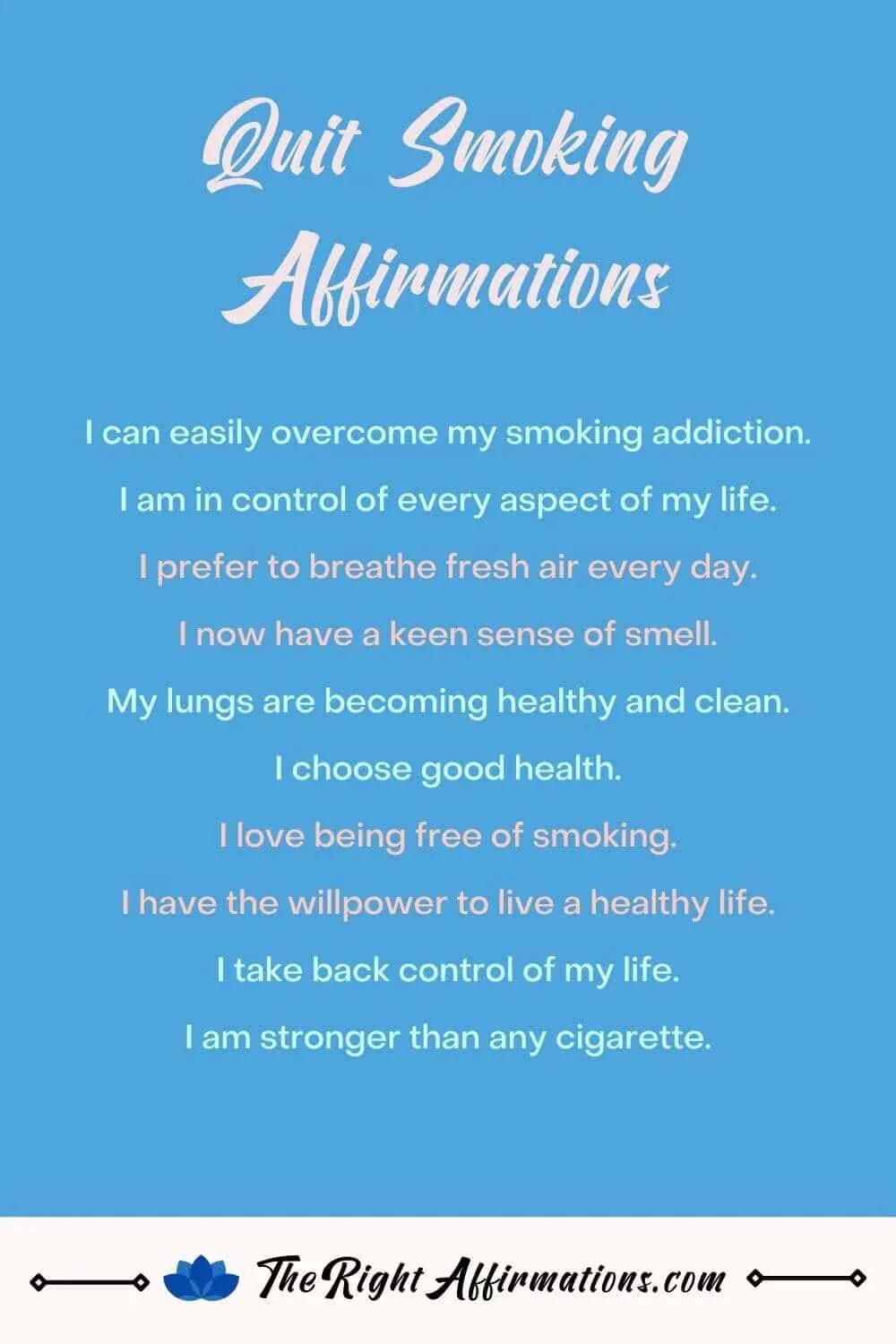
Here are some examples tailored for quitting smoking:
- I am free from smoking.
- My body is healthy and strong without cigarettes.
- I choose fresh air and clean lungs.
- I control my cravings.
- I am proud of my smoke-free life.
- I breathe easily and deeply.
- I am calm and relaxed without nicotine.
- Every day, I grow stronger.
- I enjoy life without smoking.
- I am committed to quitting for good.
You can create your own affirmation based on your goals. If you want to quit for your family, try: "I am creating a healthier future for my loved ones."
Using Affirmations In Daily Life
Affirmations are most effective when used regularly. Here are ways to build them into your routine:
- Morning Routine: Start your day by saying your affirmation out loud. This sets a positive tone and reminds you of your goal.
- During Cravings: When you feel the urge to smoke, repeat your affirmation. It can help distract your mind and weaken the craving.
- Before Bed: End your day with affirmations. This reinforces your progress and builds confidence.
- On Notes: Write your affirmations on sticky notes and place them where you'll see them—on your mirror, fridge, or car dashboard.
- Phone Reminders: Set reminders to repeat your affirmations throughout the day.
Consistency is key. The more you repeat your affirmation, the more your brain accepts it. If you miss a day, don't worry. Get back on track as soon as you can.
Credit: unfinishedsuccess.com
Comparing Affirmations With Other Quit-smoking Strategies
Many people wonder how affirmations stack up against other tools for quitting smoking. Here's a clear comparison:
| Strategy | Main Benefit | Common Challenge | Best Use |
|---|---|---|---|
| Positive Affirmations | Boost confidence and motivation | Requires regular practice | Daily routines, during cravings |
| Nicotine Replacement Therapy | Reduces withdrawal symptoms | May not address mental habits | Physical cravings |
| Support Groups | Emotional encouragement | Finding the right group | Social support |
| Behavioral Therapy | Changes habits and triggers | Requires professional help | Deep-seated habits |
Affirmations work well when combined with other methods. For example, using affirmations while on nicotine patches or attending support meetings gives you a mental and emotional boost.
Real-life Examples: Smokers Who Quit With Affirmations
Hearing success stories can make quitting feel possible. Here are real examples:
- Maria smoked for over ten years. She started using the affirmation, "I am free from cigarettes and proud of my journey. " She repeated it every morning and whenever she felt cravings. Maria also wrote her affirmation on her bathroom mirror. After three months, she was smoke-free and felt more confident.
- John wanted to quit for his children. He used the affirmation, "I am creating a healthy life for my family. " He set reminders on his phone and shared his goal with his partner. John combined affirmations with nicotine gum and support from his friends. He quit after four weeks and stayed smoke-free.
- Sophie struggled with stress smoking. Her affirmation was, "I am calm and strong without smoking. " She practiced deep breathing with her affirmation during stressful moments. Sophie found that affirmations helped her stay focused and relaxed.
These stories show that affirmations are practical and can fit into any lifestyle.
The Science Behind Positive Affirmations
Positive affirmations are not just motivational phrases—they are backed by science. Studies show that repeating affirmations activates the prefrontal cortex, the part of the brain involved in planning and self-control. This helps smokers resist urges.
One study found that people who used affirmations as part of their quit plan were more likely to stay smoke-free after six months. Another study noted lower stress levels in smokers who practiced daily affirmations.
Affirmations also improve self-esteem. When you believe you are strong and capable, it becomes easier to make healthy choices. This is important because low confidence often leads to relapse.
An important insight: Affirmations can reduce guilt and shame. Many smokers feel bad about their addiction. Positive statements help replace negative feelings with hope and motivation.
For more scientific details, see this research article from the National Institutes of Health.
Building Your Own Quit-smoking Affirmation Plan
A good affirmation plan makes quitting more manageable. Here are steps to create your own:
- Pick Your Affirmations: Choose two or three statements that feel powerful to you.
- Set Times to Repeat: Decide when you'll say your affirmations—morning, during cravings, before bed.
- Write Them Down: Put them on paper, sticky notes, or in your phone.
- Track Progress: Keep a journal. Write down when you used your affirmation and how you felt.
- Adjust as Needed: If an affirmation isn't helping, change it. Make it more personal or positive.
Example plan:
- Morning: "I am free from smoking."
- Afternoon: "I control my cravings."
- Evening: "I am proud of my smoke-free life."
- Notes on mirror and fridge.
- Weekly journal entry on progress.
Common Mistakes When Using Affirmations
Affirmations are simple, but some mistakes can weaken their effect. Watch out for these:
- Being too vague: "I wish I could quit" is not as strong as "I am quitting smoking."
- Using negative words: Avoid "I don't want to smoke." Instead, use "I am smoke-free."
- Skipping repetition: Saying it once is not enough. Repeat daily.
- Not believing: If your affirmation feels fake, adjust it. Start with "I am learning to be smoke-free."
- Ignoring triggers: Affirmations help, but you must also avoid places and habits linked to smoking.
A practical tip: Pair your affirmation with deep breathing or a healthy habit, like drinking water. This strengthens the new routine.
How To Stay Motivated With Affirmations
Motivation can drop after a few days or weeks. Affirmations help, but you must keep them fresh:
- Change your affirmation: If it feels dull, create a new one.
- Celebrate progress: Reward yourself for smoke-free days.
- Share with friends: Tell someone your affirmation. It adds accountability.
- Visual reminders: Use photos, drawings, or objects that represent your goal.
If you slip and smoke a cigarette, don't give up. Repeat your affirmation and focus on your next smoke-free day.
Affirmations For Different Stages Of Quitting
Quitting is a journey with ups and downs. Affirmations can support you at every stage:
Before Quitting
- I am ready to quit smoking.
- I believe in my strength.
During Withdrawal
- I am patient as my body heals.
- Each craving makes me stronger.
After Quitting
- I am proud of my smoke-free life.
- I enjoy my fresh, healthy body.
Using stage-specific affirmations helps you stay focused and positive, no matter where you are in your journey.
Comparing Affirmation Approaches: Individual Vs Group Support
Some people use affirmations alone, while others share them in groups. Here's a comparison:
| Approach | Strengths | Weaknesses | Best For |
|---|---|---|---|
| Individual Practice | Personalized, flexible | May lack accountability | Self-motivated smokers |
| Group Support | Encouragement, shared success | May feel less private | Smokers who want social support |
Both approaches can work well. If you feel shy, start with individual practice. If you like encouragement, try a support group or online forum.
Affirmations And Stress Management
Stress is a big trigger for smoking. Many people light up a cigarette during tense moments. Affirmations can help manage stress:
- I am calm and in control.
- Stress does not control me.
- I choose healthy ways to relax.
Pairing affirmations with relaxation techniques like deep breathing or gentle exercise can make them even more effective. When you feel stressed, pause, repeat your affirmation, and take a slow breath.
The Role Of Visualization With Affirmations
Visualization is a powerful way to strengthen affirmations. When you picture yourself as a non-smoker, your brain starts to believe it.
Try this simple method:
- Close your eyes.
- Repeat your affirmation: "I am smoke-free and healthy."
- Imagine yourself enjoying fresh air, smiling, and feeling proud.
Visualization makes your affirmation more real. It also reduces anxiety and boosts confidence.

Credit: www.happierhuman.com
Tracking Progress And Adjusting Affirmations
Keeping track of your journey helps you stay motivated. Here’s how to monitor your progress:
- Keep a journal: Write your smoke-free days and how you feel.
- Record cravings: Note when they happen and how affirmations helped.
- Adjust affirmations: If you feel stuck, create a new statement.
Here’s a comparison of tracking methods:
| Method | Ease of Use | Motivation Level | Best For |
|---|---|---|---|
| Written Journal | Easy, low-tech | High, personal reflection | Private individuals |
| App Tracking | Requires phone/app | Medium, reminders | Tech-savvy users |
| Visual Charts | Requires setup | High, visual progress | Goal-oriented users |
Choose a method that fits your lifestyle. Tracking progress keeps you motivated and helps you spot patterns.
Helping Others Quit Smoking With Affirmations
If you know someone who wants to quit, sharing affirmations can help. Here’s how to support them:
- Suggest simple affirmations: "You are strong and can quit smoking."
- Encourage daily repetition: Remind them to use their affirmation.
- Celebrate milestones: Congratulate them on smoke-free days.
- Share your own story: If you’ve quit, let them know what worked for you.
Support from friends and family makes quitting easier. Positive affirmations are a great gift to share.

Credit: www.amazon.com
Affirmations For Long-term Success
Staying smoke-free is a lifelong journey. Affirmations can help maintain your progress:
- I am proud of my healthy life.
- I choose wellness every day.
- I enjoy freedom from smoking.
Review your affirmations regularly. Update them as your goals change. Long-term success comes from a positive mindset and ongoing motivation.
Frequently Asked Questions
What Are Positive Affirmations For Quitting Smoking?
Positive affirmations are short, encouraging statements that help you believe in your ability to quit smoking. They focus on the present, boost confidence, and shift your mindset from negative to positive.
How Often Should I Use Affirmations?
For best results, repeat your affirmation several times each day—morning, afternoon, and evening. Use them during cravings or stressful moments to strengthen your resolve.
Can Affirmations Replace Nicotine Patches Or Medication?
Affirmations are a mental tool. They work best when combined with physical aids like nicotine patches, medication, or support groups. Use affirmations to build willpower and address emotional triggers.
What If I Don’t Believe My Affirmation At First?
It’s normal for affirmations to feel strange or fake in the beginning. Start with simple, believable statements like "I am learning to be smoke-free." Over time, your confidence will grow.
How Long Does It Take For Affirmations To Help?
Results vary for each person. Some feel better after a few days, while others need weeks or months. The key is consistency. Repeat your affirmation daily and track your progress for best results.
Quitting smoking is a journey that takes courage and determination. Positive affirmations offer real support, helping you change your mindset and build a healthier life. By using affirmations daily, tracking your progress, and staying motivated, you can break free from nicotine and enjoy a smoke-free future.
Remember, every step counts—and you have the power to succeed.
