

Positive Affirmations Benefits: Transform Your Mindset Today
Positive Affirmations Benefits
Every day, millions of people use positive affirmations to improve their mood, boost their confidence, and change their mindset. But what is the real impact of these simple statements? Can repeating positive phrases truly transform your life? The answer is yes—when used correctly, affirmations can be a powerful tool for personal growth and well-being. This article explores the benefits of positive affirmations, how they work, and practical ways to use them effectively. You’ll find research-backed insights, real examples, and tips for making affirmations a natural part of your routine.
What Are Positive Affirmations?
Positive affirmations are short, encouraging statements that you say to yourself. They focus on what you want to achieve or believe. For example, “I am confident in my abilities” or “I handle challenges with strength.” These phrases help you direct your thoughts toward positive outcomes.
Affirmations are not just wishful thinking. They are based on the idea that your words and thoughts shape your mental state. By repeating positive statements, you can influence your subconscious mind, which affects your behavior and emotions.
The Science Behind Positive Affirmations
Many people wonder if affirmations are just “feel-good” phrases or if there is real science behind them. Research shows that positive affirmations can change brain patterns and influence how you view yourself.
In several studies, participants who practiced self-affirmation showed greater activity in areas of the brain linked to self-processing and reward. This means affirmations can help you feel better about yourself and motivate you to take positive action.
A well-known experiment found that people who used affirmations before stressful tasks had lower levels of the stress hormone cortisol. They performed better and felt more confident. Another study showed that affirmations helped students improve their grades by reducing anxiety and boosting their belief in their abilities.
| Benefit | Research Support | Example |
|---|---|---|
| Reduced stress | Lower cortisol levels after affirmations | “I am calm and relaxed” |
| Higher confidence | Improved self-image in brain scans | “I believe in myself” |
| Better performance | Higher test scores among students | “I can succeed in this exam” |

Credit: sparkinterestwithsara.com
How Positive Affirmations Work
Positive affirmations tap into the power of the mind. Your thoughts influence your feelings, which then affect your actions. When you repeat affirmations, you create new mental pathways. Over time, these pathways become stronger and shape your beliefs.
The process works through several steps:
- Repetition: Saying affirmations daily helps the brain recognize them as familiar.
- Visualization: When you speak a positive phrase, you often imagine it happening. This makes the message stronger.
- Emotional connection: Feeling the meaning of the affirmation increases its impact.
This method is similar to how athletes use mental rehearsal. By imagining success, they prepare their bodies and minds to perform better.
Key Benefits Of Positive Affirmations
Boosting Self-esteem
One of the most common uses for affirmations is to build self-esteem. If you struggle with self-doubt or negative self-talk, repeating supportive phrases can help you see yourself in a new light. Examples include:
- “I am worthy of respect.”
- “I accept myself as I am.”
- “My strengths are valuable.”
Over time, these statements replace old, negative beliefs. This process is especially helpful for people who grew up hearing criticism or doubt.
Reducing Stress And Anxiety
Stress and anxiety are often caused by worrying thoughts. Affirmations give your mind a new focus. When you say, “I am safe and secure,” or “I handle stress with ease,” you reduce the power of negative thinking.
Many therapists use affirmations as part of cognitive-behavioral therapy. This approach teaches people to challenge their fears and replace them with positive messages.
A practical tip: Combine affirmations with deep breathing. This helps your body relax while your mind focuses on positive ideas.
Improving Motivation And Productivity
Affirmations are not only for emotional health. They can also boost motivation and productivity. By repeating phrases like “I am focused and efficient,” you set clear intentions for your day.
Students and professionals often use affirmations to overcome procrastination. When your mind believes you are capable and organized, it’s easier to start tasks and stay committed.
A non-obvious insight: Motivation grows faster when you link affirmations to specific actions. For example, “I finish my assignments on time” is more effective than “I am productive.”
Supporting Mental Health
Mental health experts recommend affirmations as a simple tool for managing depression and low mood. When you feel sad or discouraged, positive statements can lift your spirit. Examples:
- “I am not defined by my mistakes.”
- “Every day, I grow stronger.”
Affirmations are not a replacement for medical treatment, but they can support recovery. Regular practice helps people notice small improvements in their mood and outlook.
Building Resilience
Resilience is the ability to bounce back from setbacks. Affirmations strengthen this skill by reminding you of your inner resources. Phrases like “I overcome challenges with courage” encourage you to face difficulties with a positive attitude.
A comparison table highlights the difference between negative and positive self-talk:
| Negative Self-Talk | Positive Affirmation | Impact |
|---|---|---|
| “I can’t handle this” | “I have the strength to overcome” | Higher resilience, better coping |
| “I always fail” | “I learn from every experience” | Growth mindset, less fear |
| “Nobody supports me” | “I build supportive relationships” | Improved social confidence |
Enhancing Relationships
Affirmations are not only about self-improvement. They also help build stronger relationships. By repeating phrases like “I communicate clearly” or “I value the people around me,” you become more open and supportive.
Couples and families often use affirmations together. This creates a positive environment and helps resolve conflicts. For example, “We solve problems together” strengthens teamwork and trust.
Supporting Physical Health
A surprising benefit: affirmations can improve physical health. When you believe in your ability to heal and stay healthy, your body responds positively. Studies show that patients who use affirmations recover faster and feel less pain.
Common health-related affirmations include:
- “My body is strong and healthy.”
- “I make choices that support my well-being.”
Pairing affirmations with healthy habits creates a powerful routine. For example, say “I enjoy nourishing foods” before meals.
Increasing Happiness And Optimism
Positive affirmations encourage a more optimistic outlook. When you focus on good possibilities, you feel happier and more hopeful. This change happens gradually, but it can lead to lasting improvements in your mood.
A practical tip: Write down three affirmations every morning. This sets a positive tone for your day.
Helping With Goal Achievement
Affirmations can help you achieve goals by keeping your mind focused on success. When you say “I am committed to my goals,” you remind yourself to take action. This works best when your affirmations are clear and specific.
A non-obvious insight: Visualize the steps needed to reach your goal, not just the outcome. For example, “I complete my daily practice” is more effective than “I will be successful.”
How To Create Effective Affirmations
Not all affirmations work equally well. To get the best results, follow these guidelines:
- Keep them positive: Avoid words like “not” or “don’t.” Focus on what you want.
- Make them specific: Clear, detailed statements are more powerful.
- Use present tense: Say “I am confident” instead of “I will be confident.”
- Add emotion: Feel the meaning as you speak.
- Repeat regularly: Daily practice creates lasting change.
Some people make mistakes, such as using vague or unrealistic affirmations. For example, “I am rich” may not feel true. Instead, try “I manage my finances wisely. ”
Common Mistakes In Using Affirmations
Even though affirmations are simple, beginners often make mistakes. Here are a few to watch out for:
- Choosing statements that feel false: If you don’t believe your affirmation, it won’t work. Start with phrases that feel believable, then grow from there.
- Using negative language: Avoid affirmations like “I am not weak.” Instead, say “I am strong.”
- Skipping repetition: Affirmations need to be repeated daily to create change.
- Ignoring emotional connection: If you just say the words without feeling, they lose power.
A practical tip: Adjust your affirmations as your confidence grows. For example, move from “I am learning to be confident” to “I am confident in my abilities.”
Real-life Examples Of Affirmations
Many people use affirmations in different areas of their lives. Here are some examples:
For Students
- “I understand new concepts easily.”
- “I stay calm during exams.”
- “I manage my time well.”
For Professionals
- “I handle challenges at work with skill.”
- “I communicate clearly with my team.”
- “I am open to new opportunities.”
For Parents
- “I support my children with love.”
- “I am patient and understanding.”
- “I balance work and family well.”
For Health And Fitness
- “I enjoy being active.”
- “I make healthy choices every day.”
- “I respect my body’s needs.”
These examples show how affirmations can be tailored to your goals and challenges.
Comparison: Affirmations Vs. Other Self-help Methods
Affirmations are often compared to other self-help tools like meditation, journaling, and visualization. Here’s a quick comparison:
| Method | Main Benefit | Best For | Requires |
|---|---|---|---|
| Affirmations | Change thinking patterns | Daily mindset improvement | Consistency, belief |
| Meditation | Reduce stress | Calming the mind | Quiet space, focus |
| Journaling | Self-reflection | Understanding feelings | Time, honesty |
| Visualization | Boost motivation | Goal achievement | Imagination, clarity |
Combining affirmations with other tools can increase their impact. For example, write your affirmations in a journal, then meditate on them.
How To Make Affirmations A Habit
To get the most from affirmations, you need to use them regularly. Here are some practical ways to build the habit:
- Set a time: Choose a moment each day, such as morning or bedtime.
- Write them down: Keep a notebook or sticky notes.
- Say them aloud: Speaking boosts their effect.
- Use reminders: Set phone alerts or place notes where you’ll see them.
- Pair with another habit: Link affirmations to brushing your teeth or drinking coffee.
A non-obvious tip: Record your affirmations and listen to them. Hearing your own voice can make the message stronger.
Evidence-based Benefits Of Positive Affirmations
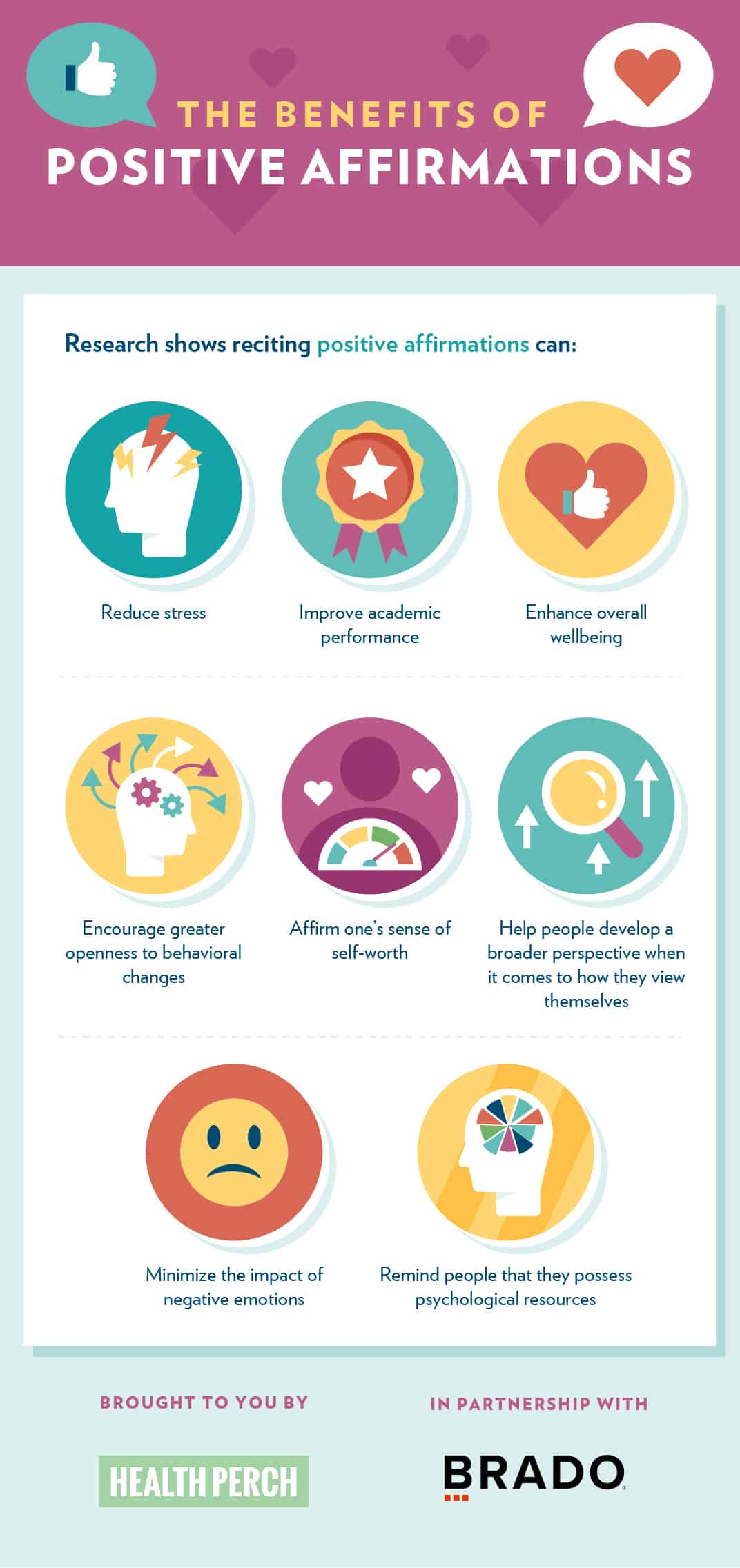
Positive affirmations have been tested in many scientific studies. Here are some key findings:
- Improved academic performance: Students who used affirmations before exams scored higher.
- Lower stress: People practicing affirmations felt calmer in stressful situations.
- Better health outcomes: Patients using affirmations during recovery had fewer complications.
- Enhanced problem-solving: Affirmation users showed greater creativity and persistence.
A study published by National Institutes of Health found that self-affirmation helps people deal with threats and challenges more effectively.
Credit: ecogreenlove.com
Practical Tips For Getting Started
If you’re new to affirmations, follow these steps:
- Identify your goals: What do you want to change or improve?
- Write three affirmations: Keep them short and positive.
- Practice daily: Speak or write your affirmations every morning.
- Visualize success: Imagine yourself living the affirmation.
- Adjust as needed: Change your affirmations as your confidence grows.
Don’t worry if you don’t see instant results. Affirmations work best over time. Stay consistent, and notice small changes in your thoughts and feelings.
Who Can Benefit Most From Positive Affirmations?
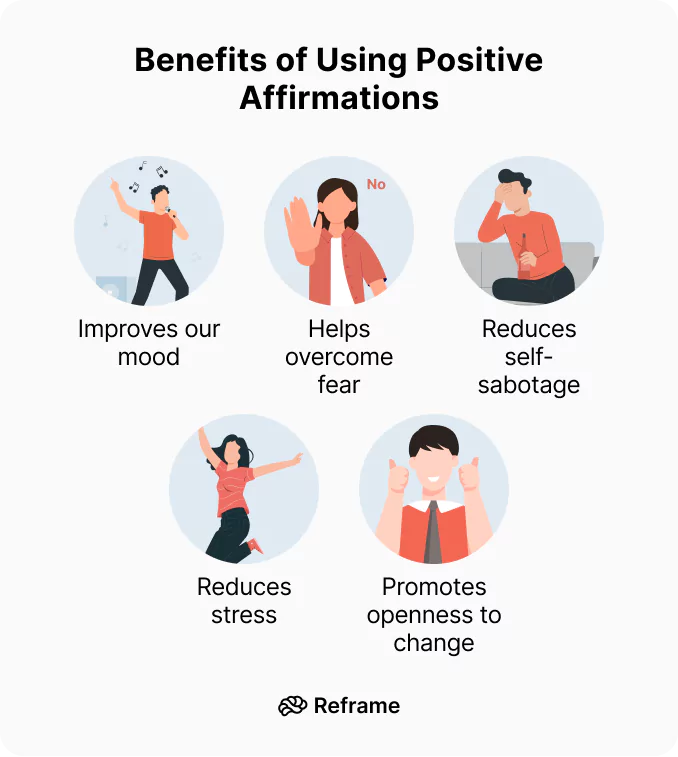
Affirmations are useful for almost everyone, but some groups benefit more:
- Students: For motivation and confidence
- Professionals: To manage stress and improve performance
- Parents: For patience and support
- People with health challenges: To boost healing and optimism
Even if you don’t have big problems, affirmations can help you maintain a positive mindset and avoid negative thinking.
Credit: www.joinreframeapp.com
Advanced Uses: Affirmations For Specific Challenges
Affirmations can be tailored for unique situations:
Overcoming Fear
If you face fears, use phrases like:
- “I am brave in new situations.”
- “I trust myself to handle challenges.”
Handling Criticism
When you receive criticism, affirmations help you stay confident:
- “I accept feedback and grow stronger.”
- “I value my own opinion.”
Managing Change
During life changes, affirmations provide stability:
- “I adapt easily to new situations.”
- “I welcome positive change.”
A non-obvious insight: Use affirmations to prepare for difficult conversations or events. For example, before a job interview, say “I express myself clearly and confidently.”
Measuring The Impact Of Affirmations
It’s easy to wonder if affirmations are working. Here’s how to measure their impact:
- Track your mood: Keep a diary of how you feel before and after practicing affirmations.
- Notice behavior changes: Are you more confident, calm, or motivated?
- Ask for feedback: Friends or family may notice changes in your attitude.
Most people see small improvements after a few weeks of daily practice. For bigger challenges, affirmations work best when combined with other self-help tools.
Frequently Asked Questions
What Are The Best Positive Affirmations To Use?
The best affirmations are simple, specific, and positive. Examples include “I am confident,” “I handle stress calmly,” and “I am making progress every day. ” Choose affirmations that match your goals and feel believable.
How Often Should I Repeat Positive Affirmations?
For best results, repeat affirmations daily. Many people say them in the morning or before bed. You can also use them during stressful moments or before important tasks.
Can Positive Affirmations Help With Anxiety?
Yes, affirmations can reduce anxiety by shifting your focus from worry to positive outcomes. Combine affirmations with breathing exercises for extra benefit. For severe anxiety, use affirmations alongside professional treatment.
How Long Does It Take To See Results From Affirmations?
Most people notice changes in mood or confidence within a few weeks of daily practice. For deeper issues, it may take longer. Consistency is key—keep repeating your affirmations even if progress feels slow.
Is There Scientific Proof That Affirmations Work?
Many studies show that affirmations can improve stress, confidence, and performance. They change brain activity and help people handle challenges better. For more details, see research by the National Institutes of Health.
Positive affirmations are more than just words—they are a tool for transforming your mind and improving your life. With regular practice, you can enjoy higher self-esteem, less stress, and greater happiness. Whether you want to boost motivation, recover from setbacks, or simply start your day on a positive note, affirmations offer a simple and effective solution.
If you’re ready for change, begin today—your future self will thank you.
