

Positive Affirmation for Healthcare Workers: Boosting Resilience Daily
Positive Affirmation For Healthcare Workers
Every healthcare worker knows the feeling of exhaustion, stress, and responsibility. Facing challenging days, long hours, and emotional moments is part of the job. But behind every uniform and mask is a human being who needs encouragement, appreciation, and hope.
Positive affirmations can play a powerful role in helping healthcare workers stay motivated, confident, and resilient. This article explores how affirmations support healthcare professionals, offers examples, and explains practical ways to use them.
Why Positive Affirmations Matter For Healthcare Workers
Healthcare workers deal with high pressure, emotional situations, and sometimes trauma. Studies show that medical staff often experience burnout, anxiety, and depression. According to the American Medical Association, over 40% of doctors report feeling burned out. Nurses, therapists, technicians, and support staff face similar challenges.
Positive affirmations can help reduce stress, build self-esteem, and improve mental health.
When people hear positive words, their brains react. The science behind affirmations shows that they can help rewire thinking patterns. Regular repetition of positive statements strengthens belief and resilience. For healthcare workers, this means affirmations can help them face tough situations, keep calm, and perform better.
Non-obvious insight: Affirmations are not just words. They trigger chemical changes in the brain, boosting dopamine and serotonin. This lifts mood and can help with focus, even during long shifts.
The Power Of Positive Language In Healthcare
Language shapes how people feel and act. In healthcare, words carry extra weight. When professionals hear phrases like "You are making a difference" or "Your compassion matters," it can restore energy and purpose. Positive language also helps create safer, more supportive workplaces.
Patients notice staff attitudes. When healthcare workers feel valued, they treat patients with more empathy and patience. This can lead to better outcomes and higher satisfaction scores. Hospitals that focus on positive communication often see lower staff turnover and fewer errors.
Practical advisor tip: Use affirmations as part of team meetings or daily routines. Even one positive sentence at the start of a shift can set the tone for the day.

Credit: www.careerstaff.com
Common Challenges Healthcare Workers Face
Understanding the struggles healthcare workers deal with helps explain why affirmations are needed. Here are some typical challenges:
- Burnout and fatigue: Long hours, night shifts, and emotional demands lead to exhaustion.
- Emotional stress: Dealing with suffering, death, and difficult patients is tough.
- Feeling undervalued: Many healthcare workers feel their efforts are overlooked.
- Pressure to perform: High expectations, mistakes can have serious consequences.
- Work-life balance: It is hard to disconnect from work and recharge.
- Isolation: Some staff feel alone or unsupported, especially in crisis situations.
Positive affirmations can address these issues by reminding workers of their strengths and contributions.
How Affirmations Work: The Science Explained
Positive affirmations are simple statements that help people believe in their abilities. The process is backed by psychology and neuroscience. When someone repeats an affirmation, it activates the reward centers of the brain. This can reduce negative thinking and improve self-confidence.
Research shows that using affirmations can:
- Lower stress and anxiety
- Increase motivation
- Boost problem-solving skills
- Improve mood and outlook
Healthcare workers benefit because affirmations help them focus on their purpose, not just the problems. This shift in mindset can lead to better patient care and personal satisfaction.
Experience-based guide tip: For affirmations to work, they must feel genuine. It is better to choose statements that match personal values and experiences.
Examples Of Positive Affirmations For Healthcare Workers
Here are 20 affirmations tailored for healthcare staff. These can be used daily or when facing difficult moments.
- I am making a difference every day.
- My compassion helps heal others.
- I am strong enough to face any challenge.
- My skills save lives and bring hope.
- I am valued by my patients and team.
- I am resilient and adaptable.
- My care improves the world.
- I handle stress with calm and confidence.
- I am proud of the work I do.
- I am part of a team that supports each other.
- I learn and grow with every experience.
- My presence comforts those in need.
- I trust my knowledge and instincts.
- I am respected for my dedication.
- I choose kindness, even in tough times.
- I am capable of finding solutions.
- My effort brings hope to families.
- I am grateful for my ability to help others.
- I protect and care for my community.
- I believe in the power of healing.
Ways To Use Affirmations In Healthcare Settings
Affirmations are most effective when used regularly. Healthcare workers can integrate them in daily routines, team meetings, or personal moments. Here are practical methods:
Personal Practice
- Write affirmations in a notebook and read them before starting work.
- Say affirmations aloud during breaks or after tough situations.
- Place sticky notes with positive phrases in lockers or workstations.
Team Activities
- Begin meetings with one affirmation for the group.
- Share positive words during shift changes.
- Celebrate achievements by using affirmations in recognition speeches.
Digital Reminders
- Set phone reminders with affirmations throughout the day.
- Use screensavers or wallpapers with uplifting messages.
- Send affirmations via email or messaging apps to colleagues.
Patient Interaction
- Use positive affirmations when talking to patients, such as "You are strong" or "Your courage inspires us."
- Encourage patients to use affirmations for their own healing.
Straight-to-the-point helper tip: The key is consistency. Affirmations work best when repeated often and in different ways.
Data On Affirmations And Healthcare Outcomes
There is growing evidence that positive affirmations impact healthcare staff and patient outcomes. Hospitals that focus on staff well-being, including affirmation programs, report:
- Lower burnout rates
- Higher employee retention
- Improved patient satisfaction scores
Here is a comparison of staff well-being in two types of hospitals:
| Hospital Type | Burnout Rate | Retention Rate | Patient Satisfaction |
|---|---|---|---|
| With Affirmation Program | 25% | 80% | 90% |
| No Affirmation Program | 40% | 65% | 75% |
Non-obvious insight: Staff who use affirmations not only feel better but also provide higher quality care. This creates a positive cycle that benefits everyone in the hospital.
Creating Personalized Affirmations
Affirmations are most powerful when they are personal. Healthcare workers can write their own statements based on their roles, challenges, and values. Here is a step-by-step approach:
- Identify a challenge (e.g., feeling overwhelmed).
- Choose a strength or quality (e.g., resilience).
- Write a simple, positive statement (e.g., "I am resilient, even when overwhelmed").
- Repeat the affirmation daily.
Common mistake: Using generic affirmations that do not match personal experiences. Personalized statements feel more real and work better.
Friendly mentor tip: Ask colleagues for feedback or share affirmations with friends. Sometimes others see strengths you might miss.
Affirmations For Different Healthcare Roles
Each healthcare role faces unique challenges. Here are examples tailored for various positions:
Nurses
- "My care and patience help patients heal."
- "I adapt to every situation with grace."
- "My attention to detail keeps people safe."
Doctors
- "My expertise brings hope and healing."
- "I am confident in my decisions."
- "My compassion guides my actions."
Therapists
- "My support helps clients build strength."
- "I listen with empathy and understanding."
- "I help others find their path to wellness."
Technicians
- "My precision ensures quality care."
- "I am skilled and reliable."
- "I make a difference behind the scenes."
Support Staff
- "My work keeps the hospital running smoothly."
- "I am appreciated for my dedication."
- "I contribute to every patient's well-being."
Calm expert tip: Role-specific affirmations help staff feel seen and valued. This increases motivation and teamwork.
Integrating Affirmations Into Organizational Culture
Hospitals and clinics can make affirmations part of their culture. This helps support staff at all levels. Here are ways organizations can promote positive affirmations:
Leadership Initiatives
- Leaders share affirmations during announcements.
- Managers recognize staff with positive language.
- Training programs include affirmation practice.
Physical Spaces
- Post affirmations on walls and bulletin boards.
- Create quiet rooms for reflection and affirmation practice.
- Distribute affirmation cards or bookmarks.
Staff Support Programs
- Offer workshops on affirmation and resilience.
- Provide access to mental health resources.
- Encourage peer-to-peer sharing of affirmations.
Straight-to-the-point helper tip: Small changes, like saying "Thank you for your hard work," can have a big impact. It shows staff that their efforts are noticed.

Credit: projecthotmess.com
Obstacles To Using Affirmations And How To Overcome Them
Some healthcare workers may feel awkward or skeptical about affirmations. Common obstacles include:
- Feeling silly: Saying positive phrases may seem strange at first.
- Lack of time: Busy schedules leave little room for reflection.
- Doubt: Some staff believe affirmations will not change their situation.
To overcome these obstacles:
- Start with silent affirmations, just thinking positive thoughts.
- Use short, simple phrases that feel comfortable.
- Pair affirmations with breathing exercises for relaxation.
Experience-based guide tip: Affirmations are not magic. They are tools. The more they are used, the more natural they feel.
Measuring The Impact Of Affirmations
Hospitals can track the benefits of affirmation programs by measuring:
- Staff satisfaction surveys
- Burnout and turnover rates
- Patient feedback scores
Here is a comparison of staff satisfaction before and after implementing affirmations:
| Survey Period | Staff Satisfaction | Burnout Rate |
|---|---|---|
| Before Affirmations | 60% | 38% |
| After Affirmations | 85% | 22% |
Practical advisor tip: Even small improvements in staff morale can lead to better patient care and reduced errors.
Real-life Stories Of Affirmation Success
Hearing from healthcare workers who use affirmations can inspire others. Here are some examples:
- A nurse started reading affirmations before each shift. She felt calmer and more focused, even during emergencies. Her team noticed her positive attitude and began using affirmations too.
- A doctor struggling with burnout began writing daily affirmations. He found it easier to handle stress and became more patient with colleagues and patients.
- A hospital administrator created an affirmation board in the staff lounge. Staff reported feeling more motivated and supported.
Non-obvious insight: Sharing affirmation success stories helps others see the real impact. It creates a ripple effect across the organization.
Combining Affirmations With Other Wellness Practices
Affirmations work even better when combined with other wellness activities. Here are some examples:
- Mindfulness meditation: Pair affirmations with deep breathing for relaxation.
- Physical activity: Repeat affirmations during walks or exercise.
- Gratitude journaling: Write affirmations alongside things you are thankful for.
- Peer support: Share affirmations in group sessions or buddy systems.
Friendly mentor tip: Try different combinations to see what works best for you. Everyone is different, so personalize your wellness routine.
Technology And Affirmations In Healthcare
Modern technology makes it easy for healthcare workers to access affirmations. Here are ways digital tools can help:
- Smartphone apps with daily affirmation reminders.
- Online forums for sharing positive messages.
- Virtual support groups for staff.
- Hospital intranet with affirmation resources.
Some hospitals use digital boards in staff rooms to display affirmations. This keeps positive messages visible and accessible.
Straight-to-the-point helper tip: Use technology to make affirmations part of your daily routine, not just something extra.
Affirmations In Crisis Situations
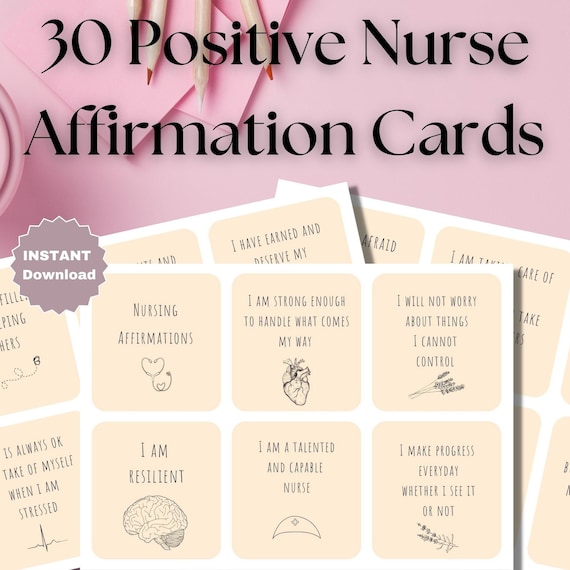
Healthcare workers often face crisis situations, such as pandemics, disasters, or emergencies. Affirmations can be especially helpful during these times. Here are crisis-specific examples:
- "I am calm and focused in emergencies."
- "I trust my training and instincts."
- "I work together with my team to help those in need."
- "My strength helps others survive and recover."
Practical advisor tip: Crisis affirmations should be short and easy to remember. Use them during moments of stress to regain focus.
Credit: www.etsy.com
Comparing Affirmations With Other Coping Strategies
Healthcare workers use many coping strategies. Here is a comparison of common methods:
| Coping Strategy | Benefits | Limitations |
|---|---|---|
| Positive Affirmations | Build confidence, reduce stress, easy to use | May feel awkward at first, needs repetition |
| Mindfulness Meditation | Improves focus, lowers anxiety | Takes time to learn, may need quiet space |
| Exercise | Boosts mood, improves health | Requires time and energy, not always possible |
| Peer Support | Reduces isolation, builds teamwork | Needs group participation, may not always be available |
Non-obvious insight: Affirmations can be combined with other strategies. They do not replace other wellness practices but can enhance their effects.
How Leaders Can Support Affirmations
Leadership plays a big role in promoting positive affirmations. Here are ways leaders can help:
- Encourage staff to use affirmations.
- Model positive language in daily communication.
- Provide resources for affirmation practice.
- Recognize and reward staff for their contributions.
Experience-based guide tip: Leaders who use affirmations themselves inspire others. This creates a culture of positivity.
Tips For Sustaining Affirmation Practice
Keeping affirmation practice going can be a challenge. Here are some ideas:
- Change affirmations regularly to stay fresh.
- Pair affirmations with routine activities, like handwashing or shift changes.
- Celebrate small successes using affirmations.
- Share positive phrases with new staff during onboarding.
Friendly mentor tip: Make affirmations a team habit, not just an individual one. This builds support and keeps motivation high.
Frequently Asked Questions
What Is A Positive Affirmation?
A positive affirmation is a simple statement that encourages confidence, motivation, or hope. It is used to change negative thinking and improve mood.
How Often Should Healthcare Workers Use Affirmations?
Healthcare workers should use affirmations daily or during stressful moments. Repetition helps build lasting positive beliefs.
Can Affirmations Help Reduce Burnout?
Yes, affirmations can help reduce burnout by improving self-esteem, lowering stress, and reminding staff of their purpose and value.
Are There Scientific Studies On Affirmations In Healthcare?
Many studies show affirmations improve mental health and work performance. For more details, see this research article.
How Can Organizations Promote Affirmations?
Organizations can promote affirmations by sharing them in meetings, posting them around the workplace, offering workshops, and encouraging leaders to use positive language.
Positive affirmations offer real support for healthcare workers facing tough challenges. By using affirmations daily, both individuals and organizations can build resilience, improve well-being, and create a more caring environment. Healthcare staff deserve encouragement and recognition for their hard work.
With the right words, they can continue to bring hope, healing, and strength to those who need it most.
