

Love Self Affirmations: Transform Your Mindset for Lasting Confidence
Love Self Affirmations
Feeling good about yourself can be tough, especially when life brings stress or difficult emotions. Many people struggle with self-doubt, low confidence, or the feeling they aren’t “enough.” But there’s a simple tool that can help: love self affirmations. These short, positive statements can change the way you think and feel about yourself.
Love self affirmations are not magic, but they do work. Psychology studies show that repeating positive statements can improve mood, build confidence, and reduce stress. But most people don’t know how to use affirmations well. Some give up because they feel silly or don’t see quick results.
Others never try because they think affirmations are just empty words. In this article, you’ll learn what love self affirmations are, why they matter, and how to make them work for you. You’ll find examples, practical tips, and real-life stories—all in simple, clear language.
What Are Love Self Affirmations?
Love self affirmations are short phrases you say to yourself to boost your sense of self-worth, confidence, and inner peace. They focus on loving and accepting yourself, even when you make mistakes or feel imperfect. These affirmations can be spoken out loud, written down, or repeated silently in your mind.
For example:
- I am worthy of love.
- I accept myself as I am.
- My heart is open to kindness.
The goal is not to ignore reality or pretend everything is perfect. Instead, affirmations help you build a more positive mindset and face challenges with strength. They encourage you to treat yourself with the same kindness you offer others.
Why Are Love Self Affirmations Important?
Many people grow up hearing criticism from family, friends, or teachers. Over time, this negative talk can become part of your inner voice. You might start believing you’re not good enough, not smart enough, or not lovable. This inner critic can affect your health, relationships, and happiness.
Love self affirmations help you:
- Replace negative thoughts with positive ones.
- Build confidence in your abilities.
- Reduce stress and anxiety.
- Improve relationships by loving yourself first.
- Support mental health and emotional balance.
Studies from the American Psychological Association show that positive self-talk can lower stress, improve problem-solving, and boost motivation. People who use affirmations regularly feel less anxious and more hopeful. Even if you doubt yourself now, affirmations can help you create a kinder, stronger inner voice.
How Love Self Affirmations Work
Affirmations work by changing your brain’s habits. When you repeat a phrase often, your mind starts to believe it. This is called neuroplasticity—your brain forms new connections based on what you focus on. If you always think negative thoughts, your brain will keep finding reasons to doubt yourself. But if you repeat positive affirmations, your brain starts looking for proof that you are worthy, strong, and lovable.
It’s like practicing a sport. The more you train, the stronger your skills become. Affirmations are mental training for self-love.
Example: Changing Thought Patterns
Imagine you always think, “I can’t do anything right. ” If you use the affirmation, “I am capable,” and repeat it daily, your mind slowly changes. You start noticing moments when you succeed. Over time, you feel more confident and less anxious about mistakes.
Creating Effective Love Self Affirmations
Not all affirmations work the same way. Some are too vague, others don’t fit your real needs. To make affirmations powerful, follow these guidelines:
- Keep it simple. Short phrases are easier to remember and repeat.
- Use present tense. Say “I am” instead of “I will be.”
- Be specific. Focus on what you need most.
- Make it personal. Choose words that feel true to you.
- Avoid negatives. Don’t use “not” or “never.” Focus on what you want, not what you avoid.
Examples Of Good Affirmations
- I am enough.
- I deserve happiness.
- I trust myself.
- I am proud of who I am.
- I forgive myself for past mistakes.
Common Mistakes
Many beginners use affirmations that don’t feel real or are too broad. For example, saying “I am perfect” can feel fake if you don’t believe it. Instead, try “I am learning and growing every day. ” This feels more honest and still builds self-love.
30 Powerful Love Self Affirmations
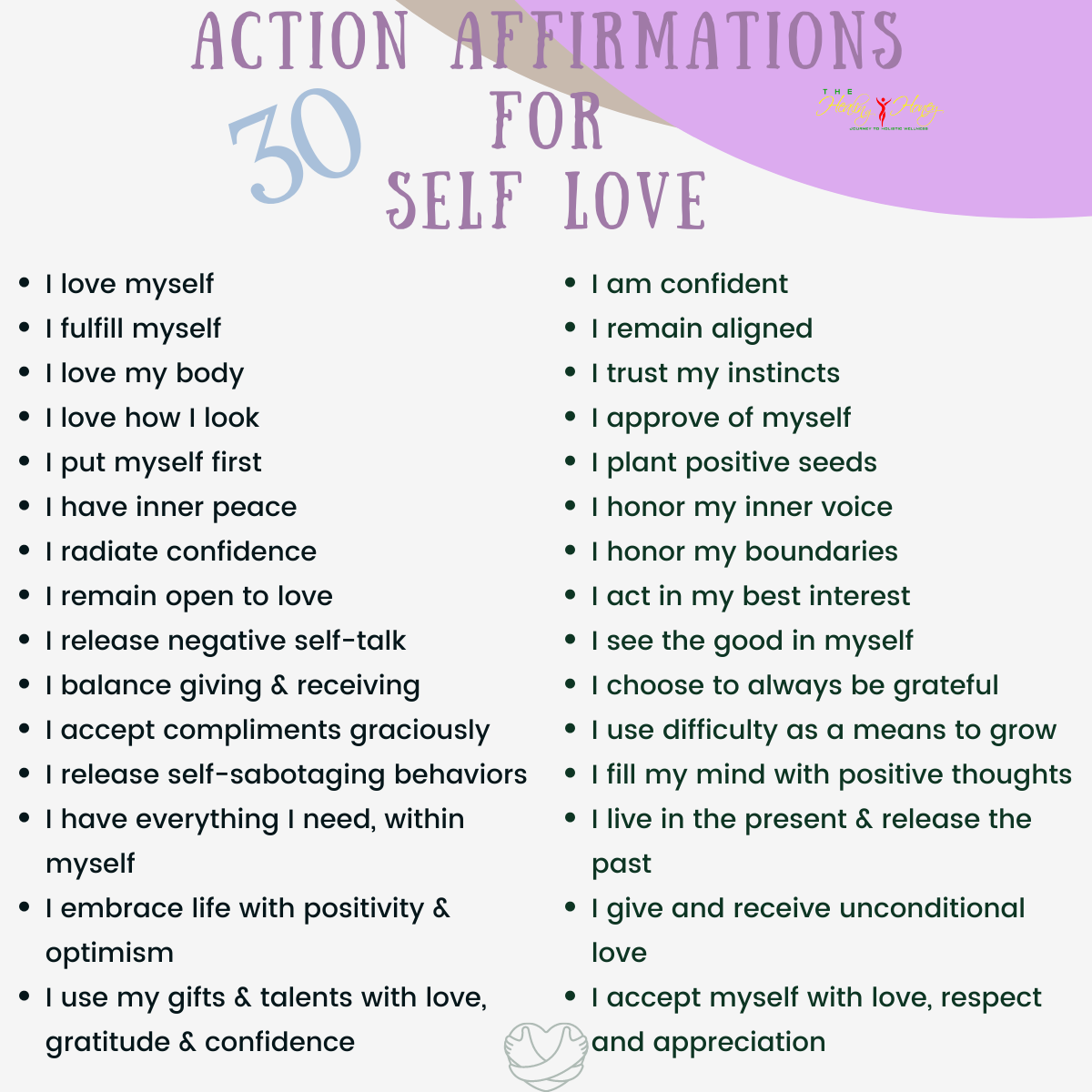
Here are 30 affirmations you can try. Use the ones that fit you best, or create your own.
- I am worthy of love and respect.
- I accept myself without judgment.
- My presence is valuable.
- I am enough just as I am.
- I honor my feelings and needs.
- I trust myself to make good choices.
- I deserve kindness and compassion.
- I am proud of who I am becoming.
- I forgive myself for past mistakes.
- My heart is open to love.
- I am strong and resilient.
- I let go of self-doubt.
- I choose happiness in every moment.
- I am grateful for my journey.
- I am at peace with myself.
- I listen to my inner wisdom.
- I am beautiful inside and out.
- I am growing every day.
- I embrace my uniqueness.
- I create my own happiness.
- I am patient with myself.
- I am gentle with my thoughts.
- I value my dreams and goals.
- I am deserving of good things.
- I am confident in my abilities.
- I am open to new experiences.
- I am free from fear and worry.
- I am grateful for who I am.
- I am surrounded by love.
- I am the author of my story.
When And How To Use Love Self Affirmations
Affirmations can fit any part of your day. The best times are:
- Morning: Start your day with a positive mindset.
- Before sleep: Calm your mind for better rest.
- During stress: Remind yourself of your value.
- After mistakes: Show yourself kindness.
Practical Ways To Use Affirmations
- Speak out loud. Hearing your voice makes affirmations more powerful.
- Write in a journal. Writing helps you focus and remember.
- Repeat silently. Use in moments of stress or anxiety.
- Set reminders. Use phone alerts or sticky notes.
- Mirror practice. Look in the mirror and say affirmations to yourself.
Example Routine
- Wake up, look in the mirror, and say: “I am enough.”
- Write three affirmations in your journal before breakfast.
- Repeat your favorite affirmation when feeling stressed at work.
- Before bed, whisper: “I am proud of myself today.”
The Science Behind Love Self Affirmations
Many studies show that affirmations can change the brain and improve well-being. A research study from the National Institutes of Health found that positive self-talk can lower cortisol, the stress hormone. In another study, students who used affirmations felt more confident and performed better on tests.
How Affirmations Affect The Brain
Affirmations activate the reward centers in the brain. When you say positive statements, your brain releases dopamine—a chemical that makes you feel good. Over time, this builds new thought patterns and habits.
Real-life Example
A woman named Sarah struggled with low self-esteem after a difficult breakup. She started using the affirmation, “I am worthy of love. ” After two months, she felt more confident, made new friends, and even found a job she enjoyed.
Her story shows that affirmations can help real people change their lives.
Comparing Affirmations With Other Self-love Tools
There are many ways to build self-love. Affirmations are just one option. Let’s compare them with other common tools:
| Tool | How It Works | Benefits | Challenges |
|---|---|---|---|
| Affirmations | Repeat positive statements | Quick, easy, builds confidence | May feel fake at first |
| Journaling | Write thoughts and feelings | Deep self-reflection, tracks progress | Requires time and effort |
| Meditation | Focus on breath or mindfulness | Reduces stress, improves focus | Takes practice, not for everyone |
| Therapy | Talk with a professional | Support, guidance, healing trauma | Can be expensive, access issues |
Affirmations are simple and can be used anywhere. But for deep issues, combining affirmations with journaling or therapy may help more.
Using Affirmations For Relationship Self-love
Love self affirmations can improve your relationships. When you love yourself, you set better boundaries, communicate clearly, and avoid unhealthy patterns.
Examples For Relationship Growth
- I am worthy of healthy relationships.
- I respect my needs and express them kindly.
- I attract love and respect.
- I am open to giving and receiving love.
By repeating these, you teach yourself to expect kindness from others and to offer it in return. People who use self-love affirmations often report better friendships, romantic relationships, and family bonds.
Love Self Affirmations For Different Life Stages
Affirmations can help at any age. Here’s how they fit different life stages:
| Life Stage | Common Challenges | Affirmation Example |
|---|---|---|
| Teenagers | Peer pressure, self-doubt, body image | I am unique and valuable. |
| Young Adults | Career choices, independence, relationships | I trust myself to make good decisions. |
| Parents | Stress, guilt, balancing work and family | I am doing my best and that is enough. |
| Seniors | Loneliness, health changes, reflection | I honor my life experience. |
No matter your age, affirmations can help you face challenges and grow.
Tips For Making Affirmations A Habit
Affirmations only work if you use them often. Here are tips to make them part of your routine:
- Start small. Use 1-2 affirmations daily.
- Link to habits. Pair with brushing teeth or breakfast.
- Track progress. Write successes in a journal.
- Ask for support. Share with friends or family.
- Change as needed. Adjust affirmations to fit your life.
Non-obvious Insights
- Personalize for impact. Generic affirmations may not work. Try “I am learning to value myself” if you struggle with self-worth.
- Visual cues help. Put sticky notes in places you see often—fridge, computer, bathroom mirror. This keeps affirmations top of mind.
Real-life Success Stories
Many people find affirmations change their lives. Here are two examples:
Story 1: Overcoming Anxiety
John felt anxious at work, always worried about making mistakes. He started saying, “I am capable and calm. ” After three weeks, he noticed less stress and more focus. His boss praised his improved attitude.
Story 2: Building Self-esteem
Maria had low confidence after losing her job. She used “I am resilient and worthy” every morning. Soon, she felt stronger and applied for new jobs. She got hired at a company she liked and felt proud of her progress.
These stories show that affirmations can help real people in tough situations.

Credit: www.lucilehr.com
Measuring The Impact Of Affirmations
It’s important to check if affirmations are helping you. Here’s how:
- Notice your feelings. Are you more positive? Less stressed?
- Track behavior changes. Do you try new things or speak up more?
- Ask others. Have friends or family noticed a difference?
- Use a journal. Write about your progress weekly.
Data Example
A survey by the American Journal of Psychology found that 74% of people who used affirmations felt more confident after one month. Those who tracked their progress in a journal reported even higher satisfaction.
Integrating Affirmations Into Daily Life
Affirmations work best when they become a habit. Here’s how to integrate them:
- Morning routine: Add an affirmation to your wake-up ritual.
- Work breaks: Repeat affirmations during short pauses.
- Exercise: Pair affirmations with walking or stretching.
- Family time: Share affirmations with children or partners.
- Evening wind-down: End your day with a calming affirmation.
Example Schedule
- Morning: “I am ready for today.”
- Lunch break: “I am doing my best.”
- Evening: “I am grateful for today’s growth.”
Common Questions And Problems
Some people worry affirmations won’t work or feel silly saying them. Here are answers to common concerns:
- “It feels fake.” Start with phrases you believe, like “I am learning.”
- “I forget to use them.” Set reminders or link to daily habits.
- “I don’t see results.” Change your affirmations or try pairing with journaling.
- “I’m not sure which to use.” Choose what fits your current feelings.
Comparing Affirmations And Meditation
Some people wonder if meditation is better than affirmations. Let’s compare:
| Feature | Affirmations | Meditation |
|---|---|---|
| Focus | Positive self-talk | Mindfulness, breathing |
| Goal | Build self-love | Reduce stress, increase awareness |
| Time | Can be quick (1-5 minutes) | Often longer (10+ minutes) |
| Ease | Easy for beginners | Can be challenging at first |
| Effect | Boosts confidence | Calms mind |
Both tools are helpful. You can use both together for better results.
How To Write Your Own Love Self Affirmations
Writing your own affirmations makes them stronger. Here’s how:
- Identify your need. What do you want to improve—confidence, peace, self-acceptance?
- Choose positive words. Use words like “worthy,” “enough,” “strong.”
- Keep it short. Aim for 5–10 words.
- Use present tense. Focus on now, not the future.
Example Process
- Need: More confidence
- Words: Capable, strong, valuable
- Affirmation: “I am capable and strong.”
Personal affirmations are more powerful than copied ones.
Using Technology For Affirmations
Technology can make affirmations easier. Here are ways to use it:
- Apps: Use affirmation apps for daily reminders.
- Smart speakers: Set up affirmations to play each morning.
- Social media: Share affirmations with friends for support.
- Digital journals: Track your progress online.
External Resource
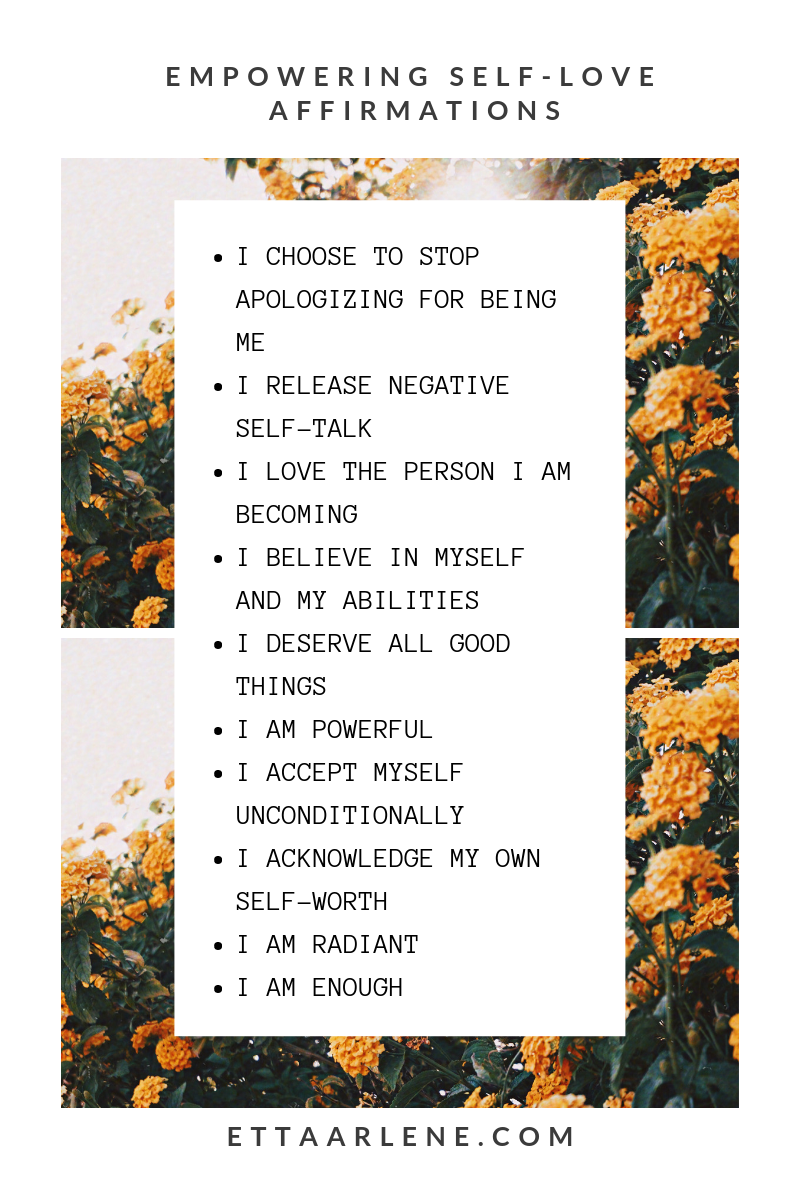
For more research on affirmations and self-love, visit Psychology Today.
Credit: www.ettaarlene.com
Frequently Asked Questions
What Are The Best Love Self Affirmations For Beginners?
Begin with simple, honest statements. Try “I am enough,” “I am worthy of love,” or “I accept myself. ” Choose phrases you believe, even a little. As your confidence grows, you can try stronger affirmations.
How Long Does It Take For Affirmations To Work?
Results vary. Some people feel better in a few days, others take weeks or months. Consistency is key. Repeat affirmations daily and notice small changes. Combining affirmations with journaling or meditation can speed progress.
Can Love Self Affirmations Help With Anxiety Or Depression?
Affirmations can help reduce anxiety and negative thinking. They aren’t a cure for depression, but they support mental health. If you have serious anxiety or depression, affirmations can be one tool, but professional help may be needed.
Should I Say Affirmations Out Loud Or Silently?
Both ways work. Saying affirmations out loud is often more powerful because you hear your own voice. But silent repetition is good for private moments or when you feel stressed. Writing affirmations also helps.
What If I Don’t Believe My Affirmations?
Start with what feels true. If “I am confident” feels too hard, try “I am learning to be confident. ” Over time, as you repeat and see small successes, your belief will grow.
Final Thoughts
Love self affirmations are a simple but powerful tool for building confidence, self-acceptance, and happiness. They are easy to use, can fit any lifestyle, and work for all ages. By choosing the right affirmations and making them a habit, you can change your inner voice and create a kinder, stronger you.
The journey takes time, but each step brings more peace and self-love. If you feel stuck, try new affirmations, ask for support, or combine them with other tools like journaling or meditation. Remember—your words shape your reality. Start today, and watch how your life improves.
Credit: www.thehealinghoney.com
