

List of Morning Affirmations: Boost Your Day with Positive Energy
Waking up can be tough for many people. Sometimes, the first thought in your mind is stress, worry, or doubt. But what if you could start your day feeling positive and strong? Morning affirmations are simple phrases you say to yourself to build a better mindset.
These words help you focus on what you want, remind you of your strengths, and even change how you see challenges.
Many people use affirmations because they work. Research shows that positive self-talk can lower stress, boost confidence, and help you perform better in daily life. It’s not magic—it’s about training your brain to choose good thoughts instead of negative ones.
When you repeat an affirmation, you give your mind a clear direction. Over time, this can change your habits, your attitude, and even your results.
This article shares a full list of morning affirmations for different needs—confidence, calmness, gratitude, health, and more. You’ll find practical tips for using affirmations, examples from real life, and answers to common questions. Whether you’re new to affirmations or want to deepen your practice, you’ll learn how these simple words can create real change.
Let’s explore how you can use morning affirmations to build a brighter start every day.
What Are Morning Affirmations?
Morning affirmations are short, positive phrases you repeat after waking up. The goal is to set your mood, focus your mind, and guide your actions for the day. These statements are usually said aloud, but you can also write them down or think them quietly.
Affirmations work by helping you replace negative thoughts with positive ones. For example, if you often feel anxious in the morning, you might say, “I am calm and ready for today. ” Over time, your brain starts to believe these statements, making it easier to stay positive and handle stress.
Studies suggest that self-affirmation can help reduce anxiety and improve performance. One research project found that people who used affirmations before a stressful task felt less nervous and did better. Another study showed that regular affirmation practice can even help with physical health, like lowering blood pressure.
Morning is the best time for affirmations. Your mind is fresh, and your thoughts for the day are still forming. Using affirmations early can help you create a positive routine, making it easier to stay motivated and focused.
Benefits Of Morning Affirmations
There are many reasons to use morning affirmations, and each benefit can impact your day in a different way.
1. Improved Mood
Starting your day with positive words helps you feel happier and more relaxed. It’s easier to smile and face challenges when your mind is calm.
2. Greater Focus
Affirmations guide your thoughts toward your goals. You can remind yourself what matters most and avoid distractions.
3. Reduced Stress
Repeating calming statements can lower anxiety. Many people find that affirmations help them handle pressure at work or home.
4. Better Self-esteem
When you say, “I am worthy,” or “I am enough,” you remind yourself of your strengths. This helps build confidence, even if you’ve struggled in the past.
5. Stronger Habits
Affirmations can support new routines, like eating healthy or exercising. When you repeat, “I make good choices,” your mind starts to follow through.
6. Improved Relationships
Positive self-talk can help you be kinder and more patient with others. You might say, “I listen with respect,” or “I show love every day. ”
7. Resilience
Affirmations teach you to see problems as opportunities. Instead of feeling defeated, you remind yourself you can learn and grow.
Many beginners miss a key insight: affirmations work best when you use them regularly. It’s not just about saying words—it’s about believing them and making them part of your daily life.
How To Use Morning Affirmations
Using affirmations is simple, but there are ways to make them more effective. Here are practical steps:
1. Choose Your Affirmation
Pick a phrase that matches your goal. If you want confidence, say, “I am strong. ” If you want calm, say, “I am peaceful. ”
2. Speak Out Loud
Saying the words aloud helps you hear and feel them. It’s more powerful than just thinking quietly.
3. Repeat Several Times
Say your affirmation 3–5 times, or more if you like. Repetition helps your mind remember.
4. Use The Present Tense
Always speak in the present, like “I am confident,” not “I will be confident. ” This tricks your brain into feeling the result now.
5. Visualize Success
Picture yourself living the affirmation. Imagine feeling confident, calm, or grateful.
6. Write It Down
Some people find writing helps. Try keeping a journal and noting your favorite affirmations each morning.
7. Pair With Breathing
Take a deep breath before each affirmation. This helps you relax and focus.
8. Create A Routine
Set a time each morning for your affirmations. Many people do this after waking up, before breakfast, or during a walk.
One insight many beginners miss: the most powerful affirmations are personal. Create your own phrases based on what you need, not just popular sayings.
List Of Morning Affirmations
Here’s a full list of morning affirmations, divided by category. You can use one or mix several, depending on your mood and goals.
Affirmations For Confidence
- I am confident and capable.
- I trust myself to make good decisions.
- I believe in my abilities.
- I am worthy of success.
- I am strong and resilient.
- I speak with courage.
- I embrace challenges with confidence.
- I am proud of who I am.
Affirmations For Calm And Peace
- I am calm and relaxed.
- I choose peace over worry.
- I breathe deeply and feel calm.
- I release stress and welcome peace.
- I am grounded and centered.
- My mind is clear and quiet.
- I handle problems with calm.
- I am peaceful inside.
Affirmations For Gratitude
- I am grateful for this new day.
- I appreciate the good in my life.
- I notice and thank the people around me.
- I am thankful for my health.
- I celebrate small blessings.
- I see opportunities everywhere.
- I am grateful for the lessons I learn.
- My heart is full of gratitude.
Affirmations For Health And Energy
- I am healthy and strong.
- I take care of my body.
- I have energy for the day.
- My mind and body are in harmony.
- I make healthy choices.
- I listen to what my body needs.
- I move with purpose.
- I am full of vitality.
Affirmations For Success And Motivation
- I am focused on my goals.
- I am motivated to achieve.
- I welcome success into my life.
- I work hard and enjoy progress.
- I turn challenges into opportunities.
- I am persistent and determined.
- I learn from every experience.
- I am ready for success.
Affirmations For Self-love
- I love myself just as I am.
- I am enough.
- I accept myself fully.
- I deserve kindness and respect.
- I forgive myself for mistakes.
- I care for my well-being.
- I honor my feelings.
- I am gentle with myself.
Affirmations For Relationships
- I communicate with kindness.
- I listen with patience.
- I show love and respect.
- I build strong connections.
- I am open to understanding others.
- I give and receive support.
- I enjoy healthy relationships.
- I value the people in my life.
Affirmations For Abundance
- I attract abundance in all forms.
- I am open to new opportunities.
- I am worthy of prosperity.
- I have everything I need.
- I welcome wealth into my life.
- I share my abundance with others.
- I see abundance everywhere.
- I am grateful for what I have.
Affirmations For Growth And Learning
- I am always learning.
- I embrace new ideas.
- I grow every day.
- I learn from my mistakes.
- I am curious and open-minded.
- I turn challenges into lessons.
- I am eager to improve.
- I welcome growth.
Affirmations For Purpose And Meaning
- I live with purpose.
- I make a difference every day.
- My actions have meaning.
- I am guided by my values.
- I find joy in helping others.
- I am true to myself.
- I follow my passion.
- My life is meaningful.

Credit: thechiclife.com
Examples Of Morning Affirmations In Real Life
Many people use affirmations in different ways. Here are some examples:
- A teacher starts her day by saying, “I am patient and understanding.” She finds it helps her handle tough students and stay calm.
- An athlete repeats, “I am strong and focused,” before training. This boosts his confidence and helps him push through hard workouts.
- A parent uses, “I show love every day,” to remind herself to be gentle and caring with her children.
- A student says, “I am curious and eager to learn,” before school. This makes studying feel more enjoyable.
- A manager uses, “I communicate with kindness,” before meetings. It helps him build better relationships with his team.
Common Mistakes With Morning Affirmations
Affirmations are simple, but there are mistakes you should avoid:
1. Using Negative Words
Always use positive language. Instead of “I am not stressed,” say “I am calm. ” Negative words can make your mind focus on problems.
2. Choosing Unrealistic Affirmations
Pick phrases that feel true or possible. If you say, “I am a millionaire,” but don’t believe it, your mind may reject the affirmation. Start with smaller goals.
3. Skipping Consistency
Affirmations work best when used daily. If you forget or only use them sometimes, you won’t see results.
4. Not Believing The Words
It’s important to feel the meaning of your affirmation. Take a moment to believe what you say.
5. Trying Too Many At Once
Focus on a few affirmations. Using too many can be confusing and less effective.
Beginners often miss the insight that feeling the affirmation is as important as saying it. If you don’t believe the words, your mind won’t change.
Data: Morning Affirmations And Well-being
Scientific research shows a link between affirmations and well-being. Here’s a comparison between people who use morning affirmations and those who don’t.
| Group | Reported Stress Level | Self-Esteem Score | Productivity Rating |
|---|---|---|---|
| Affirmation Users | Low | High | Above Average |
| Non-Users | High | Low | Average |
This table shows that people who use affirmations feel less stressed, have higher self-esteem, and perform better at work or school. The differences are clear and supported by studies.
Choosing The Right Morning Affirmation
Selecting the right affirmation depends on your needs. Here are some tips:
- Reflect on Your Goals
Think about what you want to improve. Is it confidence, health, or relationships?
- Pick Personal Words
Choose phrases that feel meaningful to you. Generic affirmations are less powerful.
- Test Different Phrases
Try several affirmations and see which ones feel right. You might change them over time.
- Use Feedback
Notice how you feel after using an affirmation. If you feel better, it’s working. If not, try a new phrase.
Here’s a quick comparison of affirmation types:
| Type | Main Focus | Best For |
|---|---|---|
| Confidence | Self-belief | Job interviews, presentations |
| Calmness | Relaxation | Stressful mornings, anxiety |
| Gratitude | Appreciation | Building happiness, relationships |
| Health | Well-being | Fitness routines, recovery |
This table can help you match your goal to the right affirmation type.
Morning Affirmations For Different Age Groups
Affirmations aren’t just for adults. Children and teens can benefit too. Here’s how affirmations look for different age groups:
| Age Group | Example Affirmation | Purpose |
|---|---|---|
| Children | I am kind and helpful. | Builds confidence and kindness. |
| Teens | I am unique and valuable. | Supports self-esteem during changes. |
| Adults | I am strong and capable. | Encourages responsibility and growth. |
| Seniors | I am wise and appreciated. | Promotes gratitude and self-worth. |
Each group can use affirmations that match their needs and stage of life.
Practical Tips For Using Morning Affirmations
Here are some tips to make your affirmation practice stronger:
1. Start Small
If you’re new, begin with one or two affirmations. Build up as you get comfortable.
2. Use Mirrors
Looking in the mirror while saying your affirmation can boost confidence.
3. Combine With Habits
Pair affirmations with daily routines, like brushing your teeth or making coffee.
4. Record Your Voice
Play your own recording in the morning. Hearing your voice can help you believe the words.
5. Change Affirmations Regularly
As your goals change, update your affirmations. Don’t stick to the same phrase forever.
6. Share With Others
Talk about affirmations with friends or family. Sharing can make the practice more powerful.
One insight often missed: affirmations can help with tough situations, not just daily routines. Use them before exams, interviews, or important meetings for best results.
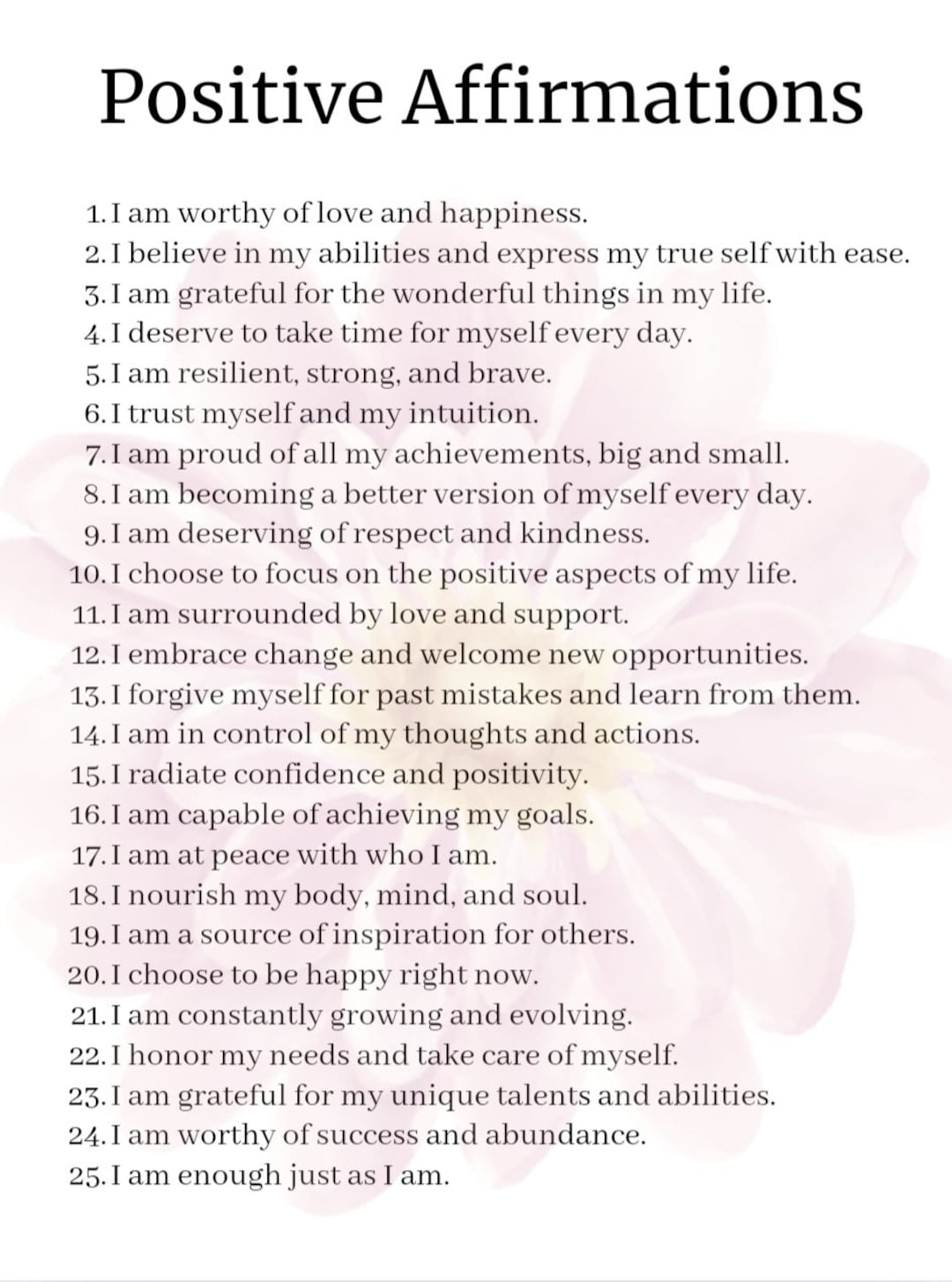
Credit: www.etsy.com
Using Technology For Morning Affirmations
Technology can make affirmation practice easier. Here are some tools:
- Apps
There are many apps that send daily affirmations. Some let you create custom phrases and reminders.
- Smart Speakers
You can program devices like Alexa or Google Home to say your favorite affirmation each morning.
- Social Media
Follow pages that share daily affirmations. You can get inspiration and support.
- Online Communities
Join forums or groups where people discuss affirmations and share tips.
If you want more research on affirmations and mental health, visit National Institutes of Health.
Frequently Asked Questions
What Is The Best Time To Use Morning Affirmations?
The best time is right after waking up, when your mind is clear. You can also use affirmations during breakfast or before leaving home. The key is to pick a time you can repeat every day.
How Many Affirmations Should I Use Each Morning?
It’s helpful to use one to three affirmations. Too many can feel overwhelming. Focus on phrases that match your goals and change them as needed.
Do I Need To Say Affirmations Out Loud?
Speaking out loud is more effective, but you can also write them down or think them quietly. If you feel shy, try whispering or using a journal.
How Long Does It Take To See Results From Affirmations?
Most people notice changes in a few weeks. The key is consistency. If you use affirmations daily and believe the words, you’ll see results sooner.
Can Morning Affirmations Help With Anxiety?
Yes, affirmations can reduce anxiety. Choose calming phrases like “I am safe and peaceful.” Pair affirmations with breathing or meditation for extra effect.
Starting your day with morning affirmations is a simple but powerful habit. It helps you focus on your goals, build confidence, and handle stress. Whether you use one phrase or several, the right words can shape your mindset and actions.
Over time, affirmations can lead to real changes in your mood, your results, and even your relationships. If you haven’t tried morning affirmations yet, start tomorrow. Choose a phrase that speaks to you, repeat it daily, and notice how your day improves.
Positive change begins with a single thought—and a single morning affirmation can be your first step.

Credit: thechiclife.com
