

How to Write Effective Affirmations That Transform Your Life
How To Write Effective Affirmations
Affirmations can be a powerful tool for changing your thoughts, boosting confidence, and reaching your goals. Many people use affirmations, but not everyone gets results. The secret is writing and using them in the right way. If you want to create affirmations that truly work, you need to understand what makes them effective and how to fit them into your daily life.
This article will guide you through the full process of writing effective affirmations. You’ll learn what affirmations really are, why they matter, and how to craft statements that stick. We’ll cover common mistakes, ways to make your affirmations stronger, and practical tips for getting the most from this practice.
By the end, you’ll have the tools you need to create affirmations that actually change your mindset and habits.
Understanding Affirmations
Affirmations are short, positive statements you say to yourself to influence your thinking. They help you focus on what you want, not what you fear. When used regularly, affirmations can shape your beliefs and actions.
How Affirmations Work
Your mind is always talking to itself. Sometimes these thoughts are helpful, but often they are negative or limiting. For example, you might think, “I’m not good enough” or “I always fail. ” These thoughts can become a habit.
Affirmations break this pattern. By repeating positive statements—like “I am capable” or “I can handle challenges”—you send a new message to your brain. Over time, these messages can replace old, negative beliefs. This process is known as self-suggestion.
Research shows that positive self-talk can reduce stress and improve performance. In one study, athletes who used affirmations performed better under pressure than those who didn’t. People recovering from illness also use affirmations to boost motivation and healing.
Myths About Affirmations
Some people believe affirmations are just wishful thinking. But affirmations are not magic. They work best when combined with action and a real desire to change. Simply saying “I am rich” will not make you rich, but it can help you develop the mindset needed to take positive steps.
Another myth is that affirmations must be repeated hundreds of times each day. Quality is more important than quantity. A few well-chosen affirmations, repeated with meaning and focus, are far more effective.
Key Elements Of Effective Affirmations
Not all affirmations are created equal. Some work better than others. Here’s what makes an affirmation truly effective:
1. Positive Language
Use words that focus on what you want, not what you want to avoid. For example, say “I am calm and relaxed” instead of “I am not stressed. ”
2. Present Tense
Write affirmations as if they are true right now. “I am confident” is stronger than “I will be confident. ” This helps your mind start believing the statement.
3. Personalization
Affirmations should feel personal. Use “I” or “my” to make them about you. For example: “I choose healthy foods,” not “People should eat healthy foods.”
4. Specific And Clear
Vague affirmations are less powerful. Be clear about what you want to change. Instead of “I am successful,” try “I finish my work on time and feel proud of my results. ”
5. Emotional Connection
Include words that trigger a feeling. The more emotion you feel, the more likely the affirmation will stick. “I am excited to meet new people” is better than just “I meet new people. ”
6. Achievable And Believable
If your affirmation feels impossible, your mind may reject it. Start with statements you can believe. If “I am a millionaire” feels too far, try “I am open to new opportunities to grow my income. ”
7. Short And Simple
Keep your affirmation easy to remember. Long sentences are hard to repeat and believe. One or two lines are enough.

Credit: www.youtube.com
How To Write Your Own Affirmations
Writing your own affirmations makes them more powerful. Here’s a step-by-step guide to help you create affirmations that work for your goals.
Step 1: Identify What You Want To Change
Think about the area of your life you want to improve. Is it confidence, health, career, or something else? Be honest with yourself. If you’re not sure, notice where you often feel negative or limited.
Step 2: Turn Problems Into Goals
Write down your negative beliefs or fears. For example, “I’m always nervous in meetings.” Then, turn this into a positive goal: “I want to feel calm and confident in meetings.”
Step 3: Create Positive Statements
Change your goal into a positive, present-tense statement. Using the example above: “I am calm and confident in meetings.”
Step 4: Make It Personal
Add “I” or “my” to make it about you. “My ideas are valuable and I share them easily in meetings. ”
Step 5: Add Emotion
Think about how you want to feel. “I enjoy sharing my ideas and feel proud of my contributions. ”
Step 6: Keep It Believable
If the statement feels too big, make it smaller. “I am learning to share my ideas with confidence. ”
Step 7: Review And Refine
Read your affirmation out loud. Does it feel good? Does it sound true? If not, adjust it until it feels right.
Examples Of Effective Affirmations
Here are some examples for common goals. Notice how each one is positive, present, and emotional.
- Confidence: “I trust myself to handle new situations.”
- Health: “I enjoy caring for my body and making healthy choices.”
- Success: “I am focused and finish my tasks with pride.”
- Relationships: “I connect easily with others and enjoy supportive friendships.”
- Stress: “I am calm and breathe deeply when I face challenges.”
Common Affirmation Mistakes And How To Avoid Them
Many people try affirmations and feel disappointed when nothing changes. Often, the problem is not with affirmations, but with how they are written or used.
Mistake 1: Being Too Vague
Statements like “I want to be happy” or “I wish for success” are not clear enough. Your mind needs a specific target. Instead, try: “I find joy in my work every day.”
Mistake 2: Negative Words
Words like “not,” “never,” or “don’t” focus your mind on the problem. “I am not afraid” still puts attention on fear. Say, “I am brave” instead.
Mistake 3: Future Focus
Affirmations like “I will be” or “I am going to” keep your goal in the future. Your mind works best with present tense: “I am calm now.”
Mistake 4: Lack Of Emotion
Affirmations with no feeling are easy to ignore. Add words that spark emotion, such as “enjoy,” “love,” or “excited. ”
Mistake 5: Too Unrealistic
If you pick a statement that feels impossible, your mind may fight back. Start small and build belief over time.
Mistake 6: Forgetting To Repeat
Affirmations work through repetition. If you only say them once, they won’t stick. Make them part of your daily routine.
Strengthening Your Affirmations
Once you have written your affirmations, there are ways to make them even more powerful.
Visualization
Imagine yourself living your affirmation. If your statement is “I am confident,” picture yourself in a meeting, speaking clearly and feeling good. Visualization adds power to your words.
Writing By Hand
Write your affirmations by hand in a notebook. This helps your brain pay more attention compared to typing or just saying them.
Using Visual Cues
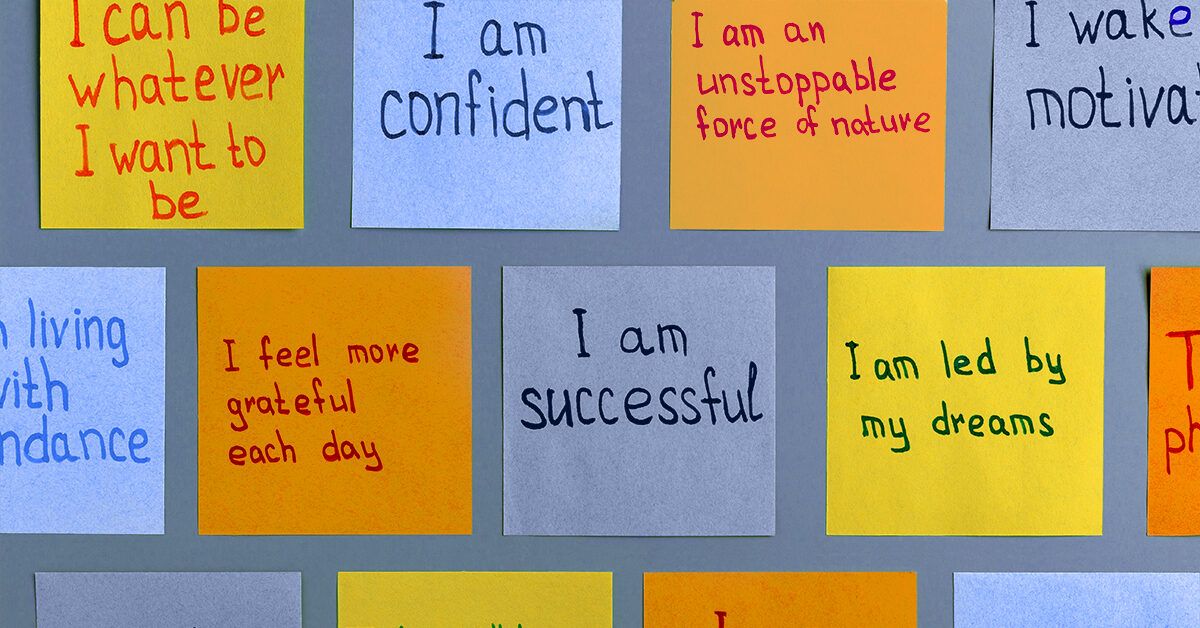
Place your affirmations where you’ll see them: on a mirror, your desk, or as your phone wallpaper. Each time you see them, repeat them in your mind.
Combine With Action
Affirmations support action, not replace it. If your affirmation is about health, take steps like walking more or choosing fruit over candy. When your actions match your words, your belief grows stronger.
Practice Gratitude
Pair affirmations with gratitude. For example, “I am grateful for my strong, healthy body. ” Gratitude opens your mind to positive change and makes affirmations feel true.
Credit: psychcentral.com
When And How Often To Use Affirmations
Timing and repetition matter. Here’s how to get the most from your practice:
Morning And Evening
Your mind is most open when you first wake up and right before sleep. Use these times to repeat your affirmations. Say them out loud, quietly, or in your mind.
During Stress
Repeat your affirmation when you feel stressed or nervous. This trains your brain to choose positive thoughts during tough moments.
With Routine Tasks
Pair affirmations with daily habits, like brushing your teeth or riding the bus. This makes it easy to remember and repeat them.
How Many Affirmations?
Start with 3 to 5 affirmations. Too many can be overwhelming. Focus on the areas that matter most to you.
Measuring Progress And Adjusting Your Affirmations
It’s important to track your results. Are your affirmations working? Here’s how to check:
Notice Your Thoughts
After a week or two, notice if your self-talk has changed. Are you thinking more positively? Do you feel more confident or hopeful?
Track Your Actions
Are you acting differently? If your affirmation is “I make healthy choices,” are you choosing better foods or moving more?
Adjust As Needed
If an affirmation isn’t working, change it. Maybe it needs to feel more believable or emotional. Keep adjusting until it feels right.
Ask For Feedback
Sometimes friends or family will notice changes before you do. Ask if they see a difference in your mood, actions, or confidence.
Real-life Examples And Success Stories
People from all walks of life use affirmations. Here are two examples that show how affirmations can make a difference.
Case 1: Overcoming Public Speaking Fear
Maria was afraid of speaking at work meetings. She wrote the affirmation, “I enjoy sharing my ideas with my team. ” Every morning, she repeated it for one month. She also pictured herself speaking with confidence. Over time, Maria noticed her fear shrinking.
She spoke up more and received positive feedback from her boss.
Case 2: Building Healthy Habits
James wanted to eat healthier but often chose junk food. He wrote, “I am proud to nourish my body with healthy foods. ” He put this affirmation on his fridge and repeated it before meals. Within weeks, he started choosing more fruits and vegetables.
He also felt better about himself.
These examples show that affirmations can help change behavior, not just thoughts, when used with intention and action.
Science And Data: Do Affirmations Really Work?
Affirmations may sound simple, but there’s real science behind them. Studies show that positive self-affirmation can reduce stress, improve problem-solving, and even help with weight loss or quitting smoking.
One experiment found that people who practiced self-affirmation made better decisions under pressure. Another study showed that affirmations can lower stress hormones and improve academic performance.
Here’s a summary comparing the effects of affirmation use:
| Group | Reported Stress | Confidence Level | Performance |
|---|---|---|---|
| Used Affirmations | Lower | Higher | Improved |
| Did Not Use | Higher | Lower | Unchanged |
The key is consistency. Affirmations alone won’t change your life overnight, but they can create small shifts that add up over time.
Comparison: Effective Vs. Ineffective Affirmations
What makes one affirmation more powerful than another? Let’s compare.
| Effective Affirmation | Ineffective Affirmation | Reason |
|---|---|---|
| I am calm and confident in meetings. | I will try not to be nervous in meetings. | Present, positive, specific vs. future, negative focus |
| I enjoy eating healthy food. | I don’t want junk food. | Positive desire vs. negative avoidance |
| I finish tasks and feel proud of myself. | I hope to be successful one day. | Present action and emotion vs. vague hope |
Notice how effective affirmations focus on present actions and positive feelings. Ineffective ones are often negative or unclear.
Practical Tips For Using Affirmations Daily
Making affirmations a habit is the key to success. Here are some ways to fit them into your routine:
- Say Them Out Loud: Speaking engages your brain and body.
- Write Them Down: Keep a special notebook for affirmations.
- Use Technology: Set reminders on your phone.
- Pair With Habits: Repeat affirmations while doing daily tasks.
- Share With a Friend: Practice together and hold each other accountable.
Common Beginner Missteps
Many people give up on affirmations too soon. They expect instant results or feel silly repeating positive statements. Remember, change takes time. It’s normal to feel awkward at first.
Another mistake is only using affirmations when things go wrong. Consistency is more important. Make affirmations a daily habit, not just a quick fix.
Non-obvious Insights For Maximum Impact
Beginners often miss these advanced tips:
- Link affirmations to values: Affirmations tied to your core values are more powerful. For example, if kindness is important to you, use: “I treat myself and others with kindness each day.”
- Use affirmations before challenges: Repeating your affirmation right before a meeting, workout, or hard task can prime your mind for success.
- Mix and rotate: As you grow, your needs change. Update your affirmations often to fit your current goals and challenges.
Advanced Techniques: Going Deeper
If you want to take your affirmation practice further, try these strategies:
Mirror Work
Stand in front of a mirror, look into your eyes, and say your affirmations. This can feel strange but helps build self-acceptance. Over time, it strengthens the emotional impact.
Record And Listen
Record your affirmations in your own voice. Listen to them while driving or relaxing. Hearing your own voice can make the message more believable.
Combine With Meditation
Repeat affirmations during meditation for deeper impact. Focus on your breathing and let the words sink in.
Create Visual Boards
Use images and words that match your affirmations on a vision board. Seeing your goals in pictures and words helps keep them top of mind.

Credit: www.binauralbeatsfreak.com
Affirmations For Different Areas Of Life
Affirmations aren’t just for confidence or success. You can use them for almost any part of life:
- Health: “I am grateful for my strong, healthy body.”
- Money: “I attract opportunities to grow my income.”
- Relationships: “I am open to love and supportive connections.”
- Learning: “I enjoy learning new things and growing every day.”
- Self-Love: “I accept myself fully as I am.”
Choose affirmations that match your top priorities.
Frequently Asked Questions
What If I Don’t Believe My Affirmation?
It’s normal to feel resistance at first. Start with statements that feel possible. For example, “I am learning to be more confident” or “I am open to feeling better. ” As your belief grows, adjust your affirmations to be more powerful.
How Long Does It Take For Affirmations To Work?
There’s no set time. Some people notice changes in a few days, others need weeks or months. The key is consistency. Repeat your affirmations daily and look for small shifts in thinking or behavior.
Can Affirmations Replace Real Action?
No. Affirmations support action but do not replace it. Saying “I am healthy” is only part of the process—you also need to make healthy choices. Affirmations work best when paired with real steps toward your goal.
Should I Use The Same Affirmations Every Day?
You can use the same affirmations for weeks or months if they still inspire you. But it’s also helpful to update them as your goals change. If an affirmation feels stale or no longer fits, create a new one.
Where Can I Learn More About Affirmations?
For a deeper look at the science and practice of affirmations, you can read this Wikipedia article on affirmations.
Practicing affirmations is a journey, not a one-time event. With the right approach and consistent effort, you can shape your thoughts, actions, and life in a positive way. Remember to start small, stay patient, and celebrate every step forward. Affirmations are a tool—how you use them determines the results you get.
