

How to Write Affirmations in Present Tense: Unlock Your Potential
How To Write Affirmations In Present Tense
Writing affirmations is a simple but powerful way to change your thoughts and habits. Many people use affirmations to build confidence, reduce stress, or reach goals. But there is a key detail that most beginners miss: affirmations work best when written in present tense. This article explains why present tense is important, how to write effective affirmations, common mistakes, and practical examples. You’ll discover non-obvious tips and see how small changes in wording can make a big difference.
Affirmations are not just positive statements. They are tools for shaping your mindset. If you feel unsure or think affirmations are just “wishful thinking,” you are not alone. The science behind them is more solid than many expect. Studies show that repeating positive statements can change your brain’s pathways and influence your behavior.
But only if you use them correctly.
Writing affirmations in present tense is a skill that anyone can master. Whether you want to boost your confidence, improve health, or achieve career goals, this guide will help you write statements that work. You will learn the details that most guides ignore and see real examples that you can use right away.
Why Present Tense Matters In Affirmations
Present tense is not just a grammar rule. It is the secret to making affirmations effective. When you write in present tense, your brain believes the statement is true now, not in the future. This helps you feel the positive change immediately.
The Brain’s Response To Present Tense
Your brain responds differently to statements in the present tense. For example, “I am confident” feels real and active. “I will be confident” feels distant and uncertain. This difference matters. Research shows that the brain reacts more strongly to present tense statements, creating new neural connections.
When you use present tense, your mind starts to act as if the affirmation is already true. This is called cognitive priming. It prepares your brain to notice opportunities and take actions that match the statement.
Creating Emotional Impact
Affirmations in present tense trigger emotions. If you say “I am healthy,” you start to feel healthy. If you say “I will be healthy,” you stay in waiting mode. Emotions are important because they motivate action and change your mood.
Building Habits With Present Tense
Habit formation needs repetition and belief. Present tense affirmations help you believe and act right away. If your statement is always about the future, you never start building the habit.
How To Write Affirmations In Present Tense
Writing affirmations is simple, but there are rules that make them powerful. Follow these steps to write statements that work.
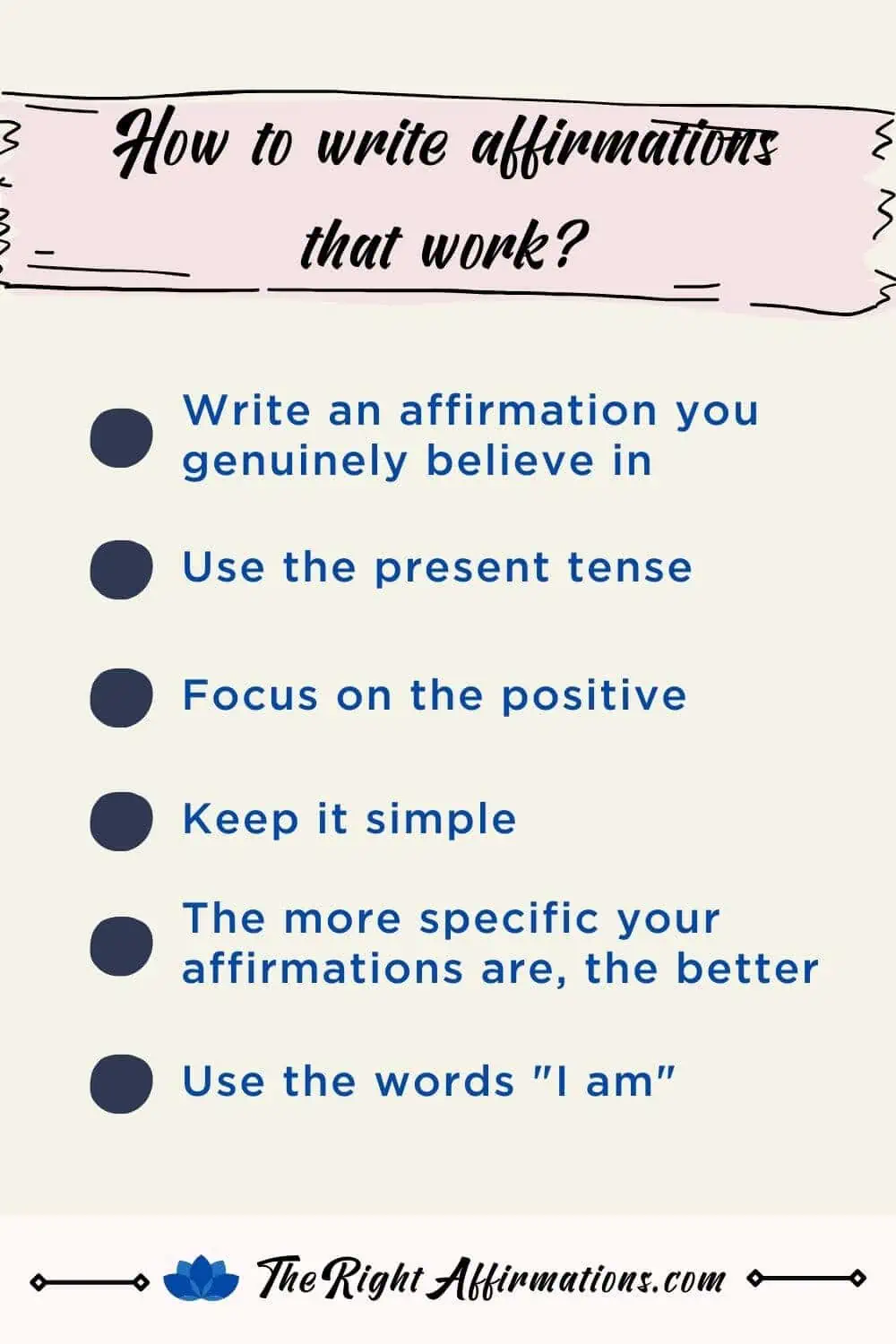
1. Start With “i Am,” “i Have,” Or “i Do”
Use I am, I have, or I do at the beginning. These phrases tell your brain you are living the statement now.
Examples:
- I am confident.
- I have a healthy body.
- I do my best every day.
2. Use Positive Language
Affirmations should be positive. Avoid words like “don’t,” “can’t,” or “won’t. ” Focus on what you want, not what you want to avoid.
Examples:
- I am calm and relaxed.
- I have strong relationships.
3. Make It Specific
General statements are less effective. Be clear and specific about what you want.
Examples:
- I am productive and finish tasks on time.
- I have a strong, healthy heart.
4. Keep It Short And Simple
Long, complicated affirmations are hard to remember. Short statements are easier to repeat and believe.
Examples:
- I am grateful every day.
- I have clear goals.
5. Use Present Tense Only
Avoid future tense. Do not write “I will be” or “I will have. ” Always use present tense.
Examples:
- I am successful. (Not “I will be successful.”)
- I have confidence. (Not “I will gain confidence.”)
6. Add Emotion Where Possible
Emotion makes affirmations powerful. Use words that trigger feelings.
Examples:
- I am excited about my life.
- I am proud of my progress.
7. Repeat And Personalize
Write affirmations that feel personal. Repeat them daily for best results.
Examples:
- I am joyful in my work.
- I am patient with myself.
Mistakes To Avoid When Writing Affirmations
Writing affirmations seems easy, but there are common mistakes that block results. Here are the most frequent errors and how to fix them.
Using Future Tense
Many people write “I will…” This keeps the goal in the future. Your brain does not connect with it.
Fix: Always use present tense.
Negative Language
Statements like “I am not anxious” focus on the problem, not the solution.
Fix: Write “I am calm” instead.
Overly Complex Statements
Trying to fit too much in one sentence makes affirmations hard to remember.
Fix: Keep it simple and clear.
Lack Of Emotion
Flat statements do not inspire action. Add emotional words.
Fix: Use “I am excited,” “I am grateful,” or “I am proud.”
Not Personalizing
Generic affirmations do not connect with your life.
Fix: Add details that matter to you.
Ignoring Repetition
Repeating affirmations is key. Without repetition, they fade quickly.
Fix: Say or write them daily.
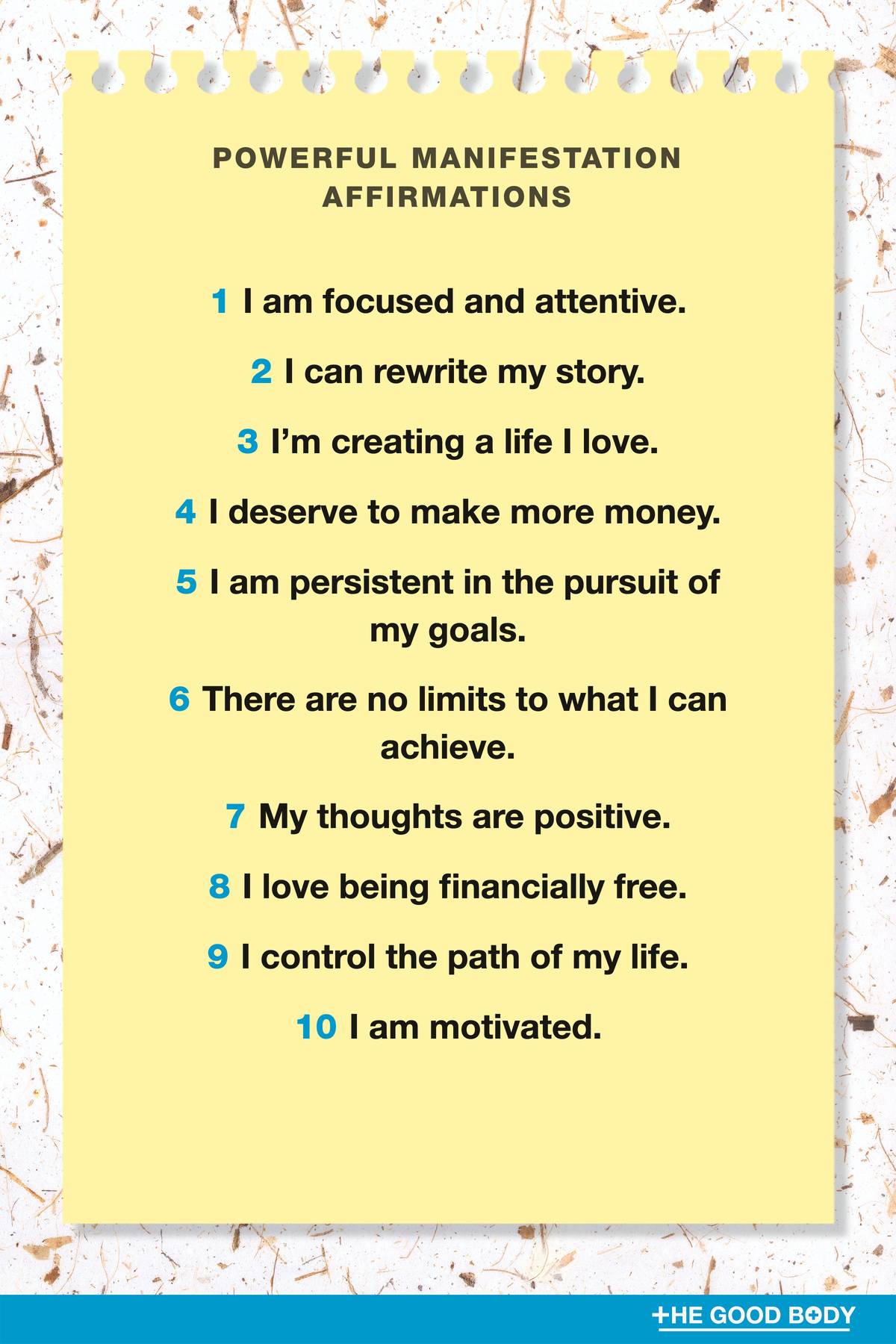
Examples Of Present Tense Affirmations
Here are examples for different areas of life. Each statement uses present tense and follows the rules above.
Confidence
- I am confident in my abilities.
- I am comfortable speaking in public.
- I am proud of who I am.
Health
- I have a strong, healthy body.
- I am full of energy.
- I am grateful for my good health.
Career
- I am successful in my work.
- I am focused and productive.
- I am open to new opportunities.
Relationships
- I am loved and appreciated.
- I am patient with others.
- I am kind and supportive.
Personal Growth
- I am learning every day.
- I am open to new ideas.
- I am growing stronger.
Financial
- I am financially secure.
- I am wise with money.
- I am attracting abundance.
Comparison: Present Tense Vs. Future Tense Affirmations
To see the difference, here is a table comparing present and future tense affirmations.
| Present Tense | Future Tense |
|---|---|
| I am confident. | I will be confident. |
| I have a healthy body. | I will have a healthy body. |
| I am successful. | I will be successful. |
| I am grateful. | I will feel grateful. |
| I am peaceful. | I will be peaceful. |
Notice that present tense statements feel real and active. Future tense keeps the change out of reach.
Science And Data: Do Affirmations Really Work?
Many people wonder if affirmations are just “positive thinking.” The truth is, they are backed by science. Studies show that self-affirmation can reduce stress, improve performance, and even change brain activity.
- A study published in the journal “Social Cognitive and Affective Neuroscience” found that self-affirmation activated areas of the brain linked to reward and positive emotion.
- Another study showed that students who used affirmations before tests performed better, especially those with low confidence.
- Repetition and present tense were key factors in making affirmations work.
Data Table: Affirmation Effectiveness
Here is a summary of research findings.
| Study | Key Finding |
|---|---|
| University Study on Students | Affirmations improved test scores by 12% on average |
| Brain Imaging Research | Present tense statements activated reward centers |
| Workplace Survey | Employees using daily affirmations reported 20% higher job satisfaction |
| Stress Reduction Trial | Participants felt 15% less stressed after 2 weeks of affirmations |
How To Personalize Your Affirmations
Generic affirmations do not work as well as personal ones. To create affirmations that fit your life, follow these steps.
1. Identify Your Goal
Think about what you want to change or improve. Is it confidence, health, or relationships?
2. Find Your Motivation
Why do you want this change? Write a statement that connects to your reason.
Example: If you want to be healthy for your family, write “I am healthy and active for my family.”
3. Use Your Own Words
Affirmations should sound natural to you. If you do not speak like “I am abundant,” try “I am comfortable with my finances. ”
4. Add Details
Specific details make affirmations stronger.
Example: “i Am Focused And Finish My Work Before Lunch.”
5. Use Visuals
Picture yourself living the affirmation. This helps your brain believe it.
How To Practice Affirmations For Best Results
Writing affirmations is only the first step. Practicing them daily is what makes them work.
Daily Routine
- Repeat your affirmations every morning and evening.
- Write them in a journal.
- Say them out loud with emotion.
- Place them where you can see them (mirror, desk, phone).
Visualizing
Imagine yourself living the affirmation. If you say “I am confident,” picture yourself speaking in public.
Tracking Progress
Keep a record of how you feel after repeating affirmations. Notice changes in mood, behavior, or results.
Adjusting Statements
If an affirmation feels false or awkward, change the wording. It should feel believable and comfortable.
Examples Of Affirmations For Different Goals
Affirmations can be used for many goals. Here are examples for popular areas.
Weight Loss
- I am making healthy choices.
- I am enjoying exercise.
- I am proud of my progress.
Anxiety Reduction
- I am calm and peaceful.
- I am safe and secure.
- I am handling stress with ease.
Study And Learning
- I am focused when I study.
- I am remembering information easily.
- I am enjoying learning.
Job Search
- I am confident in interviews.
- I am finding the right job.
- I am prepared for new opportunities.
Parenting
- I am patient with my children.
- I am loving and supportive.
- I am guiding my children gently.
Advanced Tips For Writing Effective Affirmations
Beginners often miss these advanced tips. Use them to make your affirmations even more powerful.
1. Use Sensory Words
Add words about touch, sight, or feeling.
Example: “i Am Relaxed And Feel Warmth In My Body.”
2. Add Action
Make affirmations about what you do, not just what you are.
Example: “i Am Speaking Up In Meetings.”
3. Use “i Choose”
If “i Am” Feels Too Strong, Try “i Choose.”
Example: “i Choose To Be Calm.”
4. Focus On Process
Instead of results, focus on actions.
Example: “i Am Improving My Skills Every Day.”
5. Avoid Overpromising
If you write “I am a millionaire,” but you do not believe it, it may backfire.
Fix: Write “i Am Building Wealth.”
Credit: unfinishedsuccess.com
How To Use Affirmations With Other Techniques
Affirmations work well with other self-improvement tools. Here are ways to combine them.
Meditation
Repeat affirmations during meditation. This helps relax your mind and makes the statement stronger.
Journaling
Write your affirmations in a journal every day. This increases belief and tracks progress.
Visualization
Picture yourself living the affirmation. This boosts confidence and motivation.
Habit Stacking
Add affirmations to another daily habit, like brushing your teeth or walking.
Comparison Table: Affirmation Techniques
Different ways to practice affirmations suit different people. Here is a comparison.
| Technique | Benefits | Best For |
|---|---|---|
| Meditation | Deep focus, relaxation | Stress reduction |
| Journaling | Tracks progress, builds belief | Goal setting |
| Visualization | Boosts motivation | Confidence building |
| Habit Stacking | Easy to remember | Busy lifestyles |
Choose the method that fits your daily routine and goals.
How Many Affirmations Should You Use?
Using too many affirmations at once can dilute their effect. It is better to focus on a few key statements.
- 3 to 5 affirmations is ideal for most people.
- Repeat each one several times daily.
- Change them as your goals change.
Real-life Examples And Success Stories
Many people have used present tense affirmations to change their lives. Here are real stories.
Confidence Boost
A student was shy and afraid to speak. She started saying “I am confident and speak clearly. ” After weeks, she felt more comfortable in class and joined discussions.
Health Improvement
A man wanted to improve his health. He used “I am strong and energetic. ” He noticed he made healthier choices and felt better within a month.
Career Change
An employee wanted a promotion. He repeated “I am capable and ready for new challenges. ” He gained confidence, asked for new tasks, and got promoted.
These stories show that present tense affirmations can create real change. The key is daily practice and belief.
Credit: www.thegoodbody.com
How To Overcome Doubts About Affirmations
Many people feel uncomfortable or skeptical about affirmations. Here’s how to overcome doubts.
Start Small
Begin with simple, believable statements. If “I am confident” feels false, try “I am improving my confidence. ”
Use Evidence
Notice small changes in your mood or actions. This builds belief.
Give It Time
Affirmations are not instant. They work with repetition. Stay patient and keep practicing.
Seek Support
Share your affirmations with a friend or mentor. Feedback helps build confidence.
How To Write Affirmations For Children
Children benefit from affirmations, too. Use simple language and positive words.
Examples:
- I am smart.
- I am kind to others.
- I am brave.
Repeat them together daily. This builds confidence and self-esteem.

Credit: theamandajewell.com
Frequently Asked Questions
What Is The Best Way To Write Affirmations In Present Tense?
Start with “I am,” “I have,” or “I do. ” Use positive, specific words. Keep statements short and simple. Always use present tense, not future tense.
How Many Times Should I Repeat My Affirmations?
Repeat your affirmations at least twice a day, morning and evening. For best results, say each one 3–5 times. Consistent repetition builds belief.
Can Affirmations Help With Anxiety Or Stress?
Yes, affirmations can reduce anxiety and stress. Use present tense statements like “I am calm” or “I am peaceful. ” Combine them with relaxation techniques for greater effect.
What If I Don’t Believe My Affirmation?
If your statement feels false, adjust it to be more believable. Try “I am becoming confident” or “I am improving every day. ” Over time, your belief will grow.
Where Can I Find More Examples And Research On Affirmations?
You can find more examples and scientific studies at Positive Psychology. This site offers research, guides, and practical tips.
Writing affirmations in present tense is a skill that can change your life. When you use present tense, your brain believes the statement now, not later. This triggers action and builds positive habits. Use the steps and examples in this guide to write affirmations that work for you.
Practice daily, adjust as needed, and notice the changes in your mindset and results. Remember, the power of affirmations is not in the words, but in your belief and repetition. Start today and see how your thoughts and life begin to shift.
