

How to Use Daily Affirmation Cards for Lasting Positive Change
How To Use Daily Affirmation Cards
Daily affirmation cards are a simple yet powerful tool for self-growth. They help you focus your mind, boost confidence, and reduce stress. But many people buy these cards and never use them fully. With the right approach, affirmation cards can make a real difference in your daily life.
This article explains how to use daily affirmation cards, gives practical tips, and shares insights that most beginners miss. Whether you want to improve your mood, change your thinking, or build new habits, you’ll find clear steps and helpful advice here.
What Are Daily Affirmation Cards?
Daily affirmation cards are small cards printed with positive statements. These statements, called affirmations, are designed to encourage good thoughts, self-belief, and motivation. Each card usually has one affirmation, sometimes with a short explanation or image.
You can find affirmation cards for many topics: self-esteem, gratitude, health, relationships, or success. Some decks are themed for specific goals, like overcoming anxiety or building confidence.
Affirmation cards are popular because they are easy to use and require no special skills. You can use them at home, at work, or while traveling. Unlike books or long exercises, cards fit into any routine.
What makes affirmation cards stand out from other self-help tools is their simplicity. You do not need to study or plan for a long time. Just a few minutes a day can make a difference. Many people find that the physical act of picking up a card and reading it helps their mind focus better than reading from a book or screen.
Some decks even include cards with short exercises or prompts. For example, a card might say, “List three things you are proud of today. ” This combination of affirmation and action can deepen the effect and help you see changes more quickly.
Why Use Daily Affirmation Cards?
The main reason people use daily affirmation cards is to change their mindset. Positive thinking is linked to better health, higher productivity, and stronger relationships. Scientific studies show that repeating positive statements can help rewire the brain, making it easier to form new habits and reduce negative thoughts.
Here are some benefits:
- Boosts self-confidence: Reading affirmations daily reminds you of your strengths.
- Reduces stress: Positive statements help calm anxiety and focus your mind.
- Builds new habits: Repeating affirmations can support behavior change.
- Supports goal achievement: Cards keep you motivated and focused.
- Improves mood: Positive words lift your spirit, especially during tough times.
A study from the National Institutes of Health found that regular affirmation practice can lower stress and increase feelings of self-worth.
Another important benefit is that affirmation cards can help break the cycle of negative thinking. Many people struggle with self-doubt or harsh self-talk. When you use affirmation cards, you give your mind a new script. Over time, these new thoughts can replace old, negative patterns.
This is especially helpful for people who want to overcome anxiety, improve performance at work, or recover from setbacks.
Affirmation cards are also a good way to start or end your day on a positive note. If you wake up feeling worried or tired, a card can set a better tone for the rest of your day. If you use a card before bed, it can help you let go of stress and sleep more peacefully.
Some users notice that, after a few weeks, their overall attitude changes. They react differently to challenges and find it easier to stay calm under pressure. This is not magic—it is the result of training your mind to focus on strengths and possibilities instead of problems.

Credit: www.intelligentchange.com
Choosing The Right Affirmation Cards
There are hundreds of affirmation card decks available, but not all are equal. Choosing the right cards is important for your success.
Consider Your Goals
Ask yourself: What do I want to change or improve? Some decks focus on self-love, others on success, gratitude, or healing. Pick a deck that matches your goals. If you want to feel calmer, look for cards with affirmations about relaxation and peace.
Think about specific areas in your life where you want to see change. For example, if you struggle with self-doubt at work, a deck focused on career confidence may be best. If you want better relationships, look for cards with themes like compassion, forgiveness, or communication.
Quality Matters
Some affirmation cards use generic or vague statements. Look for cards that feel personal and clear. Well-designed cards include:
- Strong, positive language
- Easy-to-read fonts
- Durable material
Durability may seem like a small detail, but it matters if you plan to use your cards often. Cards made from thick paper or with a protective coating last longer and feel more pleasant to hold. This small improvement can help you stick to your routine.
Also, check if the language suits your style. Some decks use formal words, while others are casual or even playful. Choose the one that matches your personality. If English is not your first language, make sure the text is simple and easy to understand.
Visual Appeal
Many people enjoy cards with attractive images or colors. Visuals can make the experience more enjoyable and memorable. If you like art, choose cards with illustrations that inspire you.
Cards with calming colors or nature scenes can make your routine feel peaceful. Some people prefer minimalist designs, while others love bright and bold images. Your connection to the cards matters—if you like how they look, you are more likely to use them every day.
Comparing Popular Decks
Here is a comparison of three well-known affirmation card brands:
| Brand | Theme | Card Quality | Number of Cards |
|---|---|---|---|
| Affirmation Deck A | Self-love | Thick, glossy | 50 |
| Affirmation Deck B | Success | Matte, sturdy | 40 |
| Affirmation Deck C | Gratitude | Thin, flexible | 60 |
Choose a deck that fits your needs and style. If possible, read reviews or try sample cards before buying.
Some people even create a custom set by mixing cards from different decks. This way, you can cover several areas of your life at once.
How To Use Daily Affirmation Cards
Getting the most from affirmation cards means using them regularly and with intention. Here are clear steps to help you build a routine.
Step 1: Set A Time And Place
Consistency is key. Decide when and where you will use your cards. Popular times are:
- Morning: Start your day with positive energy.
- Evening: Reflect and prepare for tomorrow.
- Breaks: Use cards during work or study breaks.
Pick a quiet spot where you can focus. Some people like to sit in their favorite chair, others stand or walk while reading cards. The important thing is to make it a habit.
If your schedule is busy, link your affirmation practice to another daily activity. For example, read a card while you drink your morning coffee or before brushing your teeth at night. This technique, called "habit stacking," helps you remember and makes the routine automatic.
Step 2: Shuffle And Select A Card
Shuffle your deck to mix the cards. You can pick one card randomly or choose a card that feels right. Some people like to spread the cards and select with their intuition.
If you prefer structure, you can use the cards in order or assign different cards for each day of the week.
Sometimes, a card will stand out or "call to you. " Trust your feeling. Often, the card you need most will show up at the right time. Over time, you may notice patterns in the cards you pick—this can reveal what your mind is focusing on.
Step 3: Read The Affirmation Aloud
Reading the affirmation out loud helps your brain pay attention. If you are shy or in public, you can whisper or read silently, but speaking is more powerful.
Focus on the words. Try to understand the meaning and feel the message. Don’t rush; take your time.
When you read aloud, your brain processes the information in a deeper way. This activates more senses and helps the message "stick. " If you feel uncomfortable, start by reading in a soft voice when you are alone. With practice, it will feel more natural.
Step 4: Reflect On The Message
Pause for a moment after reading. Ask yourself:
- What does this affirmation mean to me?
- How can I apply it today?
- Does it remind me of a personal challenge or goal?
Reflection makes the affirmation personal. You can write your thoughts in a journal or simply sit quietly.
This step is often skipped by beginners, but it is one of the most important. Reflection helps you connect the affirmation to your real life. For example, if the card says, "I am enough," think about moments when you felt insecure and how you can remind yourself of your worth.
Some people like to write a few sentences about their feelings. Over time, these notes become a record of your progress and can be a source of motivation on tough days.
Step 5: Repeat The Affirmation
Repeating the affirmation several times increases its effect. Say it three to five times. If you want, close your eyes and imagine yourself living the statement.
For example, if the card says, “I am confident,” picture yourself acting with confidence.
Repeating the words helps train your mind, just like practicing a new skill. You can also try different tones—say the affirmation softly, then with more strength. This helps you find the emotion behind the words.
Step 6: Take Action
Affirmations are most powerful when you combine words with action. Think about one small step you can take today that matches the affirmation.
If your card says, “I am grateful,” send a thank-you note to someone. If it says, “I am strong,” face a fear or challenge.
Even small actions count. For example, if your card says, "I am healthy," choose a healthy snack or go for a short walk. Linking words to actions helps your mind believe the affirmation is true.
Step 7: Record Your Progress
Keep a notebook or digital journal. Write down the card you picked, your feelings, and any actions you took. This helps track your growth and makes the practice more meaningful.
Journaling also helps you see patterns over time. You may notice that some affirmations are easier to believe after a few weeks, or that certain cards come up when you face specific challenges.
Step 8: Review And Adjust
After a week or month, review your journal. Notice patterns: Are some affirmations harder to believe? Are you feeling better? Adjust your routine as needed.
If a particular affirmation feels uncomfortable, you can create a "bridge" affirmation. For example, if "I love myself" feels too hard, try "I am learning to love myself. " This makes the process smoother and more believable.

Credit: www.gatheringbeauty.com
Advanced Techniques For Using Affirmation Cards
Many people use affirmation cards in simple ways, but you can get more from them with advanced methods.
Pair With Visualization
Visualization is a mental exercise where you picture yourself living the affirmation. For example, if your card says, “I am successful,” imagine yourself achieving a goal. This makes the affirmation stronger.
Try to add details: Where are you? What do you see, hear, or feel? The clearer your image, the more powerful the effect. Athletes often use visualization to improve performance, and the same idea works for self-confidence and motivation.
Combine With Meditation
Start with a short meditation, then read your card. Meditation quiets your mind and prepares you to absorb the message. You can meditate for two to five minutes before using your card.
If you are new to meditation, simply close your eyes and take a few deep breaths. Focus on your breath and let other thoughts go. Then, pick your card and read the affirmation slowly. This routine can help you feel calm and open to positive change.
Use With Other Tools
Affirmation cards work well with other self-growth tools:
- Gratitude journals
- Vision boards
- Goal planners
For example, after reading a card, write a gratitude note in your journal or add a picture to your vision board.
Combining tools creates a stronger routine. If you use a planner, write your daily affirmation at the top of your to-do list. This keeps your intention visible all day.
Share With Others
Affirmations are not only personal. You can use cards with family, friends, or groups. Share a card with a partner or child. Discuss the message and support each other.
Sharing affirmations can open deeper conversations and build stronger connections. In a group setting, each person can pick a card and talk about how it relates to their day.
Create Rituals
Some people create special rituals, like lighting a candle or playing soft music while using affirmation cards. Rituals make the experience more memorable and meaningful.
A small ritual can signal to your brain that it’s time to focus and be present. Even a simple gesture, like holding the card close to your heart, can deepen your connection to the affirmation.
Common Mistakes Beginners Make
It’s easy to make errors when starting with affirmation cards. Avoid these mistakes to get better results.
Using Cards Only Once
Some people use the cards a few times and stop. Affirmations work through repetition. Make it a daily habit.
Set a reminder or pair your card routine with another daily activity. The more consistent you are, the more your brain will adapt to positive thinking.
Reading Without Believing
If you read the card without believing the statement, the effect is weak. Try to feel the words and trust the message.
If belief is difficult, start with affirmations that feel possible. Use gentle phrases like "I am learning to…" or "I am open to…"
Choosing Too Many Cards
Picking several cards at once can be confusing. Start with one card per session. Focus your energy on a single message.
Overloading your mind makes it harder to focus and remember the affirmation. Simplicity is more effective.
Skipping Reflection
Reading is not enough. Reflection makes the affirmation personal. Take a moment to think about the meaning.
If you have little time, even a quick thought or one sentence in your journal can help.
Ignoring Actions
Words alone do not change behavior. Combine affirmations with small actions for best results.
Think of one practical thing you can do each day that matches the affirmation. This builds real change and confidence.
Examples Of Daily Affirmation Cards And Their Use
Here are sample affirmations and how you can use them in daily life:
- I am worthy of love: Use this card when you feel lonely or insecure. Reflect on your relationships and take a step to connect with someone.
- I trust myself: Choose this card before making a big decision. Think about your strengths and past successes.
- I am grateful for today: Use this card in the morning. Write three things you are thankful for.
- I am strong: Pick this card during tough times. List your achievements and face a challenge.
- I am open to new opportunities: Use this card when starting a new job or project. Try something new and note your experience.
- I am calm and peaceful: Choose this card when you feel stressed. Practice deep breathing for five minutes.
- I am successful: Use this card before an important meeting. Visualize yourself doing well.
- I forgive myself: Pick this card after making a mistake. Write a forgiveness note or talk to someone you trust.
Each affirmation works best when combined with reflection and action.
You can also create your own variations. For example, "I am patient with myself" is helpful if you often feel frustrated. Or "I create my own happiness" can remind you to look for joy in small things.
Affirmation Cards Vs. Other Self-growth Tools
Affirmation cards are just one tool for personal growth. Let’s compare them with other popular methods.
| Tool | Ease of Use | Time Required | Cost | Best For |
|---|---|---|---|---|
| Affirmation Cards | Very easy | 1-5 minutes | Low | Building daily habits |
| Journaling | Moderate | 10-20 minutes | Low | Self-reflection |
| Meditation | Moderate | 5-30 minutes | Free | Reducing stress |
| Vision Boards | Easy | 30+ minutes | Medium | Clarifying goals |
Affirmation cards are quick, easy, and affordable. They fit into any schedule and can be combined with other tools.
Unlike vision boards or long journaling sessions, cards offer instant motivation and require almost no setup. If you travel often or have a busy life, this flexibility is a big advantage.
Making Affirmation Cards Part Of Your Routine
Building a habit takes time and effort. Here are tips to make affirmation cards part of your daily life.
Start Small
Begin with one card each morning. Keep your deck in a visible place, like your desk or bedside table.
If your mornings are busy, use your cards at another time—during lunch, before bed, or even after exercise. Choose a moment that feels natural for you.
Use Reminders
Set a phone alarm or leave a sticky note to remind yourself. Consistency builds habits.
You can also create a visual reminder, like placing your deck next to your toothbrush or coffee maker. Seeing the cards regularly helps you remember your routine.
Involve Others
Ask a friend or family member to join you. Share your experiences and support each other.
Some families use affirmation cards at dinner or bedtime. Teams at work can use them to start meetings on a positive note. Sharing the experience creates accountability and makes the practice more fun.
Track Progress
Keep a journal or use an app to record your cards and feelings. Review your notes every week.
Tracking helps you notice changes in your mood or behavior. You may discover that certain affirmations have a bigger impact, or that your attitude improves over time.
Celebrate Wins
Notice small changes and celebrate your progress. Positive feedback keeps you motivated.
Reward yourself for sticking to your routine. Even a simple acknowledgment, like saying “Well done!” or treating yourself to something small, can reinforce the habit.
Non-obvious Insights For Beginners
Many new users miss these important points:
- Personalization matters: If a card does not feel right, change the wording or write your own affirmation. Custom statements are often more powerful.
- Environment affects results: Using cards in a calm, focused setting improves effectiveness. Avoid distractions during your routine.
- Physical touch helps: Holding the card while reading makes the experience more real and engaging. This small action can increase belief in the affirmation.
Another useful tip is to revisit old cards. Sometimes, an affirmation you did not connect with before will feel different after a few weeks. Growth is not always linear—be patient with yourself as you learn what works best.
Also, don’t worry if you miss a day. Life gets busy. Just return to your routine as soon as you can. The long-term benefits come from regular, not perfect, practice.
Data On Effectiveness
A survey by the American Psychological Association found that 72% of people using daily affirmation cards reported improved mood after two weeks. Another study showed that people who practiced affirmations had higher motivation and resilience compared to those who did not.
Most experts agree that the best results come from regular practice and combining affirmations with reflection and action.
Interestingly, some research suggests that affirmations are even more effective when focused on values. For example, affirming your strengths or core beliefs can protect against stress and improve performance, especially in challenging situations.
If you want to learn more about the science behind affirmations and how they work, you can visit Wikipedia for additional reading.
Frequently Asked Questions
What If I Don’t Believe The Affirmation?
It is common to feel doubtful at first. Start by reading the card and imagining the possibility. Over time, belief grows as you repeat the affirmation and see small changes in your life.
You can also soften the statement: Instead of “I am confident,” try “I am learning to feel more confident.” This makes the affirmation more believable while still moving you forward.
How Long Should I Use Affirmation Cards Each Day?
Most routines take one to five minutes. The key is consistency. Daily practice is more important than long sessions. If you want, you can use cards several times a day.
If you feel rushed, choose a shorter affirmation or read your card during a quiet moment, like when waiting for the bus or before a meeting.
Can I Make My Own Affirmation Cards?
Yes. Homemade cards are very effective because you can personalize the statements. Use strong, positive language. Decorate your cards with colors or images that inspire you.
You can write your affirmations on index cards, sticky notes, or even small pieces of paper. The act of creating your own cards can deepen your connection to the practice.
Are Affirmation Cards Suitable For Children?
Affirmation cards can help children build confidence and positive thinking. Choose cards with simple words and fun images. Use them together and explain the meaning.
You can also turn it into a game—let children pick a card and talk about times they felt strong, kind, or brave. This builds emotional skills in a gentle way.
Where Can I Find Reliable Affirmation Cards?
You can buy cards online, in bookstores, or make your own. Look for decks with good reviews and clear, positive language. For more information about the science behind affirmations, visit Wikipedia.
If you prefer digital options, some apps offer virtual affirmation cards you can use on your phone.
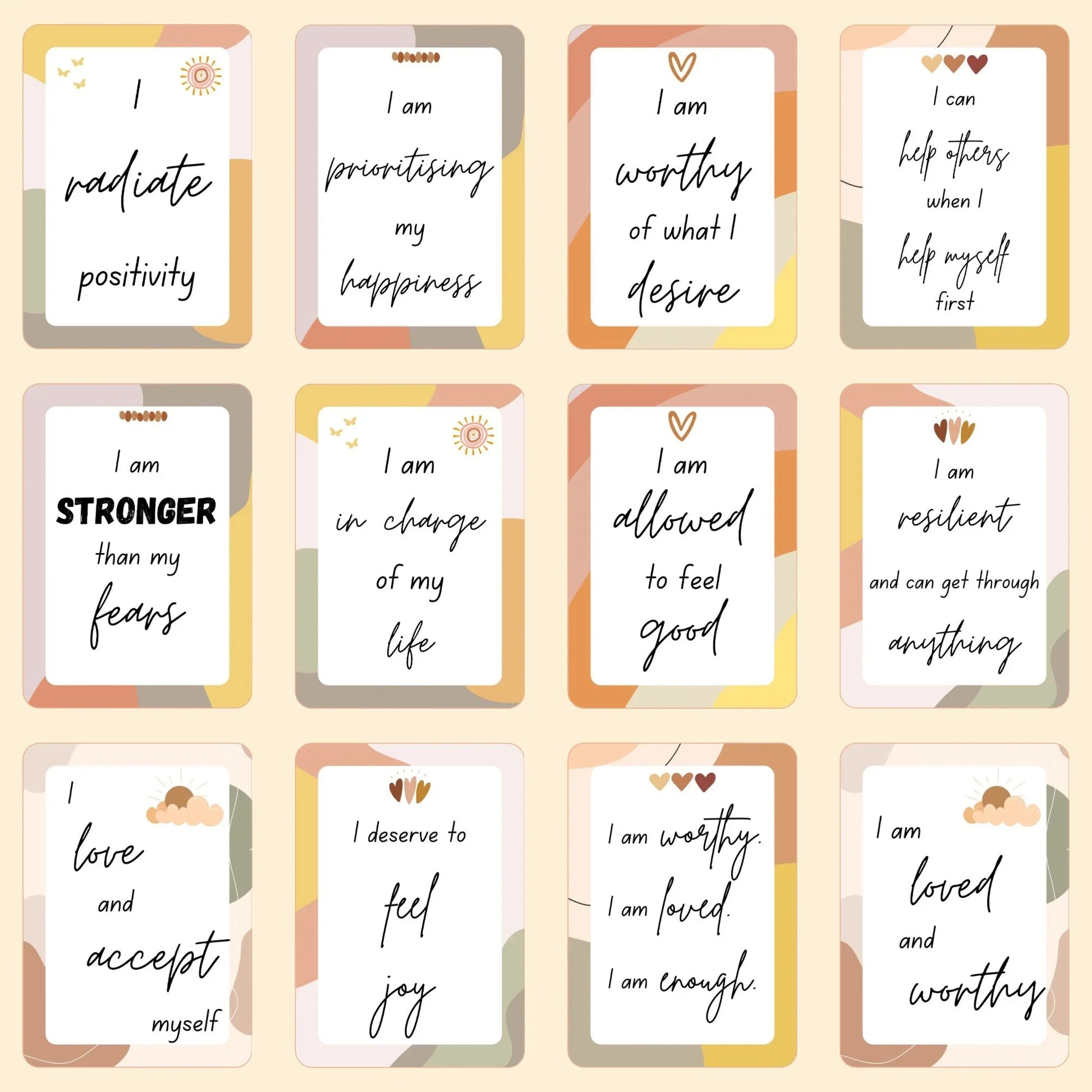
Credit: jessiesartshop.co.uk
Final Thoughts
Daily affirmation cards are a powerful yet simple tool for self-improvement. Used with intention and consistency, they can help you change your mindset, build confidence, and reach your goals. The secret is to make the routine personal, combine words with action, and track your progress.
Avoid common mistakes, use advanced techniques, and remember that belief grows with practice. Whether you are new or experienced, affirmation cards can add positivity and strength to your daily life. Start today and see the difference for yourself.
With patience and practice, these small cards can help you build a more positive, confident, and resilient mindset—one day at a time.
