

How to Use Affirmations: Transform Your Mindset Instantly
How To Use Affirmations
Imagine waking up each day with a positive mindset, feeling motivated and confident. Many people wish for this kind of start, but often feel stuck in old thought patterns. Affirmations offer a practical tool for changing how you think and feel. They are simple, powerful statements that you repeat to yourself. Used well, affirmations can help you build new habits, improve mental health, and reach your goals.
But what makes affirmations work? How do you use them so they are more than just empty words? This article explains everything you need to know about using affirmations. You’ll learn the science behind them, practical steps to create your own, and common mistakes to avoid.
You’ll also see real-world examples and tips to help you get the most from your affirmation practice.
What Are Affirmations?
Affirmations are short, positive statements that you say to yourself regularly. They help you focus your mind on what you want, not what you fear. The goal is to replace negative or unhelpful thoughts with positive ones. For example, instead of thinking, “I can’t do this,” you repeat, “I am capable and strong.”
Affirmations can target many areas of life:
- Self-confidence
- Health and wellness
- Career goals
- Relationships
- Stress management
It’s not about ignoring problems or pretending everything is perfect. Instead, it’s about shaping your thoughts to support growth and positive change.
The Science Behind Affirmations
Some people wonder if affirmations are just wishful thinking. But research shows that self-affirmation can have real effects on the brain and behavior.
How Affirmations Affect The Brain
When you repeat positive statements, your brain starts to build new neural pathways. This means your mind learns new ways to think and respond. Over time, these paths become stronger, making positive thinking more natural.
Studies using brain scans show that self-affirmation activates areas linked to self-processing and reward. This is why affirmations can help you feel more motivated and resilient, especially during stress.
Evidence From Studies
Research has found benefits in several areas:
- People who use affirmations before stressful events often perform better.
- Affirmations can reduce negative thoughts and boost problem-solving.
- They are linked to better health choices, like exercising and eating well.
For example, a study published by the Social Cognitive and Affective Neuroscience journal found that self-affirmation increased activity in the brain’s reward centers. This helped people stay motivated when facing challenges.
Why Repetition Matters
Repeating affirmations is key. Just saying something once is not enough. The brain needs regular reminders to create lasting change. Think of it like learning a new language—the more you practice, the stronger the skill becomes.
Why Use Affirmations?
People use affirmations for many reasons. Here are some common benefits:
- Boosting Confidence: Affirmations can help you believe in yourself, especially before important events like presentations or interviews.
- Reducing Stress: Positive statements can calm your mind and lower anxiety.
- Improving Focus: They remind you of your goals and keep you on track.
- Changing Habits: Repeating new beliefs can help you break old, unhelpful patterns.
- Supporting Mental Health: Affirmations are often used in therapy to challenge negative thinking.
Real-world Examples
- Athletes use affirmations like, “I am strong and prepared,” before competitions.
- Students say, “I am focused and ready to learn,” before exams.
- Professionals repeat, “I handle challenges with calm and skill,” at work.
These simple sentences create a mental environment where positive change is more likely.
How To Create Effective Affirmations
Not all affirmations work the same way. To get real results, you need to craft statements that are personal, positive, and present tense.
Steps To Write Your Own Affirmations
1. Identify Your Goal
What do you want to change or improve? Be specific. For example, “I want to feel more confident in meetings. ”
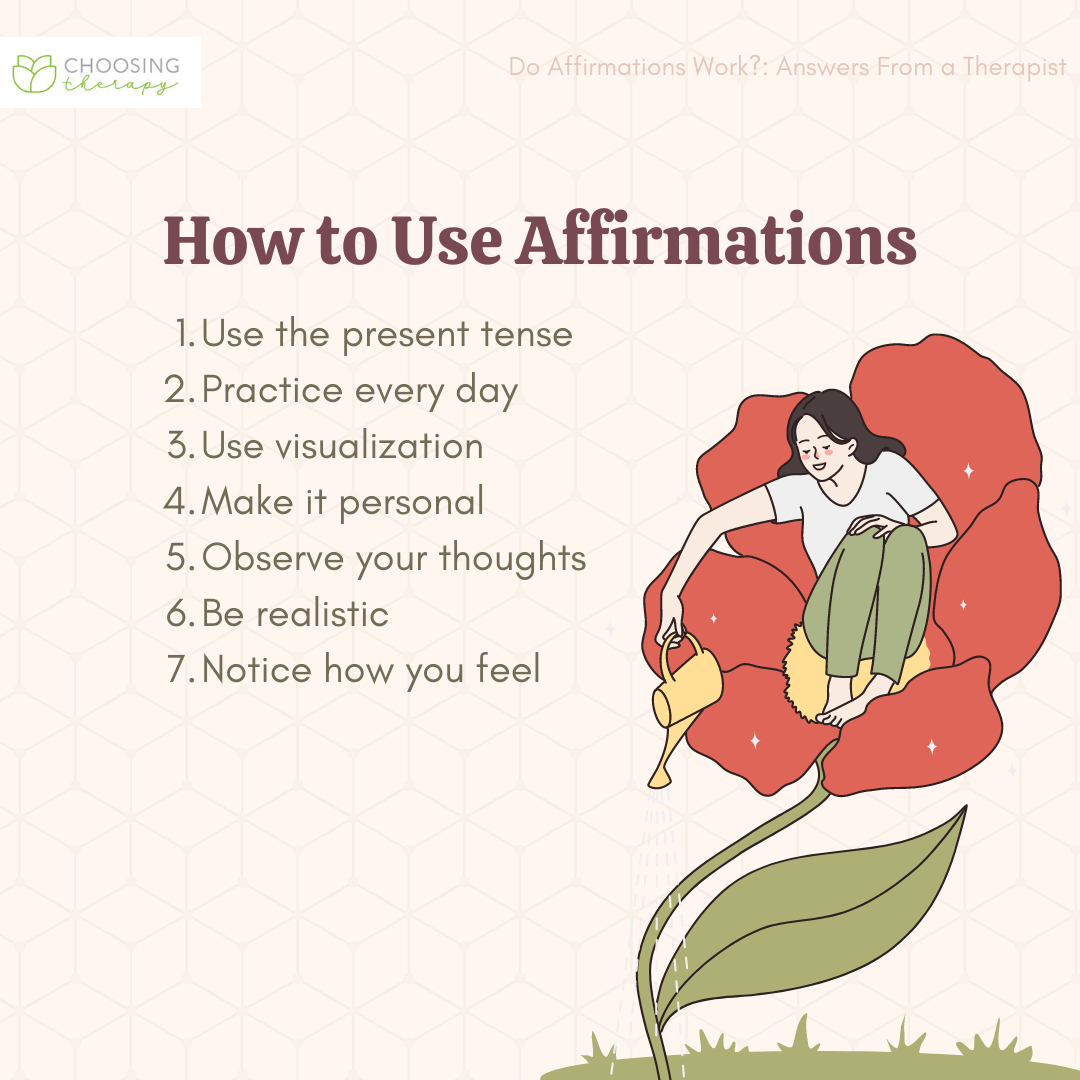
2. Use Present Tense
Write as if it’s already true. Instead of “I will be confident,” say, “I am confident. ”
3. Keep It Positive
Avoid negative words. Instead of “I am not afraid,” say, “I am calm and brave. ”
4. Make It Personal
Use “I” or “my” to connect the statement to yourself.
5. Keep It Short And Clear
Easy to remember phrases work best.
6. Add Emotion
Feel the statement as you say it. For example, “I am excited about my new opportunities. ”
Examples Of Good Affirmations
- “I am strong and capable.”
- “I choose to focus on what I can control.”
- “I am worthy of success and happiness.”
- “Every day, I grow more confident.”
- “I trust myself to make good decisions.”
Common Mistakes To Avoid
- Making affirmations too long or complicated.
- Using future tense (“I will…”).
- Focusing on what you don’t want.
- Choosing words that feel untrue to you.
If an affirmation feels fake or forced, adjust it until it feels believable. For example, “I am learning to be more confident” is better than “I am always confident,” if you’re just starting out.
How To Use Affirmations In Daily Life
Simply writing affirmations is not enough. How you use them makes all the difference.
When To Use Affirmations
- Morning: Set a positive tone for the day.
- Before Stressful Events: Calm nerves and boost focus.
- At Night: Reflect on your progress and prepare for the next day.
- During Difficult Moments: Shift negative thinking in real time.
How To Practice Affirmations
1. Repeat Them Out Loud
Saying affirmations with emotion helps your brain remember them better.
2. Write Them Down
Keep a journal or sticky notes where you see them often.
3. Visualize
As you say the affirmation, picture yourself living it.
4. Pair With Deep Breathing
Slow breaths help you feel calmer and more focused.
5. Use Reminders
Set phone alarms or write on mirrors to keep affirmations visible.
Combining Affirmations With Other Habits
Affirmations work even better when combined with other positive habits. For example, say your affirmation during a morning walk, or while meditating. This creates a strong mind-body connection.
How Often To Repeat
Consistency is more important than quantity. Start with 2-3 affirmations, and repeat them at least twice a day. Over time, you can add more or change them as your goals evolve.
Sample Affirmation Routines
Everyone’s routine will look different. Here are a few examples to help you get started.
Simple Morning Routine
- Wake up and take three deep breaths.
- Repeat your main affirmation three times out loud.
- Write it in a journal.
- Picture your day going well.
Before A Challenge
- Find a quiet space.
- Close your eyes and say your affirmation: “I am ready and prepared.”
- Take a moment to feel calm and focused.
Night Reflection
- Write down one thing you did well.
- Repeat: “I am grateful for my progress.”
- Visualize tomorrow going even better.
Tracking Your Progress
Using affirmations is not a “quick fix. ” It helps to track how you feel and what changes you notice over time.
Ways To Measure Results
- Mood Tracking: Note your mood before and after saying affirmations.
- Journaling: Write about changes in your thoughts or actions.
- Goal Progress: See if you’re moving closer to your goals.
What To Expect
Some people notice changes in a week. For others, it takes longer. Look for small shifts, like feeling less anxious or more hopeful. Celebrate these wins—they show your brain is learning a new way to think.
Common Myths About Affirmations
There are many misconceptions about affirmations. Clearing these up helps you use them wisely.
Myth 1: Affirmations Are Just Positive Thinking
Affirmations are more than just “thinking happy thoughts. ” They are tools for building specific, supportive beliefs. Used with action, they help change real behavior.
Myth 2: You Have To Believe Them Right Away
It’s normal if affirmations feel strange at first. With practice, they become more believable.
Myth 3: Affirmations Replace Hard Work
Affirmations are not magic words. They support your goals, but you still need to take action.
Myth 4: They Work For Everyone, Instantly
Some people respond faster than others. If you have deep doubts or negative beliefs, it may take more time and support.
Myth 5: You Can’t Change The Affirmation
You can adjust affirmations as your needs change. The best affirmations grow with you.

Credit: thechiclife.com
Advanced Tips For Using Affirmations
As you get comfortable, you can make your affirmation practice even more powerful.
Try Visualization
Combine affirmations with visualization. For example, as you say, “I am a confident speaker,” imagine yourself giving a speech with ease.
Use Physical Anchors
Say your affirmation while touching your heart, making a fist, or standing tall. This links the positive feeling to a physical action.
Pair With Gratitude
After repeating your affirmation, list one thing you’re grateful for. This boosts positive emotion and helps your brain connect affirmations with real life.
Record And Listen
Record yourself saying your affirmations and listen during your commute or workout. Hearing your own voice makes them feel more real.
Involve Others
Share affirmations with a friend or loved one. Encouraging each other builds accountability and support.
Data: Affirmations Vs. Other Self-help Tools
How do affirmations compare to other popular tools like journaling or meditation? Here’s a look:
| Tool | Main Benefit | Time Needed | Best For |
|---|---|---|---|
| Affirmations | Shifts beliefs, builds confidence | 2-10 minutes/day | Quick mindset boost |
| Journaling | Processes thoughts, tracks growth | 10-20 minutes/day | Deeper self-reflection |
| Meditation | Reduces stress, improves focus | 10-30 minutes/day | Calming the mind |
Affirmations are unique because they are fast and easy to fit into a busy schedule. They work well alone or together with other tools.

Credit: sproutingzen.com
Real-world Success Stories
Hearing how others use affirmations can inspire you to keep going.
Story 1: Career Confidence
Maria was nervous about asking for a promotion. She started saying, “I am worthy of new opportunities,” every morning. After a month, she noticed she spoke up more in meetings. Her boss saw the change and offered her a new role.
Story 2: Managing Stress
David often felt overwhelmed by work. He used the affirmation, “I handle stress with calm and clarity. ” Repeating it before work helped him stay focused and less reactive, even during busy days.
Story 3: Building Healthy Habits
Jasmine wanted to eat healthier. She repeated, “I make choices that support my health,” before meals. Over time, she found it easier to pick healthy options and felt proud of her progress.
What These Stories Show
Success with affirmations is not about perfection. It’s about taking small steps, noticing progress, and adjusting as needed.
Common Mistakes And How To Fix Them
Even with the best intentions, people sometimes struggle with affirmations. Here are mistakes to watch for, and how to get back on track.
Mistake 1: Choosing Unrealistic Affirmations
If you pick a statement that feels impossible, your brain may reject it. Instead, start with something believable, like “I am learning to be more confident. ”
Mistake 2: Inconsistency
Saying affirmations only once in a while won’t create change. Set a reminder or link your practice to a daily habit, like brushing your teeth.
Mistake 3: Ignoring Negative Thoughts
If you notice negative self-talk, don’t just push it away. Pause, notice it, and gently remind yourself of your affirmation.
Mistake 4: Being Impatient
Change takes time. Look for small wins, and trust the process.
Mistake 5: Using Too Many Affirmations
More is not always better. Focus on 2-3 key areas at a time.
Table: Affirmation Practice Troubleshooting
Here’s a quick guide if your affirmations aren’t working:
| Problem | Possible Cause | What to Try |
|---|---|---|
| Feels fake | Too big a jump from current belief | Soften statement: “I am learning to…” |
| Hard to remember | Too long or complicated | Make it shorter and clearer |
| No results | Inconsistent practice | Repeat daily and track progress |
| Negative thoughts return | Not addressing old beliefs | Notice, then gently replace with affirmation |
| Feels boring | Repetition without meaning | Add emotion, visualization, or change words |
How To Personalize Affirmations For Your Life
The most effective affirmations are those that fit your unique needs and values.
Reflect On Your Values
What matters most to you? Confidence, kindness, growth? Build affirmations around these core values.
Address Specific Challenges
If you struggle with public speaking, try, “I speak clearly and connect with my audience. ” If you want better health, “I honor my body with care and respect. ”
Adjust As You Grow
Change your affirmations as your goals change. What worked six months ago may need updating now.
Get Feedback
Sometimes, asking a friend or coach to review your affirmations can help make them stronger and more believable.
When Affirmations Might Not Work Alone
Affirmations are a powerful tool, but they are not a cure-all. If you struggle with severe negative thinking, anxiety, or depression, it’s important to seek help from a mental health professional. Affirmations can be a helpful part of your toolkit, but sometimes you need extra support.
Cultural And Spiritual Roots Of Affirmations
Affirmations are not new. Many cultures and traditions have used positive statements for centuries.
- Buddhism uses mantras to focus the mind and build compassion.
- Christianity includes prayers and scriptures with positive messages.
- Self-help movements have promoted affirmations for personal growth.
Understanding these roots can add meaning to your practice and connect you with a long tradition of self-improvement.
Credit: www.choosingtherapy.com
Affirmations For Different Life Areas
You can use affirmations for almost any goal. Here are some examples:
For Confidence
- “I believe in myself and my abilities.”
- “I am proud of who I am becoming.”
For Health
- “My body is healthy and strong.”
- “I make choices that support my well-being.”
For Relationships
- “I attract positive, supportive people.”
- “I communicate with kindness and respect.”
For Success
- “I am open to new opportunities.”
- “Every step brings me closer to my goals.”
For Stress Management
- “I am calm and in control.”
- “I handle challenges with grace.”
Table: Popular Affirmations And Their Purposes
Here’s a quick reference for some common affirmations:
| Affirmation | Purpose |
|---|---|
| I am enough | Self-worth |
| I am resilient | Overcoming challenges |
| I trust my intuition | Decision making |
| I am grateful for today | Gratitude |
| I am a work in progress | Personal growth |
Choose affirmations that match your current needs. Adjust the wording so it feels personal and true to you.
How To Involve Others In Your Affirmation Journey
Affirmations don’t have to be a solo activity. Sharing your practice can strengthen your results and help others grow too.
Family And Friends
- Create shared affirmations for family goals.
- Encourage children to build self-esteem with simple phrases.
Work Teams
- Start meetings with a group affirmation.
- Use positive statements to support team morale.
Online Communities
- Join groups focused on growth and positive thinking.
- Share your favorite affirmations and learn from others.
Including others can make affirmation practice more fun and effective.
Frequently Asked Questions
What If I Don’t Believe My Affirmation At First?
It’s common to feel doubtful in the beginning. Start with statements that feel possible, like “I am open to learning confidence. ” Over time, as you repeat and see small changes, your belief will grow.
How Long Does It Take To See Results From Affirmations?
Some people notice a difference in a few days, while others need several weeks. The key is consistency. Track your mood or habits to see real changes, and be patient with yourself.
Can Affirmations Help With Anxiety Or Depression?
Affirmations can support mental health, but they are not a replacement for therapy or medical help. If you struggle with anxiety or depression, use affirmations as one tool, and reach out to a professional for extra support. You can learn more from resources like the National Institute of Mental Health.
Should I Say My Affirmations Out Loud Or Silently?
Saying affirmations out loud can be more powerful because it engages your senses. However, repeating them silently works too, especially if you’re in public or want a private practice. Choose the method that fits your comfort and routine.
How Many Affirmations Should I Use At One Time?
Start with 2-3 affirmations that matter most to you. Focus on these until they feel natural, then add or change as needed. Too many affirmations at once can feel overwhelming and less effective.
Using affirmations is a journey, not a quick fix. With patience, practice, and a willingness to adjust, you can create real, lasting change in your life. Affirmations are a small habit that can make a big difference—one positive thought at a time.
