

How to Use Affirmations for Manifestation: Unlock Your Dreams
How To Use Affirmations For Manifestation
Imagine waking up every day feeling sure that your dreams are possible. You start your morning with a powerful thought, and slowly, your life begins to change. This is not magic—it's the power of affirmations for manifestation. Many people talk about using positive statements to attract what they want, but few understand how to use them correctly. If you’ve tried affirmations before and felt frustrated, you’re not alone. Getting real results means knowing how, when, and why they work.
This guide is for anyone who wants to use affirmations as a tool to create real change. We will cover what affirmations are, why they matter, and how to build a practice that works for you. By the end, you’ll have the confidence and knowledge to make manifestation a natural part of your life.
What Are Affirmations?
Affirmations are positive statements you repeat to yourself, often about who you are or what you want to achieve. They may sound simple, but these words can influence your thoughts, feelings, and actions. When used with intention, affirmations help to rewire your brain, making your goals feel possible and within reach.
For example, saying “I am confident and strong” every morning can help you feel more self-assured during the day. Over time, your mind starts to accept this new belief, and your actions follow.
The idea behind affirmations is rooted in psychology. Our brains are always listening to what we say and think. If you repeat negative things, you begin to believe them. The same is true for positive statements. The key is consistency and emotion.
The Science Behind Manifestation And Affirmations
Many people wonder if affirmations are just wishful thinking. The truth is, there’s real science behind how they work.
Research shows that the brain can’t always tell the difference between reality and imagination. When you repeat a statement often, your mind starts to accept it as true. This is called self-affirmation theory. By focusing on positive beliefs, you can reduce stress, improve performance, and even boost your health.
One study found that people who used affirmations felt less anxious and performed better under pressure. Another experiment showed that regular practice can change brain patterns, making it easier to spot opportunities and take action. This is how manifestation happens: you change your thinking, which changes your behavior, and finally, your results.
However, affirmations alone are not enough. You must combine them with real effort and a clear intention. Think of them as a tool that helps you stay focused and motivated.
Why Use Affirmations For Manifestation?
Many people try to change their lives by working harder or making big decisions. But often, their own beliefs hold them back. Affirmations work because they target the root of change: your mindset.
Here’s why affirmations are so effective for manifestation:
- Reprogramming Beliefs: Old, negative thoughts can stop you from reaching your goals. Affirmations help you replace them with positive beliefs.
- Boosting Confidence: When you believe in yourself, you take more risks and seize new opportunities.
- Staying Focused: Repeating your goals every day keeps them top-of-mind, so you notice chances to make them real.
- Creating Momentum: Small changes in your thinking add up, leading to big results over time.
Many successful people use affirmations, from athletes to business leaders. They know that the right mindset is the foundation for growth.
How To Write Effective Affirmations
Not all affirmations work equally well. The way you write and say them matters. Here’s how to create affirmations that help you manifest real change.
1. Use Present Tense
Write your statements as if they are already true. For example, say “I am healthy” instead of “I will be healthy. ” This tells your mind that the change is happening now.
2. Be Positive
Avoid negative words like “not” or “don’t. ” Instead of “I am not afraid,” say “I am brave. ” Your mind responds better to positive language.
3. Make Them Specific
Clear, detailed affirmations are more powerful. Instead of “I am successful,” say “I am growing my business and helping others every day. ”
4. Keep Them Short And Simple
Long, complex sentences are hard to remember and repeat. Short phrases are easy to use and more effective.
5. Add Emotion
The most powerful affirmations make you feel something. Include words like “excited,” “grateful,” or “joyful” to boost their impact.
6. Make Them Believable
If your affirmation feels too far from the truth, your mind may resist. Start with statements you can believe, and make them stronger over time.
7. Personalize Your Statements
Use words that matter to you. “I am a loving parent” is more meaningful if being a good parent is important in your life.
8. Repeat Often
Consistency is key. The more you repeat your affirmations, the faster your mind will accept them.
Examples Of Effective Affirmations
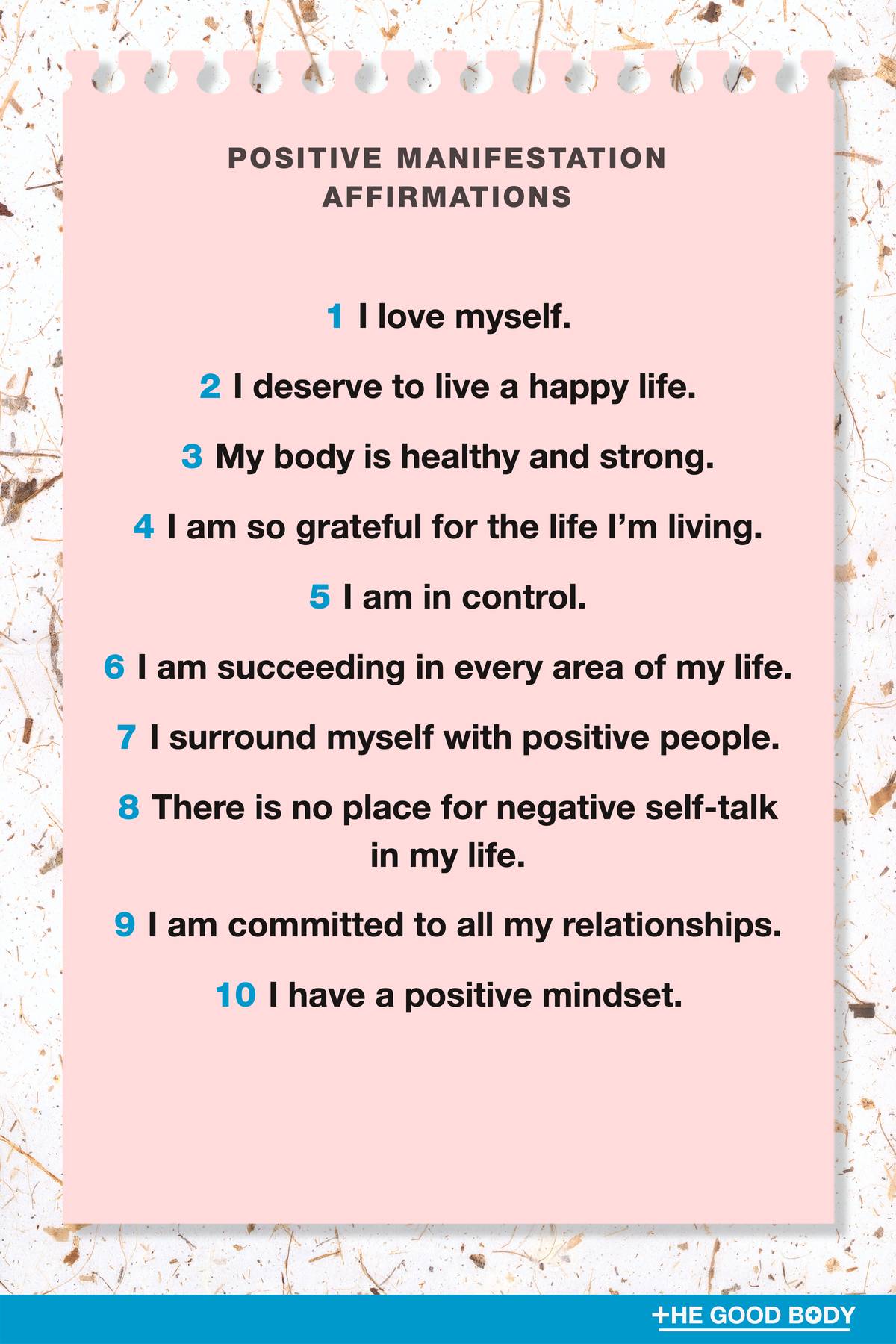
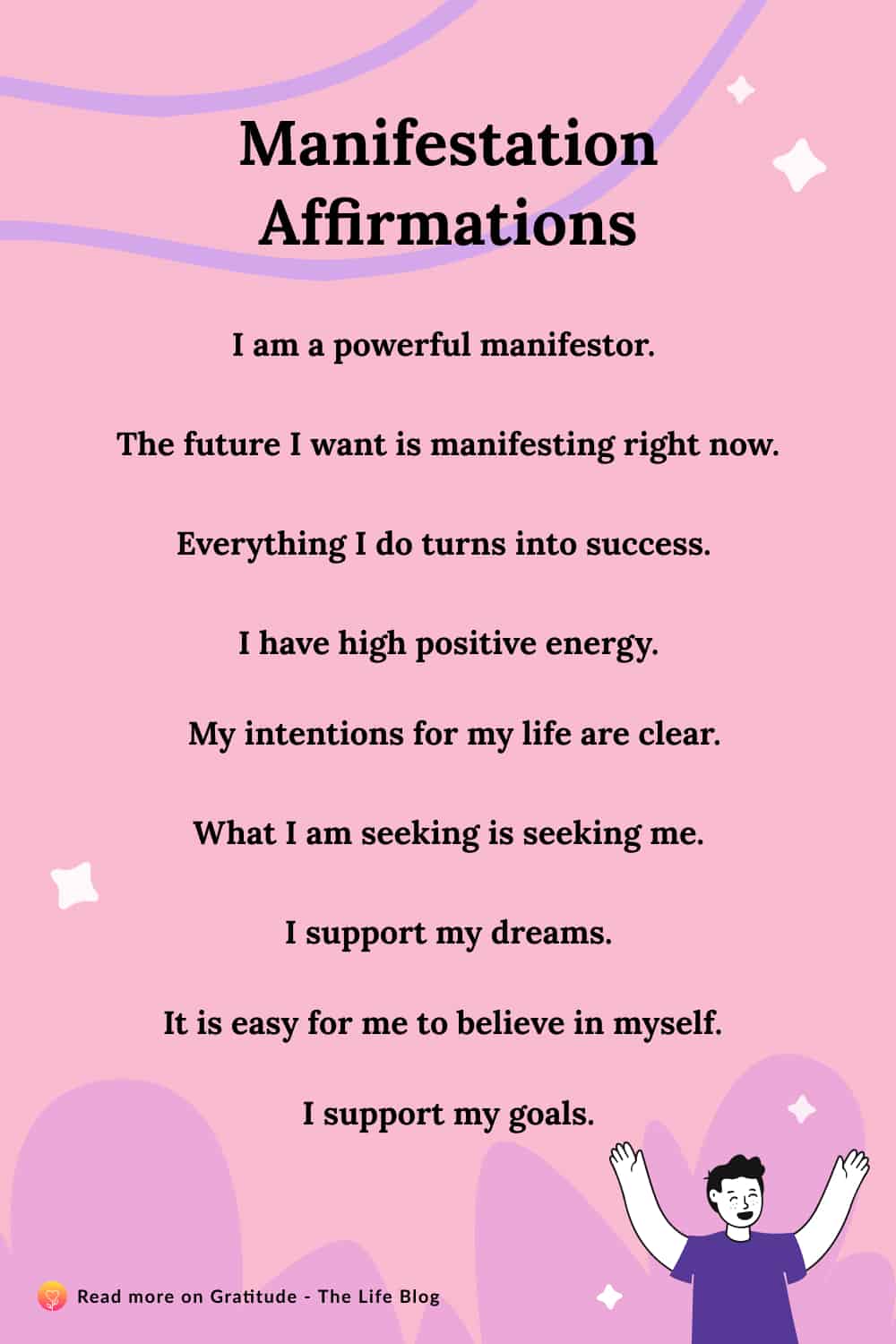
- “I am worthy of love and respect.”
- “I am confident in my skills and abilities.”
- “I am attracting new opportunities every day.”
- “I am grateful for the abundance in my life.”
- “I am becoming healthier and stronger each day.”

Credit: www.juliettekristine.com
How To Use Affirmations For Manifestation
Writing good affirmations is only the first step. The real power comes from how you use them in your daily life.
1. Set Clear Intentions
Before you start, know what you want to manifest. Be honest with yourself about your goals. Are you looking for a better job, more confidence, or improved health? Clarity helps you choose the right affirmations.
2. Create A Daily Routine
Make affirmations a part of your day. Many people find it helpful to repeat them in the morning and before bed. You can say them out loud, write them down, or even record your voice and listen.
3. Use Visualization
Picture yourself living your affirmation. If you say “I am successful,” imagine what success looks and feels like. Visualization makes the experience more real for your mind.
4. Engage Your Emotions
Feel the truth of your words. Don’t just repeat them by habit—let yourself believe and feel each statement.
5. Combine Affirmations With Action
Affirmations are not magic words. You still need to take steps toward your goals. Use your statements to inspire action, even small steps each day.
6. Track Your Progress
Keep a journal of your affirmations and note any changes in your feelings, actions, or results. This helps you stay motivated and see your growth.
7. Be Patient
Manifestation takes time. Don’t expect overnight results. Trust the process and stay consistent.
8. Adjust As Needed
If an affirmation stops feeling right, change it. Your goals and beliefs will grow as you do.
Different Types Of Affirmations
Not all affirmations are the same. Depending on your goals, you may use different types:
Self-love Affirmations
These help you build confidence and appreciate yourself.
- “I am enough just as I am.”
- “I accept myself completely.”
Abundance Affirmations
These focus on attracting wealth, opportunities, and growth.
- “I am open to receiving abundance.”
- “Money flows easily to me.”
Health Affirmations
Use these to support your body and mind.
- “I am strong and healthy.”
- “My body is healing every day.”
Success Affirmations
For career or personal achievement.
- “I am successful in all that I do.”
- “I am a leader and inspire others.”
Relationship Affirmations
These improve your connections with others.
- “I attract loving and supportive people.”
- “My relationships are built on trust and respect.”
Stress-relief Affirmations
To help you stay calm and positive.
- “I am at peace with myself and the world.”
- “I choose calm in every situation.”
Common Mistakes When Using Affirmations
Many people try affirmations but give up quickly. Here are some mistakes to avoid:
- Lack of Belief: If you don’t believe your affirmation, it won’t work. Start with something believable and build from there.
- Inconsistency: Skipping days or forgetting your practice weakens the effect. Make it a habit.
- Negative Language: Using words like “don’t” or “can’t” focuses your mind on the wrong things.
- No Action: Affirmations need action. Use them as motivation to do real things.
- Impatience: Real change takes time. Don’t expect instant results.
How Affirmations Support The Law Of Attraction
The Law of Attraction says that your thoughts create your reality. By focusing on positive statements, you attract more of what you want.
Here’s how affirmations fit into the process:
- Focus: They keep your goals clear in your mind.
- Vibration: Positive words raise your emotional energy.
- Action: They inspire you to take steps toward your dreams.
- Consistency: Daily repetition builds momentum.
Affirmations help you stay in the right mindset, so you notice and act on opportunities.
When And How Often To Use Affirmations
There is no single “best” time, but some moments are more powerful:
- Morning: Sets a positive tone for your day.
- Before Bed: Programs your mind for success while you sleep.
- During Stress: Reminds you of your strength.
- Before Big Events: Boosts confidence before interviews or meetings.
Most experts suggest repeating affirmations at least twice a day. You can also repeat them whenever you need a boost.
Where To Practice Affirmations
You can use affirmations almost anywhere, but creating a special space helps. Here are some ideas:
- Bedroom: Start your day with affirmations before getting up.
- Bathroom Mirror: Say them while you get ready in the morning.
- Car: Repeat them quietly during your commute.
- Work Desk: Keep a note or card with your favorite statement.
Some people like to write their affirmations in a journal or set reminders on their phone.
Credit: www.thegoodbody.com
Tools And Resources For Affirmation Practice
Technology can make your affirmation practice easier and more fun. Here are some tools you can use:
- Affirmation Apps: Many apps send you positive statements or let you record your own.
- Sticky Notes: Place them on your mirror, computer, or fridge.
- Journals: Write your affirmations each morning or night.
- Audio Recordings: Listen to your affirmations while you walk or relax.
- Vision Boards: Combine images and words to create a powerful visual reminder.
Using these tools keeps your practice fresh and consistent.
Sample Daily Affirmation Routine
Here is a simple routine to help you get started:
- Wake Up: Before getting out of bed, repeat 3 affirmations out loud.
- Mirror Practice: While brushing your teeth, look in the mirror and say your main affirmation.
- Journaling: Write your affirmations in a notebook.
- Midday Reminder: Take a break and repeat your statements quietly.
- Evening Reflection: Before sleep, review your day and repeat your affirmations.
Adjust this routine to fit your life. The key is consistency.
Affirmations Vs. Positive Thinking
Some people think affirmations are just another form of positive thinking. While they are similar, there are key differences.
| Affirmations | Positive Thinking |
|---|---|
| Specific statements about your goals or identity | General focus on hopeful thoughts |
| Repeated daily, often out loud or in writing | More spontaneous, less structured |
| Used to reprogram beliefs and support action | Mainly helps shift attitude |
Affirmations are more focused and intentional. They are a tool, while positive thinking is more of an attitude.
How To Measure Progress With Affirmations
Tracking your results helps you stay motivated and adjust your practice. Here’s how to measure your progress:
- Journaling: Write about your feelings, actions, and results each week. Look for changes in mood or confidence.
- Goal Setting: Set small goals related to your affirmations and review them regularly.
- Feedback: Ask friends or family if they notice changes in your attitude or actions.
- Self-Reflection: Take time each month to reflect on your journey.
Remember, progress is not always immediate or obvious. Trust that your efforts are making a difference.
Combining Affirmations With Other Manifestation Techniques
Affirmations are powerful, but they work even better with other practices. Here are some methods you can combine:
Visualization
Spend time each day imagining your goals as real. This makes your affirmations stronger.
Gratitude Practice
Write or say what you are grateful for. Gratitude increases positive emotion and supports manifestation.
Meditation
Quiet your mind and focus on your affirmation during meditation. This deepens your belief.
Scripting
Write a story about your life as if your goals are already true. Combine with affirmations for extra power.
Action Planning
Break your goal into small steps. Use affirmations to motivate action.
Affirmations For Different Areas Of Life
Using targeted affirmations can help you in any area:
Career
- “I am valued and successful in my work.”
- “I attract exciting job opportunities.”
Money
- “I am financially secure and free.”
- “Wealth flows easily into my life.”
Health
- “Every cell in my body is healthy.”
- “I have the energy to do all I want.”
Relationships
- “I am surrounded by love.”
- “I communicate with kindness and honesty.”
Personal Growth
- “I am always learning and improving.”
- “I welcome new challenges.”
Table: Sample Affirmations For Common Goals
Below is a table with examples you can use or adapt:
| Goal Area | Sample Affirmation |
|---|---|
| Self-Confidence | I trust myself and my choices. |
| Money | Money comes to me in expected and unexpected ways. |
| Health | I am vibrant and full of energy. |
| Love | I give and receive love freely. |
| Success | I am achieving my goals every day. |
Myths And Truths About Affirmations
There are many misunderstandings about affirmations. Here are some common myths and the real facts:
| Myth | Truth |
|---|---|
| They work instantly | They take time and consistency |
| You don't need action | Action is always needed |
| Any statement works | Personal, specific statements are better |
| They are only for positive people | Anyone can use and benefit from affirmations |
Understanding these truths helps you avoid disappointment and build a practice that gets real results.
Real-life Examples Of Manifestation With Affirmations
Many people have changed their lives with affirmations. For example, a young woman who struggled with self-doubt began saying, “I am confident and capable. ” Over several months, she noticed she spoke up more at work and was offered a promotion.
Another person used the affirmation, “I am open to new relationships. ” Soon, they found themselves meeting new people and forming deeper connections.
These examples show that affirmations work best when you use them with intention, emotion, and action.
Non-obvious Insights For Beginners
While the basics of affirmations are well-known, here are two insights many people miss:
- Affirmations Can Reveal Limiting Beliefs: Sometimes, saying a positive statement brings up negative feelings. This is a sign of a hidden belief holding you back. Notice these reactions, and use them to guide deeper work on your mindset.
- Small Shifts Matter: You don’t need huge changes overnight. If you feel just a little more confident or hopeful, that’s progress. Over time, these small shifts add up to big results.
Another tip: record your voice saying your affirmations and listen while you walk or do chores. This helps your mind absorb the messages in a relaxed way.
Frequently Asked Questions
What If I Don’t Believe My Affirmation?
It’s normal to feel doubt at first, especially if your affirmation is very different from your current reality. Start with a statement that feels close to true. For example, instead of “I am wealthy,” try “I am open to new ways of creating wealth.
” As your belief grows, make your affirmation stronger.
How Long Does It Take To See Results?
Results vary for each person. Some people notice changes in a few days, while others take weeks or months. The most important thing is to practice daily and stay patient. Real change takes time, but it is always worth it.
Can I Use More Than One Affirmation At A Time?
Yes, you can use several affirmations for different goals. However, don’t overwhelm yourself with too many at once. Start with 2-3 main statements and add more as you get comfortable with the practice.
Credit: blog.gratefulness.me
Should I Say My Affirmations Out Loud Or Silently?
Saying them out loud is often more powerful because you hear your own voice and feel the emotion. However, you can also repeat them silently, write them down, or listen to a recording. The most important thing is to be consistent and believe in your words.
Are Affirmations Supported By Science?
Yes, research supports the use of affirmations for changing beliefs and behaviors. Studies show they can reduce stress, improve performance, and help you focus on your goals. For more scientific details, you can visit Wikipedia.
Believing in yourself is the first step toward making your dreams real. With the right affirmations, daily practice, and action, you can manifest positive change in any area of your life. Let your words shape your reality, and watch as new opportunities appear.
